
Reviewed · WALKING TOURS
Jewish Sites Buenos Aires Private Walking and Car Tour
Memory lives in these city blocks. This private Buenos Aires Jewish heritage tour connects Templo Libertad, the Holocaust Memorial, and AMIA with stories of immigration, faith, loss, and renewal. I especially like the personal format and the chance to visit the Salvador Kibrick Jewish Museum on the longer options. The main drawback is that the 2-hour tour is mostly an exterior walking visit, and synagogue entry is not included.
The tour works best if you want context rather than a quick photo stop. Guides speak English, Spanish, French, Italian, or Portuguese, and past guests singled out Richard Shpuntoff for his warm, open approach and family stories. Plan for roughly 25 to 30 minutes of walking on the shorter tours, with some uneven ground and steps.
In This Review
- Key points to know before booking
- Why Buenos Aires Jewish history deserves your time
- Starting near Hotel Presidente on Cerrito Street
- Templo Libertad and the first Jewish roots
- The Salvador Kibrick Museum adds objects and detail
- The Holocaust Museum and Argentina after World War II
- AMIA and the long shadow of the 1994 bombing
- What the 4-hour private car tour adds
- Comparing the 2-hour, 3-hour, and 4-hour options
- Guide quality and the private format
- Who should book this Buenos Aires heritage tour?
- Practical details that improve the day
- Should you book it?
- FAQ
- Where does the walking tour meet?
- Does the tour include entry to Templo Libertad or other synagogues?
- Which tour options include the Salvador Kibrick Jewish Museum?
- Do I need identification for the Jewish Museum?
- Which option includes private transportation?
- What languages are available?
Key points to know before booking

- Templo Libertad offers the historical starting point: You see Argentina’s first synagogue from the outside and learn how Jewish immigrants established roots in Buenos Aires.
- AMIA brings the story into the present: The guide explains the 1994 bombing and its effect on Argentine Jewish life.
- The Salvador Kibrick Museum changes the depth of the tour: The 3-hour and 4-hour options include ritual objects, photographs, and documents that you cannot experience from the street.
- The 4-hour plan covers much more ground: A private car links the Jewish sites with Plaza Libertad, 9 de Julio Avenue, the Israeli Embassy Memorial, and Plaza General San Martín.
- This is a genuinely private experience: Your guide can adjust the pace and answer questions without the fixed rhythm of a large group.
- Bring the correct identification for the museum: Foreign visitors need an original passport, while Argentine visitors need their national identity card.
Why Buenos Aires Jewish history deserves your time
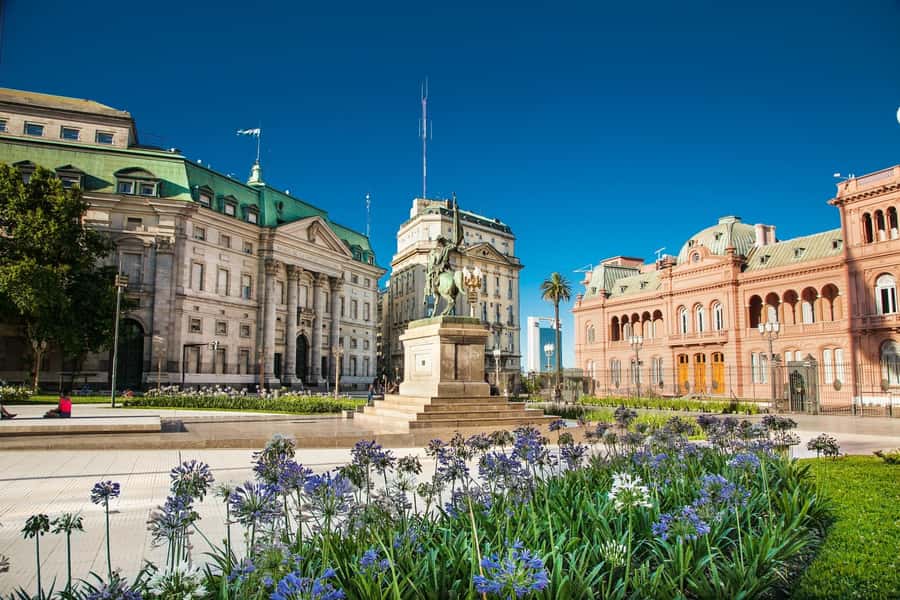
Buenos Aires is home to one of Latin America’s major Jewish communities, yet its story can be easy to miss if you explore only the city’s best-known attractions. The Jewish heritage route gives you a way to read the city through immigration, religious life, public memory, and the hard work of rebuilding after violence.
I like that the tour does not present Jewish history as a sealed-off subject. It connects religious buildings and museums with central streets, public squares, political events, and the wider story of Argentina. You see how a community made a life in the capital, faced discrimination and tragedy, and continued to preserve its identity.
The private guide is important here. Sites such as the AMIA building and the Israeli Embassy Memorial carry serious emotional weight. A good guide can explain the events without reducing them to dates and labels, while giving you room to ask questions. The strongest feedback so far has focused on this human side. One guide, Richard Shpuntoff, was praised for combining historical explanation with personal and family stories, helping connect Argentina’s past with its current political climate.
You should come ready for a thoughtful tour, not a light sightseeing stroll. Some travelers will find the material about the Holocaust and terrorist attacks difficult. That is part of the point, but it may not suit anyone looking only for cheerful city sightseeing.
More Walking Tours in Buenos Aires
- Buenos Aires Hop-On Hop-Off Bus, Free Walking Tours & Discounts
★ 4.5 · 2,218 reviews - Buenos Aires: La Boca Guided Walking Tour in English
★ 4.8 · 1,587 reviews - Nazis in Buenos Aires: a historical walking tour
★ 4.9 · 193 reviews
Starting near Hotel Presidente on Cerrito Street
The shorter tours begin in front of Hotel Presidente at Cerrito 850. Do not go inside the hotel, since its staff is not involved with the tour. This is a simple meeting point in central Buenos Aires, but check the operator’s message the day before for the final instructions.
The exact starting time depends on availability. The 2-hour and 3-hour versions are walking tours, while the 4-hour plan includes private transport and pickup and drop-off at your Buenos Aires accommodation.
The walking involved is not extreme. You should expect about 25 to 30 minutes on foot during the 2-hour and 3-hour experiences, but the route can include uneven surfaces and steps. Wear comfortable shoes, carry water, and prepare for changing weather. The tour operates in rain or shine.
Because the experience is private, the guide can adjust the pace. That helps if someone in your group needs more time at a memorial or prefers a slower walk. Groups can include up to 25 people per guide, with additional guides arranged for larger parties.
Templo Libertad and the first Jewish roots
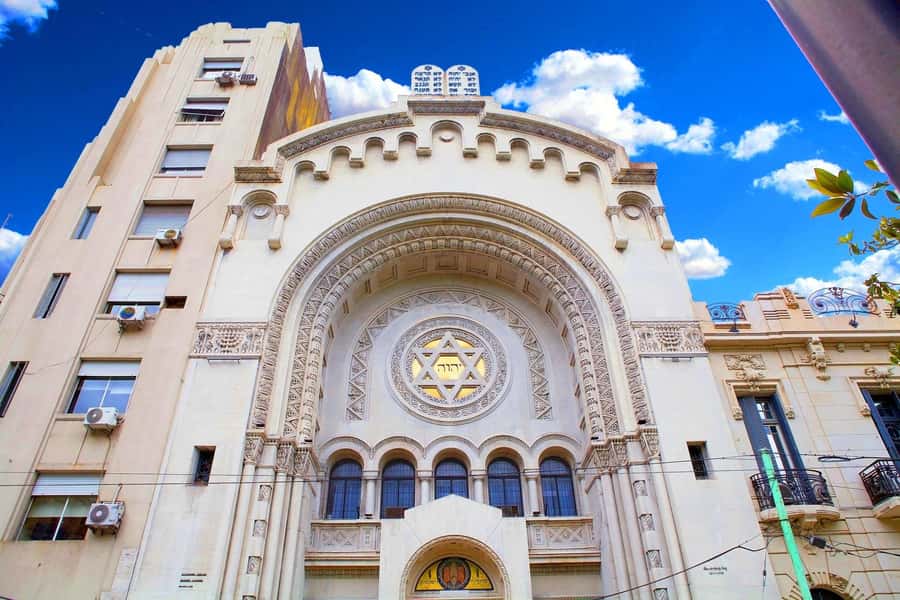
Libertad Street provides the clearest introduction to Buenos Aires Jewish heritage. Here you see Templo Libertad, identified as Argentina’s first synagogue. Its façade gives you an immediate sense of the community’s early public presence in the city.
The important detail is that the tour does not include synagogue entry. You should think of this stop as an architectural and historical introduction, with the guide explaining the early Jewish diaspora in Argentina and the role of religious institutions in forming communal life.
That limitation matters if you hoped to see the interior. Ask about current opening arrangements if entering a synagogue is essential to your plans, but do not assume access is part of this experience. The tour is designed around the exterior view and the guide’s interpretation.
Nearby, you pass the Museo Judío de Buenos Aires, also known as the Dr. Salvador Kibrick Jewish Museum. On the 2-hour option, you see the area and hear about the museum, but entry is not included. That makes the shortest version best for travelers who want an overview rather than a museum visit.
The Salvador Kibrick Museum adds objects and detail
The 3-hour tour includes entry to the Salvador Kibrick Jewish Museum, and this is the clearest reason to choose it over the 2-hour plan. Instead of seeing Jewish history only through buildings and street references, you encounter objects connected to daily religious and communal life.
The collection includes ritual objects, photographs, and historical documents. These items can supply the detail that a walking route cannot. A façade tells you that an institution existed. A prayer object, family photograph, or document can show how people practiced, moved, worked, and kept traditions alive.
For me, the museum makes the middle option the best value for many visitors. You gain more historical substance without committing to the full 4-hour route. It suits anyone who enjoys museums, family history, migration stories, or the material side of religious culture.
There is one firm practical requirement. Foreign visitors must bring an original passport for security reasons. Argentine visitors need their national identity card. A photocopy or casual phone image should not be treated as an acceptable substitute, so carry the required document.
The museum is included only in the 3-hour and 4-hour tours. If you book the 2-hour version and later decide you want museum access, the ticket is not part of that option.
A completely different sort of day in Buenos Aires:
- Buenos Aires: Piazzolla Tango Show with Optional Dinner
★ 4.4 · 2,122 reviews - Buenos Aires: City Highlights Guided Tour with Transfer
★ 4.7 · 1,946 reviews - Buenos Aires: Hop-On Hop-Off City Bus Tour
★ 4.2 · 1,855 reviews - Buenos Aires Hop-On Hop-Off Bus and Exclusive Benefits
★ 4.4 · 1,714 reviews
The Holocaust Museum and Argentina after World War II
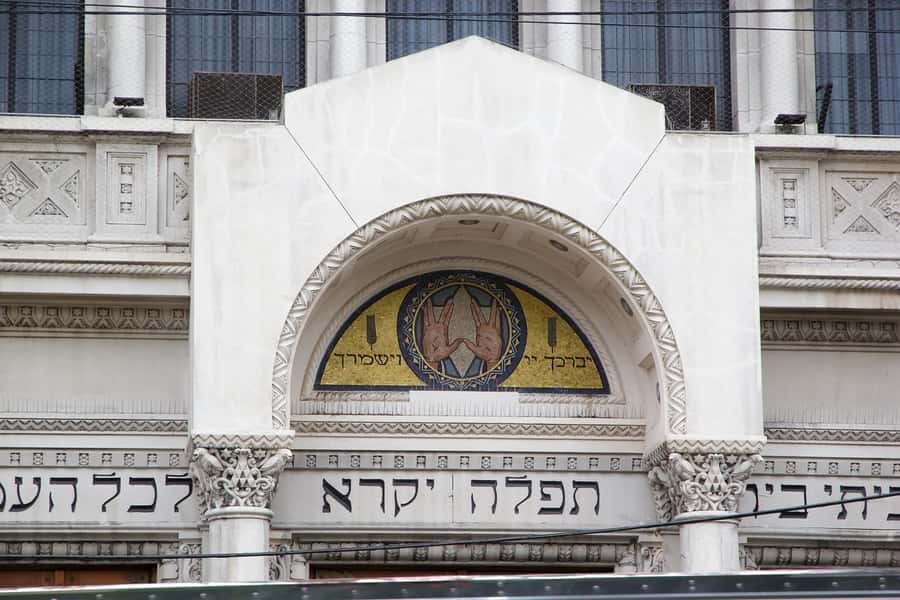
The Buenos Aires Holocaust Museum gives the tour a wider historical frame. Your guide discusses Argentina’s role during and after World War II and focuses on survivors who rebuilt their lives in the city.
This stop is valuable because it shifts the story from local institutions to global events. Jewish life in Buenos Aires cannot be separated from European persecution, migration, survival, and the decisions made by governments and individuals during and after the war.
The guide’s role matters especially here. The subject requires care, and a private setting lets you pause for questions or ask for more background. You are not simply moving through a display at your own speed. The guide can connect the museum’s material to the earlier stops and to Argentina’s Jewish community today.
Expect a serious portion of the tour. The subject may be emotionally heavy, and the experience does not try to soften that. If you prefer to visit difficult memorial sites at your own pace, a private tour still helps, but you should know that the route is built around discussion and remembrance.
AMIA and the long shadow of the 1994 bombing
The visit to AMIA is one of the most important moments on the route. The Asociación Mutual Israelita Argentina is both a center of Jewish communal life and a place linked to one of the darkest events in Argentine Jewish history.
In 1994, a bombing struck the AMIA building. The guide explains the attack, its victims, and its continuing effect on the community and the country. The point is not only to recall a tragedy. It is also to understand how a community responds when a place meant for connection becomes a site of loss.
I appreciate the way this stop brings the subject into the present. Templo Libertad and the museum help you understand earlier generations. AMIA shows that Jewish history in Buenos Aires is not only about the past. It includes unresolved pain, public memory, solidarity, and the determination to maintain communal life.
The tour does not promise entry into every institution along the way. Treat AMIA as an important exterior stop with guided interpretation unless your tour provider gives you different instructions. Dress and behave respectfully around all religious and memorial locations.
What the 4-hour private car tour adds
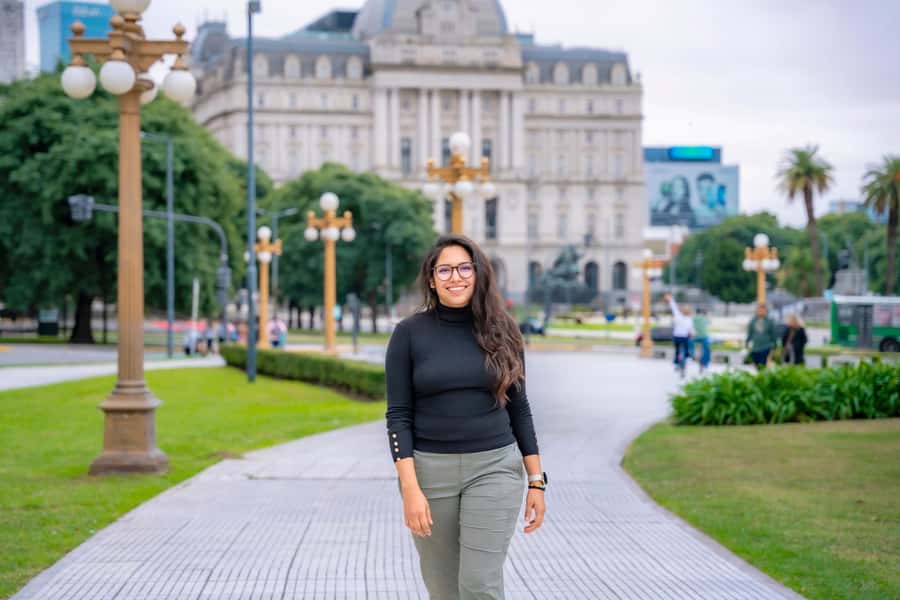
The 4-hour option includes the complete itinerary by private car, museum entry, and pickup and drop-off at your accommodation in Buenos Aires. This is not simply a longer walk. The car allows the guide to connect several sites spread across the city without using up your energy on transfers.
You visit Plaza Libertad, a quiet square surrounded by notable architecture. It helps place Templo Libertad and the surrounding Jewish institutions within the broader civic center of Buenos Aires.
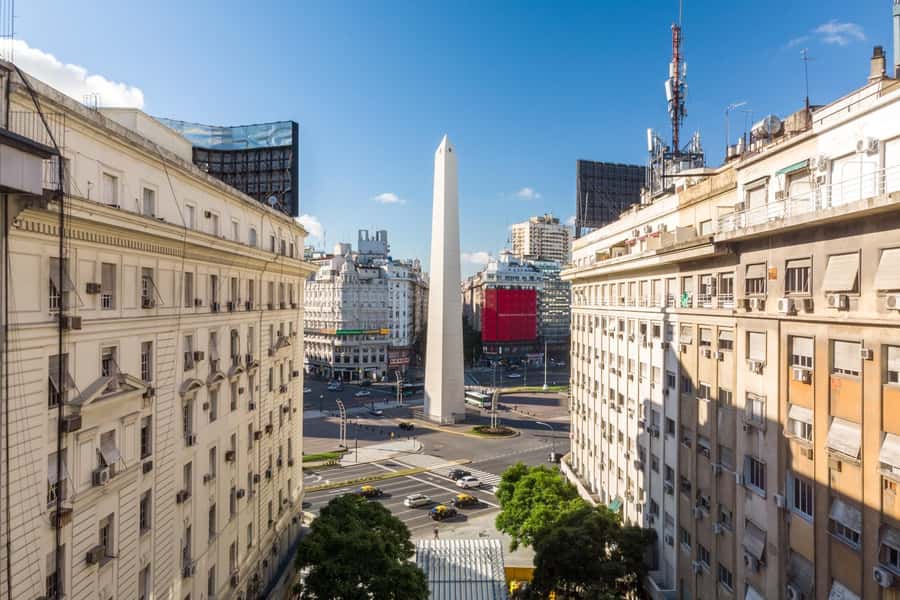
The route also includes 9 de Julio Avenue, one of the world’s widest boulevards. This stop may seem less directly connected to Jewish heritage, but it gives you a sense of the city’s scale and urban design. It also provides a visual break between the more focused religious and memorial sites.
At the Israeli Embassy Memorial, the guide discusses the 1992 attack and the people commemorated there. Alongside AMIA, this stop shows the painful history of attacks affecting Jewish institutions in Buenos Aires. The two memorial sites help you understand why public remembrance matters so strongly to the community.
You also visit Plaza General San Martín, a major public space tied to Argentina’s military and immigrant history. This broader context is useful because Jewish life developed within the larger story of Argentina as a country shaped by migration, national politics, and urban growth.
The 4-hour plan costs more of your day, but it gives you a much wider picture. I would choose it if you are new to Buenos Aires, want hotel pickup, dislike navigating city transfers, or prefer seeing how the Jewish story fits into the capital as a whole.
Comparing the 2-hour, 3-hour, and 4-hour options

The 2-hour tour is the most efficient choice. You visit the Old Jewish Quarter on foot, see Templo Libertad, pass the Jewish Museum, learn about the Holocaust and AMIA, and receive the guide’s full attention. Choose it if your schedule is tight or if you want an introduction before deciding how much more you wish to explore independently.
The 3-hour tour is the strongest middle ground. Museum entry adds objects and documents, while the walking time remains manageable. Since the 2-hour version does not include museum admission, the additional hour gives you a meaningful change in content rather than only a slower pace.
The 4-hour tour is the fullest option. You get the museum, private car transport, hotel pickup and drop-off, and the additional squares, avenue, and embassy memorial. It is the best choice for a first visit when you want convenience and a broader city tour, though it may feel too long if you mainly want the core Jewish Quarter.
The advertised price is $129 per person. Value depends on the option you select and the size of your private group. For a solo visitor or a small group, the price buys a licensed guide, a tailored conversation, and, on the longer option, private transportation. If you are traveling with family or friends, the private format becomes easier to justify because the cost is attached to a personal group experience rather than a seat on a large coach.
Food and drinks are not included. Plan to eat before or after the tour, especially if you choose the 4-hour version.
Guide quality and the private format
The strongest part of this experience is the guide’s ability to add human meaning to difficult material. The tour is offered in five languages, and the guide is licensed and assigned to your private group.
The feedback attached to the experience repeatedly praises the explanations and the personal approach. One guest described learning a great deal about Argentine Jewish history, while another highlighted the way Richard Shpuntoff connected historical facts with current politics and family experience. That is exactly the kind of guidance you want on a heritage route.
A private group also changes how you use your time. You can ask why a site matters, request more background on immigration, or spend longer at a memorial without worrying about a busload of people waiting. The guide can adjust the pace to suit your group, and you can contact support in advance if you have specific needs.
Still, your experience will depend on the individual guide and the questions you bring. Come prepared to engage. If you only want a list of dates and buildings, the personal format may feel more than you need. If you enjoy conversation and careful explanation, it is a major benefit.
Who should book this Buenos Aires heritage tour?
I would recommend it to first-time visitors who want historical context, Jewish travelers exploring family or cultural connections, and anyone interested in how Buenos Aires has responded to migration and political violence.
The 3-hour version suits museum lovers and people who want substance without spending half a day in a car. Families may also prefer it, since the museum gives younger visitors physical objects and images to focus on rather than a long series of exterior stops.
The 4-hour option is better for visitors with limited time in Buenos Aires. Hotel pickup and private transport remove much of the city-navigation work, while the extra stops provide a fuller sense of place.
I would not choose the 2-hour option if entering a synagogue or seeing the museum is essential. I would also skip the tour if you are not comfortable with Holocaust history and the details of terrorist attacks. This is a serious cultural experience, not a casual neighborhood walk.
Practical details that improve the day
Check your email the day before for the operator’s final information. Meet in front of Hotel Presidente at Cerrito 850 for the shorter tours, and remember that hotel staff are not part of the tour.
Wear walking shoes. Even though the walking distance is modest, uneven surfaces and steps can make the route less comfortable in thin soles. Bring weather protection because the tour runs in all conditions.
For the museum, carry your original passport if you are visiting from outside Argentina. The museum requires it for security. The 4-hour tour includes transport, but the 2-hour and 3-hour versions do not, so arrange your own way to the meeting point.
The tour allows free cancellation up to 24 hours before the start, and you can reserve now and pay later. Those terms help if your Buenos Aires schedule is still shifting, but check the final booking conditions when selecting your date.
Should you book it?
Book this tour if you want the Jewish history of Buenos Aires explained by a dedicated guide rather than pieced together from scattered plaques and quick internet searches. The AMIA discussion, Holocaust context, and personal style of guides such as Richard Shpuntoff give the route real weight.
My pick is the 3-hour museum option for the best balance of time and content. Choose the 4-hour plan if you want hotel pickup, private transport, and the Israeli Embassy Memorial and city landmarks. Take the 2-hour tour only if your schedule is tight and an exterior-focused introduction is enough.
At $129 per person, the experience is not a bargain city stroll. It is a specialized private tour with licensed guiding, and the value comes from the quality of explanation and the chance to ask your own questions. For visitors who care about memory, migration, religion, and modern Argentina, that personal attention is worth paying for.
FAQ
Where does the walking tour meet?
The meeting point is in front of Hotel Presidente at Cerrito 850, C1010 Ciudad Autónoma de Buenos Aires. Do not enter the hotel, since its staff is not informed about the tour.
Does the tour include entry to Templo Libertad or other synagogues?
No. Entry to synagogues is not included. The itinerary includes viewing historic sites and receiving explanations from the guide.
Which tour options include the Salvador Kibrick Jewish Museum?
Museum entry is included in the 3-hour and 4-hour options. It is not included in the 2-hour tour.
Do I need identification for the Jewish Museum?
Yes. Foreign visitors must present their original passport. Argentine visitors must present their national identity card.
Which option includes private transportation?
Only the 4-hour tour includes private car transportation, along with pickup and drop-off at your accommodation in Buenos Aires.
What languages are available?
The live guide service is available in English, Spanish, French, Italian, and Portuguese.
Latest additions in Buenos Aires
- Buenos Aires: 7 Hour Small Group “BA 101” Walk★ 5.0 · 3 reviews
- Unique Tigre and Delta Private Day Cruise Navegation★ 5.0 · 3 reviews
- Buenos Aires: Customizable City Tour in Polish★ 4.7 · 3 reviews
- Buenos Aires After Dark: A City Lights & Sunset Experience★ 5.0 · 3 reviews
- Tango Show at El Querandi with optional Dinner★ 4.2 · 3 reviews
- Velez Sarsfield Football Match★ 5.0 · 3 reviews
- Caminito, La Boca: vibrant neighborhood★ 5.0 · 3 reviews
- Café de los Angelitos – Traditional Night in Buenos Aires★ 4.8 · 3 reviews
Walking Tours, compared.
Nazis in Buenos Aires: a historical walking tour
Read our review →
La Docta Free Walking Tour “Córdoba La Antigua”.
Read our review →
Buenos Aires Walking Tour with Local Guide and Optional Rooftop
Read our review →
Browse the lists this tour appears in