
Reviewed · HISTORICAL TOURS
Bariloche: German Immigration and History Walking Tour
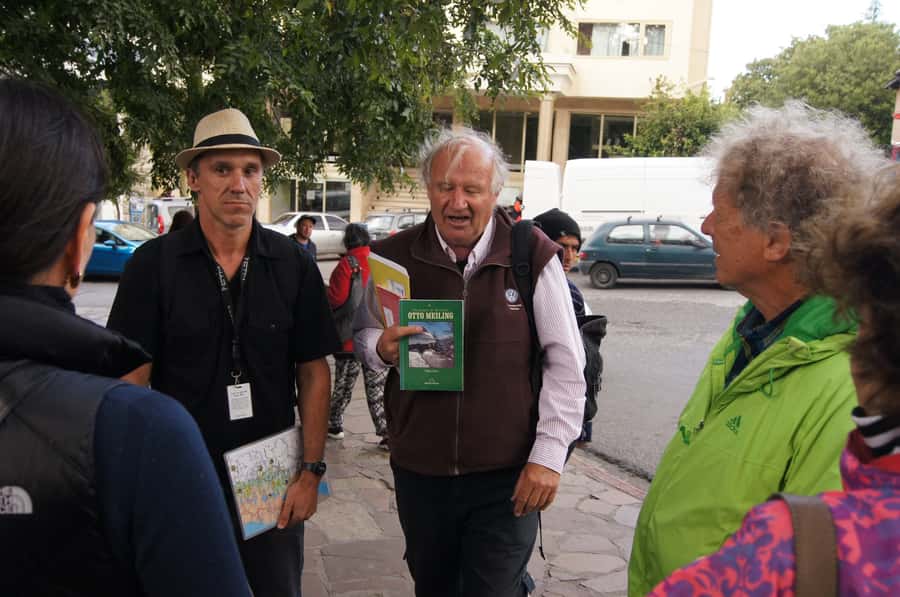
History hides in plain sight here. This 90-minute walk connects Bariloche’s German architecture and institutions with three distinct immigration waves, including the Nazi fugitives who arrived after World War II. I especially like the clear route through real locations, from the Civic Center to the German School and Erich Priebke’s former home. I also like the guide’s storytelling, particularly when Diego uses old photographs and cliffhangers to keep the group moving. The main drawback is the uphill walking, and a bilingual tour may leave less time for questions than an English-only outing.
At $41 per person, this is not a bargain-priced stroll. Still, the route covers about 1 kilometer and turns ordinary streets into evidence of Bariloche’s past. If you want to understand why the city looks and feels so different from other Argentine destinations, this tour offers useful context before or between outdoor activities.
In This Review
- Key points to know before booking
- Starting at Bariloche’s Civic Center
- The first German arrivals and Bariloche’s early identity
- The Bariloche Andean Club and national park connections
- The German School and the Sam Donaldson story
- Belgrano Square and the German neighborhood
- Erich Priebke’s former home
- Separating facts from Patagonia’s Nazi myths
- Diego’s guiding style and the bilingual format
- Is $41 good value for 90 minutes?
- Who should book this Bariloche history walk?
- Practical tips for a better hour and a half
- Should you book it?
- FAQ
- Where does the tour meet?
- How long is the tour?
- How far do you walk?
- Is the route uphill?
- What languages are available?
- Which immigration periods does the tour explain?
- Does the tour visit Erich Priebke’s former home?
- Can I cancel the booking?
Key points to know before booking
- Three German immigration waves: The tour explains German arrivals from the mid-19th century through the postwar period, separating established history from popular myths.
- Erich Priebke’s former home: You visit the house where the former Nazi officer lived before his extradition in 1994.
- The Sam Donaldson connection: The route includes the school where American journalist Sam Donaldson helped expose Priebke’s presence.
- A short but uphill route: The walk covers about 1 kilometer, though parts of the area are uphill.
- English and Spanish guiding: The guide speaks both languages, with Diego receiving especially strong praise for his English and presentation style.
- A useful city introduction: Civic buildings, clubs, schools, squares, and houses become part of the story instead of isolated sightseeing stops.
Starting at Bariloche’s Civic Center
Meet by the door of the tourist information office in the Bariloche Civic Center square. This is a practical meeting point because it is central and easy to identify, though the square can be busy with normal city activity. Arrive a little early so you can locate the correct door and settle in before the group sets off.
The Civic Center is more than a convenient starting place. It helps frame the tour’s main idea: Bariloche’s public image was shaped by European influences, local institutions, tourism, and later political controversy. The guide uses the buildings and open square to introduce the town’s development before leading you toward the German neighborhood.
I like this approach because it avoids treating German influence as a vague architectural theme. You begin with the civic heart of Bariloche, then follow the connections into schools, clubs, parks, and private homes. The route gives you something concrete to look at while the guide explains the larger story.
More Historical Tours in Bariloche:
- Indigenous People of Patagonia History Tour
★ 5.0 · 8 reviews - Maria Fumaça – Wines and History
★ 4.0 · 242 reviews - Nazis in Buenos Aires: a historical walking tour
★ 4.9 · 193 reviews
The first German arrivals and Bariloche’s early identity
A central part of the walk is the explanation of the three main waves of German immigration to Argentina and Bariloche. The first stretches back to the mid-19th century. The guide then moves through later arrivals, ending with the postwar Nazi presence that has shaped so many stories about German communities in Patagonia.
This structure is one of the tour’s strongest features. It prevents a common mistake: assuming that every German connection in Bariloche has the same origin or political meaning. Long-established families, cultural institutions, ordinary migration, and Nazi fugitives belong to different chapters.
You will hear how German connections became visible through local institutions and architecture. The route points to places such as the Bariloche Andean Club and the administration of Nahuel Huapi National Park. These stops show how the town’s German links were not limited to private homes or wartime rumors.
The guide also discusses what is fact and what is legend. That matters in Bariloche, where stories about hidden Nazi networks and secret German activity in Patagonia can grow quickly. The tour does not simply repeat dramatic claims. It closes with a discussion of theories about German presence in Patagonia, giving you a chance to consider how myth and documented history overlap.
The Bariloche Andean Club and national park connections
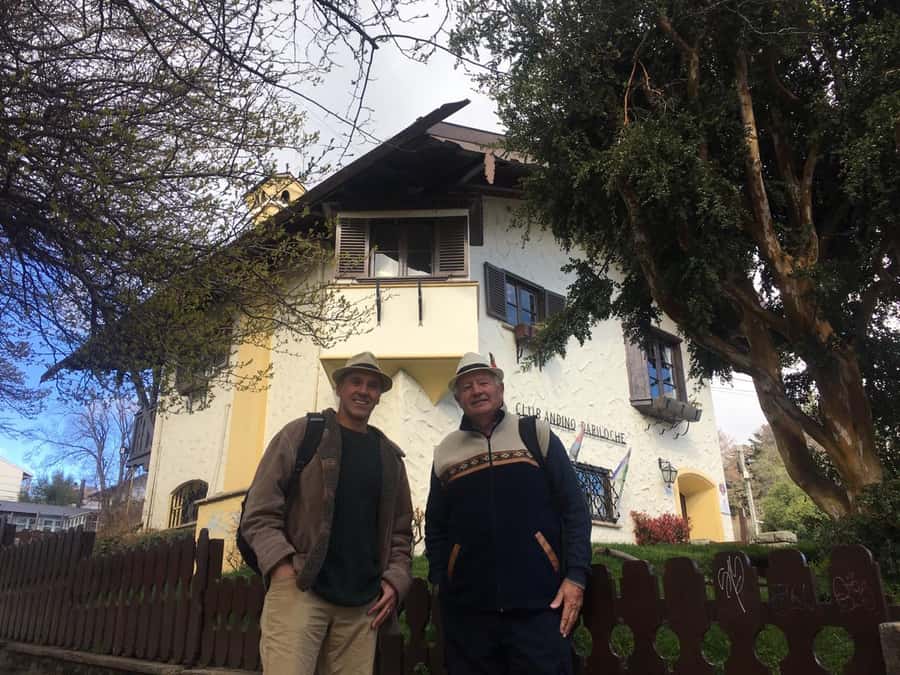
The Bariloche Andean Club and the Nahuel Huapi National Park administration are important stops because they broaden the subject beyond wartime figures. You get a look at the institutions connected with the town’s growth and outdoor identity.
The Andean Club points toward Bariloche’s long relationship with mountain recreation and organized exploration. The national park administration helps explain the official framework around Nahuel Huapi, one of the defining features of the area.
The tour does not turn these sites into long indoor visits. Instead, the guide stops at representative locations, explains their role, and then continues walking. That keeps the pace active. Several people appreciated this stop-and-go format because it offered a steady change of scene without creating a tiring full-day history lecture.
Bring your attention to the buildings and their setting. The value is not only in what you hear. You are learning to read Bariloche’s streets, institutions, and design as clues to the city’s past.
The German School and the Sam Donaldson story
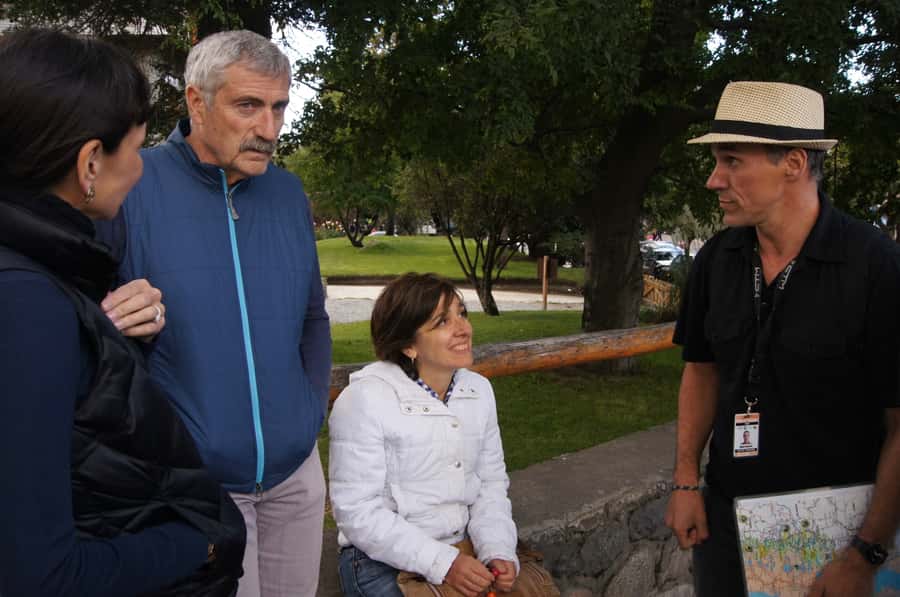
The German School is one of the most memorable stops because it links everyday education with one of the tour’s most discussed episodes. This is the school where Erich Priebke was intercepted by American journalist Sam Donaldson.
That moment gives the tour a strong narrative turn. The earlier sections deal with migration, institutions, and cultural influence. At the school, the story becomes more immediate: a public figure with a hidden past was located in Bariloche, and an American journalist’s investigation helped bring international attention to him.
The guide explains the setting and the events surrounding Priebke’s exposure. You should expect a serious subject, but the presentation is designed to remain clear and engaging rather than sensational. Several people praised Diego for treating difficult material with care while still telling the story in a way that held their attention.
If you have already read about Nazi fugitives in Argentina, this stop may fill in the local details. If you know little about the subject, it provides a readable introduction without requiring a long academic background.
More Walking Tours in Bariloche:
- Buenos Aires Hop-On Hop-Off Bus, Free Walking Tours & Discounts
★ 4.5 · 2,218 reviews - Buenos Aires: La Boca Guided Walking Tour in English
★ 4.8 · 1,587 reviews - Buenos Aires: Personalized 2 to 8-Hour Private Walking Tour
★ 4.7 · 149 reviews - La Docta Free Walking Tour “Córdoba La Antigua”.
★ 4.7 · 104 reviews
Belgrano Square and the German neighborhood
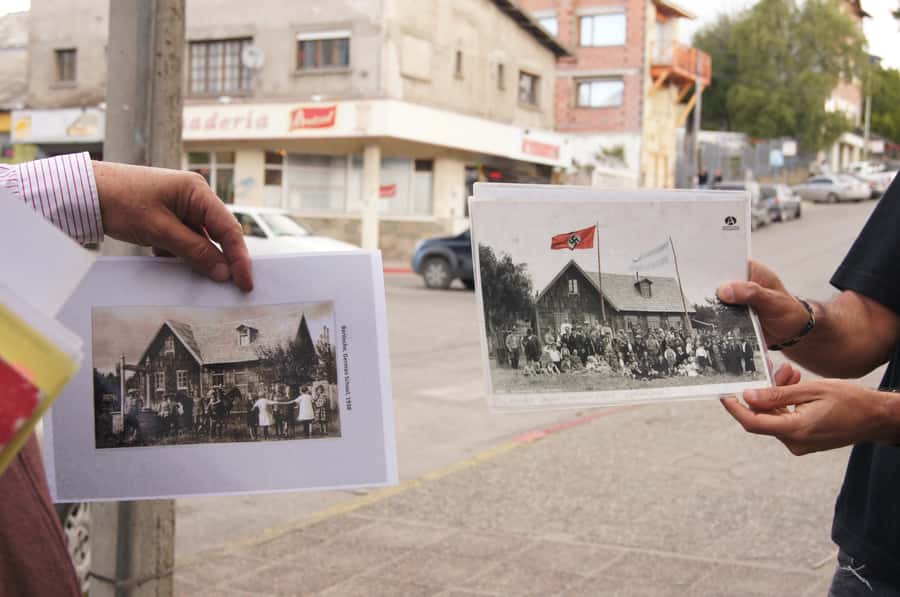
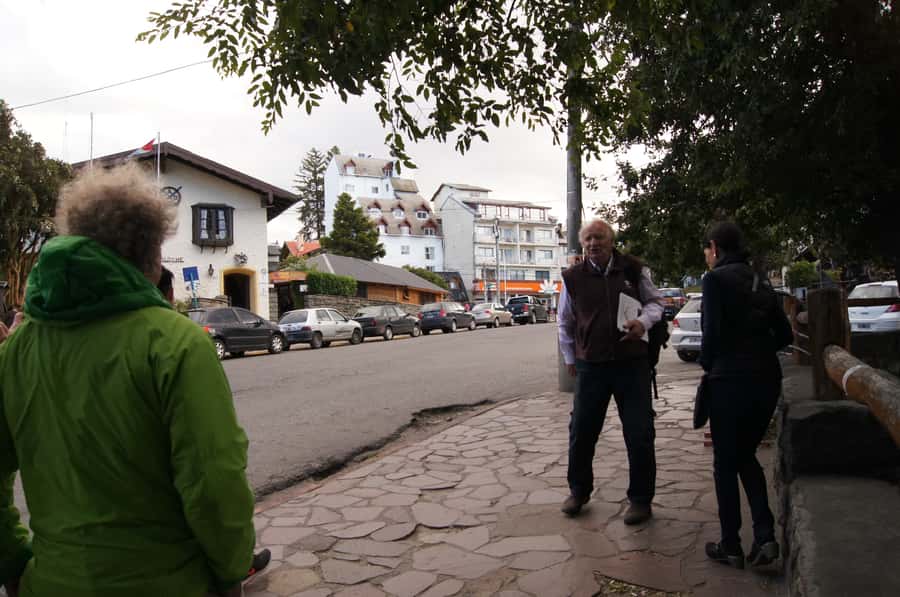
The route continues through Belgrano Square and nearby streets, where the guide points out different house styles and German influences. This part of the walk is useful because it puts the subject at street level. You are not just hearing about immigration in the abstract. You are looking at the built environment where families and institutions left their mark.
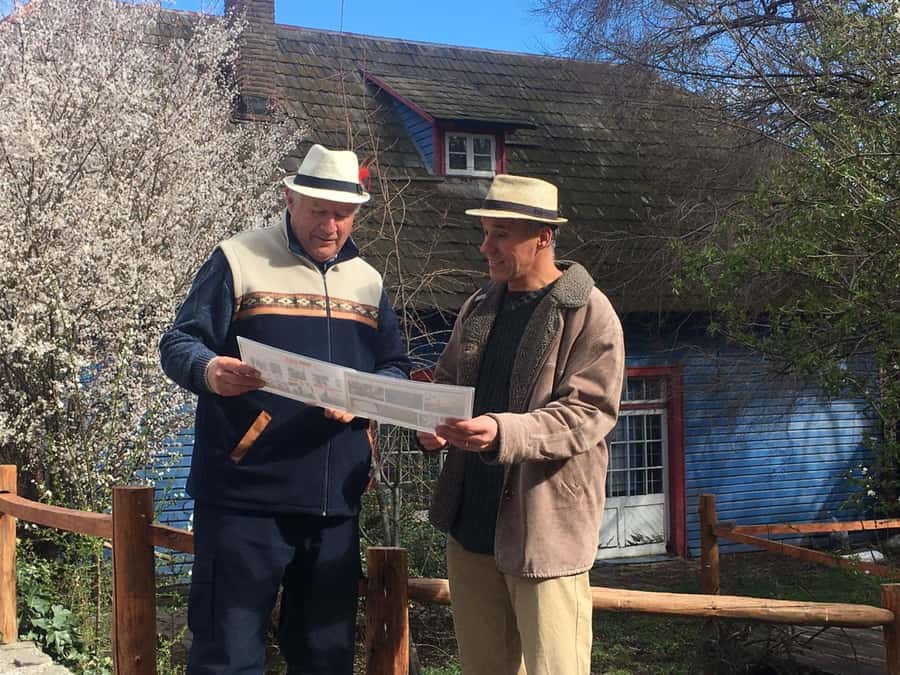
The houses are not presented as proof of one single story. Instead, their styles form part of a wider discussion about German settlement and Bariloche’s changing identity. The guide’s use of old photographs is especially helpful here. Seeing earlier views beside the streets in front of you makes the city’s development easier to follow.
This is also where the walking format earns its price. A standard city tour might point out the main square and stop there. This route takes you farther into the neighborhood, where ordinary houses and less famous buildings carry much of the story.
Expect a few uphill sections. One person described the area as mostly uphill, though still manageable. The total route is only about 1 kilometer, but short distances in Bariloche are not always flat. Wear comfortable shoes and save this activity for a time when you are happy to walk at a moderate pace.
Erich Priebke’s former home
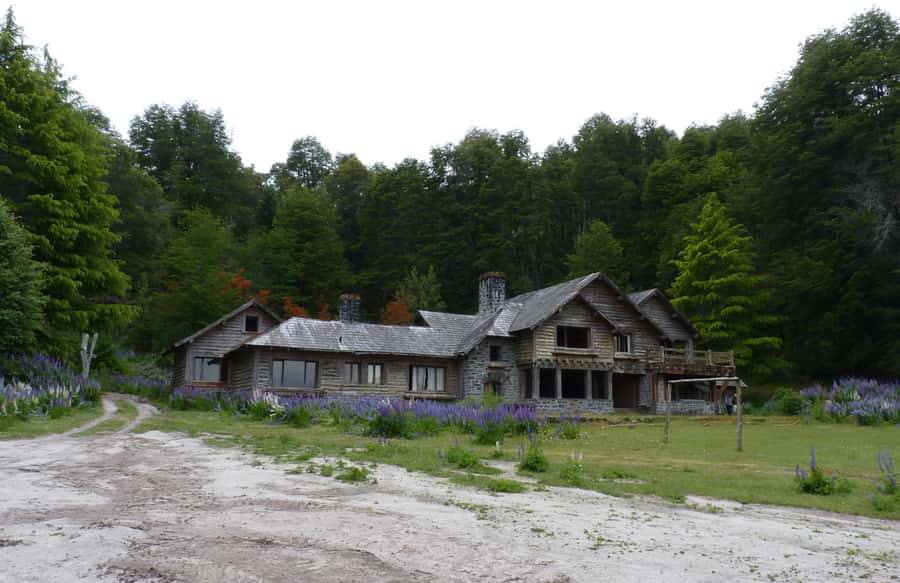
The house where Erich Priebke lived before his extradition in 1994 is the tour’s most provocative stop. Seeing the address gives physical scale to a story that can otherwise feel distant or abstract.
Priebke was a former Nazi officer who lived in Bariloche for years before his presence was uncovered. The tour explains how he was located and what followed, including the role of Sam Donaldson and the later extradition.
The stop should be approached with care. This is not a monument celebrating Priebke, and the point is not to turn a private home into a curiosity. Its importance comes from the uncomfortable contrast between an ordinary-looking residence and the past of the man who lived there.
I appreciate that the route places Priebke’s story within the larger sequence of German immigration. That context matters. Without it, you could leave with the mistaken idea that Bariloche’s German identity began with Nazi fugitives. The three-wave framework shows that the Nazi period was one chapter, not the whole story.
Separating facts from Patagonia’s Nazi myths
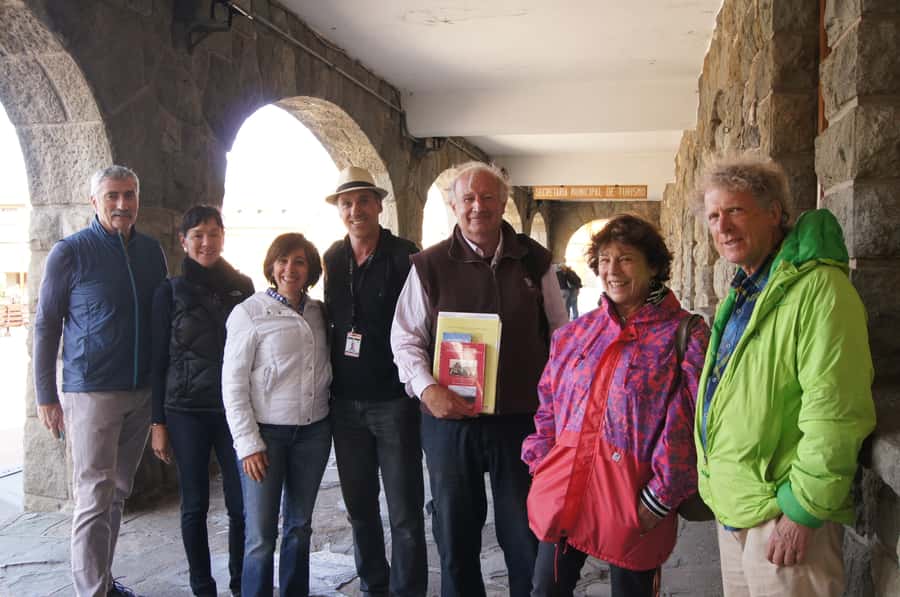
The final discussion turns to theories about German presence in Patagonia. This is a smart way to end the tour. By this point, you have seen actual institutions, houses, public spaces, and the school linked with Priebke. You can better judge the difference between a documented local connection and a dramatic rumor.
Bariloche has long attracted stories about escaped Nazi officers, secret communities, hidden bases, and other claims about German activity in Patagonia. The guide addresses these ideas rather than ignoring them, but the tour’s stated purpose is to examine reality and myth.
That balance is important for anyone interested in World War II history. You will get a more useful experience if you arrive ready to ask questions instead of expecting every rumor to be confirmed. The guide’s role is strongest when he connects a famous story to a specific place and then explains what can and cannot be established.
The tone also makes this suitable for a mixed group. It is serious, but not grim from start to finish. Diego has been praised for using suspense, old photographs, humor in moderation, and short pauses to keep the subject approachable.
Diego’s guiding style and the bilingual format
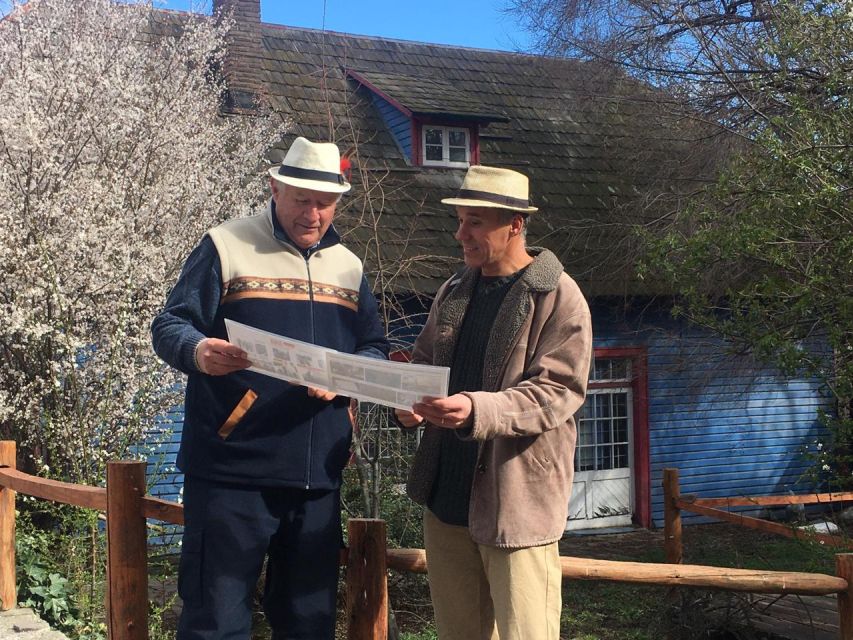
Diego is the guide most often associated with this experience, and his presentation is a major reason the tour receives such strong marks. He speaks English and Spanish well, answers questions as the walk continues, and uses a storytelling style rather than simply reciting dates.
One particularly effective technique is leaving a question or unresolved detail before moving to the next location. That gives the walk a clear narrative rhythm. You are not standing in one place for 90 minutes while someone talks at you. You move through Bariloche while the story unfolds.
His ability to handle different group sizes is also useful. A larger group can make a city walk feel impersonal, but the guide has been praised for making people feel included and for answering questions from different parts of the group.
There is one practical point to watch. The tour can be bilingual, even when you book expecting English. That may mean the total presentation takes longer or that question time is shorter. Some English-speaking participants still found the experience excellent, but if you want a fully English-only tour, confirm the language arrangement before booking.
One comment referred to Pedro as the guide, so the exact guide may vary by departure. Diego appears often in the feedback, but you should not assume he will lead every scheduled walk.
Is $41 good value for 90 minutes?
At $41 per person, the tour costs more than a casual free walk around the Civic Center. Its value depends on how much you want interpretation rather than simple sightseeing.
You are paying for a focused subject, a live guide, a planned 1-kilometer route, and access to locations that make the history easier to understand. The German School, Belgrano Square, the former Priebke residence, the Andean Club, and the national park administration work together as a connected lesson.
I would call it fair value for history-minded visitors, especially if you like asking questions and want more than a general city introduction. It may feel expensive if you mainly want architecture or a quick orientation, since the walk lasts only 90 minutes and does not include admission to attractions.
The experience is also a useful change of pace from Bariloche’s outdoor activities. After time on the lake or in the mountains, a short urban history walk gives you a different way to understand the city. Several people specifically liked using it between outdoor plans.
Free cancellation up to 24 hours before the start and the option to reserve now and pay later make the booking less rigid. Those terms are useful when weather or mountain plans may change, but the main value still comes from the guide and the subject, not from the booking flexibility.
Who should book this Bariloche history walk?
I would recommend it most strongly to:
- History fans interested in German migration, postwar Argentina, and Nazi fugitives.
- First-time visitors who want to understand Bariloche’s architecture and cultural background.
- English-speaking visitors who appreciate a guide comfortable in both English and Spanish.
- Curious walkers who prefer several short stops to one long lecture.
- People with a spare afternoon between lake, mountain, or park excursions.
You may want to skip it if steep streets are a serious problem for you, if you dislike bilingual guiding, or if your interest is limited to Bariloche’s natural scenery. The tour is short, but it is not a flat, purely scenic stroll.
Practical tips for a better hour and a half
Wear shoes with good grip and expect uphill sections. The total distance is modest, yet the slope can make the walk feel more demanding than the number suggests.
Bring a way to take notes if the subject interests you. The tour covers several historical periods, named locations, and theories in a short time. The old photographs and street views help, but a few written reminders will make later research easier.
Keep questions for the stops rather than waiting until the end. The guide usually answers as the walk proceeds, and a bilingual format may leave limited time afterward.
If English is important to you, confirm the departure language. The listed languages are English and Spanish, but the experience may be conducted in both at once.
Plan it early in your Bariloche stay if possible. The tour can give the Civic Center, local architecture, schools, clubs, and neighborhoods more meaning during the rest of your visit.
Should you book it?
Book this tour if you want the story behind Bariloche’s German connections, not just photographs of chalet-style houses. The route is short, the subject is unusual, and the guide’s storytelling turns scattered locations into one coherent account.
The price is a little high for 90 minutes, and the uphill streets plus bilingual format are real considerations. Still, Diego’s clear English, strong command of the subject, old photographs, and careful treatment of the Nazi period make this a worthwhile choice for history-focused visitors. If you have room in your schedule, I would book it, especially before setting off to explore the wider Lake District.
FAQ
Where does the tour meet?
The meeting point is in Bariloche Civic Center square, by the door of the tourist information office.
How long is the tour?
The walking tour lasts 90 minutes.
How far do you walk?
The route covers about 1 kilometer.
Is the route uphill?
Yes. Parts of the area are uphill, so comfortable walking shoes are advisable.
What languages are available?
The tour is offered in English and Spanish.
Which immigration periods does the tour explain?
It covers three main waves of German immigration to Argentina and Bariloche, from the mid-19th century through the postwar period.
Does the tour visit Erich Priebke’s former home?
Yes. The route includes the house where Erich Priebke lived before his extradition in 1994.
Can I cancel the booking?
You can cancel up to 24 hours in advance for a full refund. You can also reserve now and pay later.
Latest additions in Bariloche
- Bariloche: Sailing tour on Nahuel Huapi Lake★ 5.0 · 3 reviews
- Bariloche: Circuito Chico and Cerro Catedral★ 5.0 · 3 reviews
- Bariloche: Tour to Circuito Chico + Optional: Arrayanes★ 4.2 · 3 reviews
- Bariloche: Cerro Tronador and Ventisquero Negro Tour★ 4.3 · 4 reviews
- Bariloche: Puerto Blest and Cascada de los Cántaros (Waterfall of the Cantaros)★ 3.1 · 5 reviews
- Bariloche “Small Circuit” with Chairlift Campanario Hill★ 5.0 · 5 reviews
- Crossing to Puerto Blest and Cascada de los Cántaros★ 4.4 · 5 reviews
- Bariloche: Cerro Catedral guided tour★ 4.6 · 5 reviews
Historical Tours, compared.
Nazis in Buenos Aires: a historical walking tour
Read our review →
Historical Guided Tour with Street Food & Drinks
Read our review →
Recoleta Cemetery – Small Group Tour of History & Secrets
Read our review →
Browse the lists this tour appears in