
Reviewed · WALKING TOURS
La Docta Free Walking Tour “Córdoba La Antigua”.
Old Córdoba begins in a sunny square. La Docta’s Córdoba La Antigua tour links colonial churches, civic buildings, museums, and local stories in a useful first look at the city. I especially like the pay-what-you-wish format and the mix of major landmarks with unusual details such as Córdoba’s narrowest building. The main point to consider is the pace: 150 minutes on foot can feel long in hot weather, so comfortable shoes and water matter.
I also like that the tour finishes at Patio Olmos, a practical place to continue exploring or take a break. Guides such as Tomas, Tommy, Thomas, Valeria Velez, and Aldy have been praised for their humor, energy, clear English, and ability to get a group talking. The one catch is that the 0.50 USD booking deposit is not the full cost. You decide the final tip at the end, so plan to pay according to the quality of the experience.
In This Review
- Key points to know before you go
- Why this is a smart first walk in Córdoba
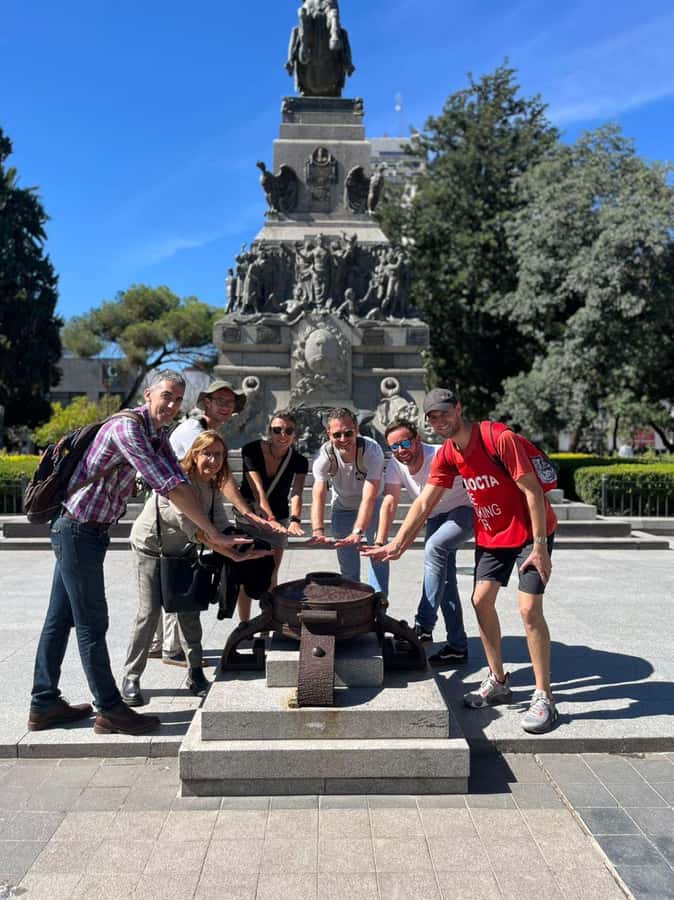
- Starting beside the statue in Plaza San Martin
- Manzana Jesuítica and the UNC Historical Museum
- Cabildo and Córdoba’s civic center
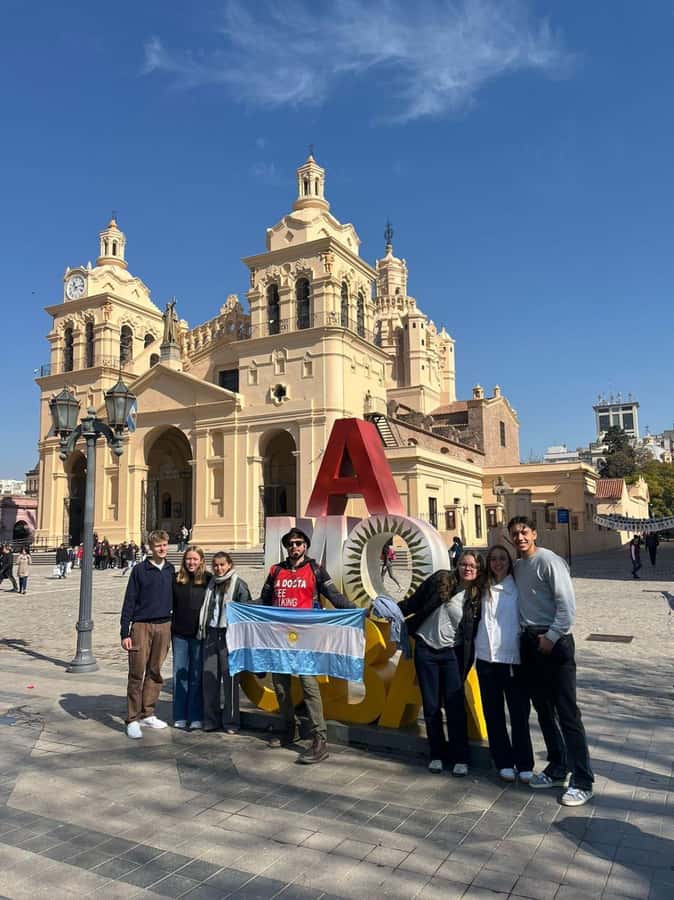
- Córdoba Cathedral and Plaza San Martin
- The Jesuit Crypt beneath the modern city
- The Marquis of Sobremonte’s house
- The Society of Jesus Church and the Jesuit heart of Córdoba
- Monserrat College and Córdoba’s education story
- The unusual details: a narrow building and the Museum of Memory
- Local sounds, tastes, and the human side of the walk
- What the 0.50 USD deposit really means
- Timing, walking comfort, and museum costs
- Who will get the most from Córdoba La Antigua
- Should you book this Córdoba walking tour?
- FAQ
- How long does the Córdoba La Antigua tour last?
- Where does the tour begin?
- Where does the tour finish?
- What language is the tour offered in?
- What is included in the tour?
- Are museum admission fees included?
- How much does the tour cost?
- What should I bring?
Key points to know before you go
- The route covers Córdoba’s colonial center in 150 minutes, beginning at Plaza San Martin and ending at Patio Olmos.
- You see major landmarks in one walk, including the Cathedral, Cabildo, Jesuit Crypt, Society of Jesus Church, and Monserrat College.
- The tour mixes architecture with local life, including planned surprises involving local sounds and tastes.
- English and Spanish tours are available, with a live guide leading the walk.
- The final price is your choice, although a 0.50 USD deposit is required when you reserve.
- Museum admission is extra, so you should not assume every interior visit is included.
Why this is a smart first walk in Córdoba
Córdoba can feel scattered at first. Its most important buildings sit within the central area, but their stories reach across colonial religion, education, government, memory, and modern Argentine life. A guided walk gives you a frame for the city before you start exploring on your own.
This tour is especially useful on your first day. You get the basic map of the historic center, hear the main events in Córdoba’s development, and finish near Patio Olmos, one of the city’s useful central landmarks. Afterward, you can return to the buildings that caught your attention instead of guessing which ones deserve more time.
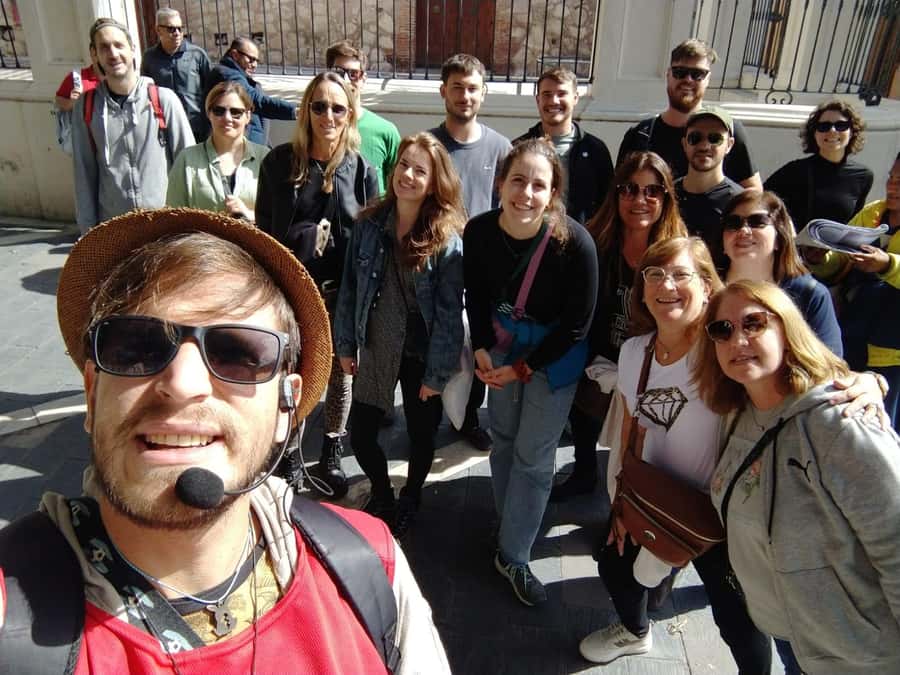
The tone also appears to be social rather than stiff. Guides use games, humor, and questions to help people mix. Valeria Velez was praised for adding games and helping the group socialize, while Tommy was described as funny, energetic, and willing to speak with people in their native languages. That matters if you are traveling alone or want a friendly start in a new city.
The route lasts two and a half hours, not the shorter one-hour orientation some city walks offer. You should expect steady walking and several stops, with explanations often doing as much work as the buildings themselves.
More Walking Tours in Argentina:
- Buenos Aires Hop-On Hop-Off Bus, Free Walking Tours & Discounts
★ 4.5 · 2,218 reviews - Buenos Aires: La Boca Guided Walking Tour in English
★ 4.8 · 1,587 reviews - Nazis in Buenos Aires: a historical walking tour
★ 4.9 · 193 reviews
Starting beside the statue in Plaza San Martin
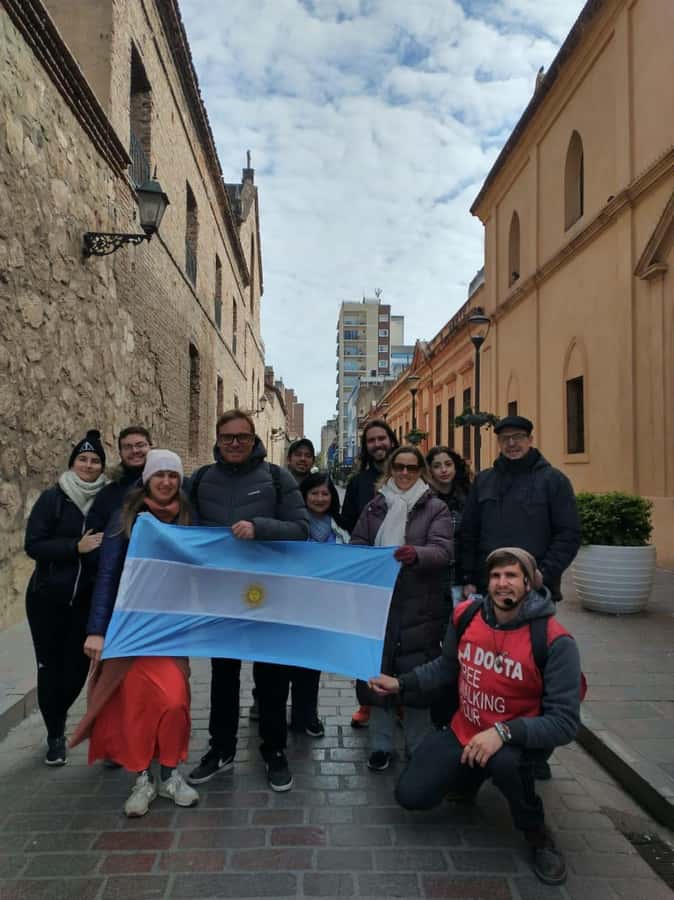
The meeting point is next to the statue in Plaza San Martin. Look for the guide wearing a red T-shirt. This simple clothing detail is useful in a busy central square, where finding a group can otherwise take time.
Plaza San Martin is a fitting starting point because it places you in the middle of Córdoba’s old civic and religious center. From here, the guide can explain how the city developed from its colonial foundation to the present day. You begin with the broad story before moving into the buildings that give that story a physical shape.
Arrive ready to walk rather than expecting a bus or a ride between stops. Bring water, wear comfortable shoes, and allow yourself enough time to find the red-shirted guide.
Manzana Jesuítica and the UNC Historical Museum
The first major stop is the University of Córdoba’s Historical Museum in the Jesuit Block, known locally as the Manzana Jesuítica. The site is one of the clearest places to understand the importance of the Jesuits and education in Córdoba.
The tour allows about 15 minutes here for a photo stop and guided explanation. That is enough for an introduction, but not enough for a full museum visit. If the university complex interests you, you may want to return later and spend more time inside.
This is also where the tour begins to connect architecture with people. You are not only looking at old walls. You are hearing how institutions shaped the city and why Córdoba became an important center for learning.
The broader tour also includes the Museum of the UNC among its historical points of interest. Admission to museums is not included, so ask your guide what can be entered during the walk and what is best saved for a separate visit.
Cabildo and Córdoba’s civic center
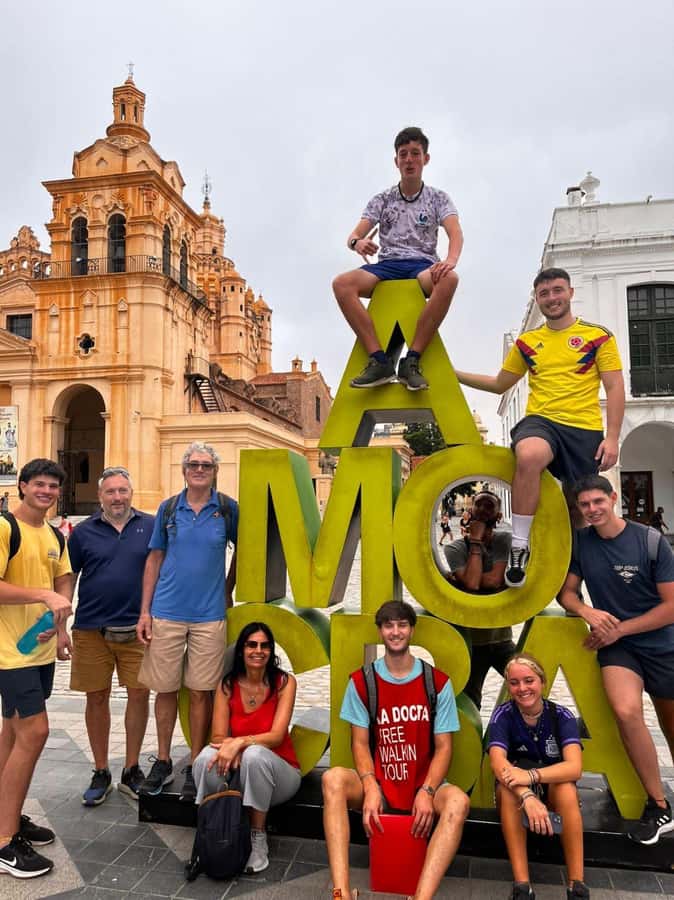
The Cabildo follows, with about 10 minutes set aside for a visit. This building represents the city’s colonial administration and gives you a counterweight to the religious sites nearby.
The value of this stop comes from the contrast. The Jesuit Block shows the influence of religious orders and education. The Cabildo shows civic authority. Together, they help you see the old center as a working colonial city, not just a collection of attractive facades.
Ten minutes is a brief stop, so expect the guide to focus on key facts and visual details. If you like political or architectural history, note the building’s location and return later if the interior is open and admission suits your plans.
A completely different sort of day in Argentina:
- El Calafate: Perito Moreno Glacier & Optional Boat Cruise
★ 4.7 · 2,586 reviews - Buenos Aires: Piazzolla Tango Show with Optional Dinner
★ 4.4 · 2,122 reviews - Buenos Aires: City Highlights Guided Tour with Transfer
★ 4.7 · 1,946 reviews - Buenos Aires: Hop-On Hop-Off City Bus Tour
★ 4.2 · 1,855 reviews
Córdoba Cathedral and Plaza San Martin
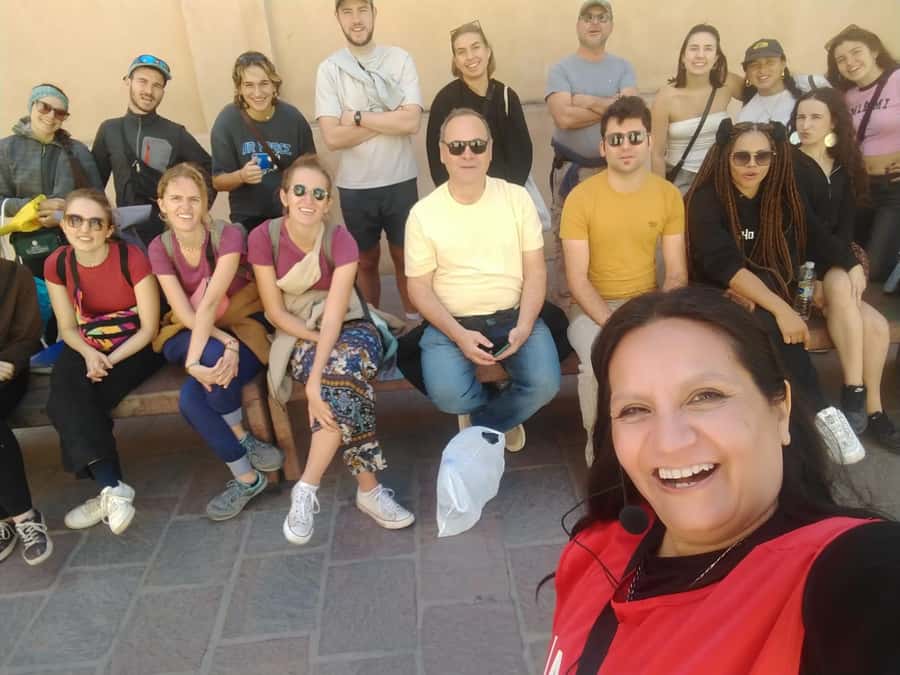
The Cathedral of Córdoba, dedicated to Nuestra Señora de la Asunción, is another short stop of around 10 minutes. Its position near Plaza San Martin makes it one of the easiest places to connect the city’s public square with its religious life.
The guide’s job here is to point out what you might miss while walking past. Look closely at the exterior details and listen for the explanation of how the church fits into Córdoba’s colonial story. The tour does not promise a long interior visit, so keep your expectations realistic.
This is one of the route’s strongest stops for first-time visitors because it gives you a visual anchor. Later, when you walk through the center again, you will recognize the Cathedral and understand its place in the old city.
The Jesuit Crypt beneath the modern city
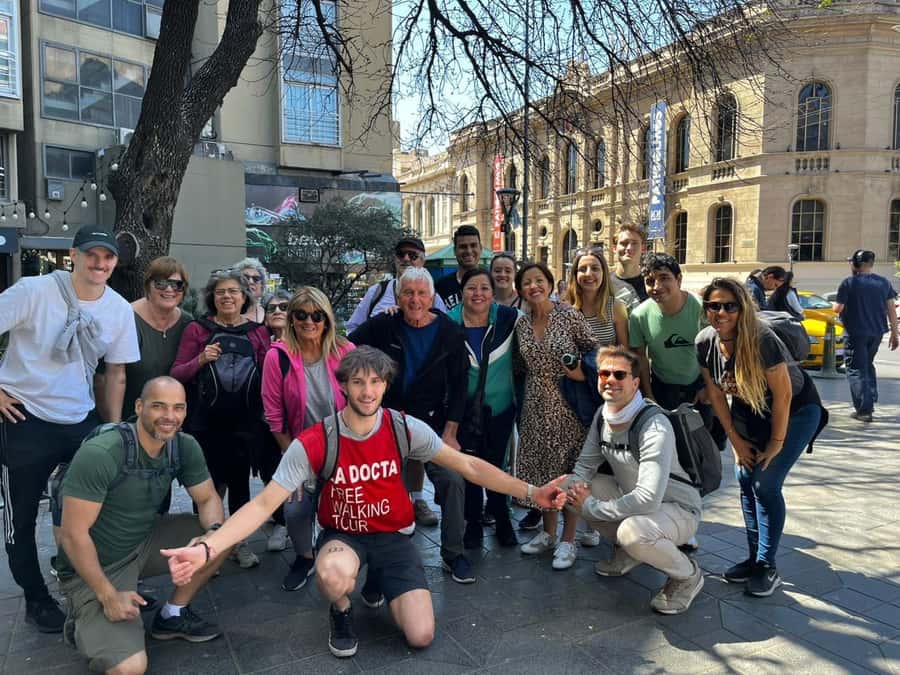
The Jesuit Crypt adds a different kind of stop. Instead of a grand facade, you get a more enclosed historic space connected with Córdoba’s Jesuit past. The planned visit lasts about 10 minutes.
A crypt can be more atmospheric than a large church, but it may also feel tight and less straightforward for anyone who prefers open spaces. The guide’s explanation is important here, since the meaning of the site may not be obvious from a quick look.
This stop also reinforces one of the tour’s useful themes: Córdoba’s past is not confined to monumental buildings. Older layers can sit below the streets and beside modern city life.
The Marquis of Sobremonte’s house
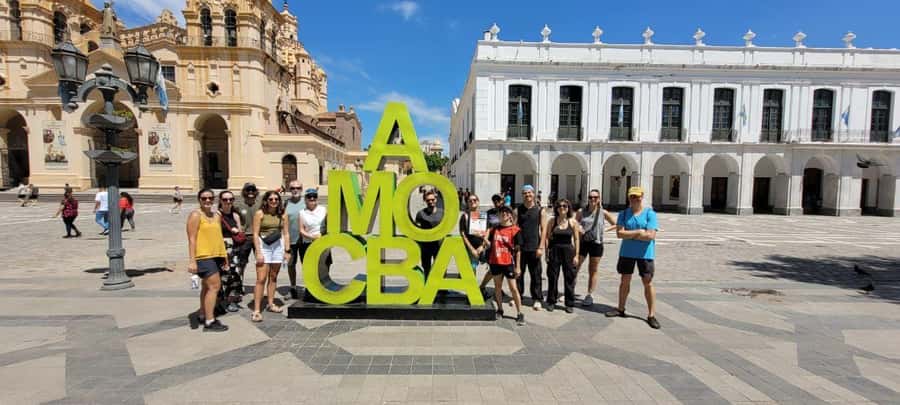
The Provincial Historical Museum housed in the former residence of the Marquis of Sobremonte offers a look at domestic and political life. The visit is scheduled for about 10 minutes.
A former residence can tell you something a church cannot. You get a sense of how a powerful colonial figure lived and how private space connected to public authority. The short time here means you will receive an overview rather than a detailed room-by-room museum tour.
Admission is not included, so treat this as an introduction. If the house appeals to you, return with enough time to examine the exhibits properly. The walking tour helps you decide where your extra time will have the most value.
The Society of Jesus Church and the Jesuit heart of Córdoba
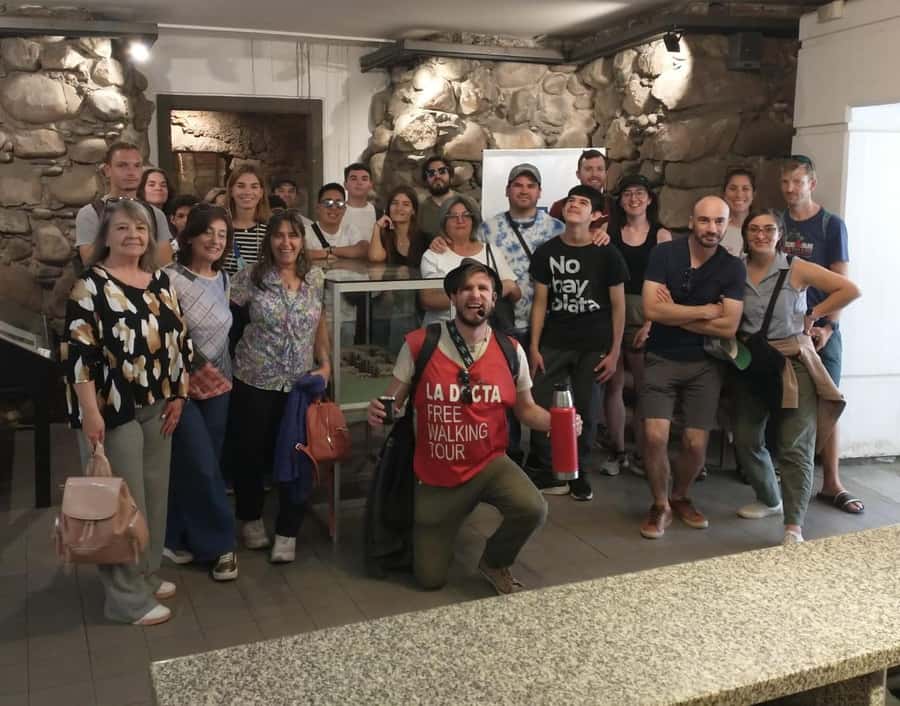
The Society of Jesus Church receives about 15 minutes, the longest planned stop on the route. That extra time makes sense. The church is central to understanding the Jesuit presence in Córdoba and the character of the surrounding Jesuit Block.
This is a good place to slow down and study the workmanship. One participant with an interest in masonry singled out the old brickwork and archways around Córdoba. You do not need specialist knowledge to appreciate those details, but a guide can help you notice how materials and construction differ from newer buildings.
The church also gives the tour a strong architectural moment after several civic and museum stops. If you enjoy old religious buildings, this may become the place you most want to revisit.
Monserrat College and Córdoba’s education story
The National College of Monserrat is scheduled for about 10 minutes. Along with the UNC Historical Museum and Manzana Jesuítica, it gives the tour an education thread that runs through the city center.
You will learn how Córdoba’s institutions helped shape local culture and public life. The stop works well beside the Jesuit sites because it shows that the city’s educational identity is not an isolated museum theme. It remains part of the way Córdoba presents itself.
Again, the timing is brief. You should expect an exterior explanation or a concise visit rather than a long academic tour. That is useful for orientation, but anyone fascinated by the college should plan a separate return.
The unusual details: a narrow building and the Museum of Memory
Not every stop is a grand church or official building. The tour also points out Córdoba’s narrowest building, an unusual detail that helps break up the larger historical narrative.
Small curiosities like this can be valuable because they make a walking route feel tied to the actual streets. You are not simply moving from one famous monument to another. You are also being shown the odd corners and visual surprises that are easy to miss alone.
The Museum of Memory is another significant part of the city’s story. The supplied route information names it among the places you will discover, while the timed itinerary does not give it a separate visit length. Expect the guide to place it within the wider account of Córdoba’s people and recent past, rather than assume a full museum visit.
That distinction matters. Museums require time, and admission is not included. If the Museum of Memory is a priority, ask the guide when you can visit it properly and allow a separate block in your schedule.
Local sounds, tastes, and the human side of the walk
The tour promises planned surprises involving local sounds and tastes. The exact format is not specified, so I would treat these as added touches rather than a meal or formal food tour.
They do, however, point to a good idea: a city is more than dates and facades. Music, everyday sounds, and regional flavors can make Córdoba easier to remember. The guide’s personality matters here, and the feedback about Tomas, Tommy, Thomas, Valeria, and Aldy is consistently strong.
Several descriptions emphasize humor, energy, friendliness, and clear explanations. One guide was praised for focusing on the critical moments of Córdoba’s history. Another was singled out for answering questions about the city, country, and people. That suggests the experience works best when you participate, ask questions, and respond to the social side of the group.
The English standard appears to be strong for international visitors. Spanish is also offered, so you can choose the language that lets you follow the historical details most easily.
What the 0.50 USD deposit really means
The advertised 0.50 USD price needs careful reading. It is a booking deposit, not the entire cost of the tour. The guide’s fee is decided by you at the end, using the pay-what-you-wish model.
That format can offer excellent value. You reserve a place for almost nothing, receive two and a half hours with a local guide, and then pay based on the quality and usefulness of the experience. It also gives the guide an incentive to keep the walk lively and informative.
The tradeoff is that you need to budget for a final payment. Do not arrive thinking the tour costs only 0.50 USD. The deposit is required to book, and the final amount is left to your judgment.
For price-conscious visitors, this is a strong way to get an introduction to Córdoba. For anyone who prefers a fixed total price, the open-ended tip may feel less comfortable. I would decide in advance what a worthwhile two-and-a-half-hour guided walk is worth to you.
Timing, walking comfort, and museum costs
You will be on foot for 150 minutes, moving through the central area with stops along the way. The route is not described as accessible by vehicle, and the instructions specifically recommend comfortable shoes and drinks.
Weather can affect the experience. One person enjoyed the tour but had poor weather, which is a reminder that an outdoor walk depends on the day. In warm conditions, water and light clothing will make the route easier. In rain or cold, bring suitable protection because much of the experience takes place outside.
The timed stops range from 10 to 15 minutes. That structure keeps the tour moving and gives you a broad introduction, but it also limits your time inside museums. Since admission is not included, you should keep extra money and time for any building you want to explore at length.
Cancellation is flexible: you can cancel up to 24 hours in advance for a full refund. You can also reserve now and pay later, which helps if your Córdoba schedule is still changing.
Who will get the most from Córdoba La Antigua
I would recommend this tour to first-time visitors who want a clear introduction before exploring alone. It also suits solo travelers, couples, and small groups who enjoy meeting people from different countries.
History fans will appreciate the concentration of colonial sites, while architecture fans will have plenty to inspect in churches, brickwork, arches, and old civic buildings. The unusual building detail and local sound and taste surprises keep the walk from becoming a list of dates.
The tour may be less suitable if you dislike group activities, need long museum visits, or prefer to move at your own pace. The guide controls the rhythm, and the route covers many places in a limited period.
Should you book this Córdoba walking tour?
Book it if you want a lively first look at Córdoba’s old center, especially at a low upfront cost. The combination of Plaza San Martin, the Cathedral, Cabildo, Jesuit sites, Sobremonte residence, Monserrat College, and less obvious city details gives you a useful foundation.
I would book with three expectations: you will walk for 150 minutes, museum entry costs extra, and the final fee is your choice rather than a fixed 0.50 USD ticket. If those terms suit you, the strong guide feedback, social atmosphere, and broad route make La Docta Free Walking Tour a sensible start to Córdoba.
FAQ
How long does the Córdoba La Antigua tour last?
The tour lasts 150 minutes, or two and a half hours.
Where does the tour begin?
It begins next to the statue in Plaza San Martin in central Córdoba. Look for the guide wearing a red T-shirt.
Where does the tour finish?
The walk ends at Patio Olmos Shopping.
What language is the tour offered in?
The tour is available in English and Spanish.
What is included in the tour?
A local tour guide is included.
Are museum admission fees included?
No. Admission to museums is not included in the tour price.
How much does the tour cost?
A 0.50 USD deposit is required to reserve a place. The tour itself has no fixed cost, and you decide how much to pay at the end.
What should I bring?
Bring comfortable shoes and drinks. You should also allow for the fact that the experience takes place largely on foot.
Latest additions in Argentina
- Buenos Aires: 7 Hour Small Group “BA 101” Walk★ 5.0 · 3 reviews
- USHUAIA: LANDSCAPES AND DELIGHTS – CITY TOUR★ 4.5 · 3 reviews
- Ushuaia: Tour: Beagle Channel Navigation★ 4.7 · 3 reviews
- From Salta: Cafayate,Humahuaca and Salinas Grandes in 3 days★ 3.6 · 3 reviews
- Unique Tigre and Delta Private Day Cruise Navegation★ 5.0 · 3 reviews
- From Salta: Cachi and Salinas Grandes 2-Day Guided Trip★ 4.1 · 3 reviews
- From Salta: Cafayate, Cachi, & Hornocal 3-Day Tour★ 4.0 · 3 reviews
- From Salta: 3-Day Cafayate, Cachi, and Humahuaca Guided Trip★ 4.7 · 3 reviews
Walking Tours, compared.

Nazis in Buenos Aires: a historical walking tour
Read our review →
Buenos Aires Walking Tour with Local Guide and Optional Rooftop
Read our review →
Browse the lists this tour appears in