
Reviewed · WALKING TOURS
Buenos Aires: 7 Hour Small Group “BA 101” Walk
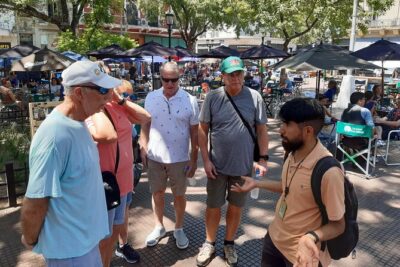
See Buenos Aires in one long, rewarding day. This seven-hour small-group walk connects the city’s grand landmarks with everyday details, from a morning coffee and a ride on the oldest subway line in the Southern Hemisphere to lunch in a local neighborhood. With no more than seven people, the guide can answer questions and adjust the conversation instead of delivering a speech to a crowd.
I especially like the mix of major sights and ordinary city life, including bookstores, cafes, public transport, markets, and historic streets. I also like that the entrance fee to Recoleta Cemetery, coffee, lunch, water, and public transport are included. The main drawback is the pace: seven hours on foot, with several subway or bus transfers and a lot of standing, will not suit anyone wanting a gentle sightseeing day.
The tour costs $160 per person, which is not cheap, but the price covers a full day, an English-speaking guide, food, transport during the tour, and the US$15 or more entry fee for Recoleta Cemetery. Previous guests singled out guides Tracy and Chris for their friendly manner, local language skills, clear history lessons, and ability to point out details you could easily miss alone.
In This Review
- Key points to know before booking
- Starting among bookstores and grand city buildings
- Recoleta Cemetery and Eva Perón’s final resting place
- Teatro Colón, Plaza Lavalle, and the city’s big avenues
- Florida Street and the old heart of Monserrat
- Buenos Aires by subway, bus, and on foot
- Plaza de Mayo, the Cathedral, and Pope Francis
- San Telmo Market and the final walk down Defensa Street
- Is $160 a fair price for this Buenos Aires day?
- Who should book the BA 101 walk?
- FAQ
- How long is the Buenos Aires BA 101 walk?
- Where does the tour start?
- Where does the tour finish?
- How many people can join the tour?
- What language is the tour conducted in?
- Is lunch included?
- Is entry to Recoleta Cemetery included?
- Is the tour suitable for wheelchair users or children under 10?
- Should you book it?
Key points to know before booking
- Small group capped at seven: You get a more personal outing and a better chance to ask questions.
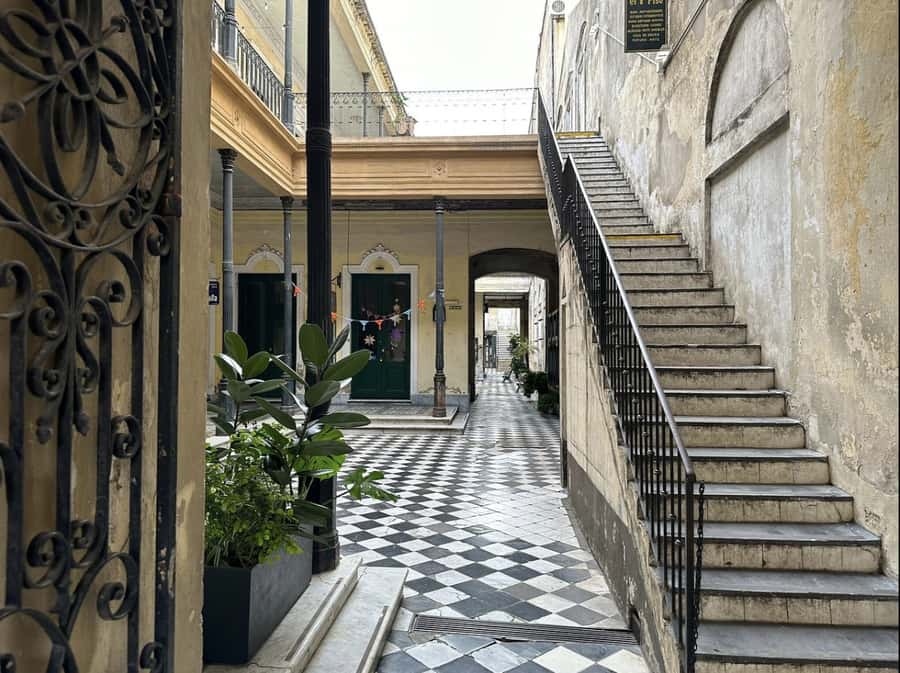
- Seven neighborhoods and city landmarks: The route moves through Barrio Norte, Recoleta, San Nicolas, Monserrat, the City Center, and San Telmo.
- A real walking day: Wear comfortable shoes and expect plenty of pavement, stairs, and standing.
- Lunch and coffee are included: You do not need to plan a separate midday meal during the tour.
- Recoleta Cemetery is a major stop: The visit includes Eva Perón’s tomb and the cemetery entrance fee.
- The tour finishes in San Telmo: You end near restaurants, bars, shops, and the San Telmo Market rather than returning to the starting point.
Starting among bookstores and grand city buildings
The day begins at 10am near the corner of Avenida Santa Fe and Avenida Callao, in the Recoleta or Barrio Norte area. The exact meeting location arrives with your booking details, so you should check that message rather than rely only on a street name.
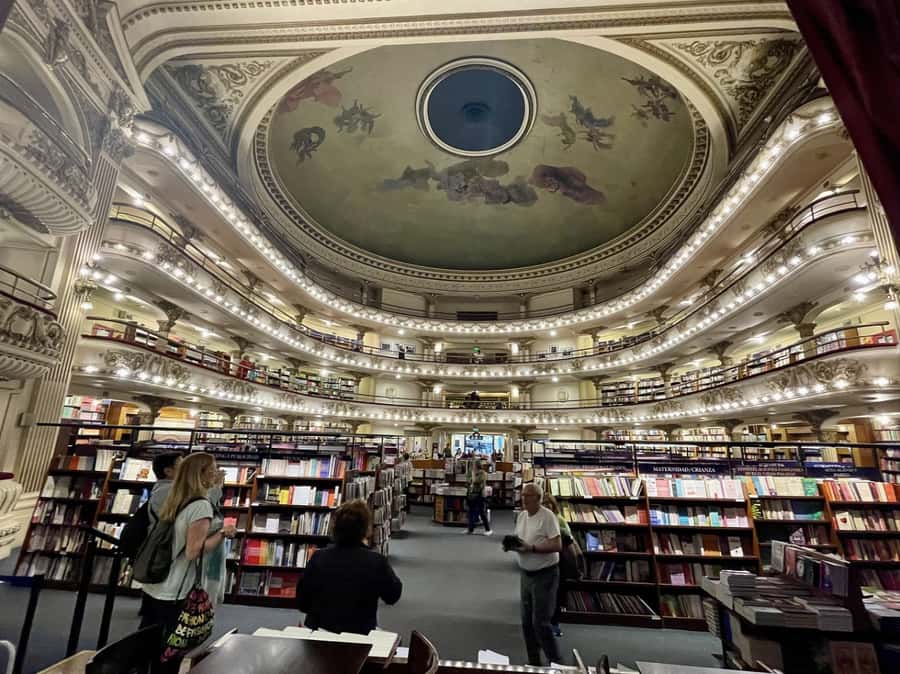
The first stop is El Ateneo Grand Splendid, a former theater converted into a bookstore. It is one of those places that makes Buenos Aires feel different from a standard capital city itinerary. The setting connects literature, performance, and architecture in one quick visit, and it gives your guide an easy way to begin explaining the city’s cultural life.
From there, you walk to leafy Plaza Rodriguez Peña. The square is home to Palacio Sarmiento, which houses Argentina’s Ministry of Education. This early part of the route is useful because it eases you into the city with a mix of open space, civic buildings, and neighborhood streets instead of sending you straight from one postcard sight to another.
Palacio de Aguas Corrientes is another strong early stop. Its ornate exterior may look like a palace, but the building has a practical public utility story behind it. That contrast is exactly the sort of detail a guide can make memorable. Alone, you might photograph the facade and keep walking. With a guide, you get the reason it was built and why such a surprising building belongs on a city walk.
A morning coffee, or a drink of the same value, is included. That pause matters. Seven hours is a long time to spend walking, and coffee gives you a chance to sit, ask questions, and sort out which parts of Buenos Aires you may want to revisit later.
More Walking Tours in Buenos Aires
- Buenos Aires Hop-On Hop-Off Bus, Free Walking Tours & Discounts
★ 4.5 · 2,218 reviews - Buenos Aires: La Boca Guided Walking Tour in English
★ 4.8 · 1,587 reviews - Nazis in Buenos Aires: a historical walking tour
★ 4.9 · 193 reviews
Recoleta Cemetery and Eva Perón’s final resting place
The route then reaches Recoleta, one of Buenos Aires’ best-known neighborhoods. Recoleta Cemetery is the emotional center of the morning. The cemetery feels less like a simple burial ground and more like a compact city of narrow paths, ornate mausoleums, statues, and family tombs.
The most famous stop inside is the tomb of Eva Perón, known as Evita. Her final resting place is not the largest or most dramatic structure in the cemetery, but it carries enormous political and cultural weight. A guide helps place Evita within Argentina’s story instead of reducing the stop to a quick photo.
You also see the elaborate tombs of other wealthy and influential Argentines. The cemetery reveals how public status, family power, and architecture once came together in Buenos Aires. It is visually striking, but some people may find the style somber or heavy. The walkways can also feel crowded at times, and the stone surfaces make sensible footwear important.
The admission fee is included, listed as a value of US$15 or more per person. That helps justify part of the $160 price, especially if you already planned to visit Recoleta Cemetery on your own. You should still think of the tour as a full-day experience rather than a cemetery visit with extras.
Outside the cemetery, Plaza Francia and Our Lady of Pilar Church add a different layer. The church is one of the city’s best-preserved examples of colonial architecture. Together, the plaza and church show the older side of Recoleta before the route shifts toward theaters, avenues, and the commercial center.
Teatro Colón, Plaza Lavalle, and the city’s big avenues
The tour continues into San Nicolas, where Teatro Colón takes center stage. The opera house is known around the world, and even a visit from the outside gives you a sense of the city’s long connection with music, performance, and European-inspired public architecture.
At Plaza Lavalle, you see the Palacio de Justicia de la Nación, home to Argentina’s Supreme Court. This is a good reminder that Buenos Aires is not only about tango, cafes, and colorful neighborhoods. Its political and legal institutions are part of the visual story too.
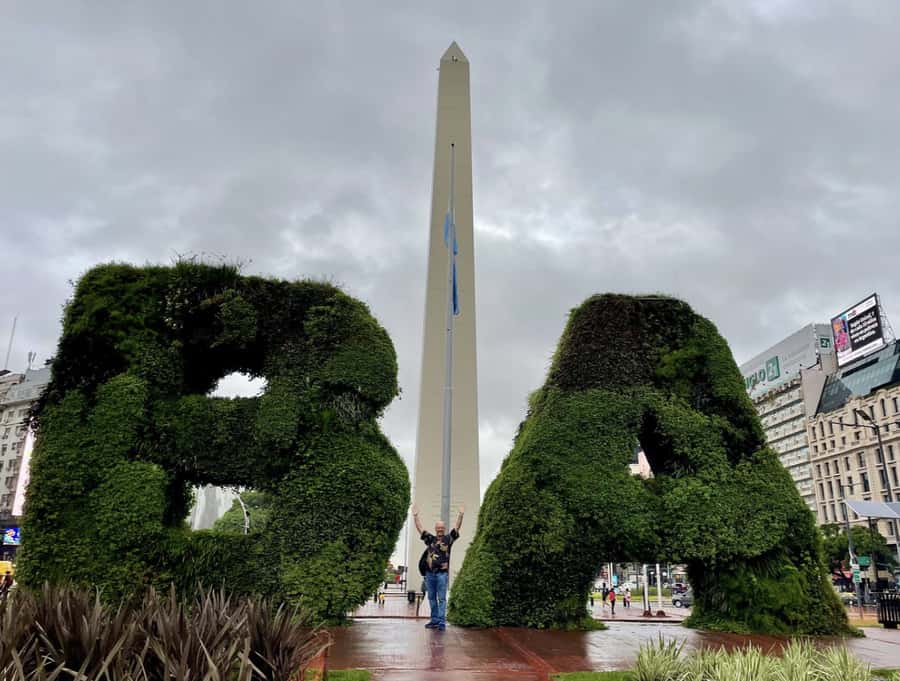
Then comes Avenida 9 de Julio, often described as the widest avenue in the world. The scale changes suddenly. After quieter squares and cemetery lanes, you are surrounded by traffic, towers, signs, and broad crossings. The Buenos Aires Obelisco is the main landmark here, and it is one of the city’s easiest photo stops.
The route also includes the green BA sign, another quick picture opportunity. It may seem minor beside the Obelisco, but these small stops help break up a long day and give you a clear record of where you have been.
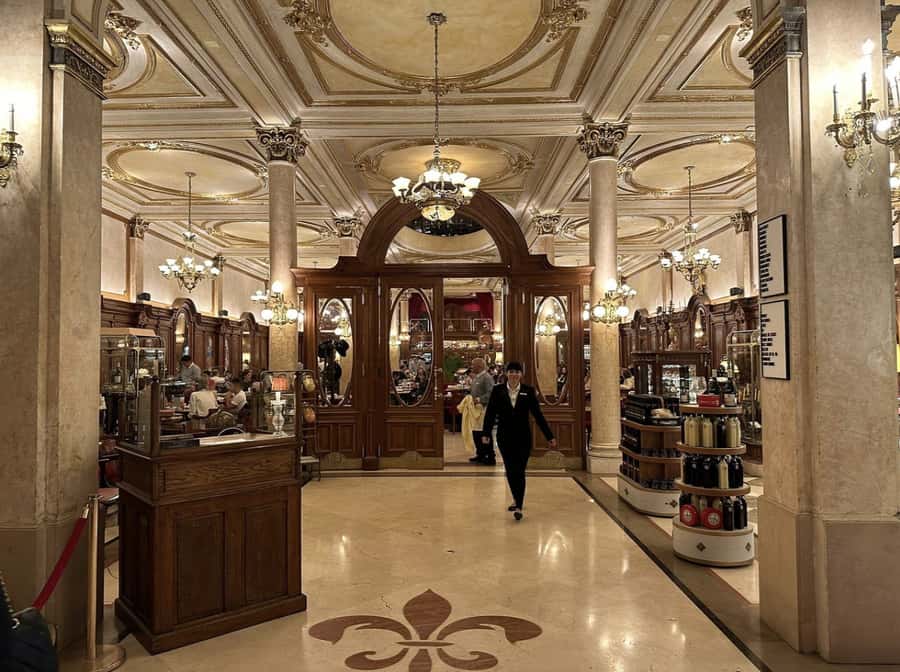
Avenida Corrientes follows. Known as the street that never sleeps, it is tied to Buenos Aires nightlife, theater, restaurants, and cafes. You see Confiteria La Ideal, an old cafe that has been restored. This is the kind of stop I value on a city tour because it gives architecture a daily use. Buenos Aires history is not locked away in museums. It appears in cafes where people still meet.
The pace here remains active. You are not spending an hour inside each attraction, and the tour does not include a Teatro Colón performance or a long interior visit at every landmark. If you want detailed museum time or formal architectural tours, this route will feel like an introduction rather than a complete study.
Florida Street and the old heart of Monserrat
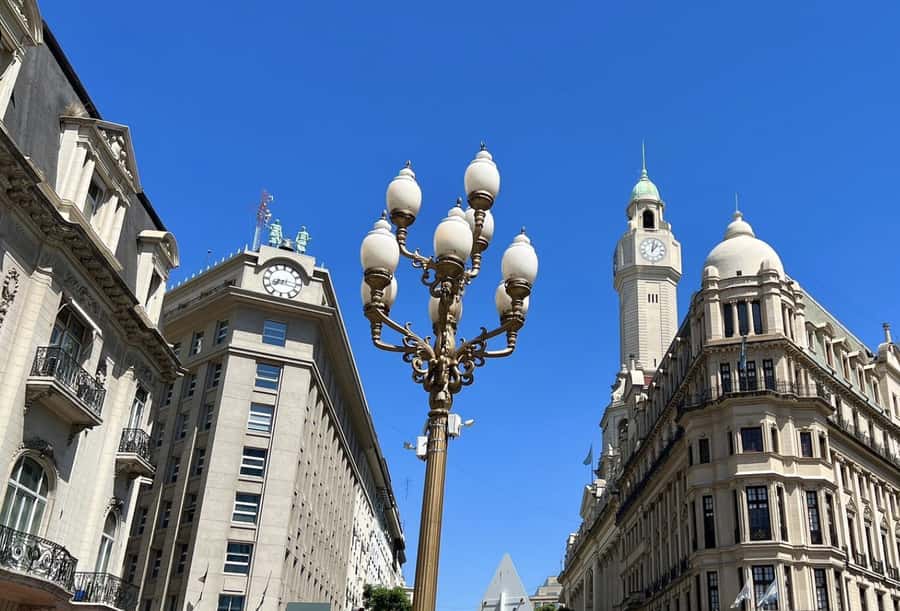
Florida Street is Buenos Aires’ main pedestrian shopping area. It brings you into the commercial side of the city, with shops, foot traffic, and Galería Güemes. The gallery is one of the area’s notable historic interiors and adds a layer of elegance to an otherwise busy shopping route.
The tour then moves into the historical center around Monserrat. This is where the city’s founding story becomes central. Plaza de Mayo is Buenos Aires’ main square and the place from which the modern city grew after its successful foundation in 1580.
The square is surrounded by some of Argentina’s most important political and religious buildings. Casa Rosada, the Pink House, is the executive government seat and one of the city’s most recognizable facades. Its balcony is famous as the place where President Juan Perón and Eva Perón addressed crowds.
Casa Rosada is best understood as a working center of power, not simply a pretty pink building. Plaza de Mayo has also been a gathering place for public demonstrations and national events, so your guide’s context can make the square feel far more meaningful than a quick photo stop.
The route points out several early city landmarks, including the first church, first street, and first business in Buenos Aires. These details are valuable because they are easy to miss. The oldest subway line in the Southern Hemisphere is also part of the story, and the tour uses local public transport during the day.
A completely different sort of day in Buenos Aires:
- Buenos Aires: Piazzolla Tango Show with Optional Dinner
★ 4.4 · 2,122 reviews - Buenos Aires: City Highlights Guided Tour with Transfer
★ 4.7 · 1,946 reviews - Buenos Aires: Hop-On Hop-Off City Bus Tour
★ 4.2 · 1,855 reviews - Buenos Aires Hop-On Hop-Off Bus and Exclusive Benefits
★ 4.4 · 1,714 reviews
Buenos Aires by subway, bus, and on foot
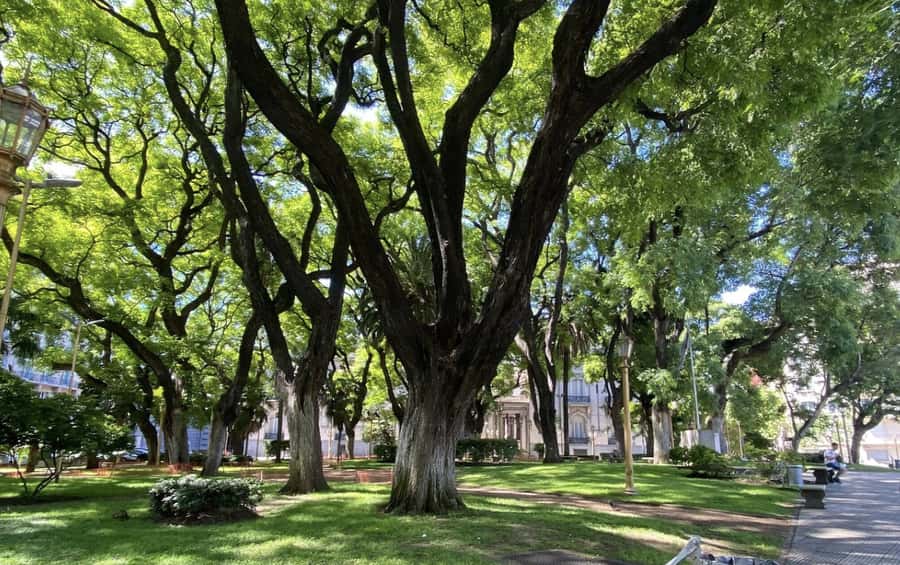
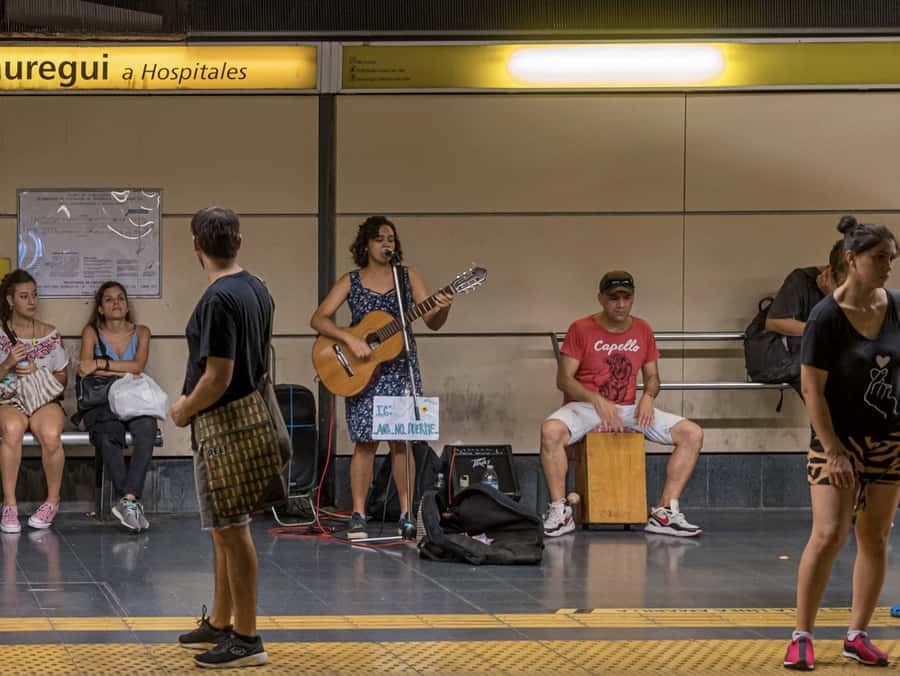
Public transport is included whenever the tour uses a local bus or subway. This is a practical advantage, not just a cost-saving feature. You get a brief look at how the city works while moving between neighborhoods, and you avoid spending the whole day in a private vehicle.
The transport also gives the route a more local feel. You are not sealed off from the city between sights. At the same time, public transport adds transitions, stairs, and possible crowding. The day is designed for people comfortable with an active urban outing.
You should wear shoes you can walk in for several hours. Bring the included bottle of water, and plan for the fact that the starting point and ending point are different. The tour begins in Barrio Norte or Recoleta at 10am and finishes around 5pm in San Telmo, so you are responsible for getting to the first meeting point and away from the final one.
Smoking is not allowed. The experience is not suitable for children under 10, wheelchair users, people with a cold, or people over 95. Those limits reflect the length of the route, the walking, and the use of public transport.
Plaza de Mayo, the Cathedral, and Pope Francis
Buenos Aires Cathedral faces Plaza de Mayo and is another important stop in the City Center. It is the final resting place of Argentine independence hero José de San Martín, giving the visit a strong national connection.
The cathedral is also linked with Pope Francis, who used to celebrate mass there before becoming pope. That connection adds a recent chapter to the building’s story and helps tie Buenos Aires to a figure known far beyond Argentina.
This portion of the tour works best if you want connections between places, people, and events. You are not simply collecting buildings. The guide can explain why the cathedral matters, why Casa Rosada is politically important, and how the city’s central square has been used over time.
The tour’s strongest quality is this kind of explanation. Feedback from the experience praised the history lessons, amusing stories, architecture, and the guides’ answers to questions. Chris was specifically praised for pointing out details that would be easy to miss without local help, while Tracy was praised for local history, language ability, and a friendly manner.
San Telmo Market and the final walk down Defensa Street
The final neighborhood is San Telmo, one of Buenos Aires’ oldest areas. Plaza Dorrego is a natural place to slow down. The square has bars, restaurants, handicraft sellers, and a more relaxed neighborhood atmosphere than the large avenues earlier in the day.
San Telmo Indoor Market occupies an impressive iron structure built in 1897. Inside, you find antiques, souvenirs, restaurants, fresh food, and local market stalls. It is a good closing stop because it brings together the city’s past and present in one place. You can look at old objects, browse food vendors, and see a market still serving everyday needs.
Lunch is included, with a main dish and a beverage. The exact menu is not specified, so you should not book this expecting a particular Argentine specialty. The inclusion is still useful: you can keep moving with the group instead of losing time finding a midday meal.
The final stretch follows Defensa Street, a cobblestone road through San Telmo. Antique dealers line the route, and the original Spanish and Italian architecture gives the neighborhood much of its character. Cobblestones can be tiring after a full day, so this is another reason to wear supportive shoes.
You finish near plenty of places to eat, drink, and shop. That ending is practical. If San Telmo catches your interest, you can continue exploring after the guide leaves. If your feet have had enough, you can make your way onward without needing to cross the city again.
Is $160 a fair price for this Buenos Aires day?
At $160 per person, this is a premium walking tour. You are paying for more than a guide leading you from one landmark to the next. The fee includes a maximum group of seven, Recoleta Cemetery admission, coffee, lunch, water, and public transport taken during the tour.
The strongest value comes from the breadth of the route. In seven hours, you see Recoleta, the central avenues, Plaza de Mayo, and San Telmo, while also using public transport and stopping for food. If you have only one day in Buenos Aires, that coverage can save a lot of planning time.
The price is less attractive if you prefer to explore slowly, spend long periods inside museums, or choose your own restaurants. You also pay for the convenience of a guide’s local knowledge, so the tour makes more sense for a first visit than for someone who already knows the city well.
Free cancellation is available up to 24 hours before the start, and you can reserve while paying later. Gratuity is optional and not included.
Who should book the BA 101 walk?
I would recommend this experience to a first-time visitor with one full day for Buenos Aires. It is also useful early in a longer trip because the route helps you decide where to return for more time. The guide’s history, language help, and neighborhood context are especially useful if you do not feel ready to handle the city alone.
It suits active adults and older children aged 10 or above who can manage a long day on foot. The small group size should appeal to you if you want to ask questions and avoid the distance that often comes with a large coach tour.
I would skip it if you need wheelchair access, dislike public transport, or want a slow, luxury-style sightseeing day. The itinerary covers a great deal, but that breadth means you will see some places briefly rather than study every interior.
FAQ
How long is the Buenos Aires BA 101 walk?
The experience lasts seven hours, from 10am until about 5pm.
Where does the tour start?
It starts in the Recoleta or Barrio Norte area, near the corner of Avenida Santa Fe and Avenida Callao. Exact meeting instructions are sent in the confirmation email.
Where does the tour finish?
The tour ends in San Telmo, near places to eat, drink, and shop.
How many people can join the tour?
The group is limited to seven participants.
What language is the tour conducted in?
The live tour guide speaks English.
Is lunch included?
Yes. The price includes a local lunch consisting of a main dish and a beverage.
Is entry to Recoleta Cemetery included?
Yes. Entrance fees to historical sites, including Recoleta Cemetery, are included.
Is the tour suitable for wheelchair users or children under 10?
No. The experience is not suitable for wheelchair users or children under 10. It is also not suitable for people with a cold or people over 95.
Should you book it?
Book this walk if you want a clear, lively introduction to Buenos Aires and prefer learning the city through streets, squares, cafes, markets, and public transport. The combination of Recoleta Cemetery, Evita’s tomb, Plaza de Mayo, the Obelisco, and San Telmo gives you the essential city picture in one day.
The main question is not the sights. It is the pace. If you can handle seven hours of walking and standing, the small group, included meals, transport, and strong guide feedback make the $160 price reasonable. If you prefer to set your own rhythm, choose fewer neighborhoods and spend longer inside each place, explore independently instead.
Latest additions in Buenos Aires
- Unique Tigre and Delta Private Day Cruise Navegation★ 5.0 · 3 reviews
- Buenos Aires: Customizable City Tour in Polish★ 4.7 · 3 reviews
- Buenos Aires After Dark: A City Lights & Sunset Experience★ 5.0 · 3 reviews
- Tango Show at El Querandi with optional Dinner★ 4.2 · 3 reviews
- Caminito, La Boca: vibrant neighborhood★ 5.0 · 3 reviews
- Velez Sarsfield Football Match★ 5.0 · 3 reviews
- Café de los Angelitos – Traditional Night in Buenos Aires★ 4.8 · 3 reviews
- Buenos Aires Fairs: San Telmo & Mataderos Cultural Tour★ 3.8 · 3 reviews
Walking Tours, compared.
Nazis in Buenos Aires: a historical walking tour
Read our review →
La Docta Free Walking Tour “Córdoba La Antigua”.
Read our review →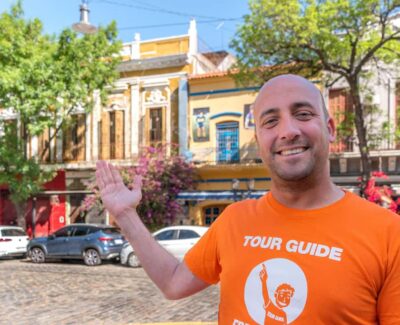
Buenos Aires Walking Tour with Local Guide and Optional Rooftop
Read our review →
Browse the lists this tour appears in