
Reviewed · HOP-ON HOP-OFF BUS TOURS
Buenos Aires: Hop-On Hop-Off City Bus Tour
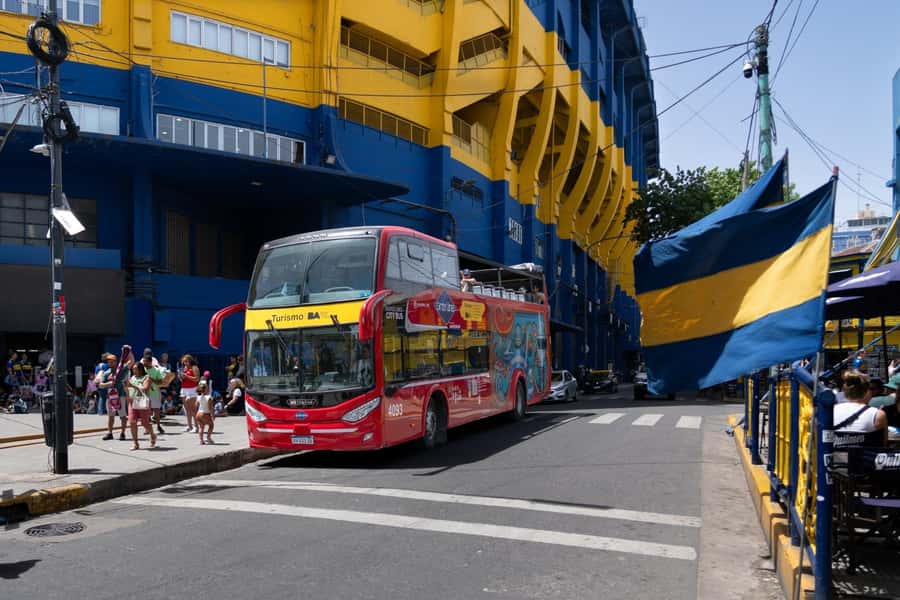
See Buenos Aires before choosing your favorites. This hop-on hop-off bus tour links La Boca, San Telmo, Puerto Madero, Palermo, Belgrano, Recoleta, and the football stadiums in one easy route. I like the wide city coverage and the clear multilingual audio guide, which gives you useful context while you ride. The main drawback is time: a full loop can take about three hours, and traffic can make the 25-minute service less exact.
I also like that you can use the bus as both a sightseeing ride and practical transport. Stay upstairs for open-air views, or hop off near a museum, stadium, plaza, or neighborhood you want to explore. Just keep your plans flexible, since some buses run late, the onboard WiFi may not work, and commentary can occasionally describe a sight after the bus has passed it.
In This Review
- Key points to know before you board
- Why this bus is a useful first look at Buenos Aires
- The central route: Congress, San Telmo, and the waterfront
- La Boca, Caminito, and the two football stadiums
- Puerto Madero and Costanera Sur
- Recoleta, Palermo, and the city’s cultural side
- Monuments, Recoleta, and the Teatro Colón finish
- The audio guide and onboard comfort
- How long should you buy: 24, 48, or 72 hours?
- Is $35 a fair price?
- Who will enjoy this city bus most?
- Should you book the Buenos Aires Hop-On Hop-Off Bus Tour?
- FAQ
- Where can I start the bus tour?
- How often do the buses run?
- What are the operating hours?
- Which audio guide languages are available?
- Is the bus ticket available for more than one day?
- Are attraction admissions included?
- Can I visit the Boca and River museums from the route?
Key points to know before you board
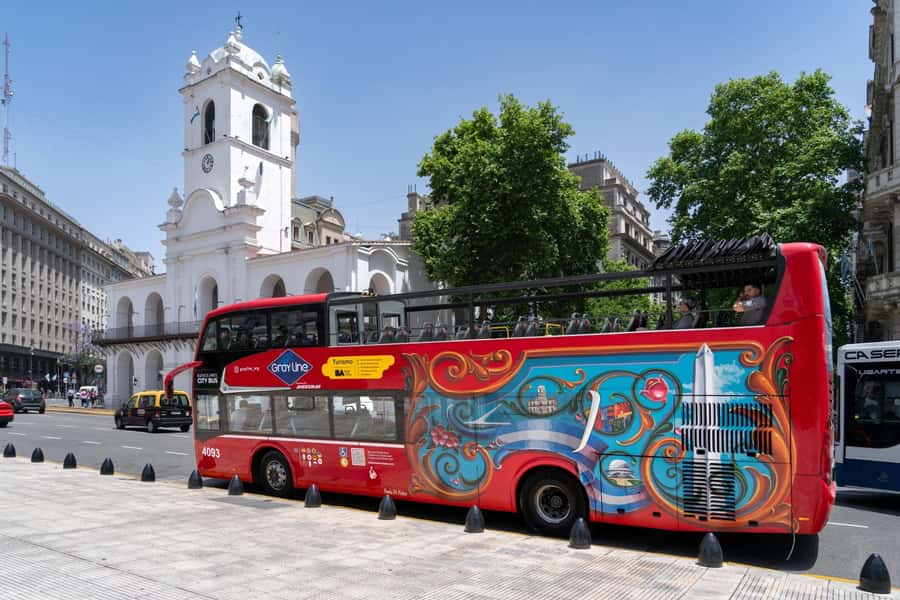
- A full loop takes about three hours: Plan one ride simply to see the city, not just to move between two stops.
- La Boca is the essential stop: Get off near Caminito and the Bombonera for colorful streets and football culture.
- The route covers very different Buenos Aires: You pass historic districts, modern Puerto Madero, leafy Palermo, Recoleta, Chinatown, and River Plate’s stadium.
- Audio commentary is a major strength: It is available in many languages, with local music played between sections on some buses.
- A 48-hour ticket gives you breathing room: At about $35 per person, extra time is useful if you want to visit several stops.
- Traffic affects the timetable: Buses are meant to come every 25 minutes, but waits of 35 minutes have occurred.
Why this bus is a useful first look at Buenos Aires
Buenos Aires is too spread out for a quick walk between its main sights. The hop-on hop-off route gives you a practical first picture of the city, especially if you have only a day or two and do not yet know which neighborhoods deserve more of your time.
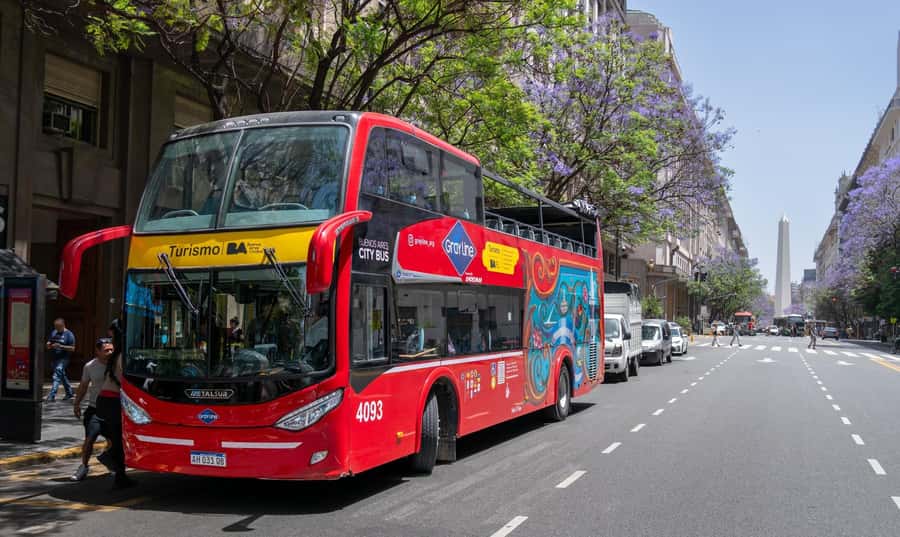
You begin at Diagonal Norte in the center, at Avenida Presidente Roque Sáenz Peña 728, or at the company office near Plaza San Martín, at Avenida Santa Fe 808. You can also board at another stop along the route. That flexibility matters because you do not have to cross the city to reach the first bus.
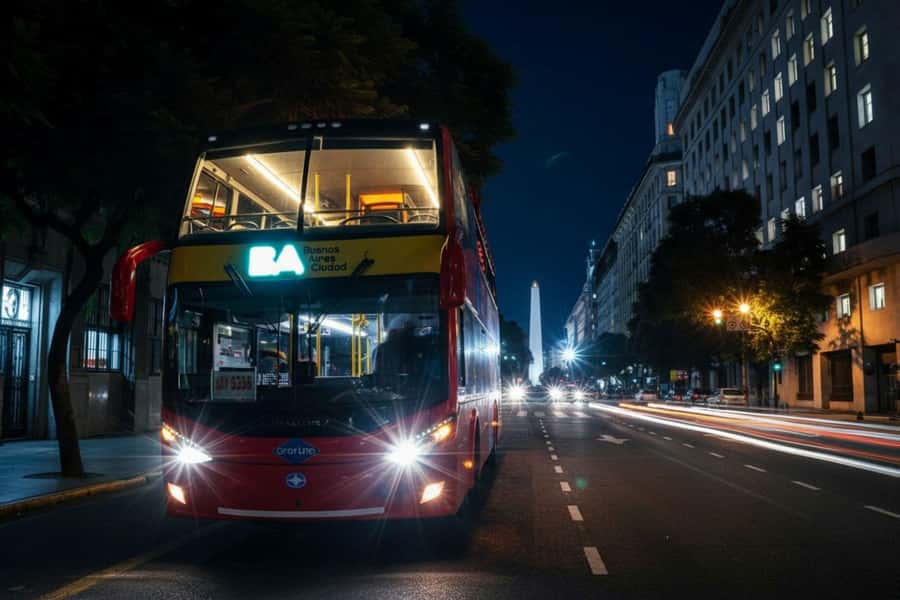
The open-top double-decker layout is best used in stages. On a pleasant day, the upper deck gives you a good view of grand avenues, tree-lined streets, monuments, and the changing character of each district. On hot days, the air conditioning downstairs is welcome. A sunroof offers a middle ground, although the upper deck can be exposed to strong sun.
The route runs Monday through Sunday. Buses begin circulating around 9:20 a.m. from the two main starting points, with regular service listed from 9:30 a.m. to 6 p.m. The last buses leave at about 5:30 p.m. and complete only half a circuit, so do not leave your most important stop until late afternoon.
More City Tours in Buenos Aires
- Buenos Aires: City Highlights Guided Tour with Transfer
★ 4.7 · 1,946 reviews - Best of Buenos Aires: Guided Sightseeing City Tour
★ 4.0 · 402 reviews - Buenos Aires Private City Tour with Local Guide
★ 5.0 · 308 reviews
The central route: Congress, San Telmo, and the waterfront
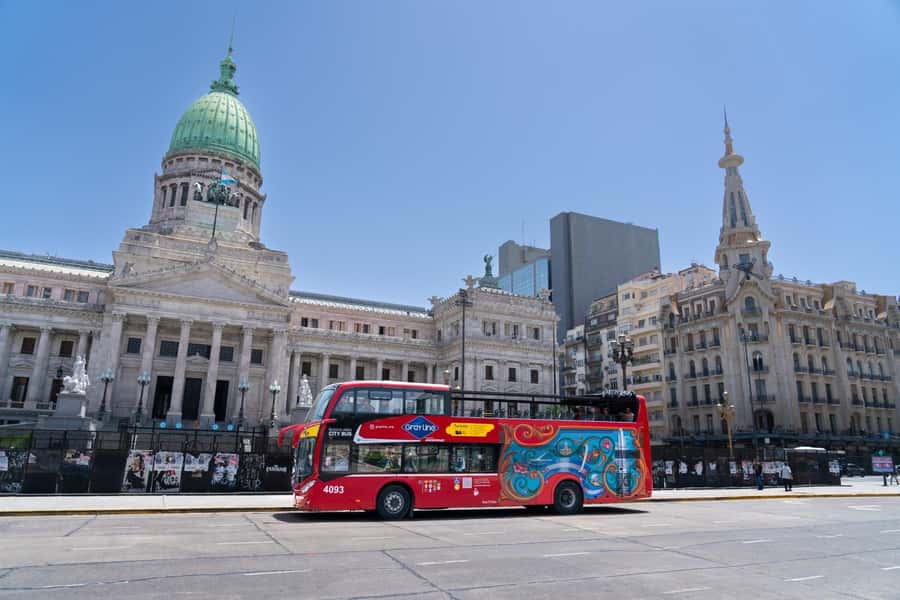
The first section gives you a strong introduction to Buenos Aires architecture and public life. From the central starting points, the bus passes the Palace of the Argentine National Congress. You do not enter the building, but its grand exterior helps explain the scale and formal style of the city center.
The route then reaches El Loco Chávez and the Paseo de la Historieta, a playful stop connected with Argentine cartoon characters. This is a lighter moment after the government buildings and broad avenues. If you enjoy local popular culture, keep your eyes open rather than treating the route as a simple list of monuments.
Plaza Dorrego brings you into San Telmo, one of the city’s most atmospheric old districts. The bus passes rather than providing an organized walking tour, so hop off if you want time on the streets. This is a good place to pause, look at the old facades, and get a feel for one of Buenos Aires’ traditional neighborhoods.
The route continues to Usina del Arte, a striking cultural center in a converted power station in the La Boca area. Again, the bus only brings you close to the attraction. Check opening details separately if you want to enter, since admissions are not part of the ticket.
La Boca, Caminito, and the two football stadiums
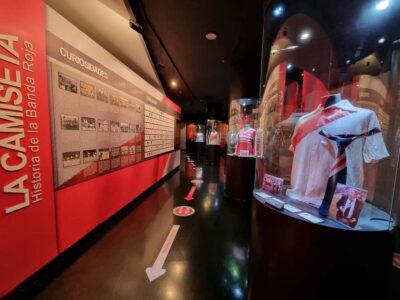
La Boca is the stop I would prioritize if you have limited time. The bus passes La Bombonera, the home stadium associated with Boca Juniors, and Caminito, the famous colorful street area. You can access the Boca Museum from the Bombonera stop.
Caminito is best treated as a focused visit rather than a quick photo stop. The colorful buildings are the visual hook, but the area also gives you a sense of Buenos Aires’ working-port identity and football passion. Stay aware of your belongings and follow the normal city habit of keeping valuables out of sight. The tour itself does not include museum entry, food, or drinks.
Football fans should also use the River Plate stop. The route passes Estadio Monumental Antonio Vespucio Liberti, and the River Museum can be reached from that stop. This makes the bus especially useful for comparing the city’s two famous football clubs without arranging separate transport across Buenos Aires.
There is one important scheduling restriction. On days when River or Boca play at their stadiums, tours will not take place. If a stadium visit matters to you, check the match calendar before building your day around the bus.
Puerto Madero and Costanera Sur
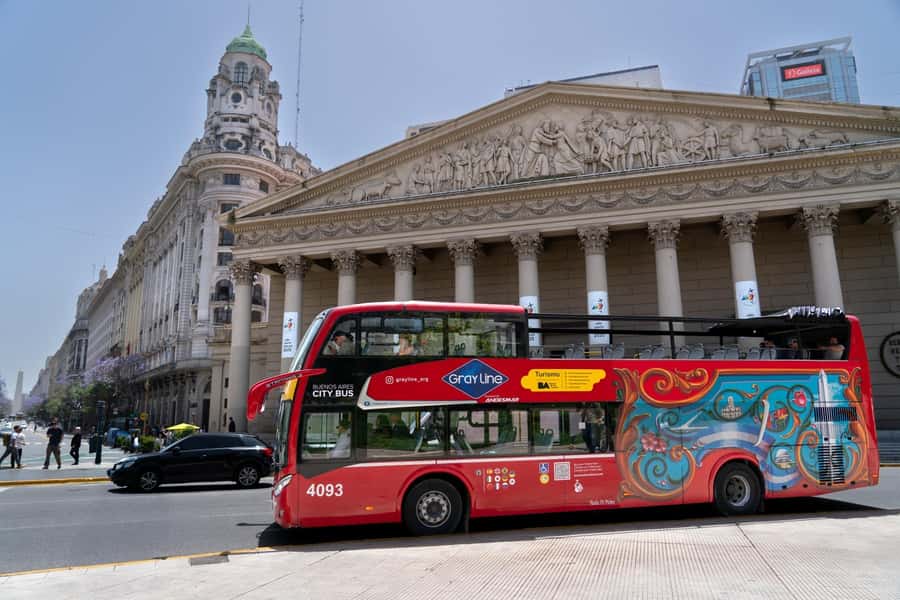
After La Boca, the bus heads toward Costanera Sur and Puerto Madero. This section shows a more modern side of Buenos Aires, with former port areas, newer buildings, and broad waterside spaces.
Puerto Madero works well as a hop-off stop because it feels different from San Telmo and La Boca. The change is the point: within one bus ride, you move from older neighborhoods to a more polished waterfront district. The route also passes the tourist and river station area, listed as Bus Turístico, Circuito Rojo y Amarillo, Estación Fluvial.
Costanera Sur is useful for a change of pace. You are not simply looking at buildings from the bus, but seeing how Buenos Aires opens toward the riverfront. The route does not include a guided walk or a separate nature activity, so treat this as an orientation stop unless you have already checked what you want to do there.
The city’s traffic is most relevant on long sections like this. A 25-minute frequency is helpful, but it is not a promise that a bus will appear exactly on schedule. If you hop off for lunch, give yourself extra time before an important museum booking or evening plan.
More hop-on hop-off routes in Buenos Aires:
- Buenos Aires Hop-On Hop-Off Bus, Free Walking Tours & Discounts
★ 4.5 · 2,218 reviews - Buenos Aires Hop-On Hop-Off Bus and Exclusive Benefits
★ 4.4 · 1,714 reviews - Buenos Aires: Hop-On Hop-Off Bus and Football Museums
★ 4.3 · 39 reviews - Mendoza Hop-On Hop-Off Wine Tour
★ 4.0 · 130 reviews
Recoleta, Palermo, and the city’s cultural side
The bus then turns toward central and northern Buenos Aires. It passes Galerías Pacífico, a major shopping center in a historic building, and Plaza General San Martín. These stops are useful for seeing the formal city center and the grand civic spaces around it.
The Recoleta section includes Floralis Genérica and the Museum of Latin American Art of Buenos Aires, usually known as MALBA. The bus does not include admission to either attraction. If art is high on your list, the route can help you decide which museum deserves a longer visit, but you will need separate tickets and enough time away from the bus.
The bus also passes the Planetario Galileo Galilei. Its distinctive shape is easy to spot, and the stop adds a science and family-friendly option to a route otherwise heavy on neighborhoods, architecture, and football.
Recoleta is one of the route’s most useful areas, but there is a practical catch. The red route does not stop directly at the famous Buenos Aires cemetery. The nearest red-route stop is about a mile away, while a yellow bus has a stop nearer the cemetery. That distinction matters if the cemetery is one of your main reasons for buying the ticket.
The route continues through Palermo and toward Belgrano. You pass the Club de Pescadores, Jorge Newbery Airfield, Parque de la Memoria, and the Monumental stadium before reaching Chinatown and the Argentine Polo Association. These stops show how broad the city is, but they are not all equally worthwhile for every visitor.
Chinatown can be a pleasant choice if you want a break from the grand central sights and football landmarks. The Argentine Polo Association points to another part of the city’s sporting identity. You may prefer to stay on the bus through some of these stops, especially if your schedule is tight.
Monuments, Recoleta, and the Teatro Colón finish
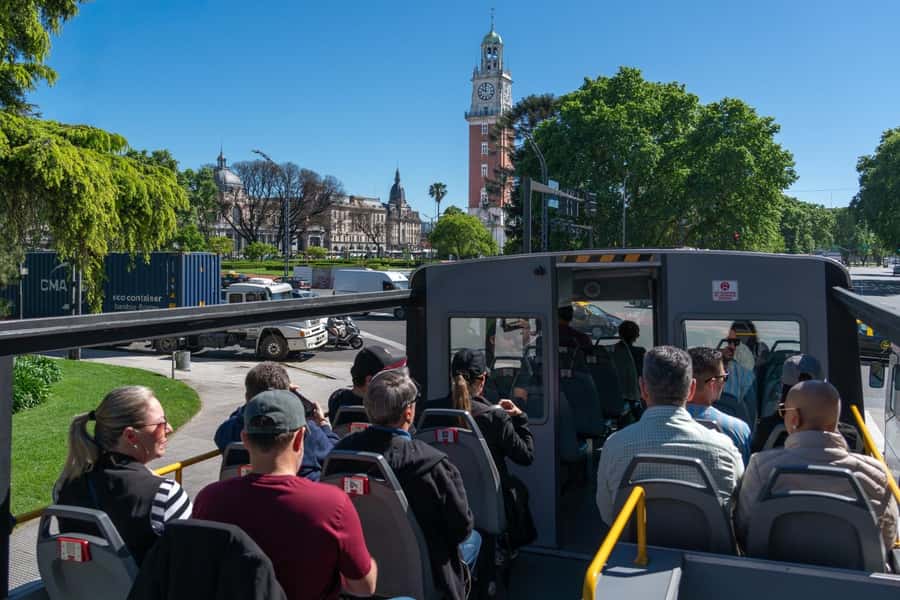
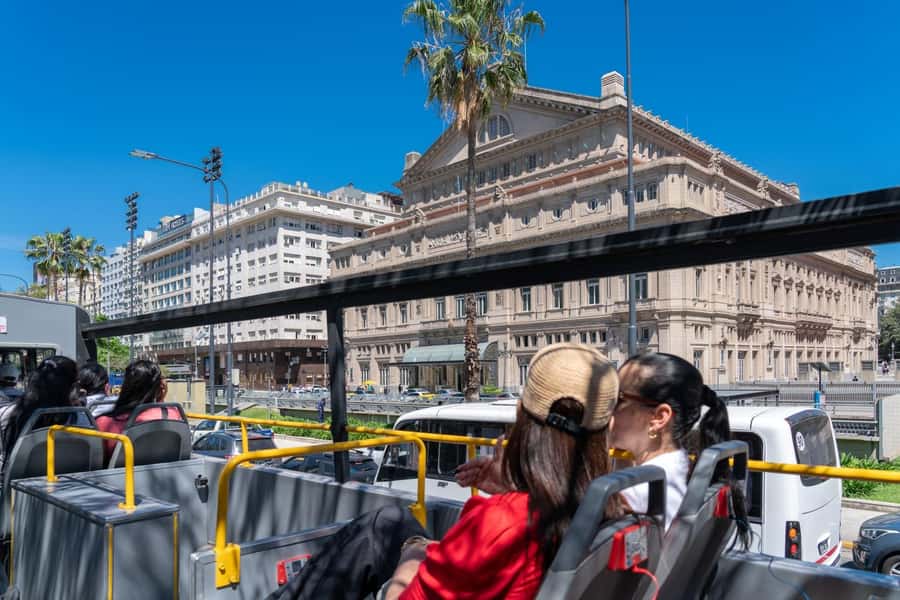
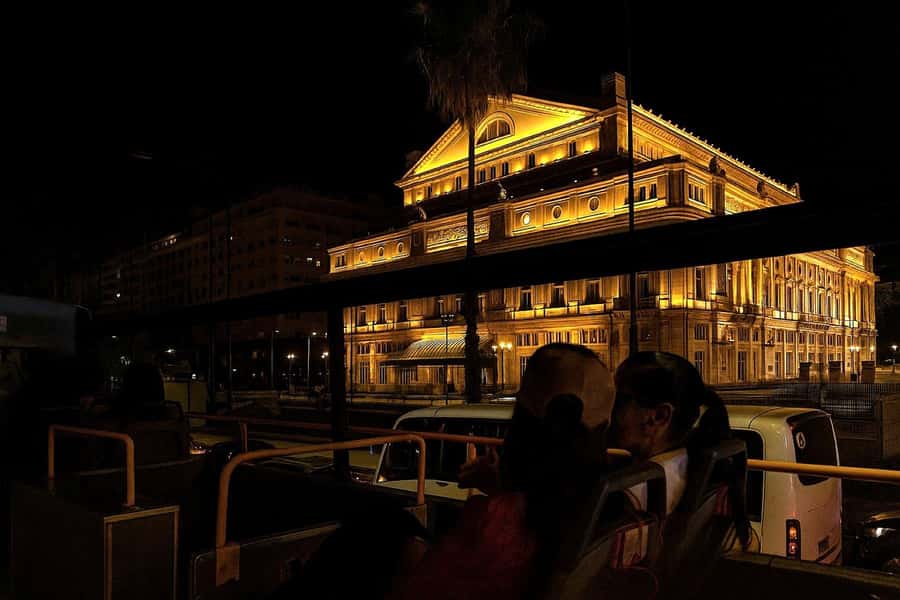
The Carta Magna Monument marks another northern section of the route before the bus returns toward Recoleta. The ride then brings you past the Teatro Colón, one of Buenos Aires’ best-known cultural landmarks.
The theater is a fitting final sight because it brings you back to the city center and its formal architecture. The bus passes it rather than including a performance or interior tour, so hop off if you have made separate arrangements to visit.
The tour ends back at a meeting point, but the ticket is designed for repeated boarding during the period you select. In practice, that means you can use the loop in different ways: one ride for orientation, a second ride for selected stops, and another section simply as an easy way to cross town.
The audio guide and onboard comfort
The included audio guide is one of the strongest parts of this tour. It is offered in Spanish, English, Portuguese, Japanese, Chinese, Russian, Italian, French, German, Ukrainian, and Korean. A live guide is also listed in Spanish, English, and Portuguese.
The commentary gives the route a useful sense of order. Instead of seeing disconnected streets and monuments, you get explanations about the city and the places you pass. The English recording has been praised for clear volume and easy understanding, and local music sometimes plays between commentary sections.
There are small flaws. The narration can occasionally begin too late, so the bus may pass a sight before the explanation arrives. On some rides, live announcements and the recording have overlapped, making both harder to hear. The supplied earphone cables can also feel short when you sit upstairs.
Free WiFi is offered on the buses and at the stops. Treat it as a bonus, not a reason to choose this tour. It has not always worked, and the real-time map can be difficult to find or use. Downloading important addresses and tickets before boarding is sensible.
How long should you buy: 24, 48, or 72 hours?
A 24-hour ticket works if you mainly want one full loop plus a couple of short stops. It is also a good choice if your time in Buenos Aires is limited and you want a broad introduction without trying to visit every district.
The 48-hour option is the best fit for most people. Since the full red route can take about three hours, a two-day ticket lets you get off without feeling that every pause has ruined your sightseeing plan. You can spend one day on the southern neighborhoods and another on Recoleta, Palermo, Belgrano, and the stadiums.
A 72-hour ticket is useful only if you plan to use the bus repeatedly or prefer a slow schedule. The operating window is daytime, so the extra time does not mean round-the-clock transport. It gives you more flexibility across several days.
The ticket time starts the first time you board, not when you purchase it. You have six months after purchase to begin using it, and the chosen 24, 48, or 72 hours then run from that first boarding.
Is $35 a fair price?
At about $35 per person, the value depends on how actively you use the bus. If you ride one full loop and get off once, you are paying mainly for an organized city overview and the audio commentary. That can still be worthwhile, especially early in your visit.
The price makes more sense with a 48-hour ticket. Use it for several neighborhoods, the Boca and River stadium areas, Recoleta, Puerto Madero, and central Buenos Aires, and it becomes both sightseeing and transport. You also avoid arranging separate rides for each far-flung area.
The ticket does not include attraction admissions, hotel pickup, meals, or drinks. You should budget for those separately. The tour is strongest as a city orientation tool, not as a package covering every major Buenos Aires attraction.
Who will enjoy this city bus most?
I would recommend it to first-time visitors, families, short-stay visitors, and anyone who wants an easy overview before choosing where to return. It is also useful if you prefer not to plan every connection between distant neighborhoods.
You will get the most from it if you enjoy sitting back and watching the city change. It is less suitable if you need exact departure times or want a detailed guided walk at each sight.
Start early, sit upstairs when the weather is comfortable, and use the first complete loop to learn the route. Then choose only the stops that genuinely interest you. Keep a little extra time in your schedule for traffic and boarding delays.
Should you book the Buenos Aires Hop-On Hop-Off Bus Tour?
Book it if you want to cover a large city quickly, hear useful commentary, and compare neighborhoods such as La Boca, San Telmo, Puerto Madero, Palermo, Belgrano, and Recoleta. I would choose 48 hours for the best balance of cost and freedom, especially if you want both football stadiums and cultural stops.
Skip it if you already know Buenos Aires well, prefer walking, or need transport that runs precisely to the minute. For a first visit, though, the long loop, broad route, clear audio options, and open-top views make this a practical way to get your bearings fast.
FAQ
Where can I start the bus tour?
You can start at any bus stop. The two main starting points are Diagonal Norte at Avenida Presidente Roque Sáenz Peña 728 and the office at Plaza San Martín, Avenida Santa Fe 808.
How often do the buses run?
The service is scheduled to run every 25 minutes during the day. Traffic and boarding can cause longer waits.
What are the operating hours?
The bus operates Monday through Sunday. It begins circulating around 9:20 a.m., with service listed from 9:30 a.m. to 6 p.m. The final buses leave around 5:30 p.m. and complete only half a return.
Which audio guide languages are available?
The audio guide is available in Spanish, English, Portuguese, Japanese, Chinese, Russian, Italian, French, German, Ukrainian, and Korean.
Is the bus ticket available for more than one day?
Yes. You can choose a 24-hour, 48-hour, or 72-hour ticket. The selected period begins when you first board the bus.
Are attraction admissions included?
No. The ticket includes the hop-on hop-off bus, air conditioning, the open-top double-decker service, WiFi, and the multilingual audio guide. Attraction admission, food, and drinks are not included.
Can I visit the Boca and River museums from the route?
Yes. The Boca Museum can be accessed from the Bombonera stop, and the River Museum can be accessed from the Monumental stop. On days when Boca or River play at their stadiums, no tours take place.
Latest additions in Buenos Aires
- Buenos Aires: 7 Hour Small Group “BA 101” Walk★ 5.0 · 3 reviews
- Unique Tigre and Delta Private Day Cruise Navegation★ 5.0 · 3 reviews
- Buenos Aires: Customizable City Tour in Polish★ 4.7 · 3 reviews
- Buenos Aires After Dark: A City Lights & Sunset Experience★ 5.0 · 3 reviews
- Tango Show at El Querandi with optional Dinner★ 4.2 · 3 reviews
- Velez Sarsfield Football Match★ 5.0 · 3 reviews
- Caminito, La Boca: vibrant neighborhood★ 5.0 · 3 reviews
- Café de los Angelitos – Traditional Night in Buenos Aires★ 4.8 · 3 reviews
Hop-On Hop-Off Bus Tours, compared.

Browse the lists this tour appears in