
Reviewed · HOP-ON HOP-OFF BUS TOURS
Buenos Aires Hop-On Hop-Off Bus and Exclusive Benefits
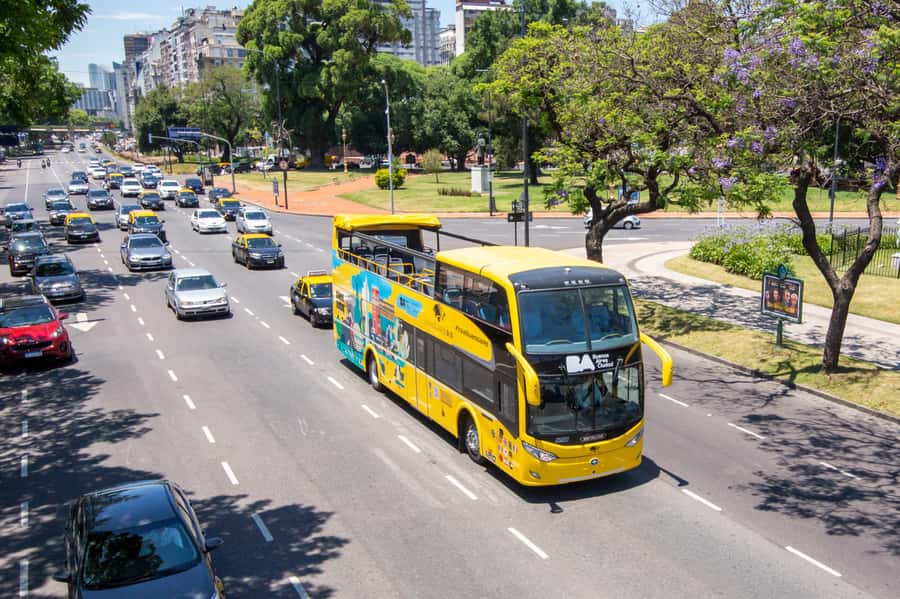
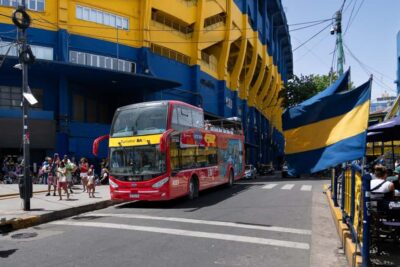
Buenos Aires is too big for a quick stroll. The Buenos Aires Bus gives you a useful first look at the city, from Plaza de Mayo and the Obelisk to La Boca, Recoleta, Puerto Madero, and Palermo. I like the freedom to hop off for Caminito or Teatro Colón, then continue without arranging another taxi. I also like the frequent service, with buses advertised about every 15 minutes. The main caution is time: the full ride takes roughly three hours and 20 minutes without stops, and traffic can stretch that longer.
This is a practical choice if you want to get your bearings fast, especially during a short stay. The top deck offers excellent photo angles, while some buses have enclosed panoramic windows for cooler or rainy days. The audio guide covers nine languages, but its quality can vary by language, bus, and volume setting.
In This Review
- Five things to know before boarding
- A three-hour introduction to a huge city
- Plaza de Mayo, the Obelisk, and the city center
- La Boca and Caminito: worth the stop
- Puerto Madero and the Woman’s Bridge
- Recoleta, Palermo, and the Rose Garden
- The audio guide: useful, but uneven
- Open-air views or enclosed comfort
- Choosing 24, 48, or 72 hours
- Ticket exchange and practical planning
- Who will get the most from this bus?
- Should you book the Buenos Aires Bus?
- FAQ
- How long does the complete bus route take?
- How often do the buses run?
- What ticket durations are available?
- Where do I exchange my voucher?
- Can I board at any stop after exchanging my voucher?
- Which languages are available for the audio guide?
- Are headphones included?
- Is the bus wheelchair accessible?
- Are attraction entry fees included?
- Can I cancel my booking?
Five things to know before boarding
- The complete loop is long: Allow at least three and a half hours for a ride without getting off, and more if you visit sights.
- The yellow service is popular for a reason: It covers the main tourist districts and is generally described as frequent and easy to use.
- You can turn one ticket into a sightseeing plan: Ride once to learn the city, then use later hours to return to the neighborhoods you like.
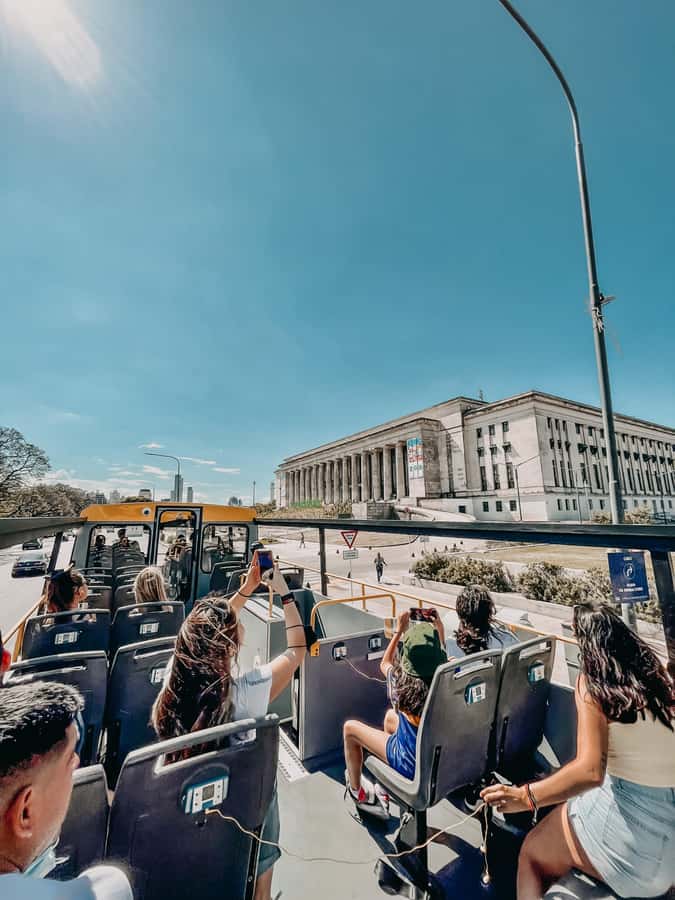
- The upper deck is best for photographs: Choose the open top in good weather, or look for a bus with enclosed panoramic windows.
- The commentary has weak spots: Music sometimes plays too loudly, some English narration sounds poorly translated, and the printed map can be hard to match with the audio.
- The voucher must be exchanged first: Go to the ticket counter at 466 Córdoba Avenue, then board at any designated stop.
A three-hour introduction to a huge city

Buenos Aires is spread across many districts, and the bus makes that scale easier to understand. You see the grand central core, older neighborhoods, waterfront districts, and leafy northern areas in one continuous ride.
I would use the first circuit as an orientation trip. Stay aboard, watch the city change outside the windows, and note the places you want to revisit. This is not the best way to study one museum or historic building in detail, but it is an efficient way to decide where your limited time should go.
The bus runs throughout the day, with service listed at about 15-minute intervals. That sounds precise, but Buenos Aires traffic is a powerful local force. Demonstrations, special events, and road delays can affect the timetable, so leave extra time if you have a flight, dinner booking, or timed attraction.
More hop-on hop-off routes in Buenos Aires:
- Buenos Aires Hop-On Hop-Off Bus, Free Walking Tours & Discounts
★ 4.5 · 2,218 reviews - Buenos Aires: Hop-On Hop-Off City Bus Tour
★ 4.2 · 1,855 reviews - Buenos Aires: Hop-On Hop-Off Bus and Football Museums
★ 4.3 · 39 reviews
Plaza de Mayo, the Obelisk, and the city center
The central section gives you the classic Buenos Aires introduction. Plaza de Mayo is the city’s great civic square, with major government and religious buildings around it. It is one of the most useful places to get off because you can explore the square on foot and then continue toward nearby sights.
The Obelisk is another key point along the route. It rises from the broad Avenida 9 de Julio, one of the city’s most recognizable streets. From the bus, you get the scale of the avenue more clearly than you would from a sidewalk.
Teatro Colón is a highlight for architecture lovers. Even if you do not enter, the bus helps place it within the central city rather than treating it as an isolated stop. I would check opening arrangements separately if you plan to visit inside, since attraction entry is not part of the bus ticket.
The central route is especially useful during a first day in Buenos Aires. You can see the city’s major civic spaces without trying to connect them by several taxis or unfamiliar public transport rides.
La Boca and Caminito: worth the stop
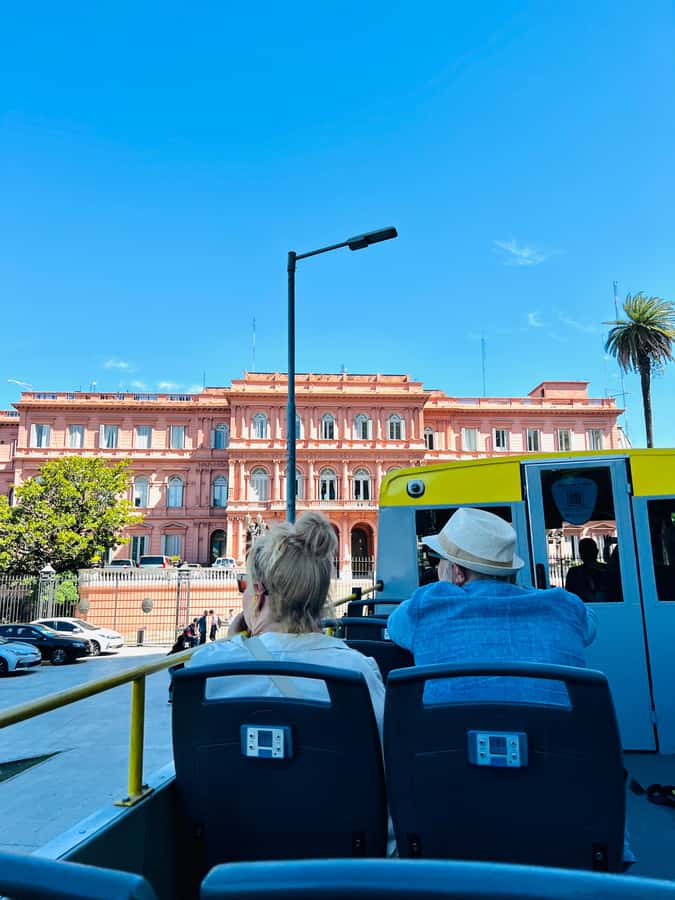
La Boca is one of the most visually distinctive parts of the ride. Caminito is known for colorful streets, painted buildings, and a strong connection to Buenos Aires tango culture. This is a place where I would get off rather than simply photograph it through the bus window.
Give yourself time to walk around the colorful squares and streets. One practical warning is that the stop may not put you directly beside every sight, so check the walking distance before you leave the bus. A stop called La Boca or Caminito is useful, but it does not mean every attraction is at the curb.
La Boca also shows why the 48-hour or 72-hour ticket can be handy. You can visit the area without trying to squeeze it between several other districts on one long day. After exploring, you return to the stop and continue when the next bus arrives.
Puerto Madero and the Woman’s Bridge
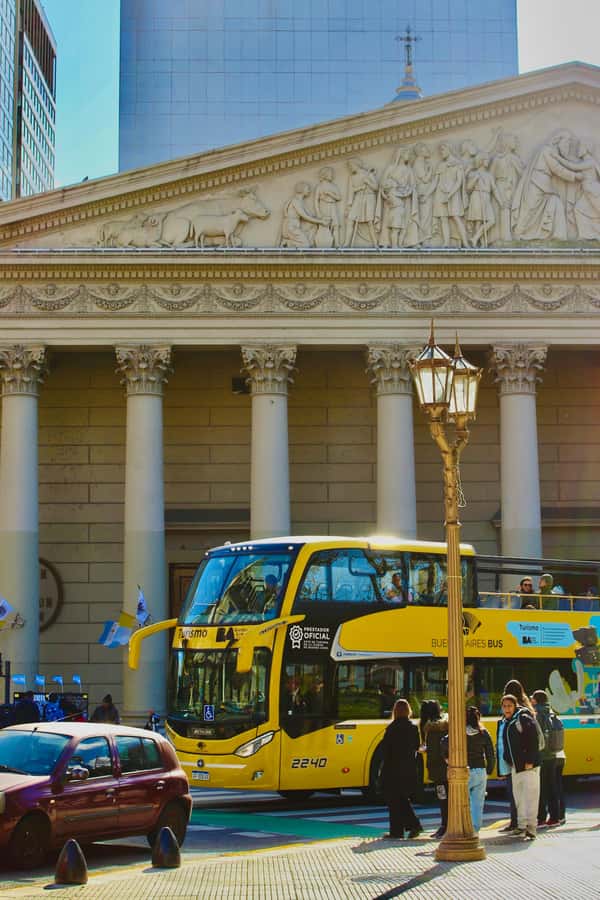
Puerto Madero provides a sharp change from the older central districts. The waterfront setting and modern architecture make this one of the better stretches for photographs, especially from the upper deck.
The Woman’s Bridge, or Puente de la Mujer, is a prominent feature here. The bus gives you a moving view of the bridge and the surrounding waterfront, but you will want to hop off if you want a closer look or a slower walk.
This section is also a good reminder of the bus’s basic value. You are not just riding between isolated monuments. You are seeing how Buenos Aires shifts from historic civic center to newer waterfront district, often without the hassle of arranging separate transport.
Food and drinks are not included, though the ticket may provide discounts at selected restaurants. Check the current benefit list before making plans, since the available offers are part of the bus package and may change.
A completely different sort of day in Buenos Aires:
- Buenos Aires: Piazzolla Tango Show with Optional Dinner
★ 4.4 · 2,122 reviews - Buenos Aires: City Highlights Guided Tour with Transfer
★ 4.7 · 1,946 reviews - Buenos Aires: La Boca Guided Walking Tour in English
★ 4.8 · 1,587 reviews - Buenos Aires: La Recoleta Cemetery Guided Tour in English
★ 4.8 · 1,359 reviews
Recoleta, Palermo, and the Rose Garden
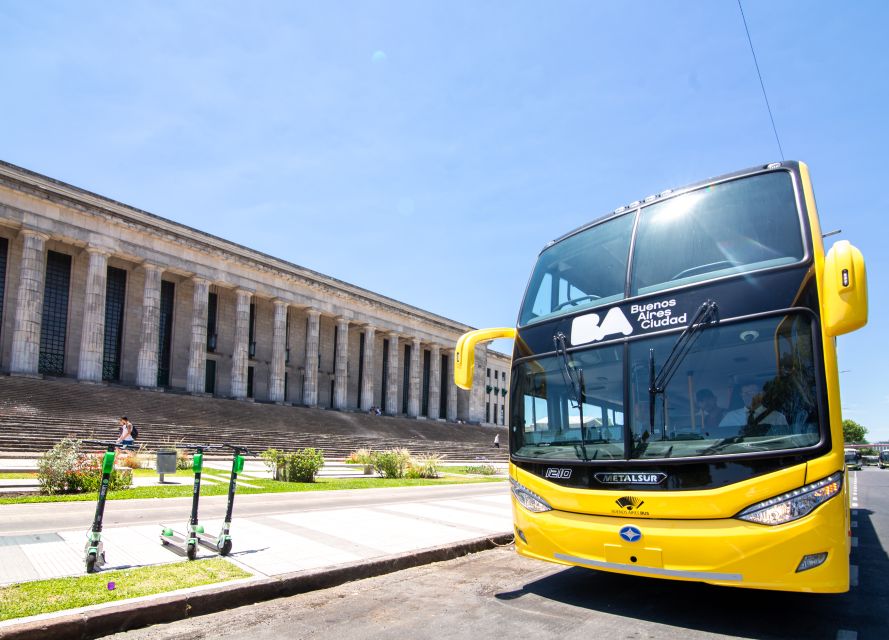
The northern part of the route takes you toward Recoleta and Palermo. Recoleta is known for elegant architecture and major cultural sights, while Palermo has a greener, more open feel. The route also passes the Rose Garden, or El Rosedal, which provides one of the better views from the top deck.
If you want a broad sense of Buenos Aires neighborhoods, this is an important section. The city does not feel the same from one district to the next, and the bus lets you compare them without spending your day checking directions.
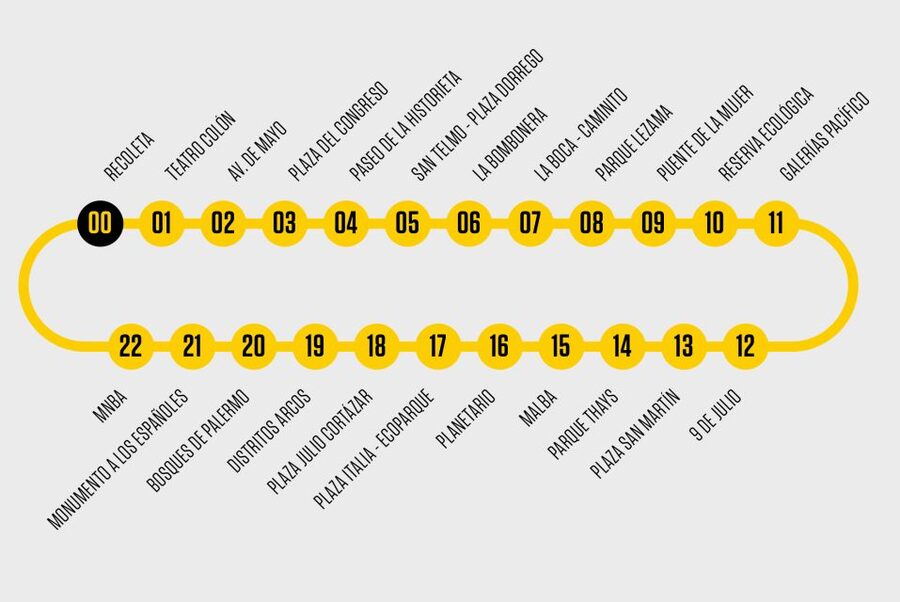
A stop may still require a walk to the actual attraction. One useful piece of advice is to treat the bus map as a rough planning tool, not a perfect walking guide. Some passengers found the route map’s small type difficult to read, and the stop numbers did not always line up clearly with the audio commentary.
If a particular attraction is your main reason for taking the bus, confirm that it is open before getting off. Temporary closures and Monday museum closures have caused wasted trips. The bus ticket does not include entrance fees.
The audio guide: useful, but uneven
Headphones are included, and the audio guide is offered in Chinese, English, French, German, Italian, Japanese, Portuguese, Russian, and Spanish. That language choice is a real advantage for international visitors.
At its best, the commentary gives you context while you pass monuments and neighborhoods. It can help turn a long ride into more than a window tour. English-language users have described the narration as interesting and informative, while others found it thin, poorly translated, or delivered in an artificial-sounding voice.
The most common practical complaint concerns volume. Spanish music between information sections can be much louder than the spoken commentary. You may find yourself adjusting the volume repeatedly or removing one earbud to hear the road and staff.
The commentary can also become less detailed later in the route. If you care most about history, bring your own notes or use the audio as a general introduction rather than your only source of information. The bus is strongest as transport and orientation, with commentary as a useful extra.
Open-air views or enclosed comfort
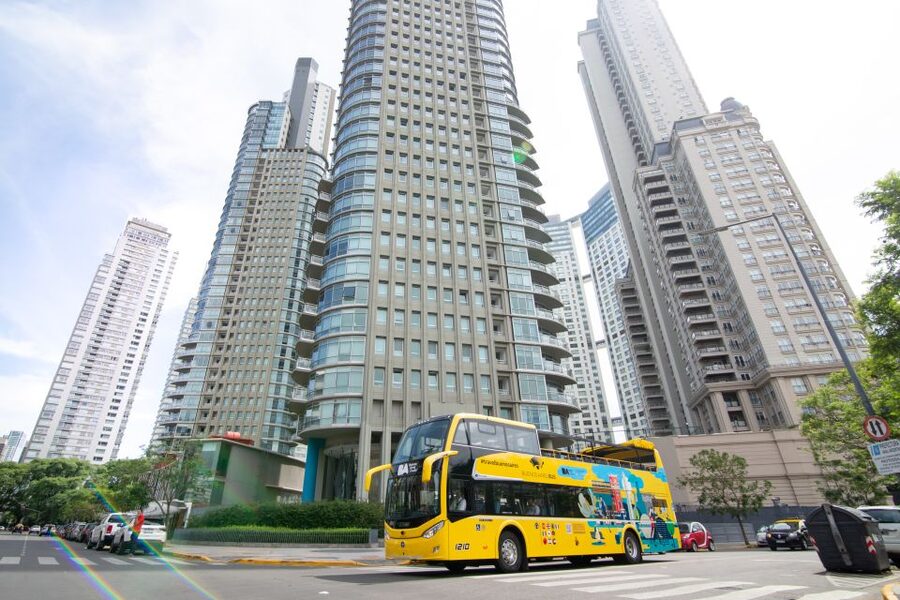
The upper deck is the place to sit for photographs. You get a clearer view of the Obelisk, the Woman’s Bridge, El Rosedal, and the changing architecture along the route. On a warm, clear day, it makes the ride feel much more connected to the city.
Wind and road noise can make the commentary harder to hear upstairs. If the weather turns cold or wet, look for a bus with an enclosed upper deck and panoramic windows. That option has been especially appreciated on cooler days.
Some older buses have had tired interiors or audio equipment that did not work perfectly. This does not appear to define the whole service, but it is worth keeping expectations realistic. You are buying a functional city sightseeing system, not a luxury coach.
Smoking, alcohol, and pets are not allowed onboard. Assistance dogs are permitted. The buses are wheelchair accessible, which makes this a more practical option for many people than an all-day walking tour.
Choosing 24, 48, or 72 hours

The 24-hour ticket is enough if you are moving quickly or only want one full orientation day. A short-stay visitor with around 20 hours in the city can use it well by riding the complete route and getting off at one or two priority stops.
The 48-hour option is the most balanced choice for many people. Use the first day to ride much of the route and identify your preferred districts. Use the second day for La Boca, Recoleta, Palermo, or Puerto Madero at a slower pace.
The 72-hour ticket makes sense if you want the bus to help with transport between districts over several days. It can also be good for a relaxed schedule, families, or anyone who dislikes rushing. Remember that the ticket period begins with your first boarding, not necessarily at the start of the morning, so there is no need to race to a 9 a.m. departure.
At $35 per person, the value depends on how often you use it. For one ride only, it is a long sightseeing circuit with convenient views. For repeated hops between distant neighborhoods, it can cost less than several taxis or app-based rides, while also supplying an audio introduction.
Ticket exchange and practical planning
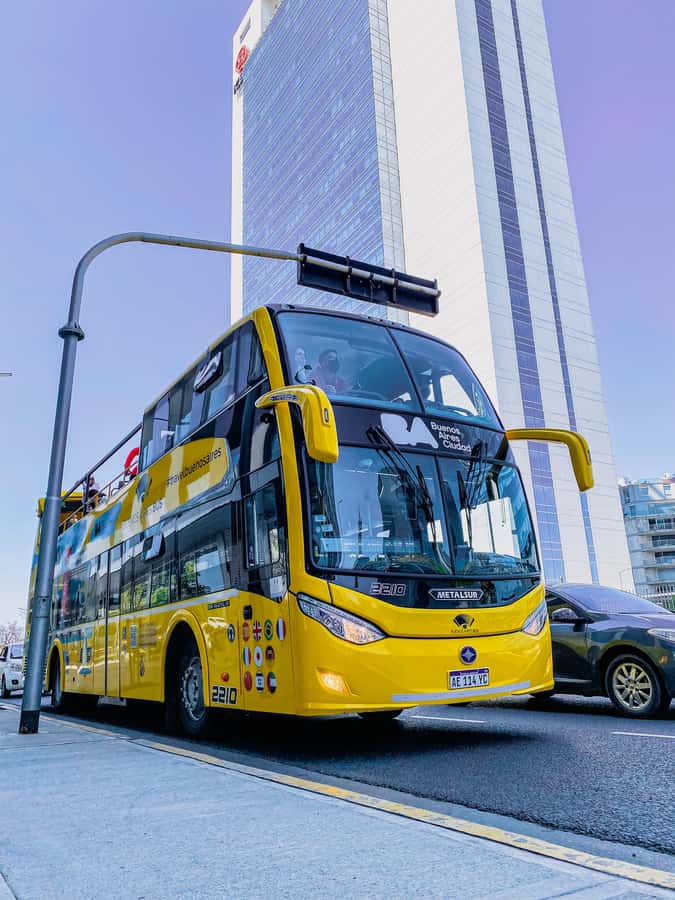
Before boarding, exchange your voucher at the ticket counter at 466 Córdoba Avenue. Arrive about 15 minutes before you want to begin. Once you receive the official ticket, you can board at any of the bus stops.
Bring your passport or identity card. Hotel pickup and drop-off are not included, so you must reach the exchange office yourself. This is the one part of the process that can be inconvenient if your hotel is far from Córdoba Avenue, especially when a nearby kiosk or bus stop appears easier to reach.
Use the online tracking and check the official Buenos Aires Bus website for current service information. The printed map may be hard to read, and its numbering can be confusing beside the audio guide. It helps to note the stop name, not only the number, before getting off.
The ticket includes discounts at selected restaurants, shops, clothing stores, and attractions. These offers can improve the value, but check the exact conditions at the ticket office before counting on a particular discount.
Who will get the most from this bus?
I would recommend it to a first-time visitor who wants a clear overview before exploring independently. Buenos Aires is large enough that the bus can save both time and mental energy.
It also suits solo visitors, short-stay guests, photographers, and anyone who wants to compare several districts in one day. The ability to sit through a full circuit, then return to selected stops, is the smartest way to use it.
You may prefer another plan if you want detailed history at every stop, direct drop-off beside each attraction, or a perfectly quiet audio experience. The route is long, traffic can slow it down, and the commentary is not equally strong in every language.
Should you book the Buenos Aires Bus?
Book it if you want a flexible city overview, especially on your first day or during a short visit. I would choose 48 hours if your schedule allows it, since the route is too long to combine comfortably with many stops in one day.
Choose 24 hours for a fast orientation, or 72 hours if you want a relaxed transport option across several districts. Sit upstairs for the best views, bring patience for traffic, and verify attraction opening times before getting off.
The bus will not replace walking around Buenos Aires. It does something more practical: it shows you where to walk, what deserves another look, and how far apart the city’s main districts really are. For $35, that can be a sensible deal.
FAQ
How long does the complete bus route take?
The full route takes approximately three hours and 20 minutes without stops. Traffic, demonstrations, special events, and road conditions may make the ride longer.
How often do the buses run?
Buses are advertised to run about every 15 minutes. Actual waits can vary because of traffic and crowding.
What ticket durations are available?
You can choose a 24-hour, 48-hour, or 72-hour ticket, depending on the option available when you book.
Where do I exchange my voucher?
You must exchange the voucher at the ticket counter at 466 Córdoba Avenue before boarding.
Can I board at any stop after exchanging my voucher?
Yes. Once you receive your official ticket, you can board at any of the designated Buenos Aires Bus stops.
Which languages are available for the audio guide?
The audio guide is available in Chinese, English, French, German, Italian, Japanese, Portuguese, Russian, and Spanish.
Are headphones included?
Yes. Headphones are included with the bus ticket.
Is the bus wheelchair accessible?
Yes. The service is wheelchair accessible.
Are attraction entry fees included?
No. Entrance fees for museums and other attractions are not included.
Can I cancel my booking?
You can cancel up to 24 hours in advance for a full refund. A reserve-now, pay-later option is also available when offered for your selected date.
Latest additions in Buenos Aires
- Buenos Aires: 7 Hour Small Group “BA 101” Walk★ 5.0 · 3 reviews
- Unique Tigre and Delta Private Day Cruise Navegation★ 5.0 · 3 reviews
- Buenos Aires: Customizable City Tour in Polish★ 4.7 · 3 reviews
- Buenos Aires After Dark: A City Lights & Sunset Experience★ 5.0 · 3 reviews
- Tango Show at El Querandi with optional Dinner★ 4.2 · 3 reviews
- Velez Sarsfield Football Match★ 5.0 · 3 reviews
- Caminito, La Boca: vibrant neighborhood★ 5.0 · 3 reviews
- Café de los Angelitos – Traditional Night in Buenos Aires★ 4.8 · 3 reviews
Hop-On Hop-Off Bus Tours, compared.

Browse the lists this tour appears in