
Reviewed · HISTORICAL TOURS
Nazis in Buenos Aires: a historical walking tour
History still has addresses. This Buenos Aires walk connects wartime politics, Nazi fugitives, Jewish life, and Argentina’s uneasy postwar choices through real city sites. I like the evidence-based storytelling and the way guide Max uses photos and graphics to make each stop clear. I also like its fair treatment of difficult political questions, though the tour can feel more like a serious street seminar than a light sightseeing stroll.
The $25 price is good value if you care about 20th-century history. You get about two and a half hours with an English-speaking history teacher from the University of Buenos Aires, but you should bring comfortable shoes and water, and note that the route is not suitable for wheelchair users or children under 10.
In This Review
- Key points to know before booking
- Why this difficult subject works as a walking tour
- Starting beside Palacio Libertad and Juana Azurduy
- Luna Park and the scale of a Nazi gathering
- ABC Restaurant and the Eichmann story
- Museo de Armas and the postwar questions
- Palacio San Martín and the Perón-era setting
- Italian Circle and the Jewish community in Buenos Aires
- The Israeli Embassy memorial and the walk’s difficult ending
- Max’s teaching style and the level of discussion
- Is $25 good value for two and a half hours?
- Practical advice for making the walk comfortable
- Who should book this Buenos Aires history walk?
- Should you book Nazis in Buenos Aires?
- FAQ
- How long does the tour last?
- What language is the tour conducted in?
- Where does the tour begin?
- How will I recognize the guide?
- Where does the tour finish?
- Which places are visited?
- Are entrance fees included?
- Is the tour suitable for children?
- What should I bring?
Key points to know before booking
- The tour links six central Buenos Aires locations across Recoleta, Retiro, and Microcentro with World War II, the Holocaust, Peronism, and Argentina’s Jewish community.
- Adolf Eichmann’s capture is a major chapter, including the place where he reportedly sat for coffee before his identity became known.
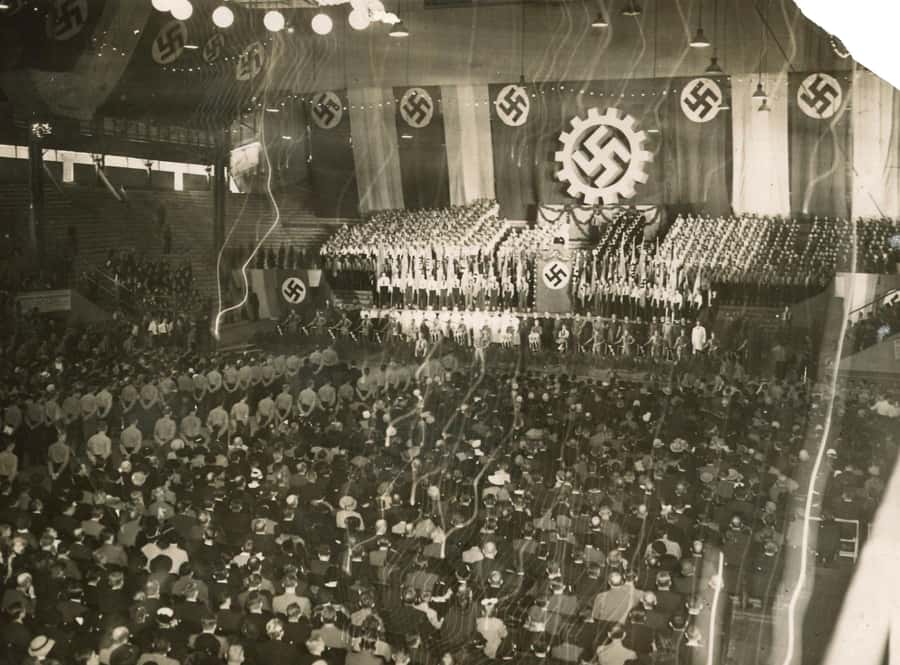
- Luna Park adds a striking physical setting, since the still-operating stadium hosted a Nazi gathering attended by about 15,000 people.
- The final memorial carries painful modern meaning, marking the former Israeli embassy site and the worst terrorist attack in Latin American history.
- Max teaches rather than simply recites facts, using images, questions, and careful distinctions between proven evidence and disputed claims.
- Plan for walking and standing, with a 10-minute restroom break during the roughly 2.5-hour experience.
Why this difficult subject works as a walking tour
The title is blunt, and the subject is not comfortable. Argentina’s connection to Nazi war criminals after 1945 has produced heated arguments about immigration, government policy, political ideology, and public knowledge. A useful tour must avoid turning that story into a simple claim that an entire country welcomed Nazis, or that every part of the postwar escape network is equally proven.
That balance is one of the strongest reasons to choose this experience. Max presents the central questions clearly: Which Nazi war criminals reached Argentina? Who helped them? Did Argentine officials know about their arrival? Was migration encouraged by parts of the government, or did different agencies and political groups act independently?
You will also hear about Argentina before and after World War II, including the presidency of Juan Domingo Perón. The tour treats Perón as a complicated and highly influential political figure rather than reducing him to a single label. That wider frame matters because the Nazi escape story did not happen in a vacuum. It connects to Argentina’s political climate, foreign relations, immigration policies, and the country’s large Jewish population.
I would choose this walk if you want history tied to actual streets and buildings. You are not just looking at a photograph in a museum. You are standing outside places where political meetings, private conversations, public attacks, and acts of remembrance took place.
More Historical Tours in Buenos Aires
- San Telmo: Historical Guided Tour with Street Food & Drinks
★ 5.0 · 87 reviews - Buenos Aires: La Boca Art and History Walking Tour
★ 4.8 · 55 reviews - Recoleta Cemetery – Small Group Tour of History & Secrets
★ 5.0 · 53 reviews
Starting beside Palacio Libertad and Juana Azurduy
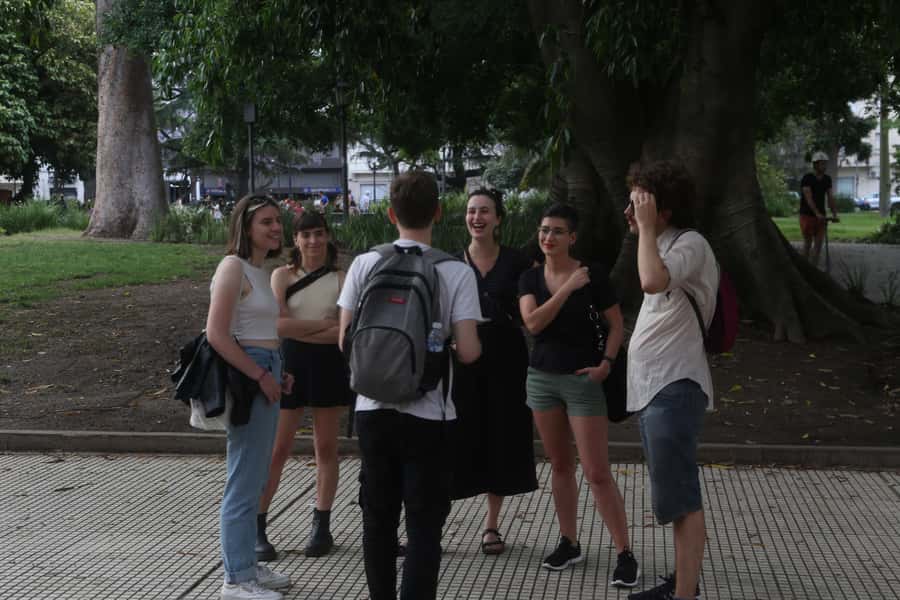
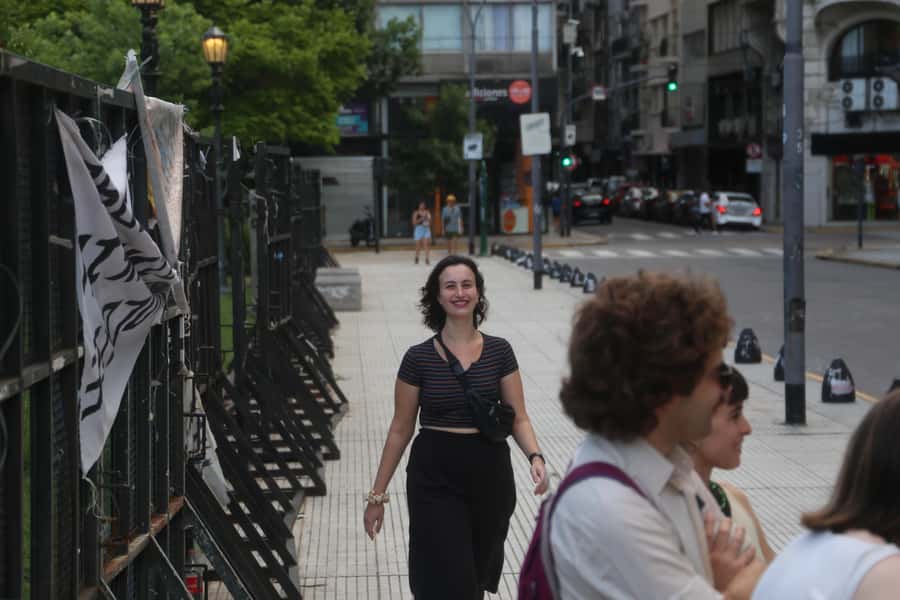
The meeting point is a few meters from the Monument to Juana Azurduy, by the benches facing Palacio Libertad, formerly known as the CCK. Max wears a black cap, which makes the group easier to spot.
This is a practical starting point in central Buenos Aires, but give yourself time to locate the exact benches. The tour description uses both a two-hour and a two-and-a-half-hour duration, so I would plan for the full 2.5 hours. The route contains several substantial stops, and Max’s style includes explanations, questions, and discussion rather than a quick stop-and-go format.
The opening section sets the background. Expect a basic introduction to World War II, the Holocaust, Argentina’s political setting, and the questions the tour will test along the way. You do not need specialist training, but a basic understanding of the war and Holocaust will help you follow the names and events.
At the same time, the guide is prepared to explain the basics. You can ask about Nazism, Judaism, the war, or Argentine history without needing to arrive as an expert.
Luna Park and the scale of a Nazi gathering
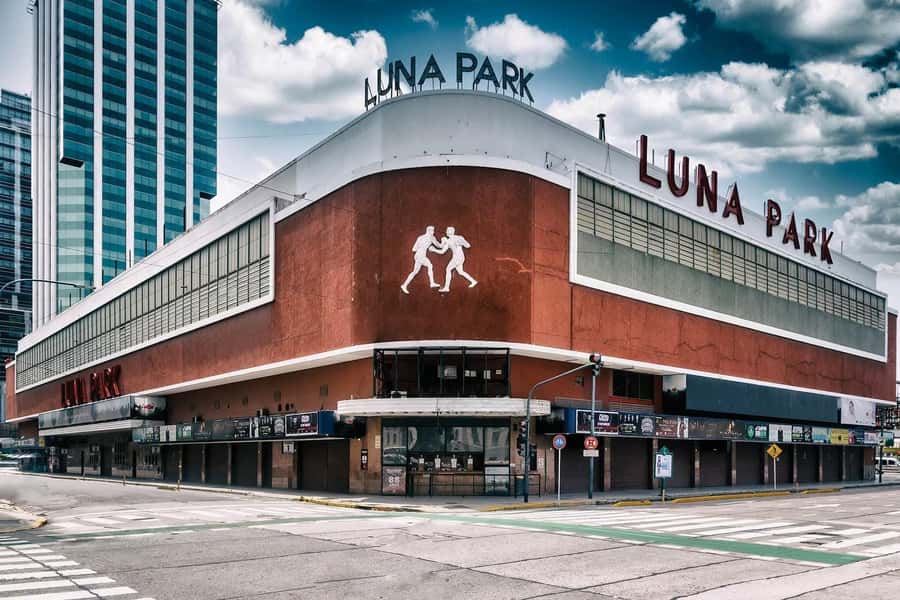
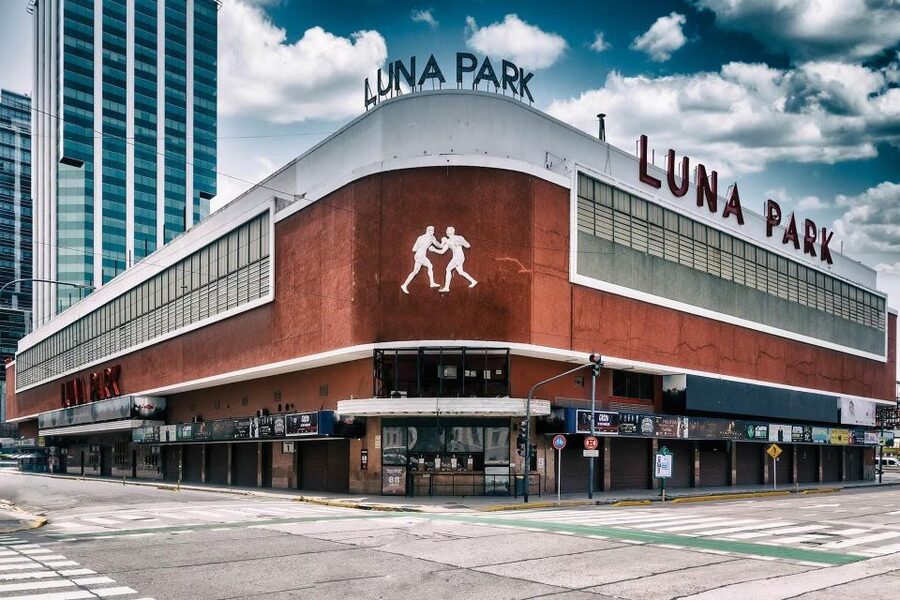
The first major visit is Luna Park Stadium, where you spend about 20 minutes. The building is still used, which gives the stop an unusual force. This is not an abandoned site with a faded plaque. It remains part of the city’s working life.
The key fact here is the reported Nazi meeting attended by roughly 15,000 people. That number changes the way you think about extremist politics in Argentina before and around the war. It suggests a public audience and an organized movement, not just a handful of isolated sympathizers meeting in private.
Max uses the setting to explain the political context and to separate what is documented from what is often repeated without proof. The stadium itself may not look dramatic during a normal visit, and entry is not included, so the value comes from the guide’s account and the connection between the present building and its earlier use.
You should also know that the tour does not promise entry into Luna Park Stadium. Treat this as an exterior or designated visit unless availability on the day says otherwise. The stop is still worthwhile because the building provides a concrete backdrop for a difficult question: how visible were fascist and Nazi-aligned ideas in Argentine public life?
ABC Restaurant and the Eichmann story
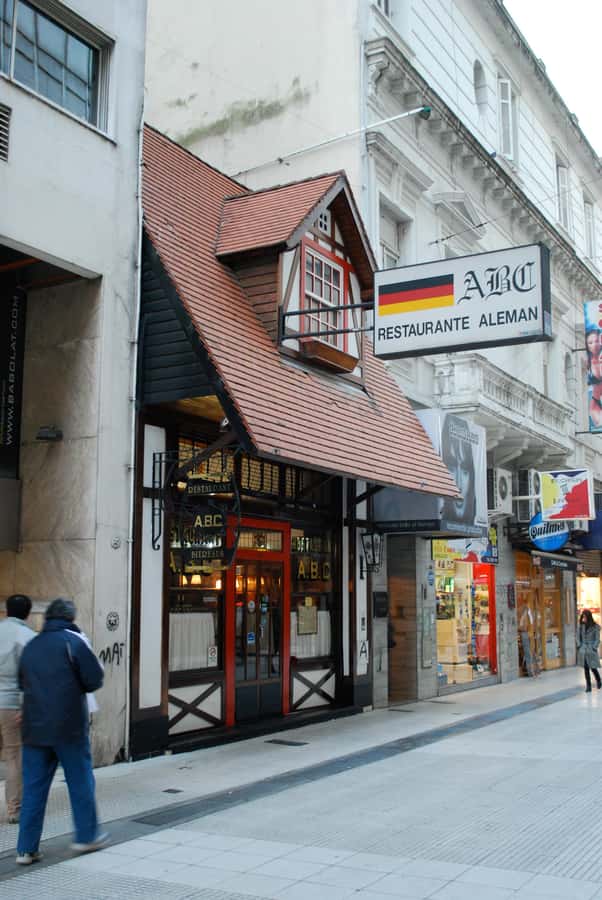
The next stop is ABC Restaurant, also allotted about 20 minutes. This is where the tour turns from large public gatherings to the spy-like story of Adolf Eichmann’s identification and capture.
The detail that gives the stop its shape is simple and almost ordinary: Eichmann sat there for a cup of coffee. That everyday action sits beside one of the most important manhunts connected to Nazi crimes. The contrast is unsettling. A person linked to mass murder could appear in a normal public setting, living a life that looked unremarkable to those around him.
The tour explains how Eichmann was identified and captured, and it places that story within the larger movement of Nazi war criminals who came to Argentina after 1945. This is one of the points where Max’s careful approach is especially useful. The story is dramatic, but the walk does not treat it as a thriller detached from the crimes that made Eichmann notorious.
If this is the part of the tour that interests you most, pay attention to the difference between a person’s assumed identity, available evidence, and the process by which investigators established who he was. The story is more than a famous arrest. It raises questions about international justice, state sovereignty, intelligence work, and the responsibility of governments that knew, or may have known, where fugitives were living.
More Walking Tours in Buenos Aires
- Buenos Aires Hop-On Hop-Off Bus, Free Walking Tours & Discounts
★ 4.5 · 2,218 reviews - Buenos Aires: La Boca Guided Walking Tour in English
★ 4.8 · 1,587 reviews - Buenos Aires: Personalized 2 to 8-Hour Private Walking Tour
★ 4.7 · 149 reviews - Buenos Aires: San Telmo and Market Guided Walking Tour
★ 4.8 · 102 reviews
Museo de Armas and the postwar questions
The Museo de Armas de la Nación Tte. Gral. Pablo Riccheri is another 20-minute stop. The tour uses this location to expand the discussion beyond individual fugitives.
A military museum may seem like an unusual place to discuss Nazi migration, but it helps bring in Argentina’s institutions, political relationships, and postwar power structures. This section is likely to appeal to you if you want more than stories about famous criminals. It asks how government systems, military circles, and political decisions shaped the setting in which fugitives could arrive and settle.
The tour’s central debate returns here: was Nazi immigration known or promoted by the Argentine government? There is no value in pretending the answer is effortless. Argentina was not one single actor, and political policies could shift over time. Max’s method, according to the experience’s description and the detailed feedback about his guiding, is to identify the evidence and admit uncertainty where the record does not give a firm answer.
That honesty is important on a subject filled with sensational claims. You may leave with fewer neat slogans, but you should have a better grasp of what is documented, what is debated, and why the argument continues.
Palacio San Martín and the Perón-era setting
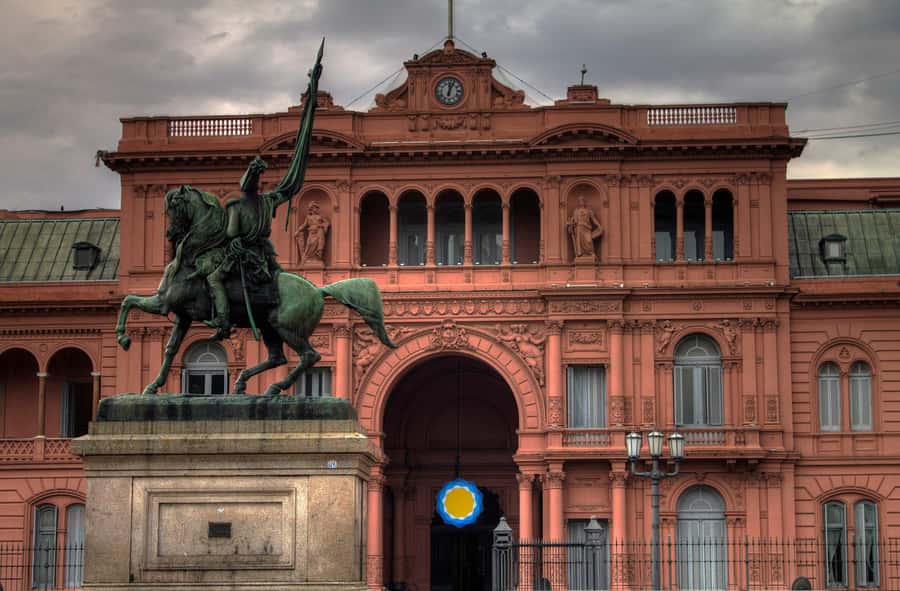
The walk continues to Palacio San Martín, with another approximately 20-minute visit. This stop helps connect the international story to Argentine diplomacy and national politics.
You will learn about debates surrounding Juan Domingo Perón, arguably the most important political figure in Argentina’s 20th century. The point is not simply to ask if Perón personally supported Nazism. The more useful questions concern the state, immigration, political alliances, public attitudes, and the many people and agencies involved in Argentina’s postwar direction.
This is also where the tour may move beyond the narrow subject promised by its title. One person who joined the experience wanted more time on Nazis on the run and less on the political situation. That is a fair warning. If your only goal is a list of escape routes and war criminals, parts of the walk may feel too broad.
I see the wider political material as a strength, but your expectations matter. The guide is building a historical explanation, not presenting a crime-history checklist. The result gives you more context, though it may provide fewer sensational details than the title suggests.
Italian Circle and the Jewish community in Buenos Aires
The Italian Circle of Buenos Aires is the next 20-minute stop. Here the tour continues exploring the European connections that shaped Argentine society and politics.
The walk also explains the fate of Buenos Aires’ Jewish community, described as the second largest in the whole continent. That makes the subject much larger than the arrival of Nazi fugitives. You will consider how Jewish life in the city was affected by wartime events, postwar immigration, political tensions, and later violence.
This part gives the tour moral and social balance. Without it, the story could focus too heavily on Nazi criminals and the governments that sheltered or failed to pursue them. By including the Jewish community, the guide keeps attention on the people who lived with the consequences.
The discussion also prepares you for the final stop. The tour connects World War II and the Holocaust to later antisemitic violence in Argentina, including a neo-Nazi attack in the 1960s. The point is not to treat the past as sealed away. Political ideas, prejudice, and violence can change form while retaining old targets.
The Israeli Embassy memorial and the walk’s difficult ending
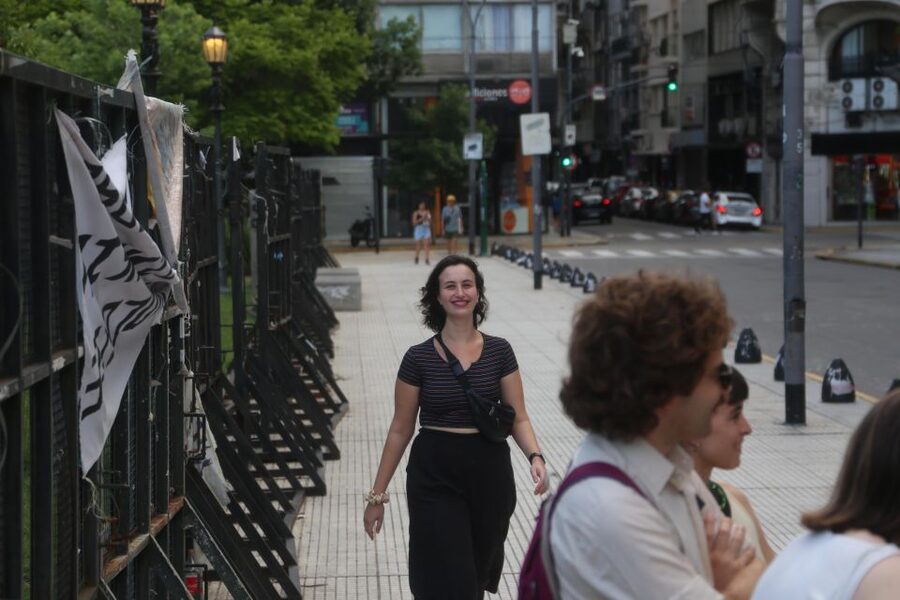
The tour ends at Plaza Embajada de Israel, the memorial site of the former Israeli embassy. This is the location associated with the worst terrorist attack in Latin American history.
Expect the final section to be the most emotionally difficult. The route moves from wartime Europe and postwar escape networks to violence in Buenos Aires itself. It also links the story to the neo-Nazi attack in the 1960s and to the experience of the city’s Jewish community.
The ending gives the walk a present-day edge. You are not being asked to study Nazism as a remote European subject. You are looking at how antisemitism, political extremism, state failure, and questions of justice affected Argentina across different decades.
The meeting details contain a small logistical inconsistency: the route description finishes at Plaza Embajada de Israel, while another note says the activity ends back at the meeting point. Confirm the exact finish when you book or meet Max. Either way, allow enough time after the tour rather than scheduling a tight appointment immediately afterward.
Max’s teaching style and the level of discussion
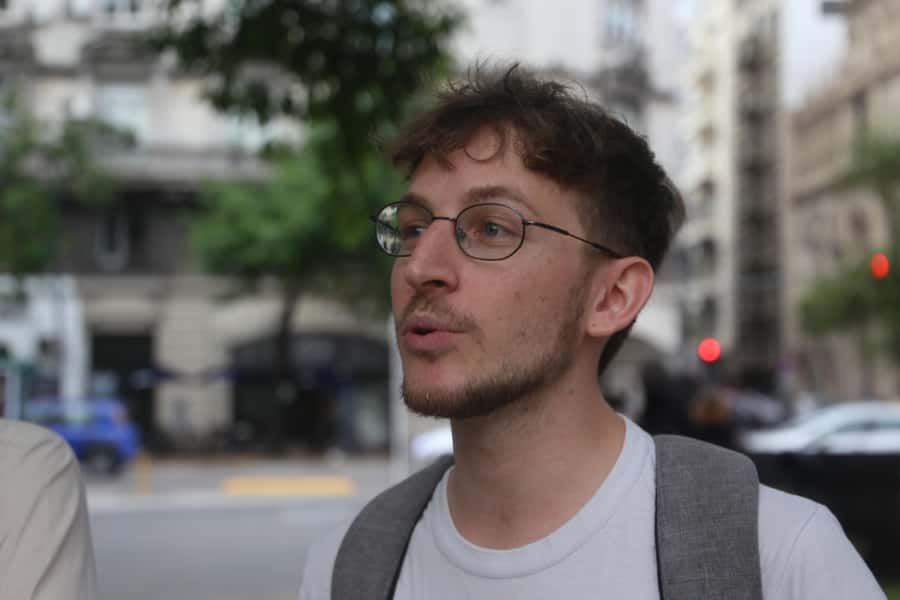
Max is a history teacher from the University of Buenos Aires, and that background shapes the experience. He is described as friendly, clear, passionate, and willing to answer questions. Just as important, he is willing to say when a point is not certain.
I like that approach for this topic. A guide who presents every disputed claim as settled may sound confident but leave you with a distorted picture. Max uses relevant images and graphics at the stops, which helps when the subject contains unfamiliar names, dates, and political groups.
The experience also appears to work for mixed levels of background. A teenager aged 14 was able to take part with a parent, while people with stronger history training appreciated the detailed treatment. The stated minimum age is 10, but the tone is serious, and the material is better suited to mature children and adults.
The group format includes discussion. If you prefer a silent walk with short facts, this may not be your ideal tour. If you enjoy asking questions and testing ideas, the format should suit you well.
Is $25 good value for two and a half hours?
At $25 per person, this is a strong value for a specialized English-language tour. You are paying for a guide-led historical interpretation across central Buenos Aires, not for admission to a museum or a collection of attractions.
The price looks especially fair if you would otherwise spend hours reading about Eichmann, Perón, postwar immigration, and the Israeli embassy attack without seeing how the stories connect. The guide supplies structure, location, images, and a chance to ask questions.
The value is lower if you want a broad introduction to Buenos Aires or a relaxed architecture walk. This is a focused history experience, and much of its appeal depends on your interest in World War II, the Holocaust, Jewish history, political extremism, and Argentina’s modern past.
Entry to Casa Rosada, Libertad Synagogue, and Luna Park Stadium is not included. Those exclusions are worth noting, but they do not weaken the basic value because the tour’s main product is the guiding and the route between significant sites.
You can cancel up to 24 hours before the experience for a full refund, and a reserve-now, pay-later option is available. Those policies make it easier to fit the walk into a changing Buenos Aires schedule.
Practical advice for making the walk comfortable
Wear comfortable shoes. The route crosses several central districts and includes repeated periods of standing while Max explains the site.
Bring water, particularly if you are visiting Buenos Aires in warm weather. A 10-minute pause is provided for the restroom, but do not count on frequent breaks beyond that.
The tour is in English only. It is not suitable for wheelchair users, and the minimum age is 10. Ask about the final stopping point because the route information gives two different descriptions of where the experience ends.
Most of all, arrive ready for a serious discussion. The subject includes mass murder, antisemitism, terrorism, and political violence. The tone is thoughtful and academic, but the material can still be upsetting.
Who should book this Buenos Aires history walk?
I would book it if you want to understand Argentina through a difficult and often oversimplified chapter. It suits history enthusiasts, people interested in Jewish heritage, students of World War II, and anyone curious about Perón-era politics and Argentina’s place after 1945.
It is also a good choice if you have already taken a standard city tour and want something more focused. The central locations are familiar parts of Buenos Aires, but the stories attached to them may be new to you.
I would skip it if you want light entertainment, shopping, grand architecture, or a general introduction to the city. The pace is purposeful, the topic is heavy, and some of the political context may take more time than you expect.
Should you book Nazis in Buenos Aires?
Yes, if you want a careful, place-based history lesson rather than a sensational tale about fugitives. Max’s strongest qualities are his preparation, clear explanations, willingness to handle questions, and care with disputed evidence.
The best reason to book is the way the walk connects seemingly separate subjects: a Nazi gathering at Luna Park, Eichmann’s presence in ordinary Buenos Aires, postwar government policy, Perón, the Jewish community, a neo-Nazi attack, and the Israeli embassy memorial. The main caution is that the tour gives substantial attention to politics and context, so it may not satisfy anyone seeking only escape stories.
For $25, comfortable shoes, and 2.5 hours, this is one of the more distinctive history experiences in Buenos Aires. It asks you to think, not just look, and that is exactly why it is worth your time.
FAQ
How long does the tour last?
The activity is scheduled for about 2.5 hours. One description also refers to a two-hour walking tour, so you should allow the full 2.5 hours.
What language is the tour conducted in?
The live guided tour is conducted in English.
Where does the tour begin?
It begins a few meters from the Monument to Juana Azurduy, by the benches facing Palacio Libertad, formerly known as the CCK.
How will I recognize the guide?
Max wears a black cap and waits by the benches facing Palacio Libertad.
Where does the tour finish?
The route description finishes at Plaza Embajada de Israel. Another meeting note says the activity ends back at the meeting point, so confirm the exact end location when you meet the guide.
Which places are visited?
The route includes Luna Park Stadium, ABC Restaurant, Museo de Armas de la Nación Tte. Gral. Pablo Riccheri, Palacio San Martín, and the Italian Circle of Buenos Aires, finishing at Plaza Embajada de Israel.
Are entrance fees included?
No. Entry to Casa Rosada, Libertad Synagogue, and Luna Park Stadium is not included.
Is the tour suitable for children?
It is not suitable for children under 10 years old. The subject is serious and includes World War II, the Holocaust, antisemitism, terrorism, and political violence.
What should I bring?
Bring comfortable shoes and water. The tour also includes a 10-minute pause to use the restroom.
Latest additions in Buenos Aires
- Buenos Aires: 7 Hour Small Group “BA 101” Walk★ 5.0 · 3 reviews
- Unique Tigre and Delta Private Day Cruise Navegation★ 5.0 · 3 reviews
- Buenos Aires: Customizable City Tour in Polish★ 4.7 · 3 reviews
- Buenos Aires After Dark: A City Lights & Sunset Experience★ 5.0 · 3 reviews
- Tango Show at El Querandi with optional Dinner★ 4.2 · 3 reviews
- Velez Sarsfield Football Match★ 5.0 · 3 reviews
- Caminito, La Boca: vibrant neighborhood★ 5.0 · 3 reviews
- Café de los Angelitos – Traditional Night in Buenos Aires★ 4.8 · 3 reviews
Historical Tours, compared.
Historical Guided Tour with Street Food & Drinks
Read our review →
Recoleta Cemetery – Small Group Tour of History & Secrets
Read our review →
Browse the lists this tour appears in