
Reviewed · MUSEUMS
El Calafate History Museum Tour
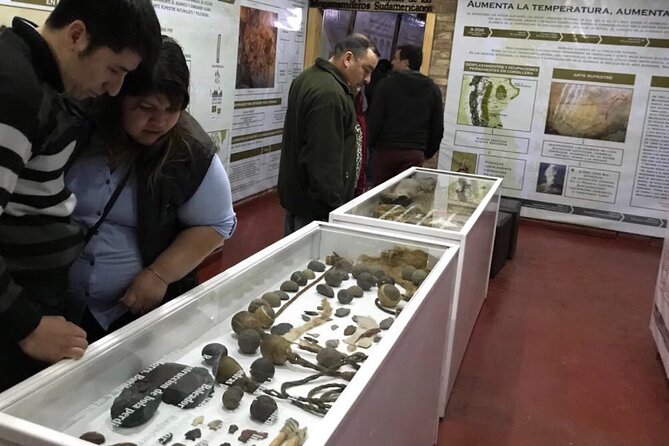
Time travel costs less than lunch. The El Calafate Historical Interpretation Center gives you a clear, compact look at 100 million years of Southern Patagonia, from dinosaur fossils and extinct mega-mammals to glaciers and human culture. I like the way graphics, videos, and bone displays turn a very large subject into something you can follow. I also like the flexible opening hours, which make this an easy stop before or after a glacier excursion.
The main drawback is size. You should not expect a full-day museum with endless galleries. The center is described as a roughly two-hour visit, though your total stop can be anywhere from one to four hours depending on your pace. A small note from the available feedback is useful: reading the displays may work better than relying on hearing aids or audio material.
In This Review
- Key points to know before you go
- Why this small museum helps you understand El Calafate
- The 100-million-year story begins with fossils
- Glaciers and the Pleistocene put your day outside in context
- Tehuelche culture keeps the story human
- What the visit feels like inside the center
- Location and timing: easy to fit into your El Calafate plans
- Is $15 a fair price?
- Who will get the most from this experience?
- Useful details before booking
- Should you book the El Calafate History Museum Tour?
- FAQ
- How much does the El Calafate History Museum Tour cost?
- How long does the museum visit take?
- What are the museum’s opening hours?
- Which languages are available?
- Is there a minimum age for the experience?
- Can I cancel for a full refund?
Key points to know before you go
- A 100-million-year timeline: The museum connects dinosaurs, mega-mammals, ice ages, glaciers, and human history in one chronological visit.
- About seven blocks from Libertador Avenue: You can reach it on foot from the central part of El Calafate, rather than arranging a separate excursion transfer.
- Good value at $15 per person: The admission covers the museum and all taxes, making this a modest-cost cultural stop in an expensive Patagonian destination.
- Open daily from 10:00 a.m. to 8:00 p.m.: That long schedule gives you room to fit the center around boat trips, hikes, and changing weather.
- Several language options: Information is available in Spanish, French, English, Italian, and Portuguese, and the visit may be operated with multilingual assistance.
- Suitable for families: There is no minimum age, but children must stay with an adult.
Why this small museum helps you understand El Calafate
El Calafate is best known as a base for glaciers, especially the great ice fields and dramatic frozen walls outside town. It is easy to focus only on the scenery. This museum gives you the background that makes those sights easier to understand.
The center presents Patagonia as a place shaped by enormous stretches of time. You move from ancient animals to changing climates, then toward the people who lived in and adapted to the region. That structure matters because it links the ice you see today with the geological forces and ecological changes that came before it.
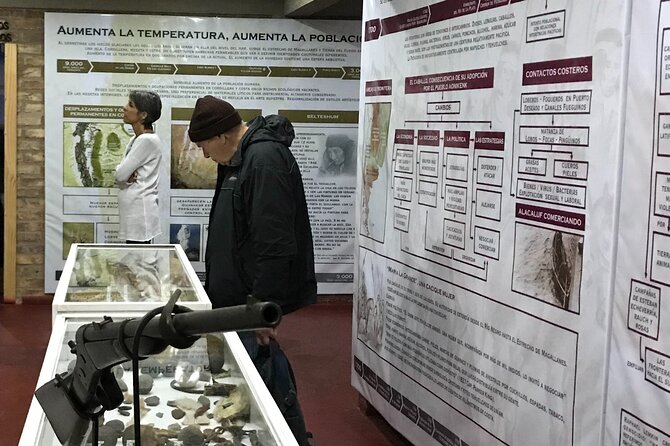
I like this approach more than a museum that simply displays a few bones with labels. The center uses graphics, videos, and mounted bones to show how the pieces fit together. You are not just looking at a fossil. You are being guided through a sequence of changes that affected the entire area.
The museum also includes the Tehuelche culture as part of the story of Patagonia. That gives the visit a human dimension. The region is not presented only as empty wilderness or a stage for geological events. You get a reminder that Southern Patagonia has also been a home, a travel route, and a cultural setting for people.
More Museums in El Calafate:
- Buenos Aires: Tickets to Boca Juniors Museum & Stadium
★ 4.5 · 581 reviews - Buenos Aires: River Plate and Boca Juniors Museum Tour
★ 4.5 · 72 reviews - Buenos Aires: Hop-On Hop-Off Bus and Football Museums
★ 4.3 · 39 reviews
The 100-million-year story begins with fossils
The oldest section focuses on the geological past of Southern Patagonia. Dinosaur skeletons and fossil material help establish the scale of time involved. The exact specimens and species are not detailed in the available information, so you should think of this as an interpretive introduction rather than a specialist fossil collection.
Still, the subject has real appeal. A dinosaur skeleton gives children an immediate point of entry, while the timeline helps adults place that animal within the much longer story of the region. If your family is tired after a day outdoors, a large fossil display can do useful work: it draws attention without requiring a complicated lecture.
The extinct mega-mammals add a different layer. These animals lived much closer to the ice-age period, so their story connects more directly with the ecological transformations of the Pleistocene. The museum uses them to show that Patagonia changed repeatedly, not just once.
I would allow time to read the explanations instead of rushing from one bone display to the next. The available visit details describe about two hours for a careful museum visit. You can shorten that to an hour if your schedule is tight, but you will get more from the center if you follow the sequence and watch the videos.
Glaciers and the Pleistocene put your day outside in context
The center explains the glacier process and the ecological changes of the Pleistocene. This is especially useful if you are planning a visit to nearby ice fields or have just returned from one. You will have seen the result of glacial action, but the museum helps explain the process behind the views.
That context can change how you look at the region. A glacier is not only a wall of blue ice or a dramatic photo stop. It is part of a long cycle involving movement, erosion, climate, water, and changing habitats. The museum gives you a way to connect those ideas without needing a science background.
The graphics and videos are important here. A moving image can show changes over time more clearly than a static text panel. Bone montages also help place extinct animals within those changing conditions. The center appears designed for general visitors, so you do not need to arrive with technical knowledge.
There is a practical advantage, too. Patagonia weather can disrupt outdoor plans, and the museum offers a useful indoor activity that still relates directly to the region. You can visit during the center’s daily 10:00 a.m. to 8:00 p.m. schedule, giving you plenty of room to adjust your day.
Tehuelche culture keeps the story human
The museum includes the Tehuelche culture in its account of Southern Patagonia. This is one of the most important parts of the visit because it keeps the presentation from becoming only a display of extinct animals and ancient ice.
You can learn about the area’s human past alongside its geological changes. The information provided does not list every subject covered in the cultural section, so I would avoid expecting a detailed ethnographic museum. Instead, treat it as one part of a broader regional history center.
That broader view is valuable. When you visit Patagonia, it is easy to see the land as remote and untouched. A historical interpretation center gives you a more accurate frame. Nature and human life have always been connected here, and the inclusion of Tehuelche culture helps make that clear.
If you have children with you, this section can also help balance the fossil displays. Younger visitors may race toward the dinosaur bones, while older children and adults can spend more time with the human story. Since there is no minimum age, families can choose how much time to give each part.
More Historical Tours in El Calafate:
- Maria Fumaça – Wines and History
★ 4.0 · 242 reviews - Nazis in Buenos Aires: a historical walking tour
★ 4.9 · 193 reviews - Bariloche: German Immigration and History Walking Tour
★ 4.8 · 169 reviews - San Telmo: Historical Guided Tour with Street Food & Drinks
★ 5.0 · 87 reviews
What the visit feels like inside the center
The experience is self-contained and focused. You visit the El Calafate Historical Interpretation Center, where visual material, videos, and bone displays guide you through the past. The supplied details describe a private activity, meaning only your group participates, though the center may also operate with multilingual assistance.
Do not confuse private participation with a long personal tour led by a specialist. The information does not promise a named guide or a fully guided lecture. The center itself is the main experience, and the exhibits provide the structure.
Language should be manageable for many international visitors. Translation options are available in Spanish, French, English, Italian, and Portuguese. If you are more comfortable reading than listening, you may want to favor the written panels. One piece of feedback specifically advised reading rather than using hearing aids, though the wording was auto-translated and not perfectly clear.
I would plan on a calm visit rather than a quick photo stop. The center is described as small but full of history, and its size means you can take in the main story without needing an entire day. If you read carefully and watch the visual material, two hours is a sensible target.
Location and timing: easy to fit into your El Calafate plans
The center is about seven blocks from Libertador Avenue. That makes it a practical walk from the central area, although the supplied information does not give a precise walking time or a specific street address.
The museum is open every day from 10:00 a.m. to 8:00 p.m. This is one of its strongest practical features. You can make it a morning activity before another booking, use it during the afternoon, or visit later in the day when outdoor plans are finished.
The listed start time is 10:00 a.m., but the visit is also described as available at any time during opening hours. Confirm the exact entry arrangement when you book, especially if you want to arrive later than the stated start time.
Transportation to and from the center is not included. Parking fees are also separate and payable at check-in. Since the museum is near public transportation and within walking distance of Libertador Avenue, you may not need a vehicle at all.
The flexible schedule is particularly helpful in El Calafate, where excursions often take most of a day. You can reserve the museum for a weather backup, a lighter day, or a first-day orientation before heading farther into the region.
Is $15 a fair price?
At $15 per person, I consider this a reasonable cultural stop. The ticket includes admission plus taxes, fees, and handling charges. That makes the cost easy to understand, with no separate museum admission waiting at the door.
The value depends on how much attention you give the displays. If you rush through in 30 minutes, the price may feel less convincing. If you spend around two hours following the geological, animal, glacial, and human sections, the admission buys a useful introduction to the region.
You should budget extra for parking, snacks, coffee, tea, or non-alcoholic drinks if you want them. Souvenir photos are also available for purchase. None of these extras are included, but they are optional rather than hidden parts of the main experience.
Compared with a full-day Patagonian excursion, this is a low-cost addition. It does not replace a glacier trip, a boat ride, or time outdoors. Its value is different: it gives you context without consuming an entire day or requiring a large transport plan.
Who will get the most from this experience?
I would recommend the center to several types of visitors:
- Families with children: Dinosaur bones and mega-mammals offer an easy starting point, while the short, focused format is less demanding than a huge museum.
- First-time visitors to El Calafate: The timeline helps you understand the area before spending time among its glaciers and outdoor sights.
- Museum and science fans: The combination of fossils, geology, climate change, and human culture gives you more than a simple local history display.
- Visitors with a spare afternoon: The daily 10:00 a.m. to 8:00 p.m. schedule makes it easy to add without reshaping your entire plan.
- People traveling without a car: Its location near public transportation and roughly seven blocks from Libertador Avenue make it accessible without included transport.
You may want to skip it if your only goal is outdoor scenery and your schedule is already packed. The museum is small, and it cannot provide the scale or drama of seeing Patagonia’s ice in person. It works best as a companion to those excursions, not as a substitute.
Useful details before booking
Confirmation is received at booking. Children must be accompanied by an adult, but there is no minimum age for the experience. Most people can participate, and service animals are allowed.
The activity has free cancellation if you cancel at least 24 hours before the start time. Cancellations made within 24 hours are not refunded, and changes inside that period are not accepted. The cut-off follows local time in El Calafate.
The experience is recommended by 91 percent of people who rated it, with an overall rating of 4.5 from 32 reviews. That is a solid result, though the sample is not large. The strongest practical praise centers on the amount of historical material packed into a small space, while the main caution is to rely on reading as much as any audio aid.
Should you book the El Calafate History Museum Tour?
Yes, if you want to understand more than the postcard view of Patagonia. For $15, you get a focused indoor visit covering dinosaurs, mega-mammals, glaciers, Pleistocene ecology, geology, and Tehuelche culture. That is a lot of regional context for a modest price.
I would book it as a two-hour stop on a flexible day, especially before or after a glacier outing. Families, curious first-time visitors, and anyone with a weather gap in the schedule will likely find it worthwhile.
I would not book it expecting a grand museum or a highly personalized guided tour. Think of it as a compact historical center that gives El Calafate a longer story. Read the displays, follow the timeline, and let the visit sharpen your understanding of everything you see outside town.
FAQ
How much does the El Calafate History Museum Tour cost?
The price is $15 per person. Taxes, fees, and handling charges are included.
How long does the museum visit take?
The experience is listed as lasting approximately one to four hours. About two hours is suggested for a complete visit through the displays, videos, and bone montages.
What are the museum’s opening hours?
The El Calafate Historical Interpretation Center is open every day from 10:00 a.m. to 8:00 p.m.
Which languages are available?
Translation options are available in Spanish, French, English, Italian, and Portuguese. The activity may also be operated by a multilingual guide.
Is there a minimum age for the experience?
There is no minimum age. Children must be accompanied by an adult.
Can I cancel for a full refund?
Yes. You can receive a full refund by canceling at least 24 hours before the experience’s start time. Cancellations or changes made less than 24 hours before the start time are not accepted for a refund.
Latest additions in El Calafate
- Estancia Cristina Discovery Adventure in El Calafate★ 5.0 · 3 reviews
- El Calafate: Spegazzini and Upsala Glaciers Boat Tour★ 3.7 · 3 reviews
- El Calafate: Minitrekking in the Perito Moreno Glacier★ 5.0 · 3 reviews
- Perito Moreno Full Day Minitrekking with Transfer & Walkways★ 5.0 · 3 reviews
- El Calafate: Kayak and Hike La Leona River Tour★ 5.0 · 4 reviews
- El Calafate: Perito Moreno Glacier & Nautical Safari★ 4.4 · 5 reviews
- El Calafate: Glacier Cruise & Trekking at Estancia Cristina★ 3.5 · 5 reviews
- El Calafate: “Perito Moreno Glacier with the Tour – Blue Safari”.★ 5.0 · 7 reviews
Museums, compared.
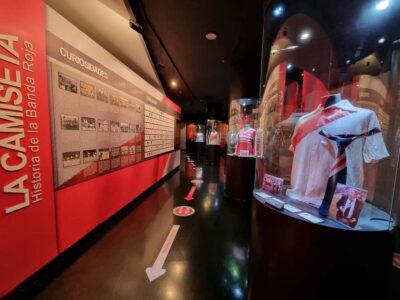
River Plate Monumental Stadium and Museum Guided Tour
Read our review →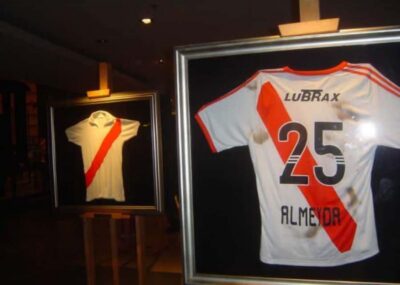
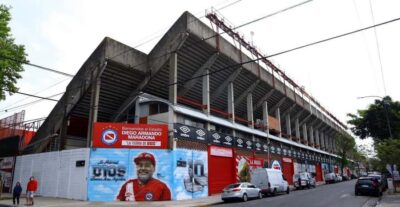
AllMaradona Buenos Aires: Maradona House Museum and Stadium
Read our review →
Browse the lists this tour appears in