
Reviewed · COOKING CLASSES
BA: Empanadas and Alfajores Cooking Experience in Palermo
Make Buenos Aires deliciously hands-on. This small-group cooking class gives you a friendly way to meet Argentine food culture, not just photograph it. You chop, fold, bake, assemble, and then sit down to eat what you made.
I especially like the choice between meat and vegan empanadas, plus the fact that children can take part. The local stories, mate tea, and family cooking traditions add real character. The main caution is that the amount of hands-on cooking may vary, and one session felt more like watching than doing.
In This Review
- Key points at a glance
- Arriving in Palermo for the cooking class
- Starting with Argentina’s favorite pocket of food
- Choosing between beef and lentil fillings
- Folding, baking, and eating your own empanadas
- Making alfajores with dulce de leche
- Mate, coffee, tea, and the occasional glass of wine
- How much cooking will you really do?
- Value at $49 per person
- Who should book this Palermo experience?
- Is this the right food experience in Buenos Aires?
- FAQ
- How long does the cooking experience last?
- Where does the class begin?
- Does the experience include transportation?
- Are vegan empanadas available?
- Are drinks included?
- What is the cancellation policy?
Key points at a glance
- Two Argentine classics in 2.5 hours: Prepare savory empanadas, then make dulce de leche alfajores.
- Meat and vegan fillings: Lentil filling is available for vegetarians and vegans.
- Intimate group size: The class accepts a maximum of 10 people, which makes questions and conversation easier.
- Local food culture: Learn folding patterns, family traditions, mate customs, and the place of empanadas in Argentine life.
- Good for families: Children aged 10 and 13 especially enjoyed the experience, though younger cooks need close help with chopping.
- Practical takeaway: Recipes are sent by WhatsApp, so you can recreate the dishes at home.
Arriving in Palermo for the cooking class
The class begins at Gorriti 4882, C1414BJN, in Buenos Aires. It is near public transportation, and the activity finishes at the same address. You will need to arrange your own way there and back, since transportation is not included.
The Palermo setting suits this sort of activity. You are not being whisked from one sight to another. Instead, you spend a couple of hours in one place, talking, preparing food, and learning how ordinary Argentine cooking connects with family life.
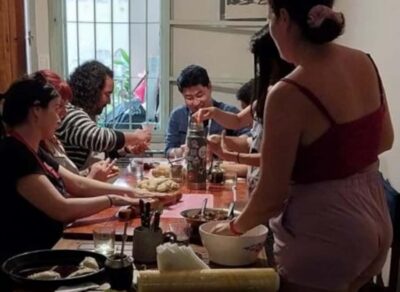
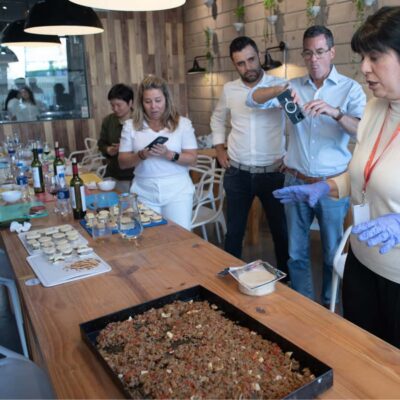
The group limit of 10 matters. Cooking classes can become clumsy when too many people crowd around one counter. Here, the smaller size should make it easier to ask how the dough is folded, check the filling, or get help with the alfajores. It also gives solo visitors and couples a natural chance to talk with people from other countries.
The host is a professional local guide, and several sessions have been led by Tomas, Tomas Valentino, Carolina, Catalina, and Cata. The exact instructor may vary, but the strongest sessions have a warm, social feel. Hosts have shared food traditions, city information, and suggestions for variations on the recipes.
More cooking classes in Buenos Aires:
- Buenos Aires: Empanadas and Alfajores Guided Cooking Class
★ 4.8 · 486 reviews - Buenos Aires: Empanada & Alfajor Cooking Lesson in Palermo
★ 4.6 · 186 reviews - Argentinian Empanadas Cooking Experience in Palermo, Bs As
★ 4.8 · 50 reviews
Starting with Argentina’s favorite pocket of food

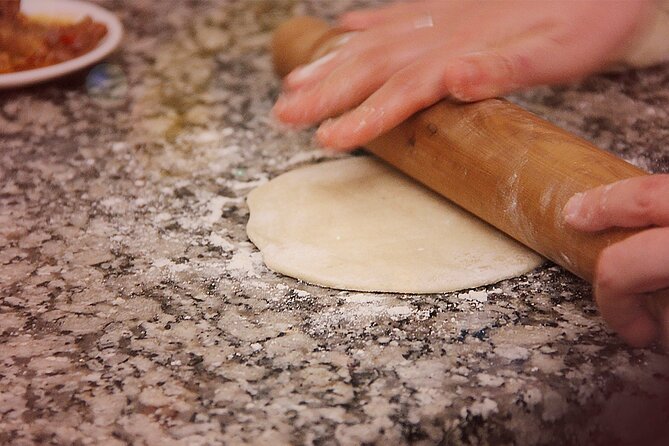
Empanadas are the main event. The class begins with an explanation of how to prepare the filling, followed by chopping vegetables and meat, quick stovetop cooking, and stuffing the pastry.
There is an important detail here: the hands-on level may not be identical every time. Some people have prepared much of the food from scratch, including rolling dough and filling each empanada. Another session used premade shells, with participants focusing on the filling, stuffing, and folding.
That is not necessarily a problem if you want a relaxed introduction. You will still learn the part that often separates a neat empanada from a leaky one: how to seal and shape it. If you are expecting a full professional kitchen lesson with pastry dough made entirely from raw ingredients, keep your expectations modest.
The folding lesson is one of the most useful parts. Argentine empanadas can have different shapes or crimping patterns depending on the filling. Beef and lentil empanadas may receive different folds, giving you a simple visual code for identifying what is inside.
You will also hear about how Argentine families make these at home. One charming story involves children having to whistle while working at their grandmother’s kitchen table, proving they were not sneaking bites of the filling. Details like this make the class feel personal rather than like a standard recipe demonstration.
Choosing between beef and lentil fillings
The class offers a meat option and a vegan option. The vegan filling has been described as lentil-based, which is useful for families or groups with mixed diets. You do not need to sit out while everyone else prepares the savory course.
The food has received strong praise overall, but it is worth remembering that taste is personal and preparation can vary. Most sessions have produced delicious, satisfying empanadas. A small number of people found the recipes too plain or felt that the food lacked flavor.
If you like bold seasoning, ask about variations during the class. One session included suggestions for changing the recipe, and the hosts are positioned to explain how Argentine cooks adapt fillings. That conversation may be more valuable than memorizing one fixed list of ingredients.
The chopping stage also deserves attention if you are booking for children. Knives are used for vegetables and meat, so younger children will need direct adult help. The activity is family-friendly, but it is not a no-tools craft session. Older children and teenagers can take part more independently, while smaller children may be better suited to filling, folding, and shaping.
Folding, baking, and eating your own empanadas
Once the filling is ready, you will place it into the shells, seal the edges, and shape the empanadas. This is where the group usually starts laughing, comparing folds, and asking how to make the edges look like the local examples.
The work is beginner-friendly. You do not need previous kitchen experience, and hosts have been praised for being patient with first-time cooks. The class is also a good choice if you have just arrived in Buenos Aires and want an easy activity while adjusting to the time zone.
After baking or cooking, you eat the finished empanadas together. That shared meal is a large part of the appeal. You are not simply handed a snack at the end. You have watched the filling come together, handled the dough, and made the mistakes that make the final bite more satisfying.
The social side can be as important as the recipe. Solo visitors have enjoyed meeting others, and families have used the meal as a chance for children to try flavors they might otherwise avoid. The class does not rush everyone out as soon as the food is served, so you may have time to chat while eating.
A completely different sort of day in Buenos Aires:
- Buenos Aires Hop-On Hop-Off Bus, Free Walking Tours & Discounts
★ 4.5 · 2,218 reviews - Buenos Aires: Piazzolla Tango Show with Optional Dinner
★ 4.4 · 2,122 reviews - Buenos Aires: City Highlights Guided Tour with Transfer
★ 4.7 · 1,946 reviews - Buenos Aires: Hop-On Hop-Off City Bus Tour
★ 4.2 · 1,855 reviews
Making alfajores with dulce de leche
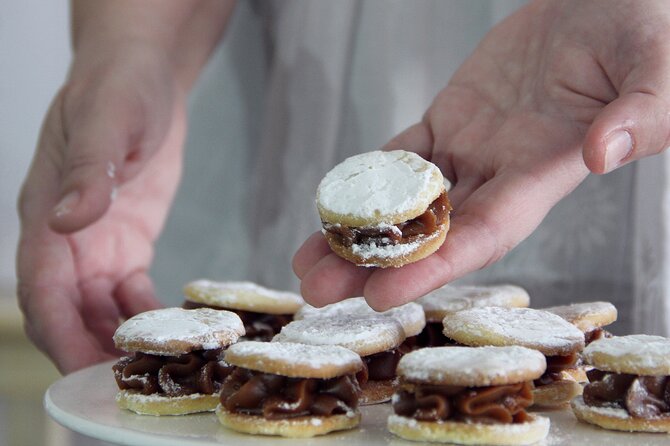
The sweet course follows the empanadas. You will learn to prepare alfajores, Argentina’s famous sandwich cookies filled with creamy dulce de leche.
The process includes mixing, baking, and assembling the cookies. In some sessions, the cookies are prepared while the empanada filling cools. Once ready, you add dulce de leche and roll the edges or outside in coconut. You may also shape the cookies in different forms.
Handle the cookies gently. They can be fragile, and pressing too hard may break them. That small warning is useful, especially for children who are excited to pile on the filling.
The alfajores have been one of the most praised parts of the activity, though not every session has received equal marks. Most people found them delicious and were eager to make them at home. A few found the result bland. Again, asking about the amount of dulce de leche or possible variations can help you get more from the class.
For many people, this is the most memorable souvenir of the afternoon. You leave with a recipe, not another trinket, and dulce de leche is easy to associate with your time in Argentina long after the trip ends.
Mate, coffee, tea, and the occasional glass of wine
Mate is the most distinctive drink included with the class. This traditional Argentine infusion is not just a hot beverage. Sharing mate has its own customs, and learning about it gives you another small window into local social life.
Coffee and tea are also listed as included options. Some sessions have offered wine, and several people enjoyed drinking it with the empanadas and alfajores. Still, wine should not be treated as guaranteed. The stated inclusions are mate, coffee, and/or tea, so confirm your preference with the host if the drink matters to you.
The beverage service helps the class feel like a meal rather than a rushed cooking demonstration. You can eat, talk, and ask about Argentine food traditions while the host explains what you have made.
One particularly interesting detail is that Tomas also makes artisan aperitifs, including vermouths and fernets. That may not be part of every class, but it shows the kind of local food conversation that can develop when the host is open to questions.
How much cooking will you really do?
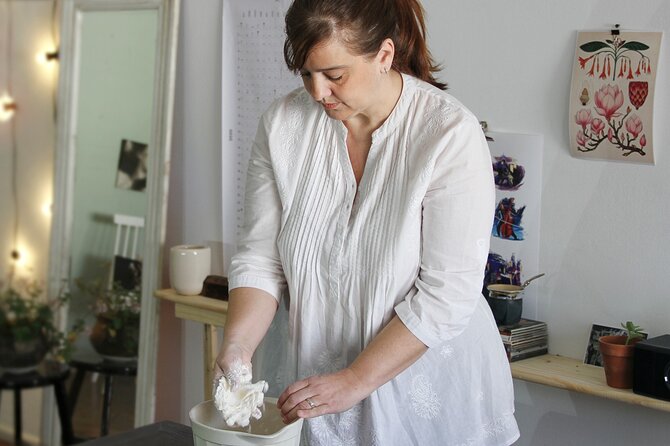
This is the point I would consider most carefully before booking. The experience is advertised as hands-on, and many sessions have involved chopping, stovetop cooking, rolling, stuffing, folding, mixing, baking, and assembling.
But the exact balance can change. In one less satisfying session, most of the work was done by one person while the rest of the group watched. Another session relied on premade empanada shells and ready-made cookies. If your main goal is to learn every stage from raw ingredients, this may feel limited.
The class works best if you see it as a social food workshop rather than a rigorous chef-training course. You will learn recognizable Argentine techniques, hear local stories, and make food with guidance. You may not spend every minute holding a knife or rolling pin.
The score of 4.9 from 112 ratings and the 96 percent recommendation rate suggest that the general experience is very strong. Still, the lower ratings point to two real risks: a less active class and food that may taste plain in some sessions. I would book it for culture, food, and company, not solely for technical instruction.
Value at $49 per person
At $49 per person, the price is fair if you value an activity that combines a meal, instruction, local conversation, and recipes to take home. Ingredients, cooking tools, a professional local host, and drinks are included. You also eat the empanadas and alfajores you prepare.
The value is strongest for families and small groups. A family of five can turn the class into a shared Buenos Aires memory, and children get a structured way to try unfamiliar food. Couples and solo visitors also benefit from the small group, since the format naturally creates conversation.
It is less compelling if you are only looking for a cheap lunch. You can buy empanadas and alfajores elsewhere for less, and the class may not satisfy someone who wants advanced pastry training.
The recipes sent by WhatsApp improve the long-term value. You can make the dishes for friends after returning home, and the lessons about folding and filling are easier to remember once you have done them yourself.
Who should book this Palermo experience?
I would recommend it most strongly for:
- Families with children who enjoy practical activities
- Solo visitors looking for an easy social outing
- Couples who want more than a restaurant meal
- First-time cooks who prefer patient guidance
- Vegetarians and vegans traveling with meat eaters
- Food lovers interested in everyday Argentine traditions
Children around 10 and 13 have enjoyed it, but adults should supervise knife work. The class is also a good fit for anyone who wants to spend a relaxed afternoon indoors, especially after a long flight or on a day when you do not want a packed sightseeing schedule.
You may want to skip it if you dislike group activities, need strict control over ingredients, or want every recipe made completely from scratch. It is also not the right choice if you are counting on wine, since mate, coffee, and tea are the listed drink inclusions.
The experience is generally in person, with a maximum of 10 participants. Confirmation is provided at booking, and free cancellation is available up to 24 hours before the start time. Changes or cancellations inside that window are not accepted, and the local start time controls the deadline.
Is this the right food experience in Buenos Aires?
I would book the Empanadas and Alfajores Cooking Experience if you want a friendly, low-pressure way to connect food with Argentine family life. The empanadas, dulce de leche, mate, folding patterns, and grandmother stories give the class a clear sense of place.
Go in expecting a beginner workshop, not a culinary school. The hands-on work can vary, and the recipes may seem plain to someone seeking strong seasoning. But for most people, the chance to cook, eat, talk, and leave with recipes makes $49 a sensible use of two and a half hours in Palermo.
FAQ
How long does the cooking experience last?
The class lasts approximately 2 hours and 30 minutes.
Where does the class begin?
It starts at Gorriti 4882, C1414BJN, in Buenos Aires, Argentina.
Does the experience include transportation?
No. Transportation is not included. The meeting point is near public transportation, and the activity ends back at the same address.
Are vegan empanadas available?
Yes. You can choose between meat and vegan empanadas. The vegan option has been prepared with lentils.
Are drinks included?
Yes. Coffee and/or tea are included, along with mate, Argentina’s traditional infusion. Some sessions have also offered wine, but wine is not listed as a guaranteed inclusion.
What is the cancellation policy?
You can cancel at least 24 hours before the local start time for a full refund. Cancellations or changes made less than 24 hours in advance are not accepted for a refund.
Latest additions in Buenos Aires
- Buenos Aires: 7 Hour Small Group “BA 101” Walk★ 5.0 · 3 reviews
- Unique Tigre and Delta Private Day Cruise Navegation★ 5.0 · 3 reviews
- Buenos Aires: Customizable City Tour in Polish★ 4.7 · 3 reviews
- Buenos Aires After Dark: A City Lights & Sunset Experience★ 5.0 · 3 reviews
- Tango Show at El Querandi with optional Dinner★ 4.2 · 3 reviews
- Caminito, La Boca: vibrant neighborhood★ 5.0 · 3 reviews
- Velez Sarsfield Football Match★ 5.0 · 3 reviews
- Café de los Angelitos – Traditional Night in Buenos Aires★ 4.8 · 3 reviews
Cooking Classes, compared.
3h Cooking Class in Mendoza with 7 Recipes & Bottomless Drinks
Read our review →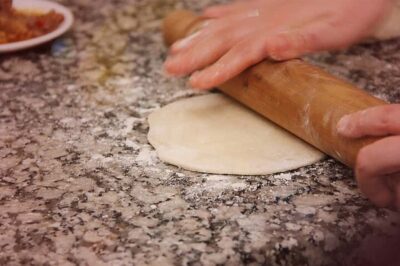
Argentinian Empanadas Cooking Experience in Palermo, Bs As
Read our review →
Private Argentine Cooking Class and Tango Lesson in Buenos Aires
Read our review →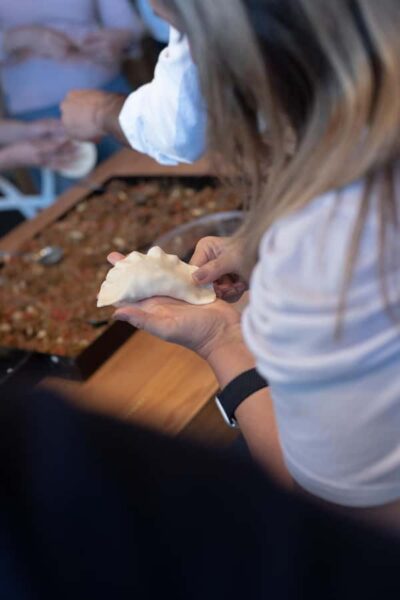
Premium Empanadas Cooking Class & Wine Tasting Experience
Read our review →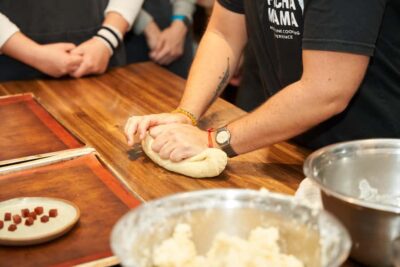
Pachamama – Argentine Cooking Experience in Buenos Aires
Read our review →Browse the lists this tour appears in