Reviewed · BUENOS AIRES TOURS
Palermo SoHo for curious people
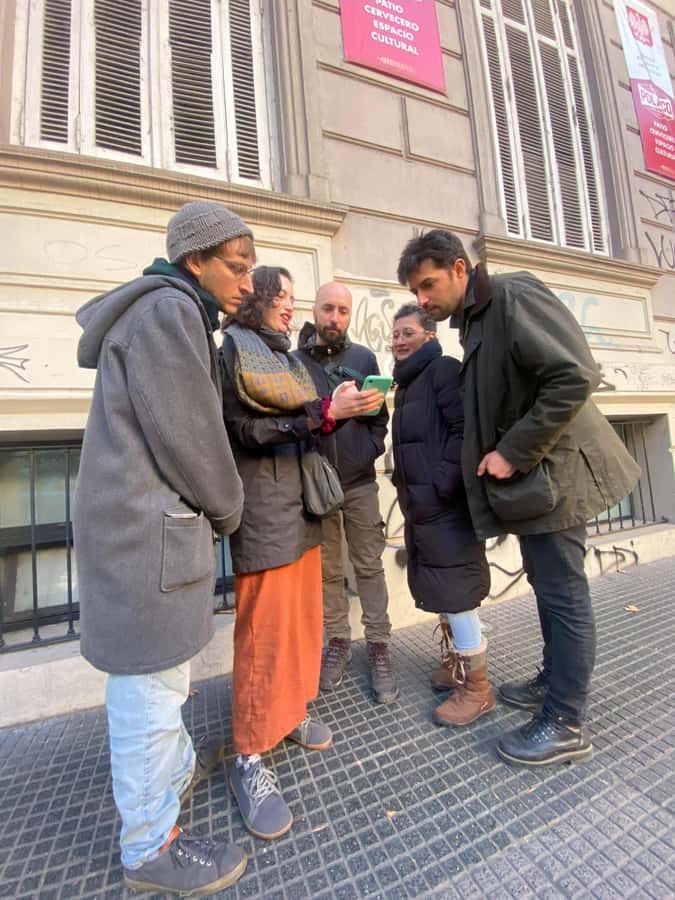
Palermo has more stories than stylish cafés. This two-hour walk with anthropologist Nico looks past Palermo SoHo’s polished storefronts to explain its rail and tram origins, immigrant communities, property speculation, and changing identity. I like the thoughtful questions and the chance to discuss the neighborhood instead of simply hearing a scripted history. I also like the small cultural stops, from a Ukrainian association to a Polish club. The main drawback is that this is a conversation-led tour, so you should not expect a fast checklist of major sights.
I especially value the way the walk connects local changes to Argentina’s peso devaluation and its two exchange rates. Nico has also been praised for being humorous, professional, and helpful when visitors had trouble finding the meeting point. At $25 per person, the tour offers good value if you want context and conversation, but less so if your ideal outing is a quiet stroll with little discussion.
In This Review
- Key points about Palermo SoHo for curious people
- Why this Palermo walk feels different
- Starting at Distrito Arcos and Puente Pacífico
- From science center to Pasaje Emilio Zola
- Ukrainian culture and Palermo’s immigrant roots
- El Preferido, Don Julio, and the business of cool
- Klub Polaco, ACILBA, and the overlooked city
- Plaza Inmigrantes de Armenia and the changing neighborhood
- Helados Italia and Pasaje Russel
- Guide style, language, and group size
- Is $25 a fair price for two hours?
- Who should book Palermo SoHo for curious people?
- Should you book this Palermo walking tour?
- FAQ
- Where does the tour begin?
- Where does the walk finish?
- How long does the experience last?
- How much does the tour cost?
- Which languages are available?
- Is the tour wheelchair accessible?
- Can I book a private or small-group tour?
- Can I cancel for a full refund?
Key points about Palermo SoHo for curious people
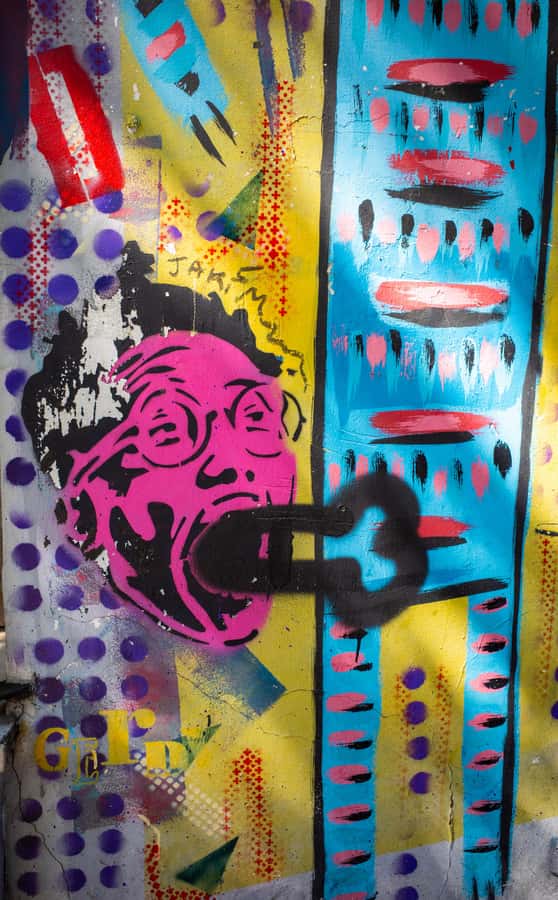
- Anthropology instead of a standard sightseeing script: You are encouraged to ask questions and discuss how Palermo changed.
- A clear two-hour route: The walk begins beside the Montagne store at Distrito Arcos and ends at Plaza Serrano.
- Immigration stories sit beside trendy dining: Ukrainian, Polish, Armenian, and other cultural references help explain the area.
- Gentrification is a central theme: You look at how cafés, restaurants, tourism, and real estate speculation reshaped Palermo.
- The guide matters here: Nico brings humor, local explanation, and a university-trained perspective to the conversation.
- A small ice cream break is included: Helados Italia provides a 15-minute pause before the final part of the walk.
Why this Palermo walk feels different
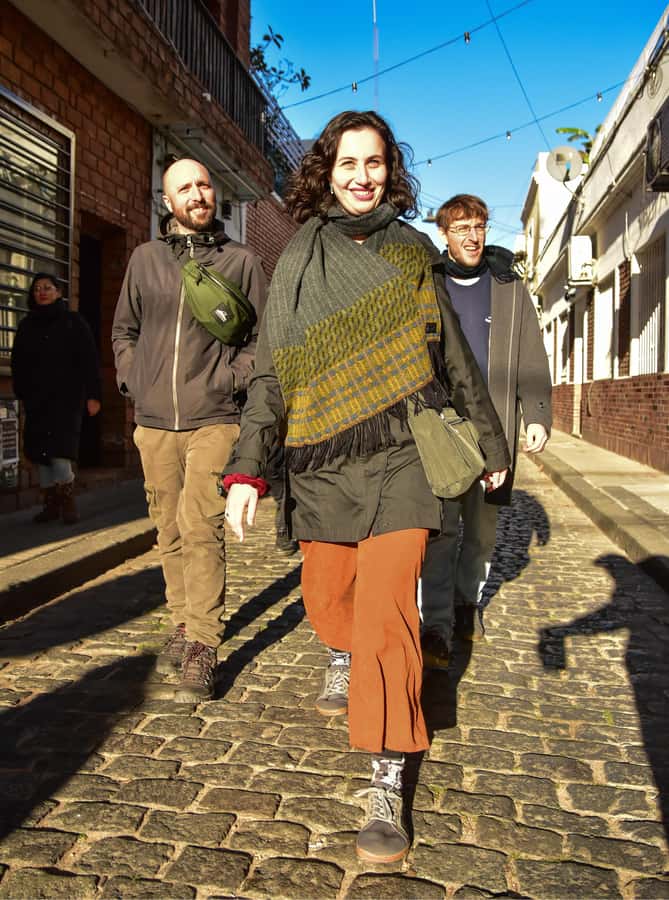
Palermo SoHo is easy to visit on your own. You can wander between restaurants, boutiques, murals, bars, and cafés without a guide. The harder part is understanding how this fashionable pocket became fashionable in the first place.
That is the purpose of this experience. Rather than treating Palermo SoHo as a collection of attractive streets, the walk asks what forces shaped them. You discuss the train and tram lines connected to the neighborhood’s origins, the people who lived here first, and the point when Palermo began attracting tourists, upscale restaurants, sourdough bakeries, and avocado toast.
I like that the central subject is change. You are not just told that Palermo is popular. You examine how popularity affects property prices, local businesses, residents, and the feel of the streets. The tour also links neighborhood development with Argentina’s currency problems, including peso devaluation and the confusing existence of two exchange rates.
That may sound like a lot for two hours, and it is. The guide has to keep the discussion moving. Still, the format is useful if you want a stronger sense of how Buenos Aires works beyond its famous monuments.
Other days out in Buenos Aires that people book on the same trip:
- Buenos Aires Hop-On Hop-Off Bus, Free Walking Tours & Discounts
★ 4.5 · 2,218 reviews - Buenos Aires: Piazzolla Tango Show with Optional Dinner
★ 4.4 · 2,122 reviews - Buenos Aires: City Highlights Guided Tour with Transfer
★ 4.7 · 1,946 reviews
Starting at Distrito Arcos and Puente Pacífico
The meeting point is by the amphitheater at Distrito Arcos, next to the Montagne store. This is a practical place to begin, but give yourself extra time to locate it. One person had difficulty finding the meeting point, and Nico helped resolve the problem, so checking the map link before setting out is sensible.
The first stop is Puente Pacífico, where the guided explanation lasts about 15 minutes. This opening section sets up the neighborhood’s transport story. The connection between rail, tram service, and Palermo’s early development gives you a useful answer to a basic city question: why did people first settle and build here?
I like beginning with infrastructure rather than a famous restaurant. Transport often explains a city better than a postcard view. It helps you see Palermo not as a ready-made entertainment district, but as a place that grew through movement, work, housing, and later investment.
You should expect some standing near the road and public spaces. The pace is a walking pace, but the route has several stops, so comfortable shoes still make sense.
From science center to Pasaje Emilio Zola
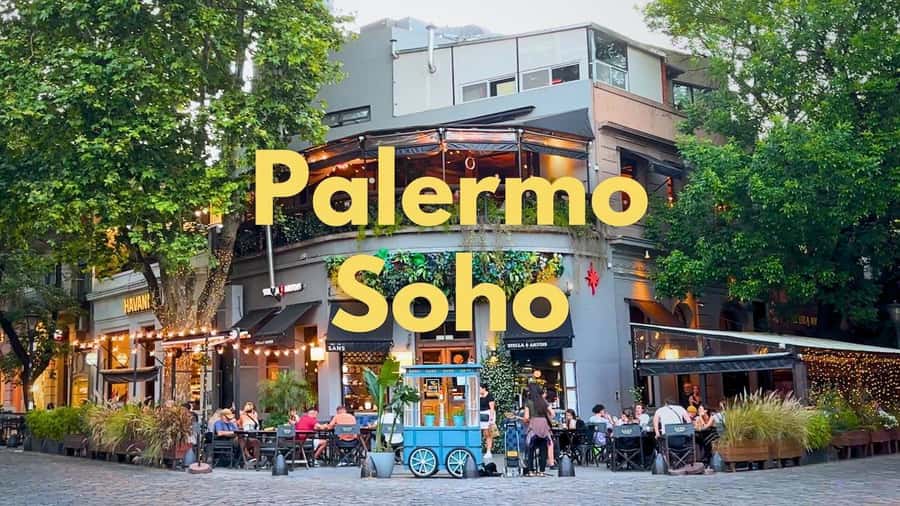
The walk continues to the Polo Cientifico Tecnologico for about 20 minutes of guided discussion. The information provided for this tour does not spell out every feature you will see there, but its inclusion signals that Palermo’s present is not only about cafés and nightlife.
This is one of the useful contrasts in the route. Palermo SoHo is often reduced to design shops and dining, yet the neighborhood also contains institutions connected to science, culture, work, and city planning. A good guide can use this stop to show how different kinds of investment share the same streets.
After that comes Pasaje Emilio Zola, visited for about 10 minutes. Small passages are often where a walking tour earns its fee. They slow you down and let the guide point out details you could easily miss while moving between larger destinations.
The limitation is that this is not a museum visit with a long list of objects and dates. Its value depends on the discussion around the place. If you enjoy asking why a passage matters, you will get more from it than someone seeking a formal attraction.
Ukrainian culture and Palermo’s immigrant roots
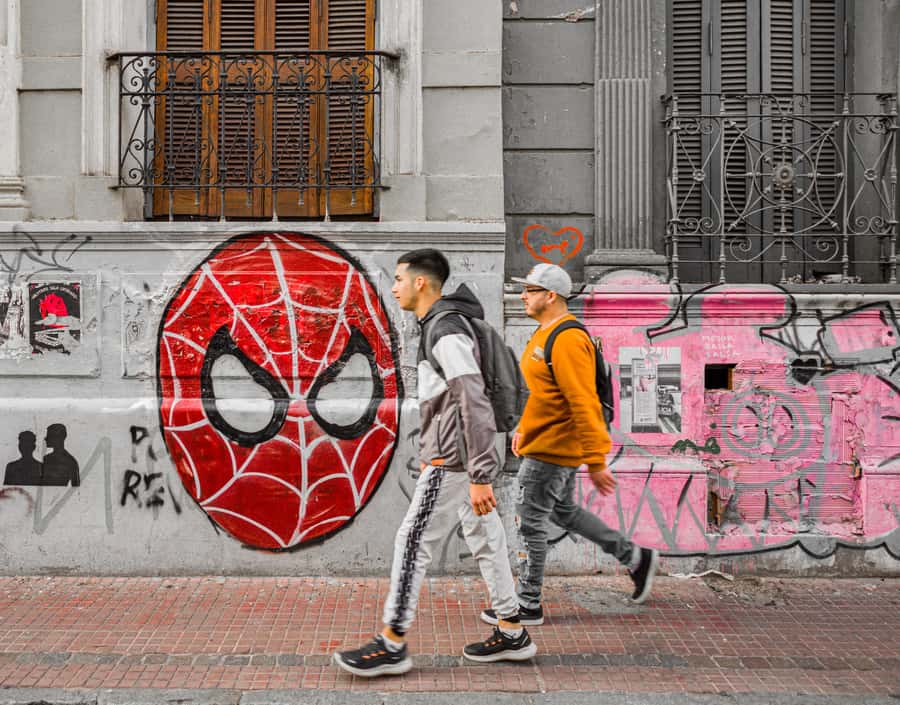
The Asociación Ucrania de Cultura PROSVITA en la República Argentina receives about 15 minutes of guided attention. This is one of the most meaningful stops because it brings immigration into the center of the Palermo story.
The tour asks who Palermo’s first inhabitants were and how immigrant communities helped give the district its character. The Ukrainian cultural association offers a concrete place to discuss that question. Instead of treating immigration as an abstract topic, you encounter an institution tied to a specific community.
This is also where the walk moves beyond the current image of Palermo SoHo. Trendy districts can make older layers disappear. A cultural association, a club, or a community building may tell you more about a neighborhood’s roots than a new restaurant sign.
The tour does not promise entry into every building or a private cultural performance. You should think of this as a guided exterior and neighborhood visit, with explanation from the guide. That keeps the route moving, but it also means the experience is strongest for people who enjoy context rather than formal admission attractions.
A completely different sort of day in Buenos Aires:
- Buenos Aires: Hop-On Hop-Off City Bus Tour
★ 4.2 · 1,855 reviews - Buenos Aires Hop-On Hop-Off Bus and Exclusive Benefits
★ 4.4 · 1,714 reviews - Buenos Aires: La Boca Guided Walking Tour in English
★ 4.8 · 1,587 reviews - Buenos Aires: La Recoleta Cemetery Guided Tour in English
★ 4.8 · 1,359 reviews
El Preferido, Don Julio, and the business of cool
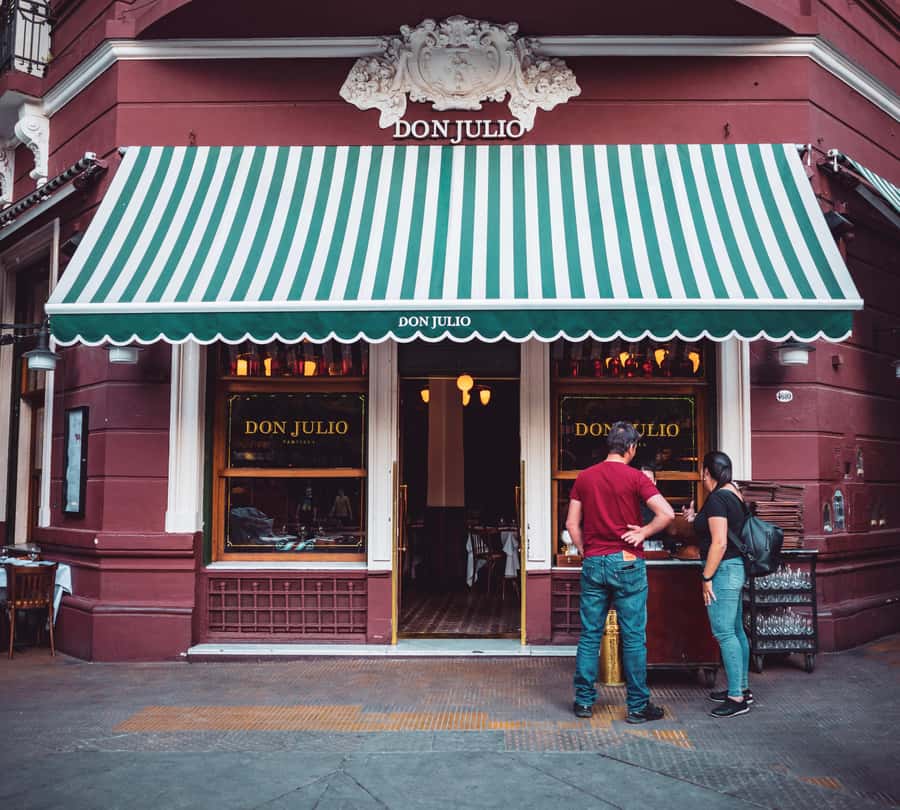
The next stops bring you back to Palermo’s famous food scene. El Preferido de Palermo receives about five minutes of guided attention, followed by a visit to Don Julio Parrilla for about five minutes.
These two names help explain how Palermo SoHo became associated with dining. The point is not simply to admire popular restaurants. You discuss the moment when the neighborhood began filling with chic bars and restaurants, and how food became part of its new identity.
The brief timing matters. You should not expect a meal, tasting, or reserved table at either restaurant. These are observation and discussion stops. If you want to eat at Don Julio, you need to arrange that separately rather than treating this walk as a dining experience.
I like this approach because a restaurant can be read as part of an urban story. A famous parrilla is not only a place to order steak. Its presence also tells you something about tourism, reputation, investment, and the kind of neighborhood Buenos Aires wants to present to the world.
At the same time, the tour does not claim that newer businesses are automatically bad. The discussion is about change and its costs, not a simple attack on modern Palermo. That balance is important. Gentrification can bring attractive businesses and renewed attention while also creating pressure on rents and older local life.
Klub Polaco, ACILBA, and the overlooked city
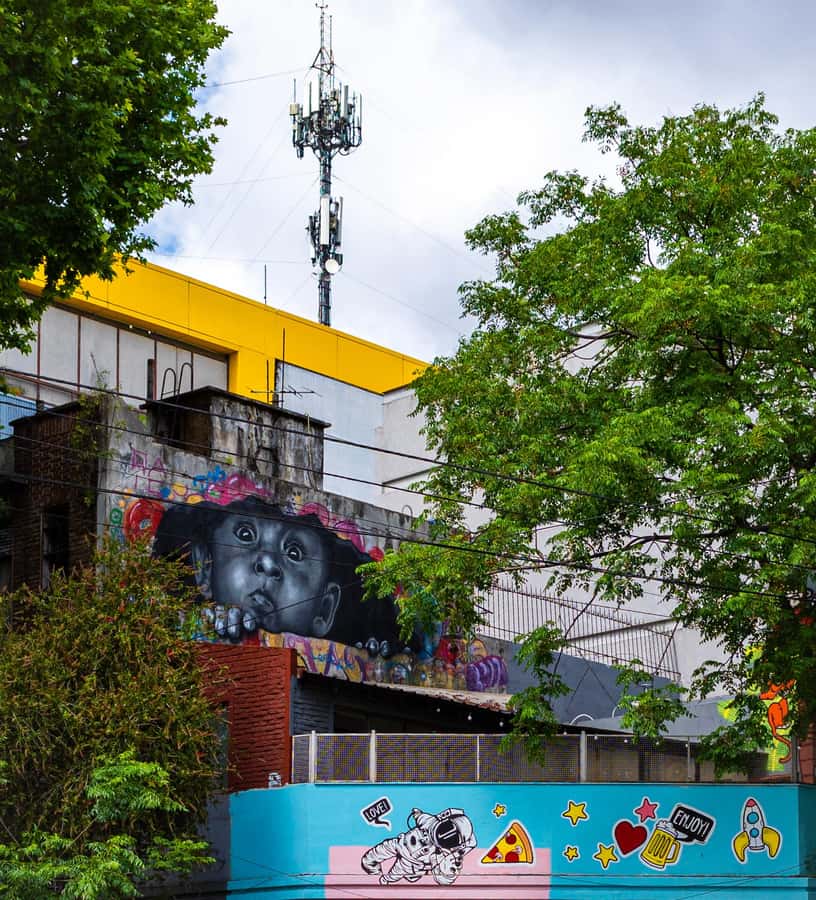
Klub Polaco is another five-minute visit. Along with the Ukrainian association, it supports the tour’s focus on immigration and community organizations. The route suggests that Palermo’s identity was built by more than the current café crowd.
You then pass by ACILBA for about three minutes. Since this is a brief pass-by rather than a long guided stop, do not expect a detailed visit. Its place on the route adds another piece to the cultural picture without turning the walk into a tour of individual institutions.
These shorter stops are useful when they are tied together by a clear explanation. On your own, you might notice a sign or building and keep walking. With Nico, you have a chance to ask what it means and how it fits the neighborhood’s past and present.
The route also shows the limits of a two-hour tour. No short walk can explain every immigrant group, every street, or every stage of Palermo’s development. You receive selected examples that support the larger argument, not a complete account of the district.
Plaza Inmigrantes de Armenia and the changing neighborhood
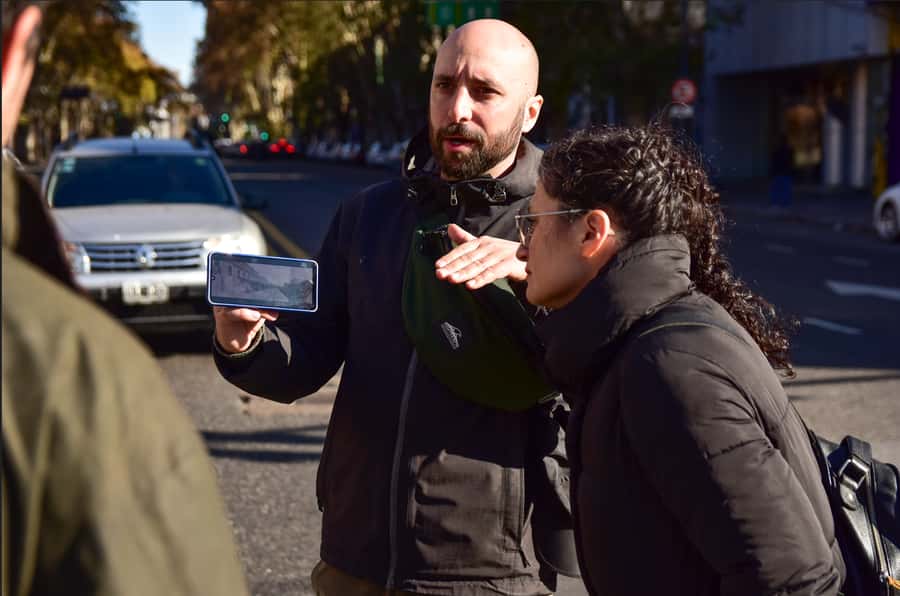
The guided stop at Plaza Inmigrantes de Armenia lasts about 10 minutes. This is a natural place to bring immigration, public space, and the modern Palermo identity together.
The name itself points toward the role of immigrant communities in Buenos Aires. The tour uses the area to ask how older identities remain visible as new businesses, tourism, and real estate interest reshape the neighborhood.
This is also a good point to consider the meaning of Palermo SoHo as a label. The name suggests a stylish, creative district, but labels are part of urban marketing. They can attract visitors and investment while making a neighborhood feel less connected to its earlier residents.
The discussion of real estate speculation adds needed economic context. You learn why property values and construction matter, and how Argentina’s peso devaluation relates to the way money and prices are understood locally. The two exchange rates can be confusing, especially for someone arriving from abroad. A walking explanation gives those issues a physical setting instead of leaving them as financial headlines.
Do not expect a financial seminar. The subject is introduced as part of Palermo’s urban change, in plain language and conversation. If currency questions are important to you, this is a good place to ask for clarification.
Helados Italia and Pasaje Russel
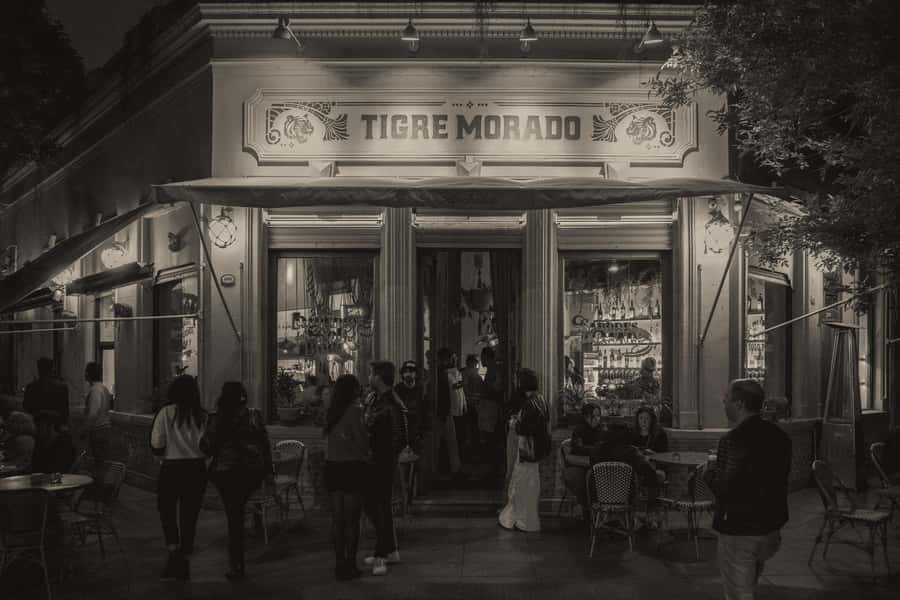
Helados Italia provides a 15-minute break. This pause is welcome because the tour includes repeated stops and discussion. It gives you time to rest, have an ice cream break, and talk with the guide before the final section.
The provided details do not say that ice cream is included in the $25 price, so plan on paying for anything you choose to order. The stop is best understood as a scheduled pause rather than a tasting.
The final guided stop is Pasaje Russel, which receives about 10 minutes. Like Pasaje Emilio Zola, it shifts your attention from major commercial names to smaller urban spaces. These passages help you notice how Palermo’s character is built from side streets as much as from famous addresses.
The walk ends at Plaza Serrano, a fitting finish for a tour about Palermo SoHo’s public image. You finish in one of the area’s best-known gathering points, with the neighborhood’s old and new identities still in view.
Because the route ends there, you can continue exploring on your own. The tour does not include a meal or a planned evening program, so Plaza Serrano works as a practical point to choose your next stop.
Guide style, language, and group size
This experience is led by a university degree guide and is available in Spanish, French, or English. Nico is the named guide associated with the positive feedback, and his strongest qualities are his humor, professionalism, personal manner, and ability to explain Palermo from an unusual angle.
That matters more here than it would on a simple landmark walk. The tour asks you to chat, question, and discuss. A guide who only recites dates would not suit the format. Nico has also helped with directions when someone struggled to find Distrito Arcos, which is useful at the very start of the experience.
Private and small-group options are available. A smaller group should make it easier for you to ask questions and keep the conversation moving. The exact group size is not stated, so you should confirm the option available when booking.
The walk is wheelchair accessible, according to the provided information. The route includes public streets, passages, plazas, and several standing stops, so you may still want to confirm any personal mobility needs before booking.
Is $25 a fair price for two hours?
At $25 per person, this is good value for a focused neighborhood walk, especially if you are curious about city change, immigration, and gentrification. You are paying for a guided interpretation of Palermo, not for tickets, a meal, or a long list of grand attractions.
The value rises if you would otherwise spend time wondering why Palermo looks the way it does. Nico’s explanation connects transport, culture, restaurants, currency, and property speculation in one route. That kind of framework can improve the rest of your time in Buenos Aires because you start noticing how neighborhoods are made and remade.
The value drops if you mainly want food samples, shopping time, or a photo-focused outing. The restaurant stops are short, and the ice cream break is not presented as an included tasting. This is a discussion-based urban walk, not a culinary tour.
Free cancellation up to 24 hours before the start and the option to reserve now and pay later make the booking less rigid. Those terms are helpful if your Buenos Aires schedule is still shifting.
Who should book Palermo SoHo for curious people?
I would choose this walk if you want to understand Palermo rather than simply pass through it. It suits readers interested in architecture, immigration, urban economics, gentrification, Argentine currency issues, and the relationship between local culture and tourism.
It is also a good fit if you have already seen the major Buenos Aires sights and want a more focused neighborhood experience. The route gives you specific places to return to, including Plaza Serrano, Pasaje Russel, the cultural associations, and the restaurants.
You may want something else if you dislike conversation or prefer a guide who speaks continuously while you take photographs. The tour expects participation. You will get the most from it if you bring questions and are willing to consider more than one side of Palermo’s changes.
Should you book this Palermo walking tour?
Book it if you want a compact, thoughtful introduction to the forces behind Palermo SoHo’s cool image. The strongest reasons are Nico’s personable style, the focus on immigration and gentrification, and the way the route links ordinary streets with larger questions about Buenos Aires.
Skip it if you want restaurant reservations, included food, or a conventional history tour packed with dates. At $25, the experience is a sound buy for curious visitors who value explanation and conversation. It is less useful for anyone looking only for famous sights.
FAQ
Where does the tour begin?
It begins by the amphitheater of Distrito Arcos, next to the Montagne store.
Where does the walk finish?
The tour finishes at Plaza Serrano in Palermo SoHo.
How long does the experience last?
The walking experience lasts two hours.
How much does the tour cost?
The price is $25 per person.
Which languages are available?
The tour is offered in Spanish, French, and English.
Is the tour wheelchair accessible?
Yes, the provided information describes the experience as wheelchair accessible.
Can I book a private or small-group tour?
Yes, private and small-group options are available.
Can I cancel for a full refund?
You can cancel up to 24 hours in advance for a full refund.
Latest additions in Buenos Aires
- Buenos Aires: 7 Hour Small Group “BA 101” Walk★ 5.0 · 3 reviews
- Unique Tigre and Delta Private Day Cruise Navegation★ 5.0 · 3 reviews
- Buenos Aires: Customizable City Tour in Polish★ 4.7 · 3 reviews
- Buenos Aires After Dark: A City Lights & Sunset Experience★ 5.0 · 3 reviews
- Tango Show at El Querandi with optional Dinner★ 4.2 · 3 reviews
- Velez Sarsfield Football Match★ 5.0 · 3 reviews
- Caminito, La Boca: vibrant neighborhood★ 5.0 · 3 reviews
- Café de los Angelitos – Traditional Night in Buenos Aires★ 4.8 · 3 reviews
Buenos Aires Tours, compared.