
Reviewed · LA BOCA & SAN TELMO TOURS
La Boca Out off the Beaten Track
La Boca has more to say than Caminito. This small-group walk with Paola De Luca, who grew up in the neighborhood, connects immigrant history, local art, Boca Juniors, religion, and everyday life in places many short visits miss. I especially like the visit inside an old corrugated-metal conventillo and the chance to enter Argentina’s first volunteer firefighter station. The main consideration is that La Boca is a gritty urban neighborhood, not a polished sightseeing zone, so you should come ready for uneven streets, heat, and a fairly active walking tour.
I also like the personal touch of coffee in an old Notable Cafe dating to 1882. Paola’s childhood connection gives the tour a clear local voice, and her English is described as excellent. You will see famous La Boca symbols, but you will also hear why the murals, mutual-aid groups, churches, football culture, and immigrant houses mattered to the people who built the district.
In This Review
- Key points to know before booking
- Why this La Boca walk feels different
- Starting beside the old port
- Inside a corrugated-metal conventillo
- Argentina’s first volunteer firefighter station
- Reading La Boca through its murals
- An artist’s home and the human side of art
- Newspapers, bordellos, and streets with a complicated past
- Boca Juniors from outside the stadium
- The Salesian Church as a place of refuge
- Finishing with Caminito, tango, and fileteado
- Coffee in an 1882 Notable Cafe
- Quinquela Martín and the optional museum visit
- Is $35 good value for 150 minutes?
- Who should book this experience?
- Final verdict: book it for the neighborhood behind the colors
- FAQ
- Where does the La Boca experience begin?
- Where does the experience finish?
- How long does the experience last?
- What languages does Paola speak during the tour?
- Is coffee included?
- Are the conventillo and firefighter station visits included?
- Is the Quinquela Martín museum ticket included?
- How large is the group?
Key points to know before booking
- Local guide with deep personal ties: Paola lived in La Boca during childhood and youth, adding family and neighborhood memories to the historical explanation.
- A different side of La Boca: The walk reaches murals, warehouses, a former immigrant train station, and older streets beyond the usual Caminito circuit.
- Two unusual interiors: Entry includes a former conventillo now used as a cultural center and Argentina’s first volunteer firefighter station.
- A proper pause for coffee: The tour finishes with coffee at a historic Notable Cafe from 1882.
- Small group format: The group is limited to 10 people, useful for questions and tighter spaces.
- The final Caminito stop: You still get tango, fileteado, and the colorful tourist quarter, but only after seeing more of the neighborhood around it.
Why this La Boca walk feels different
Many first visits to La Boca begin and end around Caminito. That colorful lane has its place, but it is only one small piece of the district. This experience begins at the corner of Pedro de Mendoza and Martín Rodríguez, then works through La Boca as a neighborhood shaped by port activity, migration, art, football, religion, and mutual support.
That wider frame matters. La Boca is often reduced to painted facades and tango poses. Here, you get a better sense of how immigrant communities found shelter, organized services, printed political newspapers, practiced religion, and created a local identity.
Paola is central to the experience. She grew up in La Boca, and that background lets her connect public history with personal memory. Her explanations cover the facts, but the personal connection is what gives the walk warmth. Several reviews praise her for combining historical detail with stories from her own life, and one particularly useful detail is that she remained attentive to people’s comfort during intense heat.
The group limit of 10 is another practical advantage. You can ask questions without calling across a crowd, and a small group is better suited to entering an old house or standing near a mural while Paola explains its meaning.
More La Boca and San Telmo Tours:
- Buenos Aires: La Boca Guided Walking Tour in English
★ 4.8 · 1,587 reviews - Buenos Aires: Navigation from Pto. Madero to La Boca
★ 4.1 · 147 reviews - Buenos Aires: San Telmo and Market Guided Walking Tour
★ 4.8 · 102 reviews
Starting beside the old port
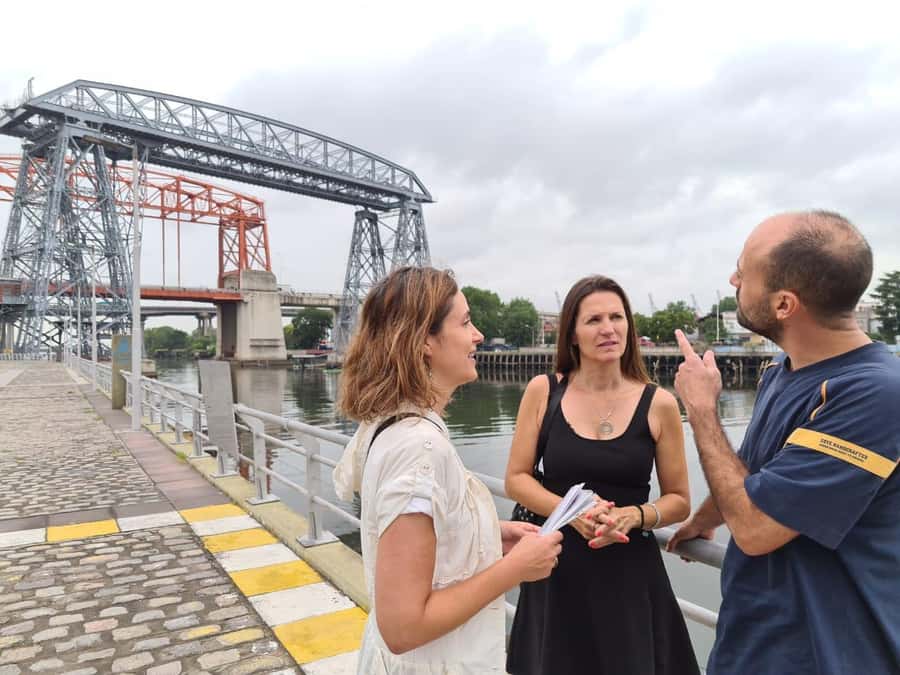
The meeting point is at Martín Rodríguez and Avenida Don Pedro de Mendoza. This places you near the edge of the old port area, where La Boca’s identity begins with water, work, warehouses, and newcomers arriving in Buenos Aires.
The early part of the walk looks at the harbor and former warehouses. You will also see the picturesque train station connected with the large immigrant arrivals that shaped the district. These are not just background sights. They help explain why La Boca developed as a working-class neighborhood with many languages, customs, and forms of community support.
I find this kind of beginning useful because it gives you a reason for what comes later. The houses, fire station, church, football club, and murals all make more sense once you understand that La Boca was a landing place for people building new lives.
The port setting also gives the neighborhood a rougher feel than central Buenos Aires. Do not expect a grand boulevard or a tidy museum district. You are walking through a lived-in area, with old buildings beside ordinary local streets. That is part of the point, but it may not suit someone looking only for postcard views.
Inside a corrugated-metal conventillo
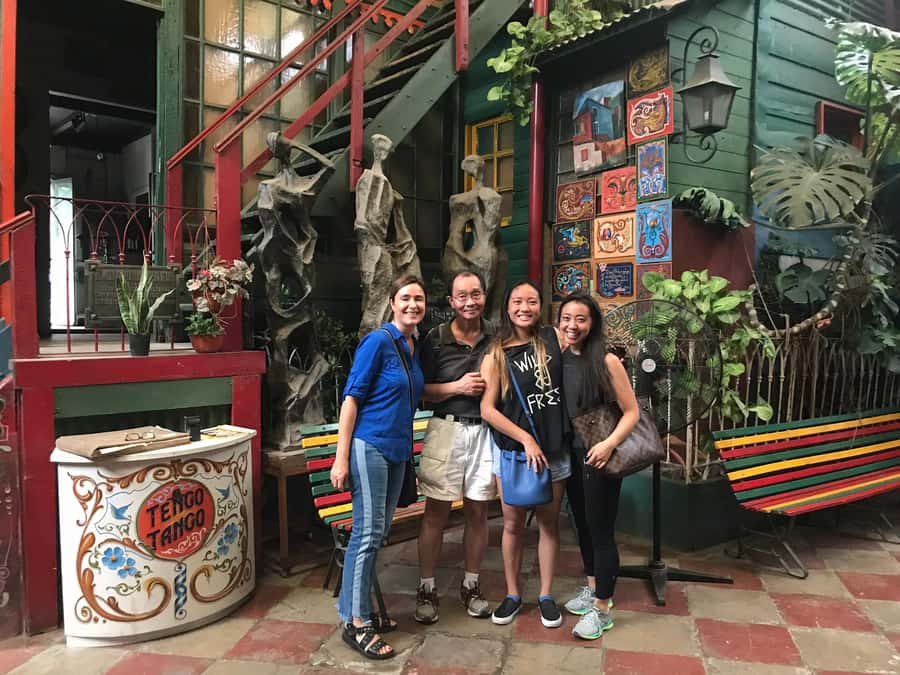
One of the strongest stops is an old conventillo, a tenement house once used to shelter immigrants. The building is clad in corrugated metal, a material closely associated with La Boca’s older working-class homes.
You can go inside, and the building now serves as a cultural center. That change of use gives you two viewpoints at once. You see the type of place that housed immigrant families, while also seeing how the neighborhood’s old structures can support art and community life today.
The value here is scale. Historical descriptions of immigration can feel distant, but stepping into a former tenement makes the story more physical. You can better picture how shared housing shaped social ties and why mutual assistance became so important in a district with many newly arrived families.
One review specifically praises the chance to see a typical house from inside. That is a meaningful advantage over a walk that only points at facades from the pavement. Still, access inside older buildings can sometimes feel less comfortable than visiting a modern museum, so wear sensible shoes and expect a straightforward, unfussy setting.
Argentina’s first volunteer firefighter station
The tour includes entry to the first volunteer firefighter station created in Argentina. This is one of the experience’s most unusual details, since it links La Boca with the voluntary organizations that helped immigrant communities protect and support themselves.
The station belongs to the wider tradition of mutual assistance associations. When formal services were limited or hard to reach, residents created their own institutions. A volunteer fire department is a practical example of community action, not merely a ceremonial landmark.
Paola’s local knowledge is especially useful here because the stop is easy to miss on an ordinary walk. You are not simply checking off an old building. You are seeing how the district’s residents responded to real urban needs.
Entrance is included in the $35 price, which strengthens the value. The station is also a good reason to choose this tour over a general La Boca photo walk. You receive access to a place with a clear civic role, rather than only an exterior view.
A completely different sort of day in Buenos Aires:
- Buenos Aires Hop-On Hop-Off Bus, Free Walking Tours & Discounts
★ 4.5 · 2,218 reviews - Buenos Aires: Piazzolla Tango Show with Optional Dinner
★ 4.4 · 2,122 reviews - Buenos Aires: City Highlights Guided Tour with Transfer
★ 4.7 · 1,946 reviews - Buenos Aires: Hop-On Hop-Off City Bus Tour
★ 4.2 · 1,855 reviews
Reading La Boca through its murals
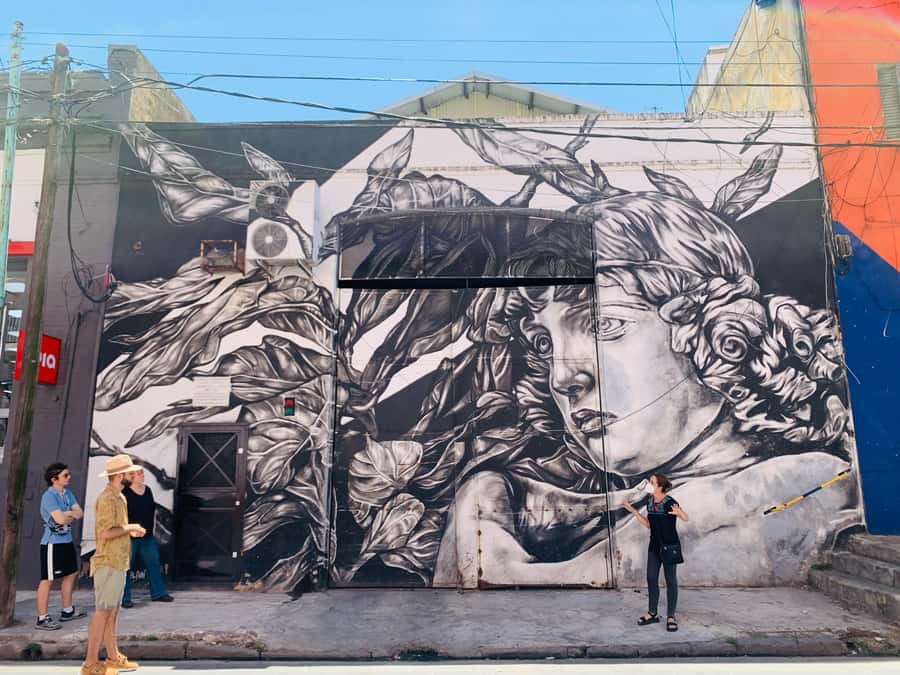
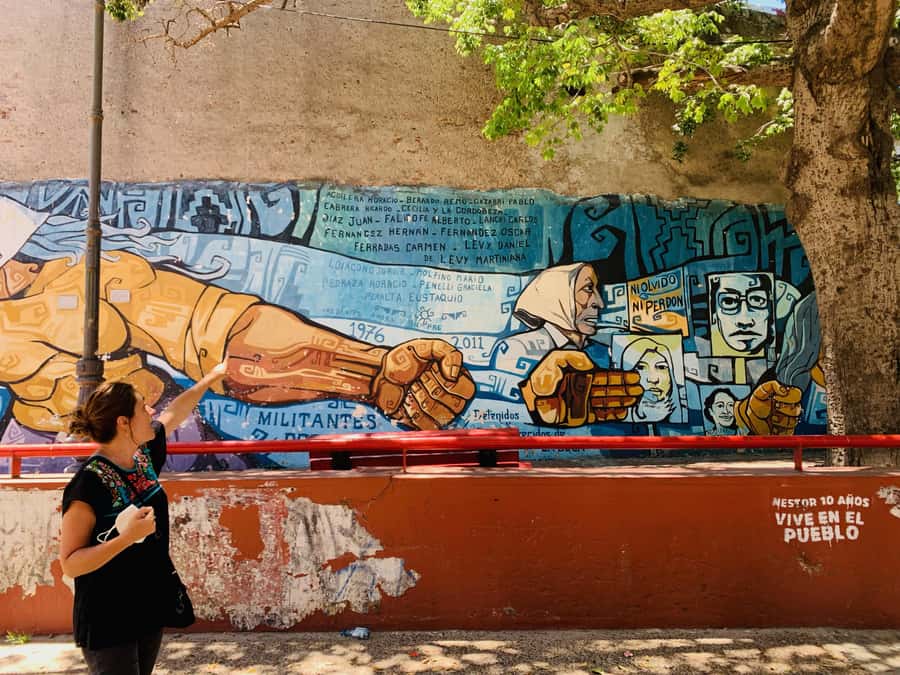
La Boca’s murals are not just decoration. The walk visits large works that address social issues, and Paola explains their background so you can read them as part of the neighborhood’s public life.
This is one of the areas where the guide’s interpretation matters most. Without context, a mural can become just another colorful wall. With an explanation of its subject and setting, you can see how artists use public space to discuss inequality, identity, memory, and local concerns.
A review from Denmark makes this point clearly: learning the stories behind the wall paintings made them more meaningful than simply looking at them. That is useful advice for you too. Pay attention to the explanation before taking photographs. The image is only half the stop.
The walk reaches murals and streets that receive less attention than the central tourist zone. You will not get the same concentration of tango performers and painted facades as at Caminito, but you gain a more grounded view of how art functions across the neighborhood.
An artist’s home and the human side of art
The experience may include a visit to a typical Boca house belonging to artist friends of Paola. One review describes a visit to a local artist in his home, made possible by Paola’s personal friendship.
This is a special feature, but it is also the part to treat with a little flexibility. The description presents the house and local artists as a key element, yet personal home visits can depend on availability and circumstances. You should see it as a valuable possibility within the local connection, not as a formal museum stop with a fixed display.
If the visit takes place, it gives you a rare look at art as part of ordinary neighborhood life. You are not only looking at finished work in a gallery. You may also gain a sense of the artist’s home, working environment, and relationship to La Boca.
That personal access is one of the clearest differences between this walk and a standard sightseeing route. It also explains why Paola’s own story matters. Her connections allow the tour to move beyond public landmarks.
Newspapers, bordellos, and streets with a complicated past
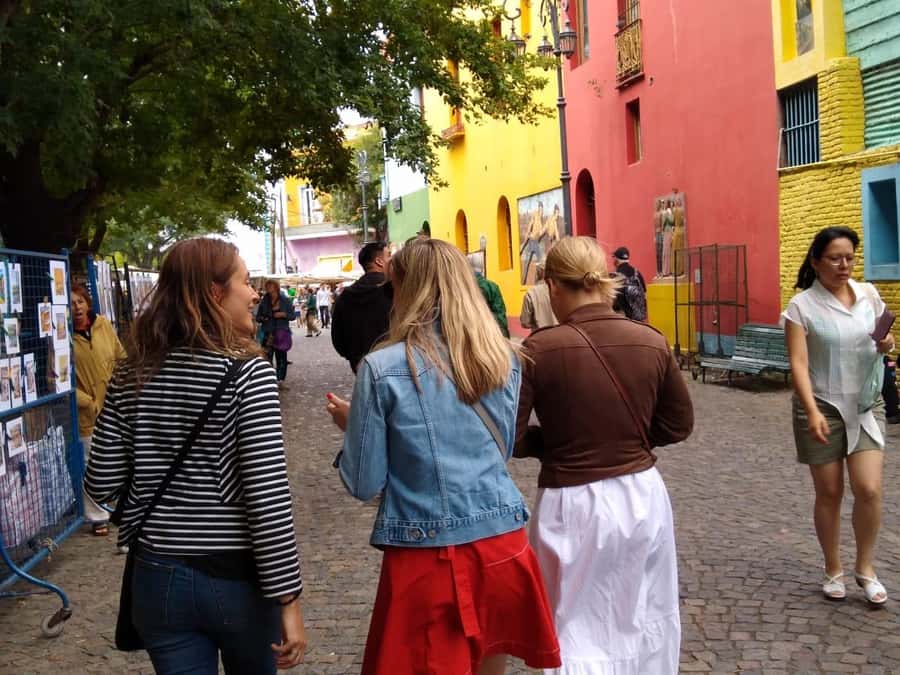
The walk also points out older buildings that once housed anarchist newspapers and bordellos in the early twentieth century. These details broaden the story of La Boca beyond football and painted houses.
Anarchist newspapers show that the district was involved in political debate and organized working-class life. Former bordellos point to a different side of port neighborhoods, where transient workers, sailors, migrants, and entertainment economies overlapped.
You do not need to be a history specialist to appreciate this section. Paola’s role is to connect the buildings with the people and pressures around them. The result is a less romantic version of La Boca, but a more believable one.
This is also where the tour may feel more serious than a casual photo outing. The subject matter includes poverty, migration, social conflict, and difficult living conditions. That is a strength if you want context, but less appealing if you prefer a light, entertainment-focused afternoon.
Boca Juniors from outside the stadium
Football is one of La Boca’s two major local icons, alongside religion. The route includes Boca Juniors Stadium from the outside.
You should not book this experience expecting a stadium tour or match-day access. The stadium visit is an exterior stop, but its importance is cultural rather than architectural. Boca Juniors is tied closely to the neighborhood’s identity, and Paola gives attention to the passion surrounding the club.
A German review places special emphasis on Paola’s explanation of the football club and its role in the soul of La Boca. That is the useful distinction: you are learning what Boca Juniors means to the district, not simply taking a photograph of a stadium wall.
Football fans will get the most from this portion, but you do not need to follow the sport closely. The club is part of the social character of the neighborhood, just as the port and the immigrant associations are.
The Salesian Church as a place of refuge
Religion provides the other local anchor. The route includes the Salesian Church, which worked as a refuge for communities described as rootless and newly settled.
This stop offers a needed counterpoint to the port and football. Churches were not only places for worship. For people trying to form stable lives in a new city, religious institutions could provide support, routine, and a sense of belonging.
The church also shows how several forces shaped La Boca at once. Immigration, mutual aid, religion, work, art, and football are not separate chapters. They overlap in the same streets, and a good guide helps you see those links.
The supplied details do not promise an interior visit to every church area, so you should think of this primarily as a historical and cultural stop rather than a full religious sightseeing visit.
Finishing with Caminito, tango, and fileteado
The experience ends at Caminito, La Boca’s best-known tourist quarter. By arriving here late, you see the famous colorful setting after learning more about the neighborhood around it.
Caminito brings tango and fileteado into view at nearly every turn. Fileteado, with its decorative painted lettering and elaborate forms, is part of Buenos Aires visual culture, and here it appears alongside tango imagery and brightly painted buildings.
This final stop works well because you can compare the polished public image of La Boca with the less visited streets from earlier in the walk. Caminito is photogenic and fun, but it can also feel more commercial and staged. The tour does not ignore that side. It simply places it in context.
Ending here is practical too. You finish in a famous area rather than being returned to the starting point. From Caminito, you can continue exploring on your own, find a meal, or arrange your next stop in La Boca. The meeting point and finishing point are different, so plan your onward route accordingly.
Coffee in an 1882 Notable Cafe
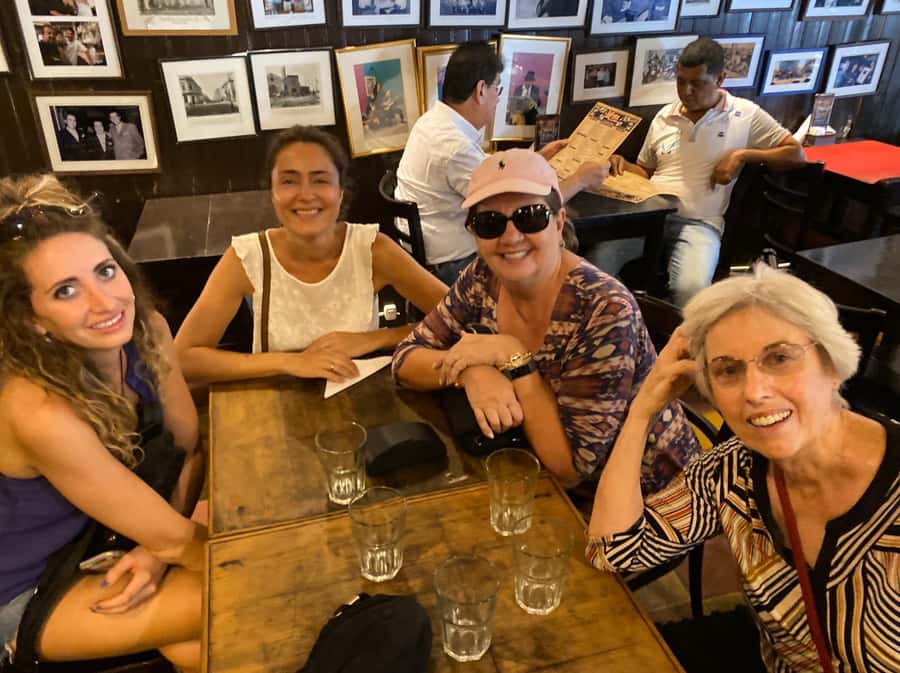
Coffee is included, and the setting is part of the attraction. You stop at a historic Notable Cafe dating to 1882, giving the walk a proper Buenos Aires finish.
This is more than a break for tired feet. Historic cafes are social places where city life unfolds over a small drink, and the pause gives you time to ask Paola questions or sort through what you have just seen.
The tour details list 30 minutes for coffee. Food is not included, so do not count on this as lunch. If you need something substantial, eat before the tour or plan a meal afterward.
I like the balance here. The walk covers serious history and a fair amount of ground, then ends in a relaxed setting. In hot weather, that pause matters. One review notes that Paola paid close attention to comfort during intense heat, but you should still bring water, sun protection, and light clothing.
Quinquela Martín and the optional museum visit
The experience can include a visit to the mythical Museum of Fine Arts of La Boca, part of the building that was once the home of Benito Quinquela Martín. The museum ticket is not included, so confirm the day’s plan and budget separately if this matters to you.
Quinquela Martín is an important name for anyone interested in La Boca’s art. His connection with the building gives the museum added local meaning, especially after you have already seen the district’s murals and artist culture.
The optional nature of this stop is worth noting. The core price covers the guided experience, firefighter station, conventillo, and coffee. The museum is an extra, so you can decide based on your interest in art and the time you have left.
Is $35 good value for 150 minutes?
At $35 per person, this is a strong value if you want access and interpretation rather than a quick look at colorful streets. The price includes a live guide in English or Spanish, a group limited to 10, entrance to the firefighter station, entrance to the conventillo, and coffee.
The guide’s local background is the biggest part of the value. You are paying for connections that would be difficult to build alone, especially the meaning behind murals, the role of mutual-aid groups, and the personal relationship with local artists.
The cost is less compelling if your only goal is to see Caminito and take photographs. You can visit the famous tourist quarter without booking a structured walk. This experience earns its price by spending time on the history and places beyond the main strip.
The total duration is 150 minutes. The schedule includes about 30 minutes for coffee, with the rest devoted to walking and visits. Starting times vary, so check availability when booking. Free cancellation is available up to 24 hours in advance, and you can reserve now and pay later, which helps if your Buenos Aires schedule is still changing.
Who should book this experience?
I would recommend it most strongly to people who want local context, social history, and a personal guide. It suits first-time visitors who want to understand why La Boca looks and feels the way it does, as well as repeat visitors who have already seen Caminito.
It is a particularly good choice for:
- Visitors interested in immigration and working-class city life
- Football fans curious about Boca Juniors beyond match results
- Art lovers who want mural context and a possible local artist connection
- People who prefer small groups and questions over a scripted bus tour
- English or Spanish speakers who want a bilingual guide
- Anyone who wants a more substantial look at La Boca than a photo stop
You should think twice if you dislike walking, older buildings, serious social subjects, or neighborhoods that feel rough around the edges. Electric wheelchairs are not suitable for this activity, and it is not intended for people over 95. Jewelry, alcohol, and drugs are not allowed.
Final verdict: book it for the neighborhood behind the colors
Book this experience if you want La Boca to become more than a backdrop for tango photographs. Paola’s childhood ties, strong English, personal contacts, and clear enthusiasm give the walk its main strength.
The best parts are the conventillo interior, the first volunteer firefighter station, the mural explanations, and the chance to connect football and religion with immigrant life. Caminito and coffee provide the familiar finish, but the real value comes earlier, on streets that most short visits skip.
Skip it only if you want a simple sightseeing loop or a stadium interior visit. For an affordable, small-group introduction to La Boca’s people, institutions, art, and memories, this is a thoughtful choice.
FAQ
Where does the La Boca experience begin?
It begins at the corner of Pedro de Mendoza and Martín Rodríguez in La Boca, Buenos Aires.
Where does the experience finish?
It finishes in Caminito, also in the La Boca neighborhood.
How long does the experience last?
The full experience lasts 150 minutes. The listed coffee stop lasts about 30 minutes.
What languages does Paola speak during the tour?
The live tour is available in English and Spanish.
Is coffee included?
Yes. Coffee at the historic Notable Cafe is included.
Are the conventillo and firefighter station visits included?
Yes. Entry to the corrugated-metal conventillo and Argentina’s first volunteer firefighter station is included.
Is the Quinquela Martín museum ticket included?
No. If you visit the Museum of Fine Arts of La Boca, the entrance ticket is separate.
How large is the group?
The experience is offered as a small group, limited to 10 participants.
Latest additions in Buenos Aires
- Buenos Aires: 7 Hour Small Group “BA 101” Walk★ 5.0 · 3 reviews
- Unique Tigre and Delta Private Day Cruise Navegation★ 5.0 · 3 reviews
- Buenos Aires: Customizable City Tour in Polish★ 4.7 · 3 reviews
- Buenos Aires After Dark: A City Lights & Sunset Experience★ 5.0 · 3 reviews
- Tango Show at El Querandi with optional Dinner★ 4.2 · 3 reviews
- Velez Sarsfield Football Match★ 5.0 · 3 reviews
- Caminito, La Boca: vibrant neighborhood★ 5.0 · 3 reviews
- Café de los Angelitos – Traditional Night in Buenos Aires★ 4.8 · 3 reviews
La Boca & San Telmo Tours, compared.

Historical Guided Tour with Street Food & Drinks
Read our review →
Buenos Aires Bike Tour: San Telmo and La Boca Districts
Read our review →
BA Flavors Food Tour in San Telmo and Boca With Local Guide
Read our review →
La Boca, a collective creation: Port, immigrants, arts and football
Read our review →
Browse the lists this tour appears in