Reviewed · BUENOS AIRES TOURS
From Colonialism to Eclecticism, Buenos Aires arquitectonica
Buenos Aires rewards a closer look. This three-hour walk links famous landmarks with less familiar buildings, and I like its mix of architectural styles and its small-group format, limited to four people. I also like that Juan Ignacio and Loli add Argentine culture to the route through mate, local snacks, and stories that reach beyond dates and façades.
The main consideration is pace. You cover a long central-city route on foot, with outdoor stops and street crossings, so comfortable shoes, sun protection, and a reasonable walking tolerance matter. The tour costs $25 per person, which is good value if you want context and conversation rather than a quick list of monuments.
In This Review
- Key points about this Buenos Aires architecture walk
- Why this tour works for architecture fans and first-time visitors
- Plaza de Mayo: the right place to begin
- Reconquista Street and the Banco Hipotecario’s Brutalist face
- The CCK and the former Post and Telegraph Palace
- Corrientes Avenue, the Gran Rex, and the Opera
- The Obelisk and the view from Diagonal Norte
- Plaza Lavalle and the Courts Palace
- Mate, Argentine hospitality, and the Teatro Colón finish
- What the $25 price delivers
- Practical advice for a comfortable walk
- Who should book this Buenos Aires architecture tour?
- Should you book it?
- FAQ
- Where does the tour start?
- Where does the tour finish?
- How long does the walking tour last?
- What languages are available?
- How large is the group?
- Is Teatro Colón admission included?
- Is food included?
- Is mate tasting part of the experience?
- What should I bring?
Key points about this Buenos Aires architecture walk
- A four-person maximum: The tiny group leaves room to ask questions and adjust the discussion around your interests.
- A broad architectural sweep: You move from the Cabildo and Cathedral to the Brutalist Banco Hipotecario, grand theaters, civic buildings, and modern cultural spaces.
- Buildings outside the usual circuit: Reconquista Street and the Banco Hipotecario receive attention alongside Buenos Aires icons.
- A useful city-center route: Plaza de Mayo, the CCK, Corrientes Avenue, the Obelisk, Plaza Lavalle, and Teatro Colón fit into one connected walk.
- Mate is part of the lesson: You taste mate and hear why it matters in Argentine culture.
- An optional Teatro Colón visit: The walk finishes at the famous theater, where you can choose to stay for an interior guided visit, with admission not included.
Why this tour works for architecture fans and first-time visitors
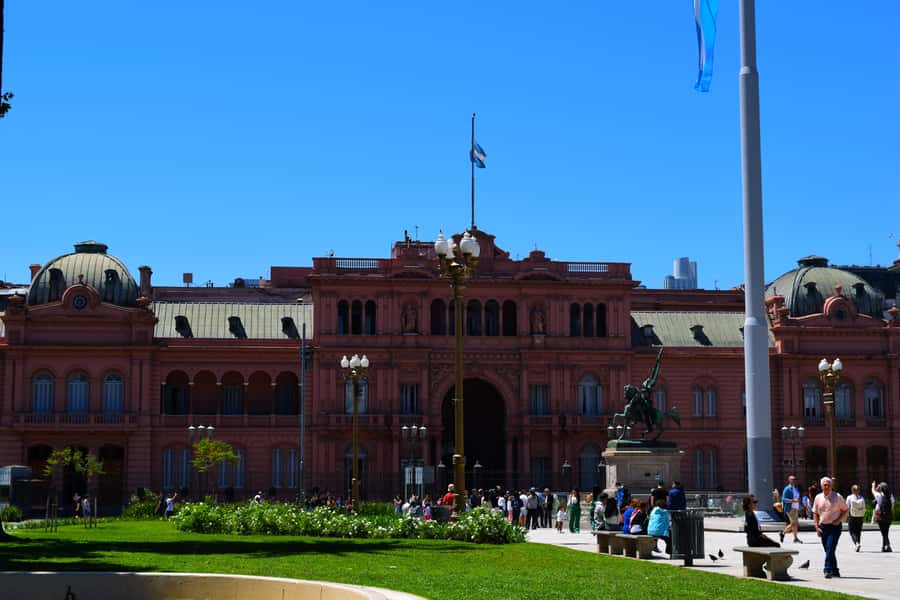
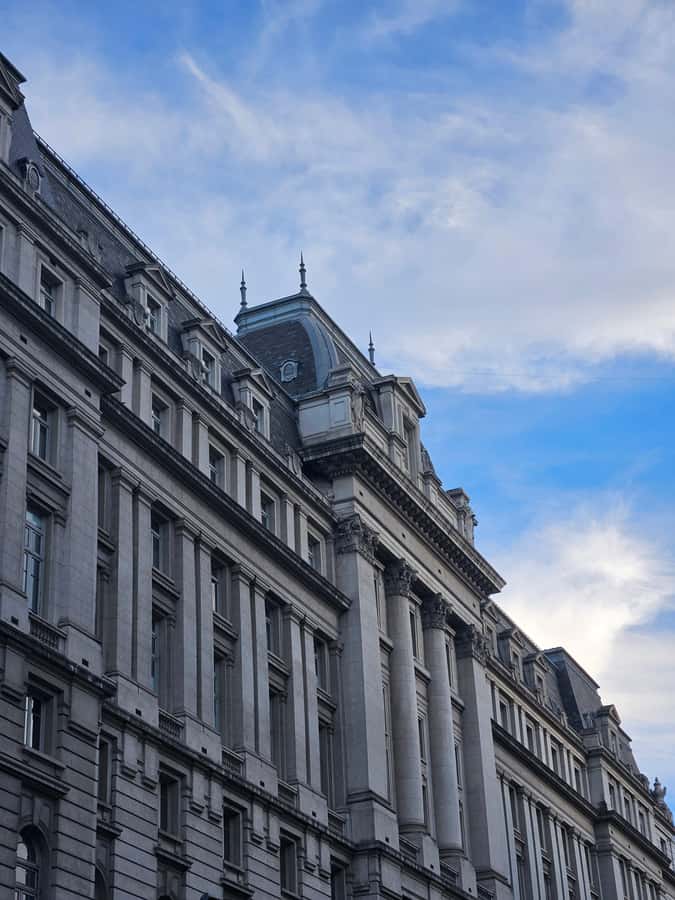
Buenos Aires can feel like several cities placed next to one another. Spanish colonial forms, grand European-inspired civic buildings, Art Deco theaters, Brutalism, and later cultural projects all appear within a fairly compact central area.
That mixture is the real subject here. You are not simply moving from one photo stop to another. You are learning to compare buildings that were designed in very different periods and for very different purposes.
I especially like the way the route uses familiar places as anchors. Plaza de Mayo gives you the major national symbols, while the walk toward the CCK and Corrientes Avenue opens up less obvious architectural stories. You get a useful introduction to central Buenos Aires without spending the entire morning inside one museum.
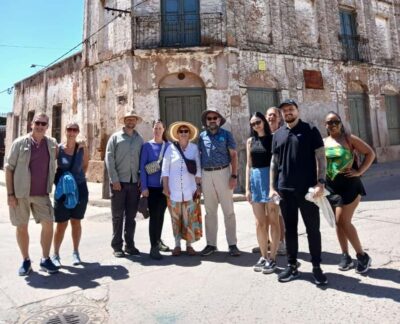
The group limit of four is important. Architecture tours can become dull when a guide is speaking to a large crowd at a noisy intersection. Here, Juan Ignacio and Loli can respond to questions and shape the conversation around your interests, including specific periods, architects, or details that catch your eye.
The experience is offered in English or Spanish. Based on the information provided, Juan Ignacio brings strong recall of architects, periods, and dates, while Loli adds stories connected to South America and Argentine culture. That combination gives the walk both technical detail and a more personal tone.
Other days out in Buenos Aires that people book on the same trip:
- Buenos Aires Hop-On Hop-Off Bus, Free Walking Tours & Discounts
★ 4.5 · 2,218 reviews - Buenos Aires: Piazzolla Tango Show with Optional Dinner
★ 4.4 · 2,122 reviews - Buenos Aires: City Highlights Guided Tour with Transfer
★ 4.7 · 1,946 reviews
Plaza de Mayo: the right place to begin
The meeting point is at Bolívar 65, at the intersection of Bolívar and Avenida de Mayo, in Plaza de Mayo. This is a practical starting point because the square gathers several of Buenos Aires’ most important public buildings in one view.
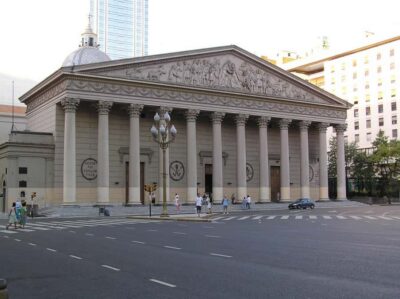
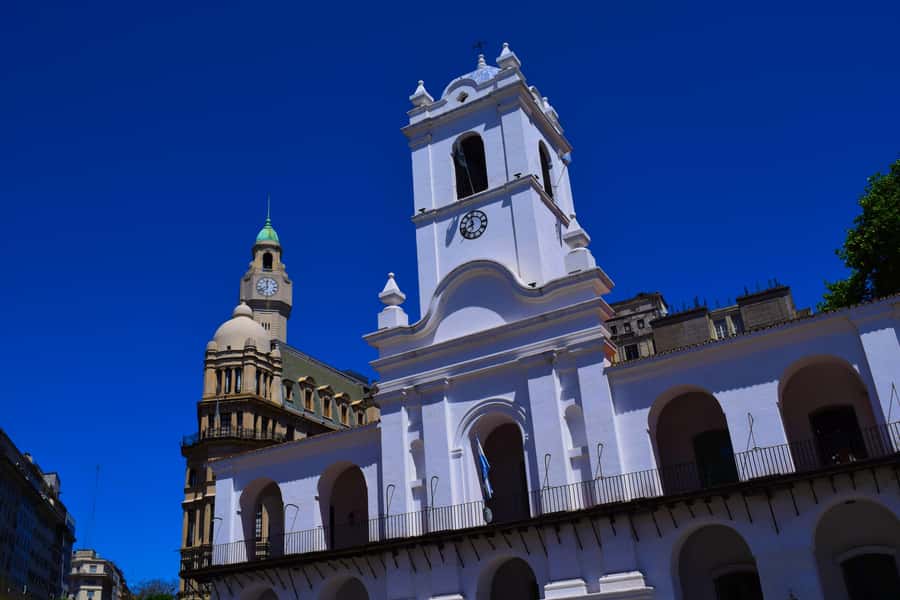
You begin with the Cabildo, the Metropolitan Cathedral, Casa Rosada, and Banco Nación. Each building offers a different way to think about power and public life in Argentina.
The Cabildo connects the square with the colonial period. The Metropolitan Cathedral brings religious architecture into the picture, while Casa Rosada represents the national government. Banco Nación adds the presence of finance and state institutions.
This opening section is useful even if you have already seen Plaza de Mayo. A guide can point out how the buildings relate to one another, rather than treating them as isolated sights. You will also learn why the square matters to Argentina’s political and social life.
Allow time for photographs here, but do not expect a long interior visit at each building. This is primarily an exterior walking tour, with explanations delivered in the street.
Reconquista Street and the Banco Hipotecario’s Brutalist face
From Plaza de Mayo, the route heads north along Reconquista Street. This change of direction shifts the focus from the best-known national landmarks to the city’s commercial and financial center.
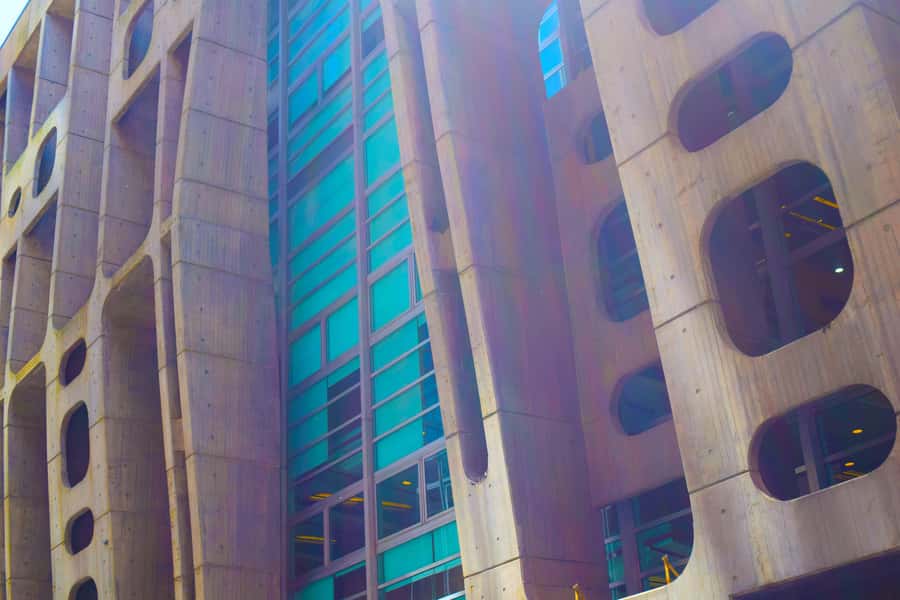
The key stop is the Banco Hipotecario headquarters, noted for its Brutalist façade. Brutalism is often associated with heavy concrete, strong geometric forms, and an unapologetically practical appearance. It can be an acquired taste, especially beside older, more decorative buildings.
That contrast is exactly why the stop earns its place. Buenos Aires is not just a city of ornate façades and grand avenues. Its central streets also contain buildings that reflect modern construction, changing ideas about public institutions, and a different view of what a bank should look like.
I would pay attention to how the building meets the street, not just to whether you like its appearance. The guide’s job here is to help you read the façade, understand its period, and compare it with the colonial and monumental buildings seen earlier.
This is also where the tour’s custom approach can be useful. If you care more about modern architecture than colonial history, you can ask for more attention to this side of Buenos Aires’ development.
The CCK and the former Post and Telegraph Palace
The walk continues to the CCK, formerly the Palacio de Correos y Telégrafos, or Post and Telegraph Palace. The route includes time to look at the façade and hear about the building’s history.
This stop adds another layer to the city’s architectural story. A former communications palace tells you how important mail and telegraph services once were to a growing capital. Its original purpose also helps you see public architecture as a record of technology and government, not only as decoration.
The CCK is a good place to pause because its identity has changed while its architectural presence remains. You are looking at a building connected to older systems of communication, now associated with cultural activity.
The information provided describes this as a walk and exterior viewing stop, so you should not assume that admission or an interior tour is part of the three-hour experience. If you want to explore inside, ask the guide what is possible during your visit.
A completely different sort of day in Buenos Aires:
- Buenos Aires: Hop-On Hop-Off City Bus Tour
★ 4.2 · 1,855 reviews - Buenos Aires Hop-On Hop-Off Bus and Exclusive Benefits
★ 4.4 · 1,714 reviews - Buenos Aires: La Boca Guided Walking Tour in English
★ 4.8 · 1,587 reviews - Buenos Aires: La Recoleta Cemetery Guided Tour in English
★ 4.8 · 1,359 reviews
Corrientes Avenue, the Gran Rex, and the Opera
Next comes Avenida Corrientes, one of Buenos Aires’ main streets for nightlife, culture, and theater. The avenue gives the tour a change of mood. After government buildings, banks, and a former communications palace, you reach a street associated with shows, crowds, and late-night city life.
Two important theater façades receive attention: the Gran Rex and the Opera. Both had their peak years in earlier periods, yet they remain major venues for performances and public gatherings.
The value of this section is not only the theaters themselves. You learn how entertainment shaped the identity of Corrientes Avenue and how architecture can reflect the habits of a city. A theater is designed to attract attention, move crowds, and create a sense of occasion before the curtain even rises.
You will want your camera ready, but busy streets can make this part less relaxed than Plaza de Mayo. Keep your belongings secure and listen carefully at crossings. The route is urban and active, not a quiet architectural promenade.
The Obelisk and the view from Diagonal Norte
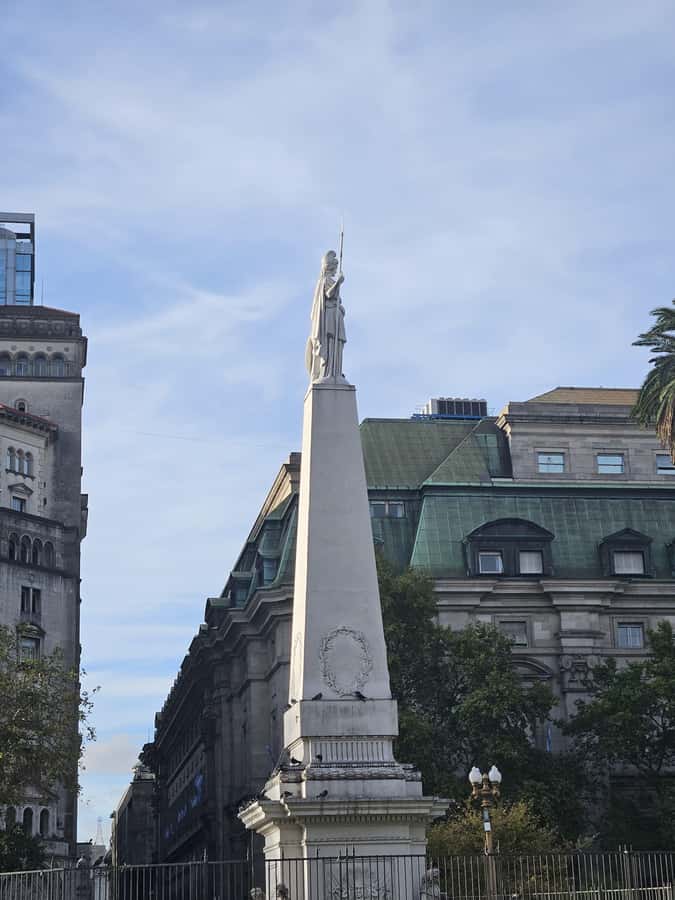
The first part of the walk ends at the Obelisk and Plaza de la República. The monument is one of Buenos Aires’ clearest visual markers, and the surrounding intersection helps explain its importance to public celebrations, demonstrations, and national events.
The tour includes a brief pause at the Obelisk staircase, described as a panoramic point. From there, you can look toward the intersection of Avenida 9 de Julio and Corrientes, one of the city’s busiest urban spaces.
This is a particularly useful photo stop because it lets you see the scale of the avenues rather than only the details of individual buildings. The view gives you a sense of how Buenos Aires planned movement, monuments, and public gathering in its central core.
Do not expect a long scenic overlook. It is a short pause within a walking route, and traffic and city noise remain part of the experience. Still, the stop breaks up the façade-by-façade rhythm and gives you a wider view of the city.
Plaza Lavalle and the Courts Palace
The final section takes you along Diagonal Norte toward Plaza Lavalle. Here, two buildings become the main subjects: the Courts Palace and the Julio Argentino Roca School opposite it.
Plaza Lavalle offers another useful comparison. The Courts Palace represents judicial authority and civic scale, while the school brings education into the same public setting. You can think about how governments express their values through buildings, and how different institutions use monumental design to signal importance.
This part of the tour may appeal most to people who enjoy details that are easy to miss on a standard city walk. The emphasis is not only on the most photographed buildings. You are encouraged to notice the less celebrated structures that help make central Buenos Aires architecturally varied.
Since the route has already passed several major avenues, Plaza Lavalle can feel like a calmer final chapter. It gives the tour a chance to return to civic architecture before ending with culture and tradition at Teatro Colón.
Mate, Argentine hospitality, and the Teatro Colón finish
A mate tasting is included near the end of the walk. You also receive water and a traditional Argentine snack.
Mate is not treated as a quick free drink. The experience includes an explanation of its place in Argentine culture and tradition. That matters because food and drink can provide context that a façade alone cannot. You are learning about a daily custom and sharing a small part of local social life during an architecture-focused walk.
The supplied reviews point to the guides sharing typical biscuits and a tasty mate, with the cultural side of the experience receiving especially warm praise. One person described leaving with a new habit of looking at buildings more closely. That is a good measure of the tour’s purpose: it aims to change how you see the city after the walk ends.
The route finishes at Teatro Colón, one of Buenos Aires’ best-known cultural buildings. The walking tour does not include admission, but you have the option to remain there and take the theater’s guided interior visit.
That separation is worth noting when you plan your day. The $25 covers the English- or Spanish-speaking guide, the three-hour walking experience, water, a traditional snack, and mate tasting. It does not cover lunch or entrance to Teatro Colón.
If the theater interior is a priority, check the available visit times and any extra cost before booking the walking tour. If you only want to see the exterior and continue with your day, the route gives you an easy endpoint near one of the city’s major cultural institutions.
What the $25 price delivers
At $25 per person, this is priced as a focused small-group experience rather than a basic orientation walk. The value comes from the guide access and the range of subjects covered in three hours.
You see colonial, governmental, financial, Brutalist, theatrical, judicial, educational, and cultural architecture. You also receive an introduction to mate and an Argentine snack. A private guide for only four people would normally offer more room for questions than a large group tour, and that is where this experience makes its strongest case.
The price is less attractive if you want extensive interior access. Most of the route concerns exterior façades and public spaces, and the Teatro Colón admission is extra. You should also be ready for a fairly full three hours of walking in central Buenos Aires.
The tour has free cancellation up to 24 hours before the start time, and you can reserve now and pay later. Those terms make it easier to fit the walk into a changing city schedule, though you still need to check availability for the exact starting time.
Practical advice for a comfortable walk
Wear comfortable shoes. The route connects several central areas and includes stops along major avenues, so footwear matters more than fashionable clothes.
Bring sunglasses, a hat, sunscreen, and comfortable clothing. Water is included, but it is still sensible to arrive prepared for sun and warm conditions.
The group is limited to four participants, and the guide languages are English and Spanish. If you have a strong interest in one period or style, say so early. The tour can be customized around your tastes and interests, which is one of its best features.
You should also keep your expectations clear. This is an architecture and culture walk, not a full museum tour, bus tour, or meal experience. The snack and mate tasting are welcome additions, but lunch is not included.
The available information identifies the route ending at Teatro Colón, while the meeting-point details also refer to returning to the meeting point. Because those instructions do not fully match, confirm the exact end arrangement when you reserve.
Who should book this Buenos Aires architecture tour?
I would recommend it to first-time visitors who want a strong introduction to the city center, especially those who prefer buildings and local stories to a checklist of attractions.
It also suits repeat visitors. If you have already photographed Casa Rosada and the Obelisk, the Banco Hipotecario, CCK, Courts Palace, school façade, and theater history give you new reasons to walk familiar streets.
Architecture students, design fans, and curious urban walkers should get the most from the guide-led comparisons. The route covers enough periods and building types to keep the subject varied, while the four-person limit supports a real conversation.
You may want another option if you dislike walking in traffic, prefer long indoor visits, or want a tour centered on food. The route is practical and city-focused, with only the mate and snack providing a formal taste of Argentina.
Should you book it?
Book this tour if you want to understand how Buenos Aires is built, not merely photograph its famous landmarks. Juan Ignacio and Loli bring architecture, city history, South American stories, and mate together in a compact route, and their warmth is one of the experience’s strongest assets.
The $25 price is fair for a three-hour walk with a maximum of four people, English or Spanish guidance, a snack, water, and mate tasting. Just wear good shoes, protect yourself from the sun, and remember that Teatro Colón admission is separate.
If you are curious about the buildings between the major sights, this is a smart way to see central Buenos Aires with sharper eyes.
FAQ
Where does the tour start?
It starts in Plaza de Mayo at Bolívar 65, at the intersection of Bolívar and Avenida de Mayo.
Where does the tour finish?
The route is described as finishing at Teatro Colón. The meeting-point information also refers to ending back at the meeting point, so confirm the final arrangement when booking.
How long does the walking tour last?
The tour lasts three hours.
What languages are available?
The live guide is available in English and Spanish.
How large is the group?
The group is limited to four participants.
Is Teatro Colón admission included?
No. Entrance to Teatro Colón is not included, though you can choose to stay for a guided interior visit.
Is food included?
Water and a traditional Argentine snack are included. Lunch is not included.
Is mate tasting part of the experience?
Yes. The tour includes a mate tasting and an explanation of mate’s history and place in Argentine culture.
What should I bring?
Bring comfortable shoes, sunglasses, a hat, sunscreen, and comfortable clothing.
Latest additions in Buenos Aires
- Buenos Aires: 7 Hour Small Group “BA 101” Walk★ 5.0 · 3 reviews
- Unique Tigre and Delta Private Day Cruise Navegation★ 5.0 · 3 reviews
- Buenos Aires: Customizable City Tour in Polish★ 4.7 · 3 reviews
- Buenos Aires After Dark: A City Lights & Sunset Experience★ 5.0 · 3 reviews
- Tango Show at El Querandi with optional Dinner★ 4.2 · 3 reviews
- Velez Sarsfield Football Match★ 5.0 · 3 reviews
- Caminito, La Boca: vibrant neighborhood★ 5.0 · 3 reviews
- Café de los Angelitos – Traditional Night in Buenos Aires★ 4.8 · 3 reviews
Buenos Aires Tours, compared.