Reviewed · BUENOS AIRES TOURS
Electric Scooter Tour: North Buenos Aires
Buenos Aires rolls by quickly. This 2.5-hour North Buenos Aires tour covers about 10 kilometers by electric scooter, linking grand avenues, Recoleta, landmark buildings, and local stories about soccer, politics, mate, and Argentine habits. I like the small groups of no more than eight and the chance to pause for mate and an alfajor, not just snap photos and move on.
I also like the guide-led storytelling, especially the mix of history and everyday culture. Guides such as Miguel and Rita have received especially warm praise for their humor and personal style. The main consideration is practical: you need to know how to ride a bicycle, and the tour can run longer than planned in busy conditions.
In This Review
- Key things to know before you book
- Why a scooter works well in North Buenos Aires
- Plaza General San Martín and Buenos Aires’ European face
- Torre Monumental, migration, and football
- The Obelisco as the city’s great witness
- The French Embassy and Argentine self-image
- The University of Buenos Aires law faculty
- Mate time beside Floralis Generica
- Recoleta Cemetery and the Basilica del Pilar
- MALBA and the limits of a fast city tour
- The guides make the difference
- Price, timing, and practical value
- Who should choose this ride?
- FAQ
- How long does the North Buenos Aires scooter tour last?
- What is included in the price?
- Do I need to know how to ride a bicycle?
- How many people can join the tour?
- Is admission to MALBA included?
- What happens if the weather is poor?
- Should you book the North Buenos Aires ride?
Key things to know before you book
- About 10 kilometers on two wheels: You cover a large part of northern central Buenos Aires without spending the whole day walking.
- Mate time at Floralis Generica: You learn how to prepare Argentina’s famous yerba mate and try a dulce de leche alfajor.
- A compact group of up to eight: This gives the guide a better chance to answer questions and keep the ride together.
- A culture-focused route: Soccer, barbecue, religion, immigration, politics, and Argentine communication all get time in the conversation.
- A 2 p.m. start: The afternoon departure fits well after a slow lunch, though a longer-than-planned ride could affect later plans.
- Weather matters: Poor weather can lead to a new date or a full refund, and the tour may also be canceled if the minimum number of participants is not reached.
Why a scooter works well in North Buenos Aires
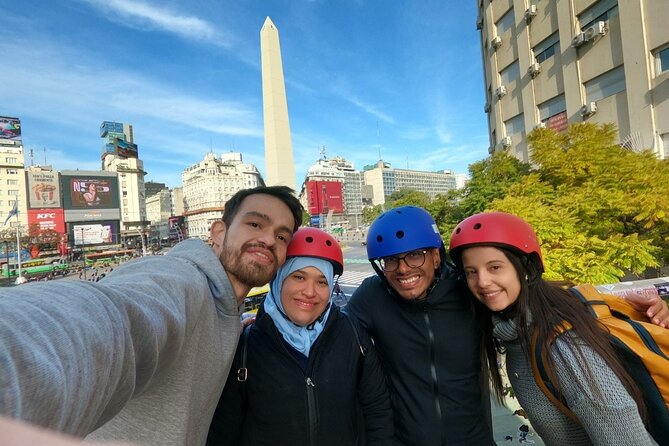
Buenos Aires is a city of long avenues, broad plazas, formal monuments, and districts that can feel far apart on foot. This ride gives you a useful middle ground. You see much more than you would walking, but you still stop often enough to hear the guide and take in the streets.
The route is especially useful if you have limited time in the city or want an orientation on your first full day. In one afternoon, you reach Plaza General San Martín, the Torre Monumental, the Obelisco, Recoleta Cemetery, the University of Buenos Aires law faculty, Floralis Generica, and several other major sights.
The tour is advertised as an electric scooter experience, while the included equipment refers to use of a Segway. That wording is worth checking with Rollin Argentina before you arrive if the exact vehicle matters to you. Either way, the activity involves balancing and steering on a two-wheeled device, so it is not a sightseeing ride for someone who cannot ride a bicycle.
You receive a helmet and reflective belt. The group limit of eight is a real advantage here. Small moving groups are easier to manage around city streets, and you are less likely to be left listening from the back while the guide speaks to someone else.
Other days out in Buenos Aires that people book on the same trip:
- Buenos Aires Hop-On Hop-Off Bus, Free Walking Tours & Discounts
★ 4.5 · 2,218 reviews - Buenos Aires: Piazzolla Tango Show with Optional Dinner
★ 4.4 · 2,122 reviews - Buenos Aires: City Highlights Guided Tour with Transfer
★ 4.7 · 1,946 reviews
Plaza General San Martín and Buenos Aires’ European face
The ride begins at Tres Sargentos 463, with a 2 p.m. start. The first major stop is Plaza General San Martín, where the guide explains why Buenos Aires often feels more European than other South American capitals.
You will hear about the city’s architecture, public spaces, and cultural ties. The point is not simply to label Buenos Aires as European. It is to help you understand how Argentina’s capital built its own identity through immigration, design, politics, and a strong connection with Europe.
This is a good opening stop because it gives you a frame for the rest of the ride. As you move between formal squares, embassies, universities, and monuments, you can better understand why the city feels both familiar and distinctly Argentine.
The stop lasts about 20 minutes and has no separate admission fee. You should expect an outdoor explanation rather than a museum visit, so bring sun protection or a light layer depending on the weather.
Torre Monumental, migration, and football
The next pause is at Torre Monumental, the clock tower once known as the Torre de los Ingleses. The discussion links migration, football, and the tower’s nickname, Little Ben.
This is a compact stop of about 15 minutes, but it connects several subjects that help explain modern Buenos Aires. Immigration shaped the city’s population and culture, while football became one of Argentina’s strongest public passions. The guide uses the monument as a starting point rather than treating it as an isolated object.
That approach is one of the ride’s strengths. You are not just collecting dates and names. You are getting the social background behind the city’s symbols. If you are interested in football, ask questions here, since the guides are praised for bringing plenty of football talk into the ride.
The Obelisco as the city’s great witness
The Obelisco stop is short, around 10 minutes, but this is one of Buenos Aires’ essential photo points. The guide presents it as a witness to the city, a fitting idea for a monument tied to public celebrations, political moments, and everyday city life.
Do not expect a long visit or an interior tour. This is a quick landmark stop during a moving route. Its value comes from seeing how the monument fits into the city’s huge central avenues and from hearing the local stories attached to it.
The stop also shows why the scooter format makes sense. Walking from the northern sights to the Obelisco and then back toward Recoleta would take considerable time. On the ride, you can connect these areas in one continuous outing.
A completely different sort of day in Buenos Aires:
- Buenos Aires: Hop-On Hop-Off City Bus Tour
★ 4.2 · 1,855 reviews - Buenos Aires Hop-On Hop-Off Bus and Exclusive Benefits
★ 4.4 · 1,714 reviews - Buenos Aires: La Boca Guided Walking Tour in English
★ 4.8 · 1,587 reviews - Buenos Aires: La Recoleta Cemetery Guided Tour in English
★ 4.8 · 1,359 reviews
The French Embassy and Argentine self-image
At the French Embassy, the conversation turns to why Argentinians sometimes have a reputation for being conceited. This is less a conventional sightseeing stop and more a chance to examine how Argentines see themselves and how outsiders interpret that attitude.
The planned discussion lasts about 10 minutes. I like this kind of subject because it moves beyond monuments. You get a taste of Argentine humor, social behavior, and the country’s complicated relationship with Europe and authority.
A guide’s personality matters here. Miguel Salazar has been praised for speaking openly about Argentine politics, the economy, the university system, and local attitudes toward Americans. That sort of frank conversation can make this stop more memorable than a standard architectural explanation.
Still, the discussion may not suit everyone. If you prefer a strictly neutral, tightly scripted tour, the direct style could feel more conversational than expected. If you like asking questions about how people live and think, it should be a highlight.
The University of Buenos Aires law faculty
The Facultad de Derecho, or law faculty of the University of Buenos Aires, gives the ride another change of pace. The guide explains its role as a training ground for Argentina’s social and political leaders and discusses its connection with Domingo and Evita Perón.
The stop is scheduled for about 15 minutes. It is a useful reminder that Buenos Aires is not only about grand plazas and famous avenues. Its universities have helped shape the country’s political life, and this building represents that link between education and public power.
You will likely get the most from this stop if you are interested in Argentine politics or modern national identity. It is not presented as a full university visit, and there is no included admission. Think of it as a street-side introduction to an institution with national importance.
Mate time beside Floralis Generica
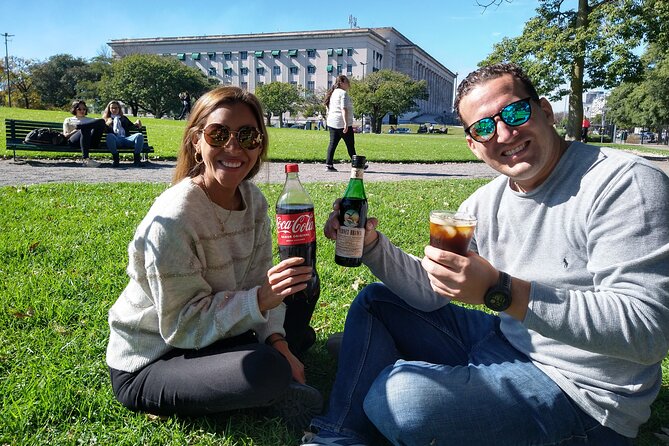
The most distinctive part of the afternoon comes at Floralis Generica. Here, the group pauses for about 20 minutes to prepare and taste mate, Argentina’s traditional yerba mate infusion, along with a chocolate alfajor filled with dulce de leche.
This break gives the tour a human center. Mate is not merely a drink to sample. The ritual of preparing and sharing it is closely tied to Argentine social life. Learning the process from the guide helps you understand why the item appears so often in homes, parks, offices, and gatherings.
The alfajor adds a sweet, simple reward after the ride. It is filled with dulce de leche, one of Argentina’s best-known flavors. Coffee or tea is also listed with the refreshments, but the focus is clearly on mate.
I would treat this as a cultural introduction rather than a formal tasting session. The pause is short, and the group has several more stops ahead. Still, it is exactly the kind of small encounter that can make a city feel less like a checklist of monuments.
Recoleta Cemetery and the Basilica del Pilar
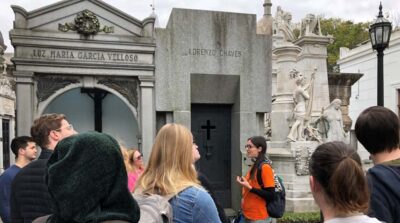
The ride continues to La Recoleta Cemetery, where several important figures from Argentina and the wider continent are buried. You have the option to go inside for about 10 minutes and take photos.
That short visit is useful, but you should set your expectations correctly. The cemetery is included as part of a fast-moving city tour, not as a dedicated cemetery walk. If you want detailed stories about individual tombs, architecture, or Argentina’s political figures, you may need to return later on your own.
The route then reaches the Basilica de Nuestra Señora del Pilar, with about 10 minutes devoted to Argentina’s religious identity. The guide connects the subject to Pope Francis, who came from what Argentines once called the End of the World.
This pairing works well. Recoleta offers a direct encounter with national memory, while the basilica introduces the importance of Catholicism in Argentine public life. Together, they show two lasting forces in the country: political history and religion.
MALBA and the limits of a fast city tour
The final listed stop is the Museo de Arte Latinoamericano de Buenos Aires, usually known as MALBA. The museum is devoted to Latin American art, but admission is not included.
The schedule gives this stop about 15 minutes. That is enough to identify the museum and hear why it matters, but not enough for a serious visit to the collection. If MALBA is high on your Buenos Aires list, plan a separate visit rather than assuming this tour provides a museum experience.
The tour ends back at the original meeting point. That makes the return convenient, especially if you have left luggage or arranged another activity nearby. Keep in mind that the outing can take longer than the stated 2.5 hours. One family reported a ride lasting four and a half hours, with weekend conditions and the route through a craft market contributing to the delay.
That is an important planning warning. Do not schedule a flight, dinner reservation, or timed museum entry immediately after the ride.
The guides make the difference
The strongest part of this experience is likely to be the guide rather than the vehicle. Miguel has been praised for his open discussions of politics, economics, university life, and Argentine attitudes toward Americans. Rita is described as friendly, funny, and enthusiastic about the city’s stories.
Those details matter because the tour covers a lot of ground in a short time. The guide needs to keep the group moving while making each stop meaningful. A warm, talkative guide can turn a simple ride past a building into a conversation about migration, social class, religion, or football.
The tone appears informal and personal. You are encouraged to learn the city’s secrets and receive recommendations for the rest of your stay. That can be especially useful early in a Buenos Aires visit, when you are still deciding which neighborhoods, restaurants, museums, or cultural activities deserve your time.
The tradeoff is that the experience may vary with the guide and group. A lively guide can make the afternoon excellent, while a visitor hoping for a formal academic lecture may find the style relaxed and opinionated.
Price, timing, and practical value
At $39 per person, the tour offers solid value if you want broad city coverage. You are paying for about 2.5 hours, the electric vehicle, safety equipment, a small group, a guide, mate, and an alfajor. There are no separate admission charges for the listed outdoor stops, though MALBA admission is not included.
The value is strongest for first-time visitors who want to see major sights without exhausting themselves on foot. A family also praised the way the ride covered the main sights without making everyone tired. Children, young adults, and active parents may enjoy the novelty, provided everyone can handle the scooter safely.
The price is less compelling if you want long visits inside attractions. Recoleta Cemetery receives only a short optional visit, and MALBA is mainly an exterior stop unless you arrange a separate museum visit. In that case, a walking tour combined with individual museum tickets may suit you better.
The tour is booked, on average, about five days ahead. That suggests you should not leave it until the last minute if your schedule is tight. Confirmation arrives at booking, and the meeting point is near public transportation.
You can cancel for a full refund up to 24 hours before the 2 p.m. start. Changes or cancellations inside that window are not accepted for a refund. Poor weather can lead to a new date or a full refund, and the operator can also cancel when the minimum number of participants is not met.
Who should choose this ride?
I would choose this tour if you want a lively introduction to Buenos Aires, enjoy local conversation, and prefer moving through a city rather than spending hours inside one site. It is particularly useful for a first afternoon in the capital, when you want to understand the city’s shape and collect ideas for the rest of your visit.
It also suits families and active couples who want to cover distance without a long walking day. The small group and included helmet help keep the outing manageable, though you still need basic bicycle skills and comfort balancing on the vehicle.
I would think twice if you dislike open-ended schedules, have a strict appointment afterward, or want detailed time at every landmark. The ride can last longer than advertised, weekend routes may be slowed by a craft market, and several stops are brief.
FAQ
How long does the North Buenos Aires scooter tour last?
The planned duration is approximately 2 hours and 30 minutes, with a 2 p.m. start. The ride can take longer in busy conditions, so leave extra time afterward.
What is included in the price?
The $39 price includes use of the electric scooter or Segway-style vehicle, a helmet, a reflective belt, mate or another listed infusion, and a chocolate alfajor filled with dulce de leche.
Do I need to know how to ride a bicycle?
Yes. The activity is not recommended for people who do not know how to ride a bicycle.
How many people can join the tour?
The maximum group size is eight participants. The experience also requires a minimum number of participants to operate.
Is admission to MALBA included?
No. Admission to the Museo de Arte Latinoamericano de Buenos Aires is not included.
What happens if the weather is poor?
If the tour is canceled because of poor weather, you will be offered another date or a full refund. The same choice applies if the experience is canceled because the minimum number of participants is not reached.
Should you book the North Buenos Aires ride?
Book it if you want a broad, friendly introduction to Buenos Aires with plenty of local context, light exercise, and a memorable mate break. The combination of major landmarks, football talk, Argentine social customs, and small-group guiding gives you more than a simple sightseeing loop.
Skip it if you need a tightly timed afternoon or want deep visits inside Recoleta Cemetery and MALBA. For everyone else, $39 is a fair price for covering 10 kilometers, getting your bearings, and seeing the city through the stories of guides such as Miguel and Rita. Just confirm the vehicle type, allow extra time, and arrive ready to ride.
Latest additions in Buenos Aires
- Buenos Aires: 7 Hour Small Group “BA 101” Walk★ 5.0 · 3 reviews
- Unique Tigre and Delta Private Day Cruise Navegation★ 5.0 · 3 reviews
- Buenos Aires: Customizable City Tour in Polish★ 4.7 · 3 reviews
- Buenos Aires After Dark: A City Lights & Sunset Experience★ 5.0 · 3 reviews
- Tango Show at El Querandi with optional Dinner★ 4.2 · 3 reviews
- Velez Sarsfield Football Match★ 5.0 · 3 reviews
- Caminito, La Boca: vibrant neighborhood★ 5.0 · 3 reviews
- Café de los Angelitos – Traditional Night in Buenos Aires★ 4.8 · 3 reviews
Buenos Aires Tours, compared.