
Reviewed · LA BOCA & SAN TELMO TOURS
Buenos Aires: Montserrat, San Telmo, La Boca, and Puerto …
Buenos Aires tells its story street by street. I like the way this four-hour tour links the city’s oldest landmarks with its tango corners, football culture, and modern waterfront, rather than treating each area as a separate stop. I also like the focus on small details, including the city’s oldest pharmacy, bookstore, and church, plus the tiny house on Calle Defensa.
The main point to consider is pace. You cover Montserrat, San Telmo, La Boca, and Puerto Madero in one morning or afternoon, with roughly an hour in each area. That gives you a useful first look, but not much time for long museum visits, shopping, or a leisurely meal. Café Tortoni also depends on availability, so it is best viewed as a possible highlight rather than a guarantee.
In This Review
- Key points at a glance
- Why this tour works as a first look at Buenos Aires
- Montserrat begins at the city’s political heart
- Montserrat’s overlooked firsts on Calle Defensa
- San Telmo brings in Mafalda, market life, and old port stories
- San Telmo Market and Plaza Dorrego
- La Boca: Boca Juniors and the color of Caminito
- Puerto Madero changes the city’s scale
- The guide can make or break the four-hour route
- Timing, walking, and practical limits
- Who will get the most from this experience?
- Should you book this Buenos Aires tour?
- FAQ
- Where does the tour start?
- Where does the tour finish?
- How long does the tour last?
- Which languages are available?
- Are meals and drinks included?
- Is Café Tortoni guaranteed to be part of the visit?
Key points at a glance
- Four historic districts in four hours: Move from colonial-era Montserrat to San Telmo, La Boca, and modern Puerto Madero.
- Small details make the tour memorable: Look for the oldest bookstore, church, pharmacy, first two-story building, and smallest house in Buenos Aires.
- Football and tango share the spotlight: See Boca Juniors Stadium and colorful Caminito, where tango dancers perform in traditional restaurants.
- San Telmo Market adds local character: The 1897 market mixes antiques, food stalls, restaurants, and traditional produce sellers.
- The finish is sleek and modern: End at Puente de la Mujer, beside historic naval vessels and Puerto Madero’s riverside promenade.
- Guide quality matters here: Alejandra, also called Ale, received especially warm praise for her friendly, well-informed storytelling.
Why this tour works as a first look at Buenos Aires
Buenos Aires can feel like several cities stitched together. One block may show grand government buildings and old cafés, while the next brings you to painted houses, tango, football, or glass towers beside the river.
This tour gives you a broad introduction without asking you to spend a full day on only one district. You start at the Metropolitan Cathedral, then move through Montserrat and San Telmo on foot. Short transfers of about 10 minutes take you to La Boca and later Puerto Madero.
I think the route is strongest for someone visiting Buenos Aires for the first time. A guide helps connect the places that can otherwise seem unrelated. You are not simply looking at a plaza, a stadium, or a bridge. You hear how politics, immigration, port life, popular culture, and urban change shaped the city.
The tour costs $100 per person. That is not a bargain-priced walking tour, so value depends on what you want. If you would otherwise pay for several separate taxi rides and spend time figuring out the best order for these districts, the price can make sense. The guide, transportation between sections, and historical context are built in.
If you prefer to linger, eat, shop, or enter major attractions at your own pace, the price may feel high for four hours. The tour gives you orientation and context more than long indoor visits.
More La Boca and San Telmo Tours:
- Buenos Aires: La Boca Guided Walking Tour in English
★ 4.8 · 1,587 reviews - Buenos Aires: Navigation from Pto. Madero to La Boca
★ 4.1 · 147 reviews - Buenos Aires: San Telmo and Market Guided Walking Tour
★ 4.8 · 102 reviews
Montserrat begins at the city’s political heart
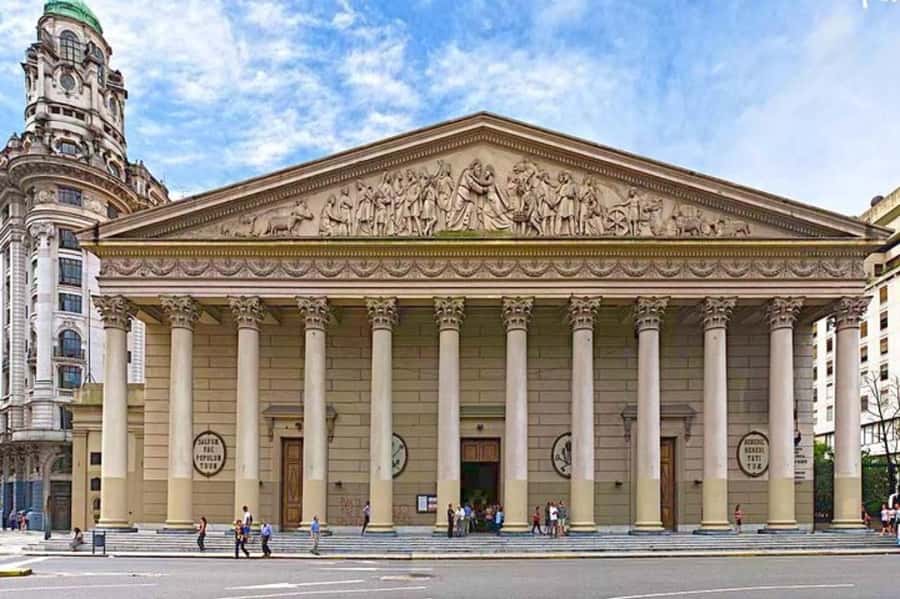
The meeting point is the Metropolitan Cathedral, an important place to begin. From here, the route reaches Plaza de Mayo, the oldest and most important public square in the city.
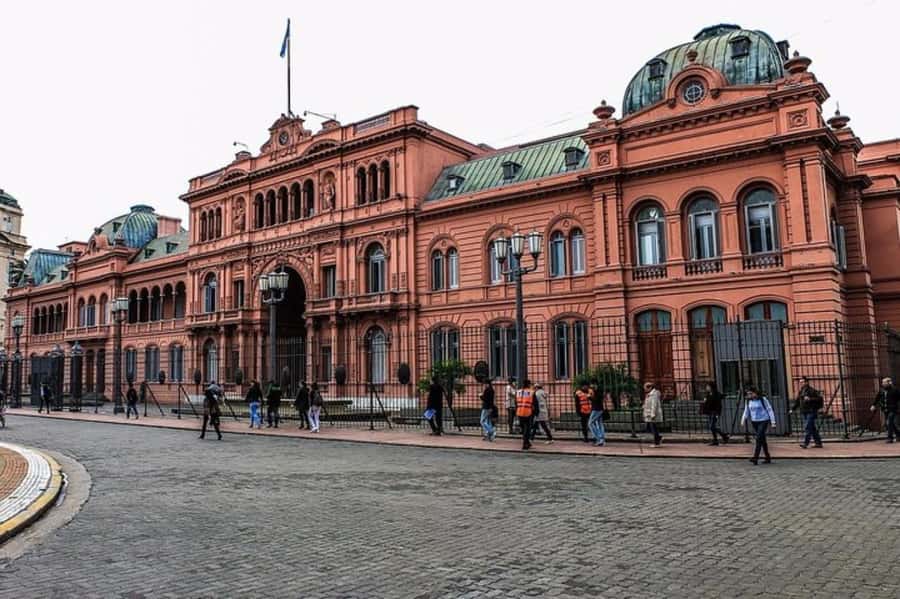
Give yourself a moment to look around. The square is framed by the Casa Rosada, the Cabildo, the cathedral, and government ministries connected with the economy and defense. This is not just a pretty civic space. It is the place where Buenos Aires presents its political identity.
The Casa Rosada is the executive office, recognizable by its pink exterior. The Cabildo recalls the city’s colonial administration. The Metropolitan Cathedral brings a religious presence to the same square. Having these buildings together makes the opening stop especially useful because you can see several parts of Argentine public life in one view.
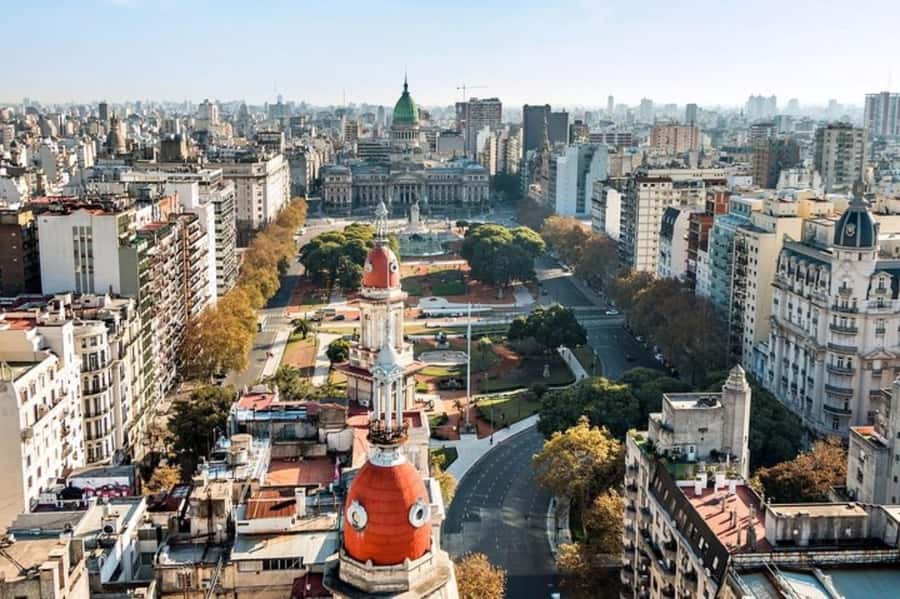
From the western end of Plaza de Mayo, Avenida de Mayo leads toward Congress. It is described as the first boulevard in Buenos Aires and the first avenue in South America. The route links the executive and legislative centers, giving the walk a clear physical shape.
Halfway along the avenue is Café Tortoni, known as the oldest café in Argentina and South America. The tour includes it subject to availability. That wording matters. You should not count on a full café visit, a seat, or time for a drink. Still, even seeing this famous address adds a pleasant old-city note to the route.
Montserrat’s overlooked firsts on Calle Defensa
The Montserrat section goes beyond the headline buildings. You look for the oldest bookstore, church, and pharmacy in Buenos Aires, along with the city’s first two-story building.
These details are valuable because they make the neighborhood feel lived in. Grand plazas are easy to remember, but a pharmacy or bookstore can reveal how ordinary city life developed around those public landmarks.
Calle Defensa then leads toward San Telmo. This is a good stretch for listening closely to the guide. The appeal is not a single dramatic monument, but the collection of old addresses and stories connected with the street.
The guide may point out the small architectural details you could pass without noticing. That is one reason I prefer taking this section with a local guide instead of trying to follow a map alone.
San Telmo brings in Mafalda, market life, and old port stories
San Telmo is Buenos Aires’ second-oldest neighborhood, and its character changes the mood of the tour. Calle Defensa becomes a route through local culture, street art, historic buildings, and familiar Argentine symbols.
Watch for the statue of Mafalda, the beloved comic character created by Argentine cartoonist Quino. Mafalda is more than a children’s character. She is part of the country’s cultural identity, and the statue makes a natural photo stop.
You also hear stories about sailors, immigrants, enslaved people, and urban legends. These subjects give San Telmo a human scale. The neighborhood was shaped by people arriving, working, trading, and living close to the port. The stories may be brief because the schedule is tight, but they help explain why San Telmo feels different from the formal center around Plaza de Mayo.
One particularly unusual stop is the smallest house in the city. It is the sort of detail that can easily disappear if you walk through San Telmo without local guidance. Keep your eyes open, since the tour’s small discoveries are part of its appeal.
A completely different sort of day in Buenos Aires:
- Buenos Aires Hop-On Hop-Off Bus, Free Walking Tours & Discounts
★ 4.5 · 2,218 reviews - Buenos Aires: Piazzolla Tango Show with Optional Dinner
★ 4.4 · 2,122 reviews - Buenos Aires: City Highlights Guided Tour with Transfer
★ 4.7 · 1,946 reviews - Buenos Aires: Hop-On Hop-Off City Bus Tour
★ 4.2 · 1,855 reviews
San Telmo Market and Plaza Dorrego
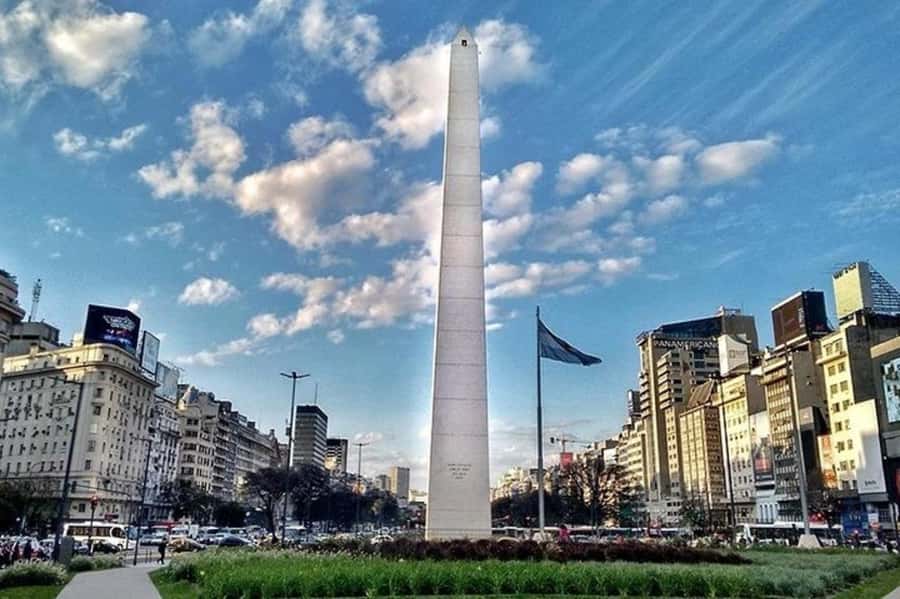
San Telmo Market opened in 1897. Today it combines antique shops, small restaurants, fruit and vegetable stalls, and other traditional sellers under one roof.
I would treat this as a sensory stop rather than a formal market tour. You may have time to look around, but the schedule does not promise a long meal or extended shopping. Meals and drinks are not included, so bring money if you want to buy something.
The market works well in the route because it shows how San Telmo has changed without losing its older purpose. It is both a food market and a place for antiques and local browsing. That mix gives you a more useful picture of the neighborhood than a polished sightseeing street alone.
Before reaching San Juan Avenue, the tour passes Plaza Dorrego, the city’s second-oldest square. Nearby is Ezeiza’s house, and the French Passage provides a photogenic corner for pictures.
This area is also a practical place to note for later. If you return to San Telmo on your own, Plaza Dorrego and the French Passage offer an easy base for a meal or another walk. On the guided tour, though, you may need to choose between lingering for photos and keeping up with the group.
La Boca: Boca Juniors and the color of Caminito
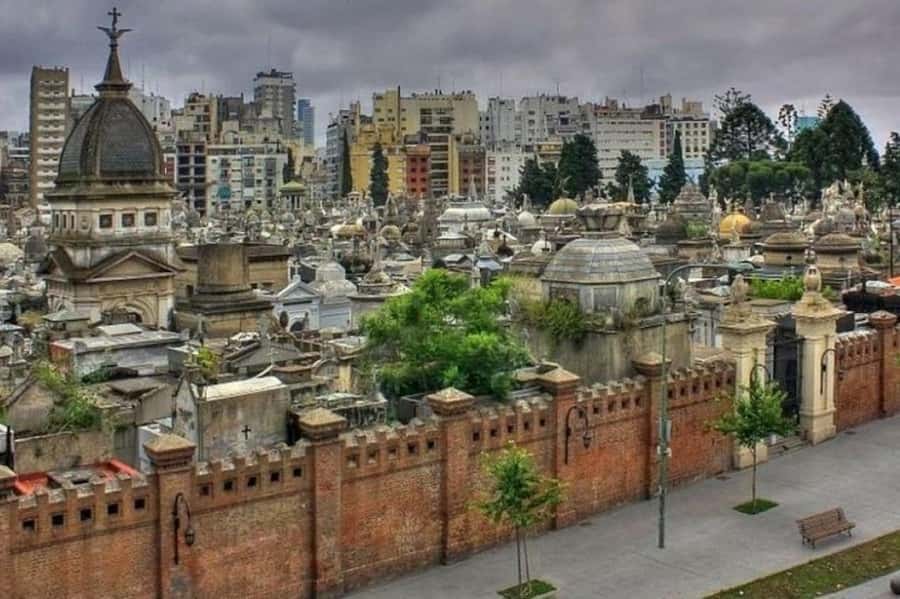
After San Telmo, a transfer of about 10 minutes brings you to La Boca. This is the most visually forceful section of the route.
La Boca is closely tied to Boca Juniors, one of Argentina’s best-known football clubs. The tour includes the iconic Boca Juniors Stadium and introduces you to the importance of the club in local culture. Football fans will get the most from this stop, but even if you do not follow the sport, the stadium helps explain the neighborhood’s identity.
Do not expect a full match-day experience. The information provided describes seeing the stadium and learning about the club, not attending a game or receiving a stadium admission. If entering the stadium is essential to you, confirm what the tour covers before booking.
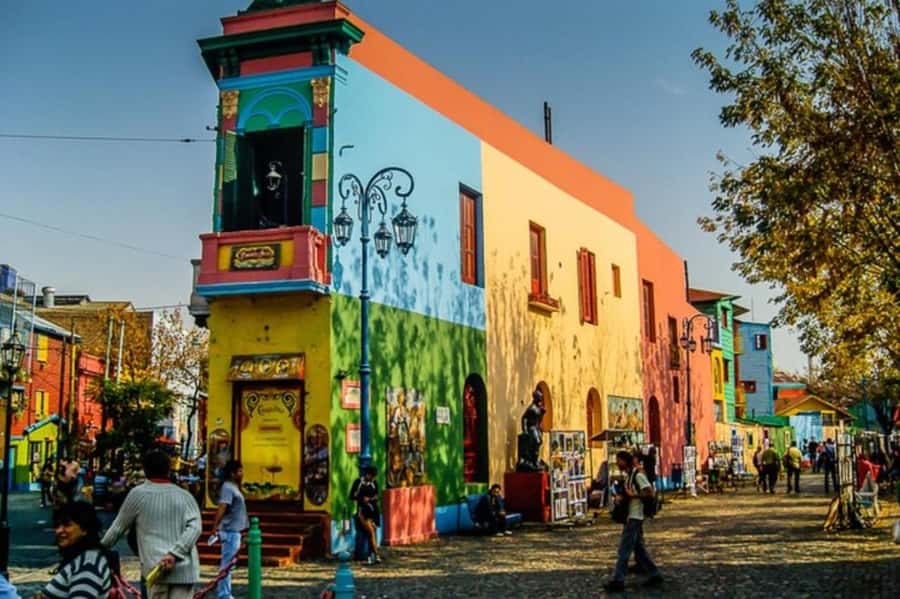
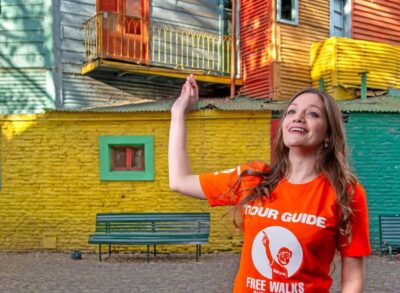
Caminito is La Boca’s famous open-air museum street. Its painted façades give the area a look unlike Montserrat or San Telmo. The street is also linked with tango, and you may see dancers performing in traditional restaurants.
This is an excellent place for photographs, but I would keep your belongings secure and stay aware of your surroundings. The tour information does not promise a meal, tango lesson, or show, so think of Caminito as a guided neighborhood visit with chances to watch short performances and browse souvenirs.
The time limit is the main drawback. La Boca can easily absorb more than an hour if you want to shop, eat, watch tango, and take pictures. Here, the tour gives you the essential introduction, then moves on.
Puerto Madero changes the city’s scale
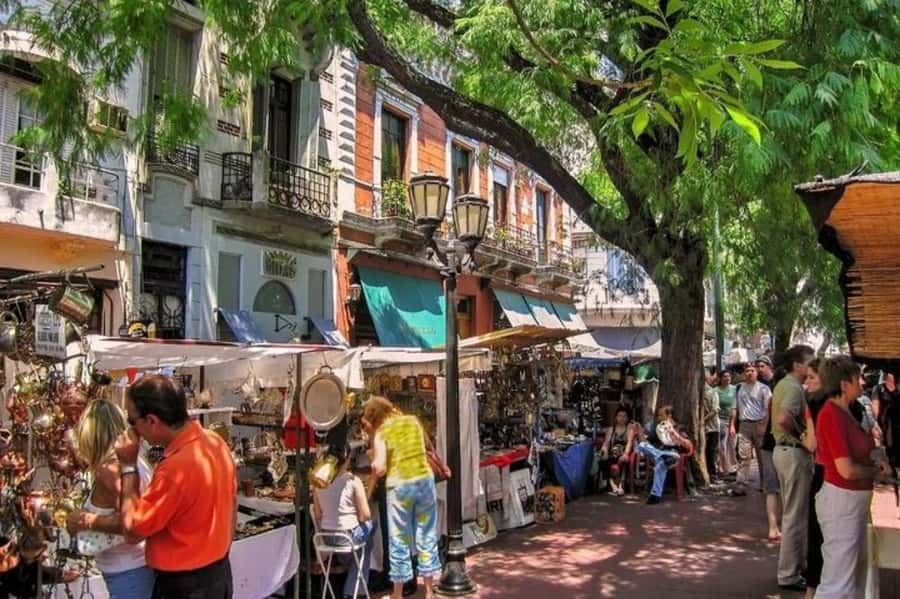
A second transfer of about 10 minutes takes you to Puerto Madero. The contrast is immediate. La Boca offers color, tango, and football. Puerto Madero presents a newer Buenos Aires beside the river.
The district began as an abandoned port project and later became a modern neighborhood of tall buildings, restaurants, bars, and a riverside promenade. It is a useful final chapter because you can see how the city has turned old port land into a sleek urban district.
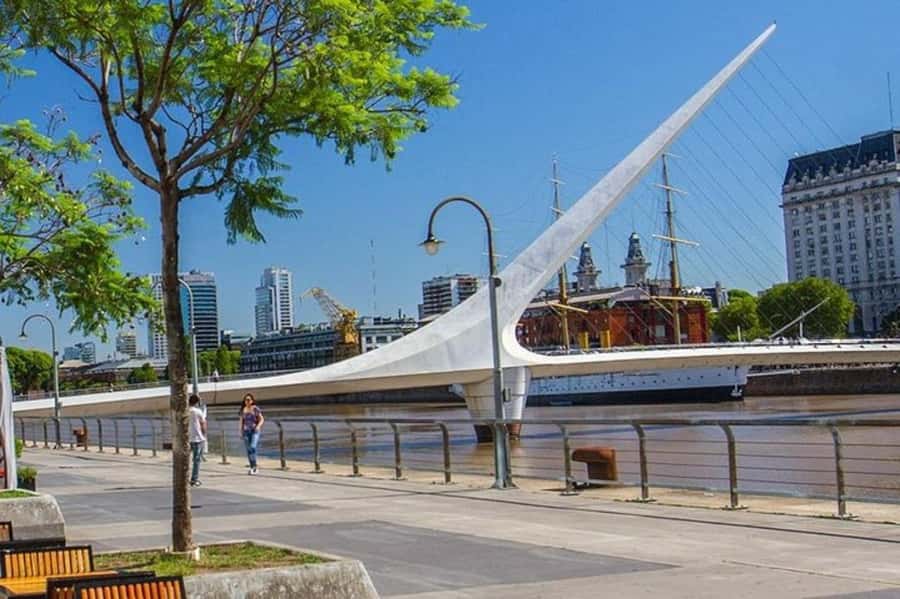
The star here is Puente de la Mujer, designed by Santiago Calatrava. Its sweeping form makes it one of the easiest modern landmarks in Buenos Aires to recognize. The tour finishes at the bridge, so you have a clear endpoint for photos and further exploring.
Puerto Madero also preserves two historic naval vessels: the frigate Sarmiento and the corvette Uruguay. Their presence adds a useful reminder that the district’s modern appearance replaced an older working port. The tour gives you the setting and their stories, but it does not list admission to the ships as included.
I like this final stop because it prevents the tour from presenting Buenos Aires as only an old colonial city. You see the city’s past, but you also see its effort to reshape the waterfront for modern life.
The guide can make or break the four-hour route
The strongest personal praise attached to this experience goes to Alejandra, also called Ale. Emilia from Australia described her as friendly and well informed, and said she made the time especially enjoyable. A separate rating also singled out Ale as the best part of the tour.
That matters because this route depends on explanation. A guide who simply names buildings would leave much of the experience flat. The value comes from learning why Plaza de Mayo matters, how San Telmo’s people and trades shaped the area, why Boca Juniors means so much in La Boca, and how Puerto Madero changed the waterfront.
Sebastian was also praised for helping make sure the outing ran smoothly. That suggests the operator pays attention to the overall experience, not just the commentary, though you should remember that guide assignments can change.
The tour is offered in English, Spanish, and Portuguese. If you want the best chance of following the stories, choose the language in which you are most comfortable discussing history and local culture.
Timing, walking, and practical limits
The advertised duration is four hours. Each main district receives about one hour, with two short transfers between San Telmo, La Boca, and Puerto Madero.
This is a walking-heavy outing. Wear comfortable shoes, especially because the route includes several historic streets and open public areas. Check the weather forecast and dress for the conditions. There is no reason to expect the same comfort level in bright sun, rain, or cool wind along the waterfront.
The tour is not suitable for wheelchair users. The supplied information does not provide more detail about pavement, steps, or vehicle access, so anyone with mobility concerns should ask the operator for current conditions before booking.
Because the schedule is compact, I would avoid planning a separate reservation immediately afterward. The route can be affected by traffic, time spent at stops, and the availability of Café Tortoni.
Free cancellation is available up to 24 hours before departure, and you can reserve now while paying later. Those terms are useful if your Buenos Aires plans are still shifting, but they do not change the basic tradeoff: this is a guided overview, not a slow neighborhood day.
Who will get the most from this experience?
I would recommend this tour if you want four major Buenos Aires districts explained in one continuous route. It suits first-time visitors, short-stay visitors, and anyone who wants help understanding how the city’s political center, old market district, football quarter, and modern waterfront fit together.
It is also a good match if you enjoy small historical clues. The oldest pharmacy, first two-story building, smallest house, Mafalda statue, and old naval vessels give the tour more personality than a standard list of famous buildings.
Football fans should value the La Boca section, while anyone interested in tango will appreciate Caminito and its restaurant performances. Architecture fans get both Avenida de Mayo and Puente de la Mujer.
I would hesitate if your main goal is shopping, eating, or visiting interiors. You will not have much free time, meals are not included, and Café Tortoni is subject to availability. The tour also does not promise stadium entry or admission to the historic ships.
At $100, I see the price as reasonable only if you value a guide and efficient routing. For a self-directed visitor who is comfortable using local transport and researching each district, it is likely more than necessary. For someone who wants an organized introduction and strong local storytelling, it can save time and add meaning to places that might otherwise blur together.
Should you book this Buenos Aires tour?
Book it if you want a fast but thoughtful introduction to Buenos Aires, especially with Montserrat, San Telmo, La Boca, and Puerto Madero all on your wish list. The route is well chosen, the guide feedback is especially strong for Alejandra, and the mix of major sights and odd little details gives the four hours substance.
Skip it if you want deep time in one neighborhood, a long market lunch, a full tango program, or guaranteed entry to Café Tortoni, Boca Juniors Stadium, or the naval vessels. For most first-time visitors with limited time, I think the tour is a practical way to get your bearings, then return later to the district that catches your interest.
FAQ
Where does the tour start?
The tour starts at the Metropolitan Cathedral of Buenos Aires.
Where does the tour finish?
The tour finishes at Puente de la Mujer in Puerto Madero.
How long does the tour last?
The tour lasts four hours. The planned stops in Montserrat, San Telmo, La Boca, and Puerto Madero each take about one hour, with two transfers of roughly 10 minutes.
Which languages are available?
The live guide is available in English, Spanish, and Portuguese.
Are meals and drinks included?
No. Meals, drinks, and personal purchases are not included.
Is Café Tortoni guaranteed to be part of the visit?
No. A visit to Café Tortoni depends on availability.
Latest additions in Buenos Aires
- Buenos Aires: 7 Hour Small Group “BA 101” Walk★ 5.0 · 3 reviews
- Unique Tigre and Delta Private Day Cruise Navegation★ 5.0 · 3 reviews
- Buenos Aires: Customizable City Tour in Polish★ 4.7 · 3 reviews
- Buenos Aires After Dark: A City Lights & Sunset Experience★ 5.0 · 3 reviews
- Tango Show at El Querandi with optional Dinner★ 4.2 · 3 reviews
- Velez Sarsfield Football Match★ 5.0 · 3 reviews
- Caminito, La Boca: vibrant neighborhood★ 5.0 · 3 reviews
- Café de los Angelitos – Traditional Night in Buenos Aires★ 4.8 · 3 reviews
La Boca & San Telmo Tours, compared.

Historical Guided Tour with Street Food & Drinks
Read our review →
Buenos Aires Bike Tour: San Telmo and La Boca Districts
Read our review →
BA Flavors Food Tour in San Telmo and Boca With Local Guide
Read our review →
La Boca, a collective creation: Port, immigrants, arts and football
Read our review →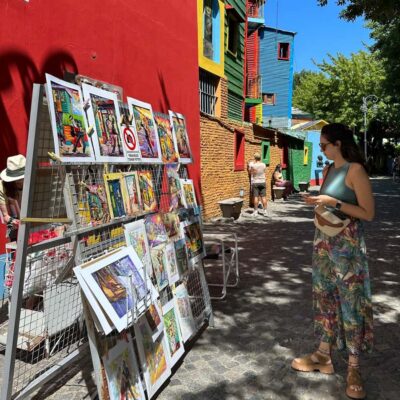
Browse the lists this tour appears in