
Reviewed · TANGO SHOWS
Boca tour: Tango, Soccer, Art and Immigration
La Boca tells its story in bright paint. This 150-minute walk brings you from the old port to Caminito and Boca Juniors stadium, with local context that turns a photo stop into a more meaningful visit. I like the public-bus ride with your guide, which helps you get oriented before the walking begins. I also like the focus on Italian immigration, tango, soccer, and street art rather than on postcard views alone. The main drawback is that the stadium entrance fee and bus ticket cost extra, so the $50 price is not the full spend.
The meeting point is Viajero Hostel at Venezuela 649, every Tuesday and Friday at 11 a.m. Guide Juliette received especially warm praise for clear explanations, good humor, and helping people feel safe. You should still wear sturdy shoes and bring water, because this is a real walking tour, not a quick loop around Caminito.
In This Review
- Key points to know before you book
- Why this La Boca walk works
- Meeting at Venezuela 649 and riding into La Boca
- The old port and La Boca’s immigrant roots
- Inside a conventillo
- Caminito’s painted houses and street art
- Plaza República de La Boca and the football connection
- Arriving at La Bombonera
- Ending near the port with food options
- What the $50 price really buys
- Who should book this walk
- Should you book the Tango, Soccer, Art and Immigration tour?
- FAQ
- Where does the tour meet?
- When does the tour begin?
- How long does the experience last?
- Which languages are available?
- Is public transportation included?
- Is entry to La Bombonera included?
- What should I bring?
Key points to know before you book
- La Boca in one compact route: See the old port, immigrant conventillos, Caminito, Plaza República de La Boca, soccer graffiti, and the Boca Juniors stadium in about two and a half hours.
- A guide-led trip from the start: The group travels to La Boca by public bus with the guide, rather than trying to find the neighborhood on your own.
- Culture beyond the painted façades: The tour explains Italian immigration, mixed cultural influences, tango’s beginnings, and the role of soccer in local identity.
- Caminito is colorful but touristy: Expect murals, painted houses, street art, and a lively pedestrian street, along with a strong visitor presence.
- La Bombonera is a highlight with an extra cost: The stadium visit brings you close to Argentine football culture, but admission is not included.
- Good value for a small-group walk: At $50 per person, the price makes the most sense if you want interpretation, local transport guidance, and several La Boca themes in one outing.
Why this La Boca walk works
La Boca can look simple at first glance: brightly painted houses, tango imagery, football murals, and a famous stadium. But without some background, it is easy to take a few pictures and miss how immigration, working port life, music, and sport shaped the neighborhood.
This tour gives you that missing frame. You walk with a local guide for roughly two hours, with the whole activity lasting about 150 minutes. That is enough time to see the main sights without giving La Boca an entire day of your itinerary.
I especially like the range of subjects. You are not getting only tango, or only soccer, or only street art. The guide connects the old port with immigrant housing, then links those social changes to tango and the football culture surrounding Boca Juniors.
The tour is conducted in English, Spanish, or Portuguese. A limited group size should make it easier to hear explanations and ask questions. The available feedback gives Juliette particular credit for making the walk clear, friendly, and safe, which matters in a neighborhood where first-time visitors may feel unsure about where to go.
More Tango Shows in Buenos Aires:
- Buenos Aires: Piazzolla Tango Show with Optional Dinner
★ 4.4 · 2,122 reviews - Buenos Aires: Tango Show at Tango Porteño & Optional Dinner
★ 4.6 · 981 reviews - Buenos Aires: Madero Tango Show with Optional Dinner
★ 4.3 · 748 reviews
Meeting at Venezuela 649 and riding into La Boca
The tour begins at Viajero Hostel, Venezuela 649, at 11 a.m. on Tuesdays and Fridays. This is an important detail because the experience does not begin at Caminito itself. You first meet the guide, join the group, and take a public bus toward La Boca.
That bus ride is practical rather than scenic. It lets the guide lead the transition from central Buenos Aires into the neighborhood, and it removes the stress of working out the route alone. If you are unfamiliar with local buses, having the guide manage the group’s movement is useful.
The bus ticket is not included, so keep money or a suitable payment method ready. The tour price is $50 per person, but your actual cost will be slightly higher once transport and any stadium admission are added.
Because the meeting time is fixed, arrive with enough time to find the hostel and use the restroom before setting off. The activity includes a lot of walking, and the schedule is not designed for a slow, stop-and-start pace.
The old port and La Boca’s immigrant roots
The walk reaches the old port and the entrance to Caminito. This opening section gives the neighborhood some needed context before you reach its most photographed streets.
La Boca’s identity is closely tied to immigration, especially Italian immigration, and to the port. The tour explains how different cultures met here and how that mixture helped shape local customs and tango. This is one of the most valuable parts of the experience because it shows that the painted buildings are not random decoration.
The port setting also helps explain why La Boca developed a personality so distinct from other parts of Buenos Aires. You get a sense of the neighborhood as a place shaped by movement, work, newcomers, and shared urban life.
Do not expect a museum-style presentation. This is a walking tour, so the information comes through conversation and stops along the route. That makes the experience more relaxed, but you should pay attention and ask questions if you want more detail.
Inside a conventillo
One of the most useful stops is a conventillo, the type of shared housing where many immigrants lived. This gives you a look at the social setting behind the neighborhood’s culture.
The word can be translated loosely as a tenement or communal lodging house, but the tour uses the space to explain more than architecture. You learn about the people who lived close together, the mix of backgrounds, and the conditions that helped create a shared local culture.
For me, this is the stop that keeps the visit from becoming a simple color hunt. The bright façades and tango paintings are easy to photograph, but the conventillo helps you think about who lived in these buildings and why La Boca became such a strong symbol of immigrant Buenos Aires.
The space may feel compact, and the walking route has no special suitability for wheelchair users. If you have mobility concerns, contact the provider before booking. The activity is not recommended for wheelchair users, and the amount of walking may also be tiring for anyone who needs frequent rest.
A completely different sort of day in Buenos Aires:
- Buenos Aires Hop-On Hop-Off Bus, Free Walking Tours & Discounts
★ 4.5 · 2,218 reviews - Buenos Aires: City Highlights Guided Tour with Transfer
★ 4.7 · 1,946 reviews - Buenos Aires: Hop-On Hop-Off City Bus Tour
★ 4.2 · 1,855 reviews - Buenos Aires Hop-On Hop-Off Bus and Exclusive Benefits
★ 4.4 · 1,714 reviews
Caminito’s painted houses and street art
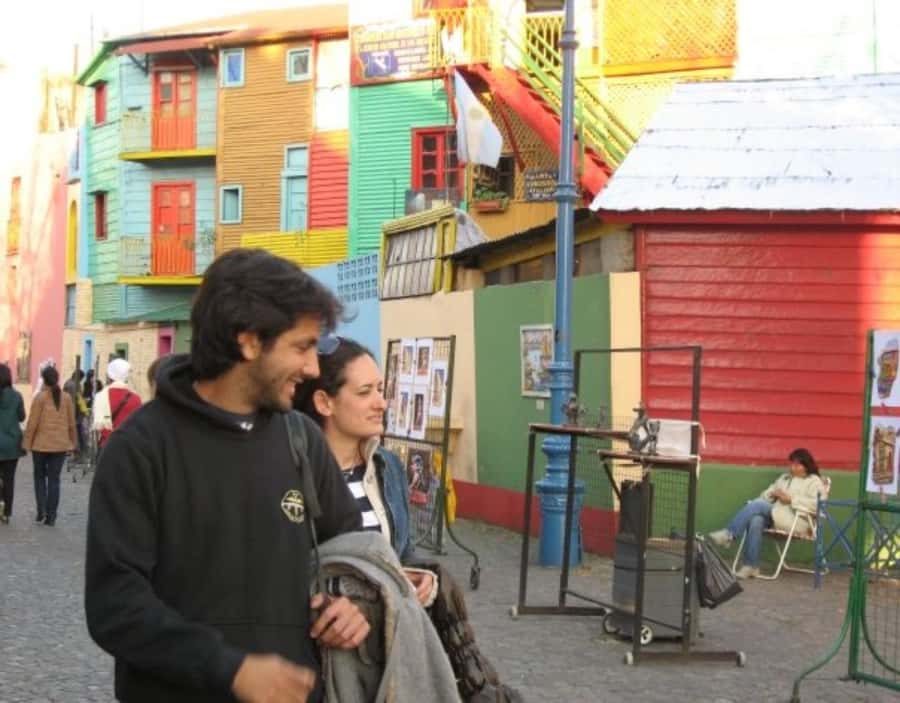
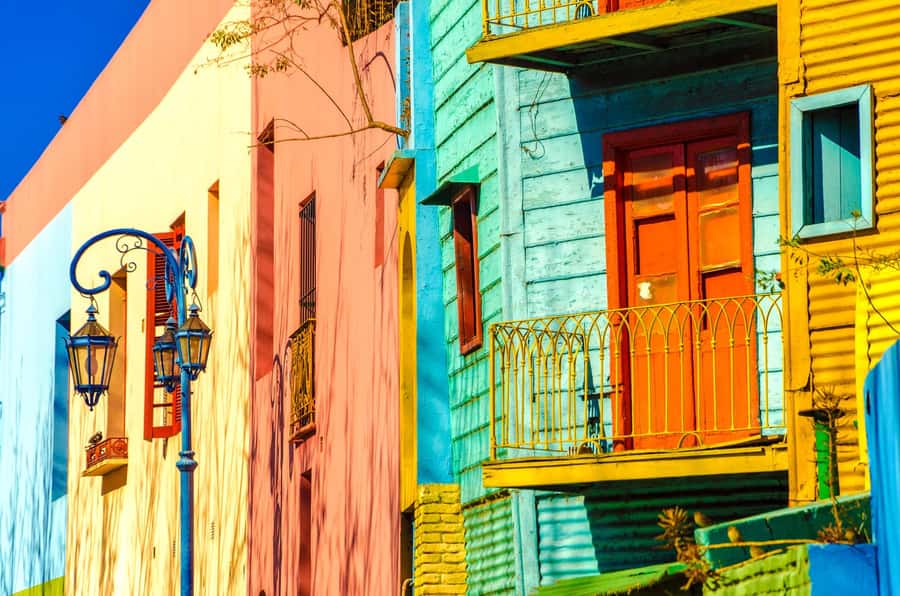
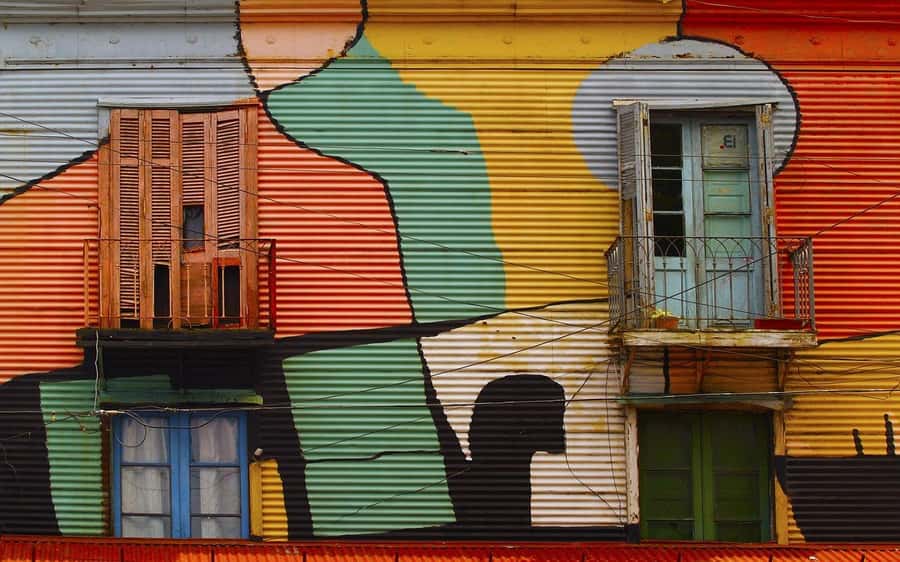
Caminito is the visual centerpiece. This pedestrian street is known for colorful houses, painted walls, murals, tango scenes, and street performers or artistic displays. You will have time to walk around, take photographs, and listen to the guide explain why this area became so closely linked with La Boca’s public image.
The colors make Caminito highly photogenic, especially if you enjoy urban art and character-filled streets. The tour also points out football graffiti and other street art, which adds a different layer to the neighborhood. Here, tango and Boca Juniors often share the same walls and visual space.
The tradeoff is that Caminito is the most visitor-oriented part of the route. It can feel staged compared with the broader neighborhood, and the painted façades can make it tempting to focus only on photographs. The guide’s explanations are therefore important. They help you separate the district’s genuine cultural roots from the polished image presented to visitors.
Bring a camera, but do not spend the whole stop looking through it. Give yourself time to notice the details in the murals and listen to the stories behind the street.
Plaza República de La Boca and the football connection
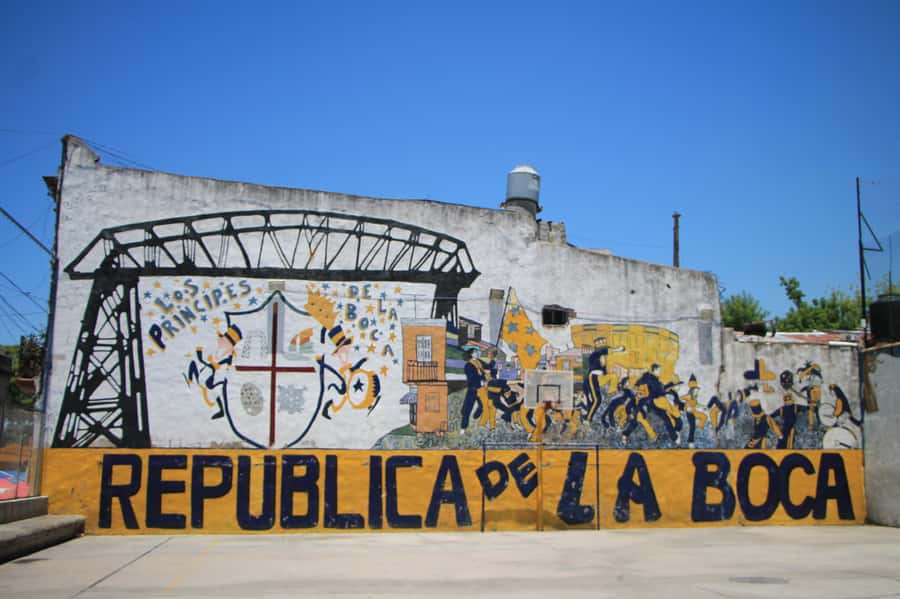
The route also includes Plaza República de La Boca. This adds an open public space to the narrow, colorful streets and gives the guide another place to discuss local identity.
Football is central here. Boca Juniors is not simply a sports club in the tour’s story. It is part of how the neighborhood presents itself, with football graffiti and strong visual references throughout La Boca. You will see how soccer joins tango and port culture as one of the district’s defining themes.
The tour is well suited to people who want a cultural introduction without committing to a full match or museum visit. You get context about the club and its home ground, but the activity remains a walking tour rather than a dedicated football experience.
If soccer is your main interest, you may find the stadium portion too brief. The tour includes the area around La Bombonera, but stadium entrance fees are not included. Confirm the available admission arrangement before booking if entering the venue is essential to you.
Arriving at La Bombonera
La Bombonera, the Boca Juniors stadium, is one of the tour’s major stops. The name refers to the stadium’s distinctive shape, and the venue is famous for its intense football atmosphere and historic matches.
You can expect the guide to explain why the stadium matters to Argentine football culture and to point out the role it plays in La Boca’s identity. Even from the outside or surrounding area, it is a powerful change of mood from the tango-focused streets of Caminito.
Admission is an important practical point. Entrance fees are not part of the $50 price, so you should not assume that a full stadium tour is included. The supplied details describe a visit to the stadium area and its atmosphere, but they do not promise a specific interior access package.
That makes this stop best for a general introduction. If you want locker rooms, a museum visit, or a full stadium tour, you will need to check the extra arrangements and cost. If you mainly want to see the home of Boca Juniors and understand its place in the neighborhood, this tour should cover the basics.
Ending near the port with food options
The walk finishes near the port, in front of a street with several food choices. Meals and drinks are not included, but the ending is convenient because you can decide what to do next instead of being taken back to the starting point.
You might stop for lunch, continue exploring, or leave La Boca after getting your bearings. The food area also gives you a chance to extend the outing at your own pace.
Do not treat the meal stop as part of the paid experience. It is simply where the route ends, and any food or drink is your responsibility. If you plan to eat, budget separately and remember that the tour’s fixed schedule may leave you ready for lunch shortly after noon.
What the $50 price really buys
At $50 per person, this is not the cheapest way to see Caminito. You can visit the colorful streets independently, and you can avoid paying for a guide if you are comfortable researching the neighborhood in advance.
The value comes from the structure. Your guide meets you in central Buenos Aires, travels with you by public bus, explains the port and immigrant background, takes you through a conventillo, interprets Caminito’s art, and connects the area to tango and Boca Juniors. That is a lot of context in a short outing.
The price is easier to justify if you want a limited group and a guide who can answer questions. It is less attractive if you only want photographs or if you already know La Boca well.
Remember the added costs. The public bus ticket is excluded, as are meals, drinks, and any entrance fee for Boca Juniors stadium. Free cancellation up to 24 hours before the activity and the reserve-now, pay-later option reduce the financial risk when your schedule is still changing.
Who should book this walk
I would suggest this tour to a first-time Buenos Aires visitor who wants a clear introduction to La Boca without spending half a day planning routes and background reading.
It is also a good fit if you enjoy several subjects at once: migration, tango, street art, local architecture, and football. You do not need to be a serious soccer fan, because the tour gives equal attention to the neighborhood’s wider culture.
The walk may suit solo visitors and couples especially well, since joining a limited group provides company and a guide for the bus journey. Families with older children may also appreciate the mix of murals and football, though the amount of walking should be considered.
I would hesitate to book it if you need step-free access, dislike walking for extended periods, or want a long stadium visit. It is not suitable for wheelchair users, and the activity is not recommended for people over 95.
Wear comfortable shoes, carry water, and bring a camera. Smoking is not allowed during the activity.
Should you book the Tango, Soccer, Art and Immigration tour?
Book it if you want La Boca explained rather than simply photographed. The strongest parts are the local guide, the immigrant and tango background, the conventillo visit, and the way the route ties Caminito to Boca Juniors.
The walk is short enough to fit into a Buenos Aires sightseeing day, but full enough to give you a real sense of the neighborhood’s character. Juliette’s praised style, clear and reassuring, is a useful sign of what a good guide adds here, although your guide may be someone else.
Skip it if your only goal is entering La Bombonera, since stadium admission is extra and the focus is broader than football. Also skip it if you want a quiet, independent stroll with no fixed meeting time.
For most first-time visitors, I find the $50 reasonable if you value explanation and company. Just add the bus fare and possible stadium fee to your budget, arrive at Venezuela 649 before 11 a.m., and expect a colorful, busy, very walkable introduction to one of Buenos Aires’ most distinctive neighborhoods.
FAQ
Where does the tour meet?
The meeting point is Viajero Hostel at Venezuela 649 in Buenos Aires.
When does the tour begin?
It meets every Tuesday and Friday at 11 a.m.
How long does the experience last?
The listed duration is 150 minutes. The included guided walking portion is described as two hours.
Which languages are available?
The live guide is available in English, Spanish, and Portuguese.
Is public transportation included?
No. The tour uses a public bus to reach La Boca, but the bus ticket is not included.
Is entry to La Bombonera included?
No. Entrance fees to the Boca Juniors stadium are not included in the tour price.
What should I bring?
Bring comfortable shoes, water, and a camera. Smoking is not allowed.
Latest additions in Buenos Aires
- Buenos Aires: 7 Hour Small Group “BA 101” Walk★ 5.0 · 3 reviews
- Unique Tigre and Delta Private Day Cruise Navegation★ 5.0 · 3 reviews
- Buenos Aires: Customizable City Tour in Polish★ 4.7 · 3 reviews
- Buenos Aires After Dark: A City Lights & Sunset Experience★ 5.0 · 3 reviews
- Tango Show at El Querandi with optional Dinner★ 4.2 · 3 reviews
- Velez Sarsfield Football Match★ 5.0 · 3 reviews
- Caminito, La Boca: vibrant neighborhood★ 5.0 · 3 reviews
- Café de los Angelitos – Traditional Night in Buenos Aires★ 4.8 · 3 reviews
Tango Shows, compared.




Tango Porteño: The Best Tango Night in Buenos Aires
Read our review →
Palacio Tango: Tango Show at the Piazzolla Theater
Read our review →
Browse the lists this tour appears in