
Reviewed · FOOD & DRINK
Secret Food Tour: Buenos Aires
Come hungry, leave better oriented. This three-hour walking tour through Palermo connects classic Argentine food with the neighborhood’s Italian, indigenous, political, and cultural stories. I like the small group size, capped at 10 people, and the mix of substantial tastings, from fire-grilled steak to award-winning choripán. The main consideration is the $95 price, which is fair only if you value a guided introduction and enough food to replace a meal or two.
I also like that the route covers Palermo Soho, Old Palermo, and the area around Plaza Inmigrantes de Armenia instead of keeping you at one restaurant. The itinerary can change with weather or venue availability, and the tour may run 15 to 30 minutes longer, so keep your schedule loose afterward.
In This Review
- Five reasons this Palermo food walk is worth considering
- Starting at Julián Álvarez 1998 in Palermo
- The secret dish starts the story
- Italian ancestry in an Argentine kitchen
- Parrilla, steak, and the Argentine centerpiece
- Plaza Inmigrantes de Armenia and Old Palermo
- A toast to Eva Perón
- A monument, Videla, and difficult history
- Palermo Soho’s famous choripán
- Handmade alfajores to finish
- What the $95 price really covers
- Who should book this food tour?
- Booking details that matter
- Should you book the Secret Food Tour: Buenos Aires?
- FAQ
- Where does the Secret Food Tour: Buenos Aires begin?
- Where does the tour end?
- How long does the tour last?
- What language is the tour offered in?
- How large is the group?
- Is hotel pickup included?
- Can dietary needs be accommodated?
Five reasons this Palermo food walk is worth considering
- A full Argentine tasting menu: Expect steak with chimichurri, empanadas, choripán, alfajores, Argentinean cheesecake, yerba mate, Basque cider, and a secret dish.
- Three Palermo districts in one walk: The route brings together Palermo, Old Palermo, and Palermo Soho, each with a different feel and set of stories.
- A compact group of 10 or fewer: This gives you a better chance to hear the guide and ask questions without shouting across a crowd.
- Food linked to migration and politics: Italian ancestry, Eva Perón, indigenous heritage, and the dictatorship all appear in the tour’s storytelling.
- A guide with local recommendations: Iago has been praised for explaining the area well and suggesting what to do in Buenos Aires after the tour.
Starting at Julián Álvarez 1998 in Palermo
The meeting point is in front of the main entrance to 1810 Cocina Regional Palermo at Julián Álvarez 1998. Look for the guide carrying an orange umbrella and wearing a big smile. That visual marker matters in Palermo, where several streets and restaurant entrances can look similar at first glance.
The tour ends back at the same meeting point. There is no hotel pickup or drop-off, so you need to make your own way to Palermo and back. Since the activity is built around walking and eating, arrive ready for both. You will want comfortable shoes and enough room for several tastings.
The scheduled length is three hours, though the outing can run 15 to 30 minutes longer. I would avoid booking a tight museum reservation, airport transfer, or dinner immediately afterward. The extra time is not necessarily a problem, but food tours work better when you are not watching the clock.
The group limit is 10 participants. That is a useful middle ground: large enough to create a social atmosphere, but small enough for a guide to explain a dish or answer a question without turning the stop into a lecture.
More Food Tours in Buenos Aires
- Buenos Aires: 9-Course Argentine Meat Tasting at Fogón Asado
★ 4.9 · 826 reviews - Buenos Aires: Local Foodie Adventure with Sherpa Food Tours
★ 4.9 · 670 reviews - Buenos Aires: Wine Tasting and Lunch at Bodega Gamboa
★ 4.8 · 177 reviews
The secret dish starts the story
The first tasting is the Secret Dish, which changes and is kept off the public menu. It is more than a surprise bite. The tour uses it to introduce Argentina’s indigenous heritage and the cultural traditions that remain part of the country today.
Because the exact dish is not announced, you cannot plan around it. That is part of the fun, but it also means you should tell the operator about dietary needs before booking. The tour may be able to accommodate some requests, but the available information does not promise substitutions.
I like this opening because it avoids beginning with the most obvious Argentine stereotype. Steak gets plenty of attention later, yet the first dish points to older food traditions and a wider national identity. You get a reminder that Argentine cooking is not only about beef and European influence.
Italian ancestry in an Argentine kitchen
The next section looks at the Italian influence on local food. The tour notes that 62.2 percent of Argentina’s population traces its ancestry to Italy, a figure used to explain why Italian customs matter so much at the table.
This is where the experience moves from tasting to context. You are not simply handed a plate and told its name. You learn how migration helped shape Argentine gastronomy and why certain foods feel both European and distinctly Porteño, meaning connected to Buenos Aires.
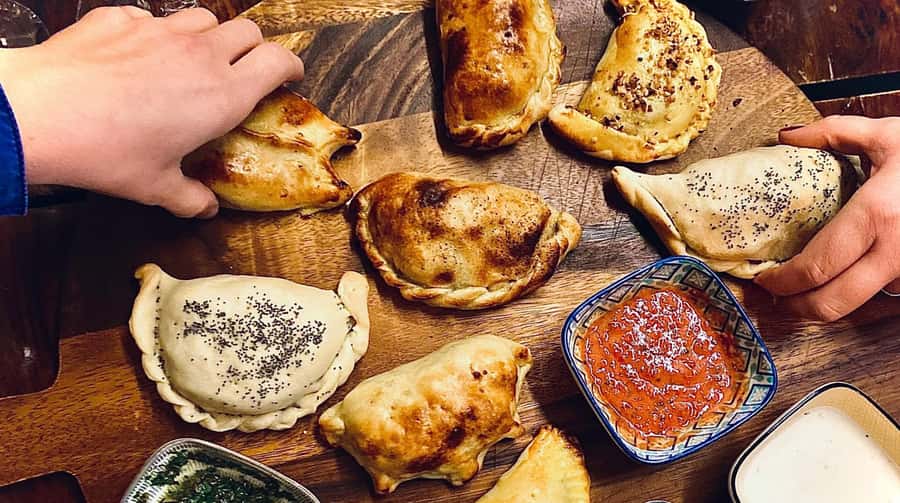
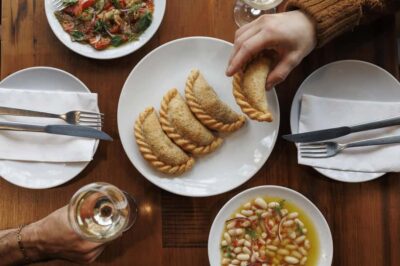
The stop includes special empanadas and Argentinean cheesecake. These are useful foods for understanding adaptation. An imported tradition rarely arrives unchanged, and the point here is to notice how local ingredients, habits, and identity alter familiar forms.
The tour does not provide every recipe or ingredient in advance, so anyone with allergies should contact Essor before reserving. A food walk can be awkward if you spend the afternoon declining samples, and advance notice gives the operator a chance to explain what is possible.
Parrilla, steak, and the Argentine centerpiece
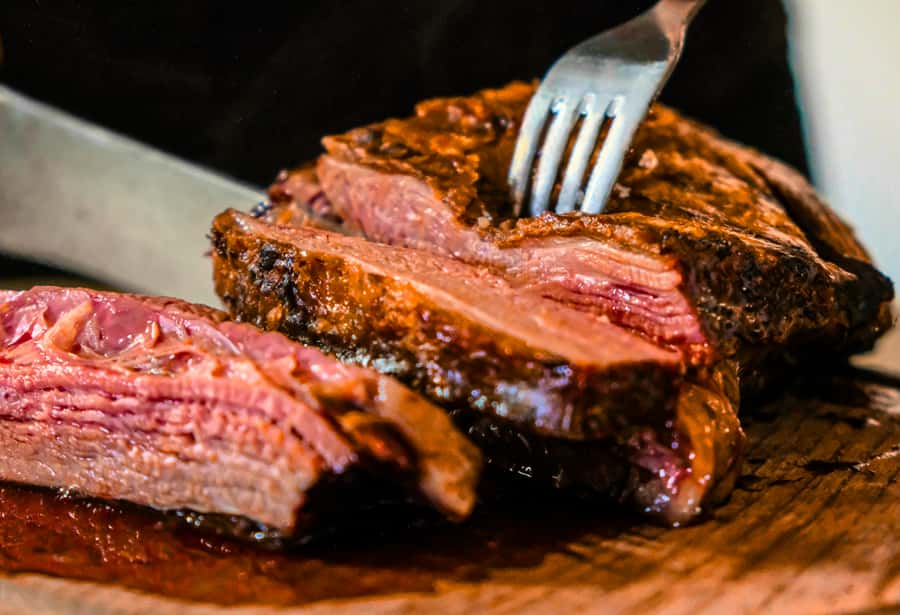
The big savory stop is a fire-grilled steak served with chimichurri. Parrilla is one of Argentina’s most famous culinary traditions, and this is likely the tasting that many people will remember most.
The steak has received especially strong praise, and that makes sense. A properly cooked piece of beef with chimichurri gives you a direct introduction to a food culture that Buenos Aires is known for around the world. The portion is part of a larger sequence, though, so avoid treating this as an all-you-can-eat steak meal.
The value of this stop depends partly on your appetite. At $95, the tour is not cheap by Buenos Aires standards if you think of it as a few samples. It becomes easier to justify when you count the steak, drinks, several other dishes, dessert, the guide, and three hours of neighborhood interpretation.
I would also pay attention to the way the guide explains parrilla. The food itself is familiar to many international visitors, but the point of a guided tasting is to understand why it matters locally and how it fits into Argentine social life. The guide’s explanation is what separates this from ordering steak alone.
A completely different sort of day in Buenos Aires:
- Buenos Aires Hop-On Hop-Off Bus, Free Walking Tours & Discounts
★ 4.5 · 2,218 reviews - Buenos Aires: Piazzolla Tango Show with Optional Dinner
★ 4.4 · 2,122 reviews - Buenos Aires: City Highlights Guided Tour with Transfer
★ 4.7 · 1,946 reviews - Buenos Aires: Hop-On Hop-Off City Bus Tour
★ 4.2 · 1,855 reviews
Plaza Inmigrantes de Armenia and Old Palermo
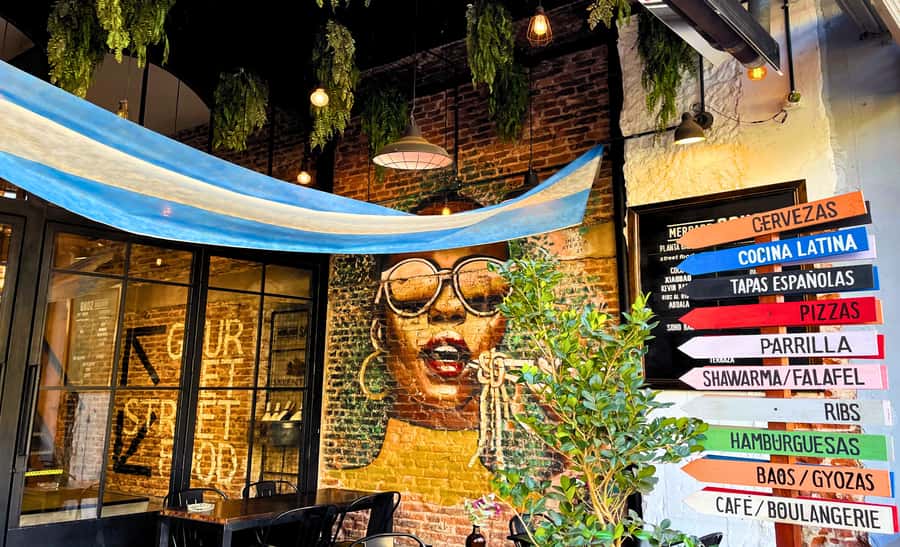
The route then moves toward Plaza Inmigrantes de Armenia, one of Old Palermo’s main food and social areas. This section adds international influences to the picture and shows how Palermo has become one of Buenos Aires’ best-known dining districts.
The plaza gives the walk a useful change of pace. Instead of moving from restaurant door to restaurant door, you get a place-based explanation of how food, migration, and city life meet. The tour description does not promise a long stop or a formal landmark visit, so think of this as a storytelling point woven into the walk.
Palermo is a large neighborhood, and its districts do not all feel identical. Covering Old Palermo and Palermo Soho helps you see that variety in a short period. You are not getting an exhaustive tour of the whole neighborhood, but you are getting a practical first look at several of its better-known sections.
This is one reason I would schedule the food tour early in a Buenos Aires stay. The guide can help you understand where Palermo Soho ends, what Old Palermo offers, and where you may want to return for another meal. The route itself ends at the original meeting point, so you can use the rest of the day to revisit an area that caught your attention.
A toast to Eva Perón
The tour includes a quick stop to raise a glass to Eva Perón, one of Argentina’s most famous political and cultural figures. The stop is brief, but it gives the walk a human face and connects national identity with the places and personalities that still shape public memory.
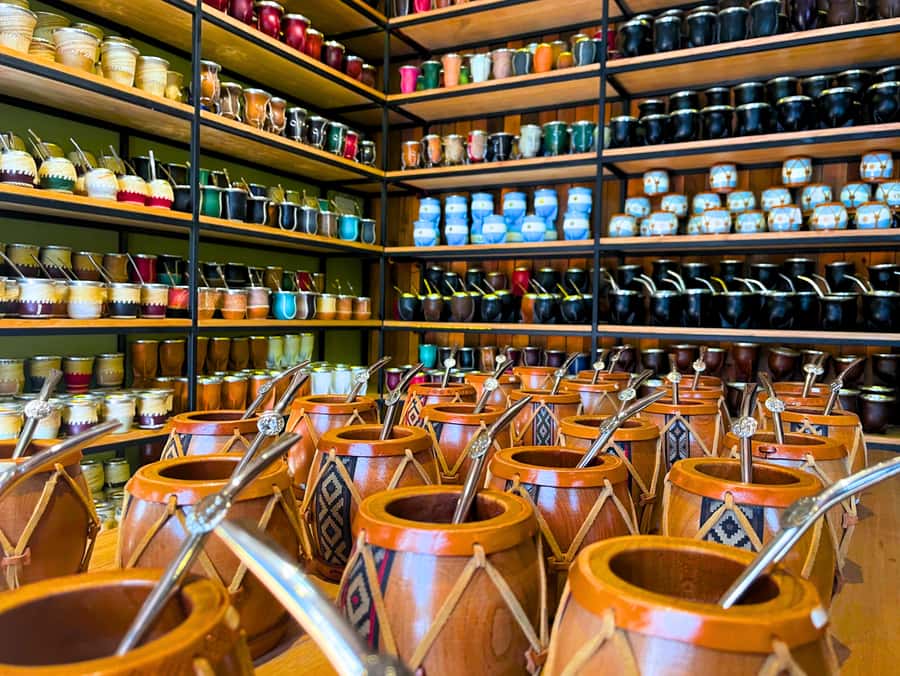
The included drinks are Basque cider, water, and yerba mate. Basque cider is a useful reminder that Buenos Aires food culture includes more than Italian and Spanish influences, while yerba mate introduces one of the country’s most familiar social drinks.
Do not expect a full beverage workshop. The information provided describes tastings and a toast, not a lengthy lesson in preparation or etiquette. Still, these drinks add welcome variety after the meat and pastries, and the yerba mate stop gives the guide a chance to explain a daily Argentine habit.
A monument, Videla, and difficult history
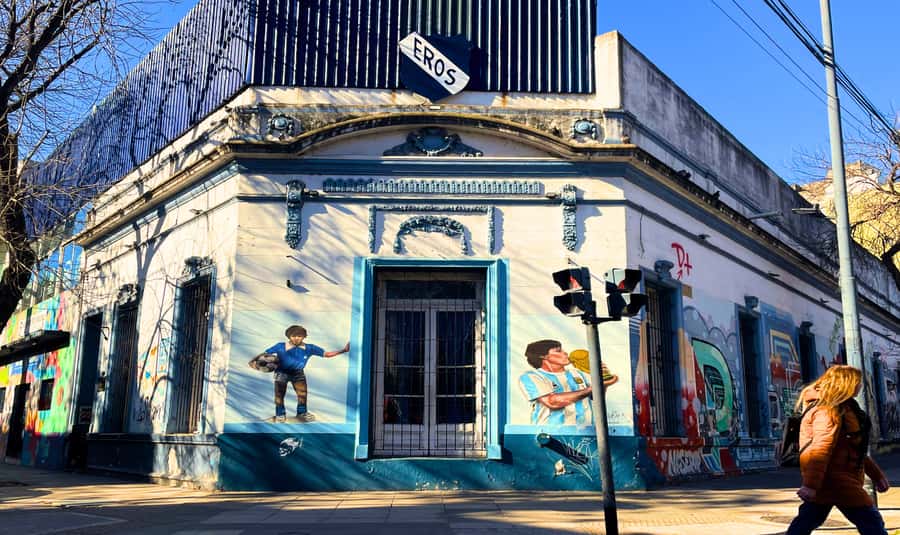
The walking route also pauses at a monument honoring people who fought against the Argentine dictatorship. The guide discusses Jorge Rafael Videla, whose name is tied to that period of military rule.
This is an important choice for a food tour. Buenos Aires cuisine does not exist apart from politics, migration, and memory. A short explanation at a monument gives you context that a restaurant-only outing would miss.
The subject may feel heavier than the surrounding tastings, and that is appropriate. The tour appears to treat food as an entry point into the country’s past rather than as an escape from it. You should expect the tone to shift for this stop, even if the visit is not long.
Palermo Soho’s famous choripán
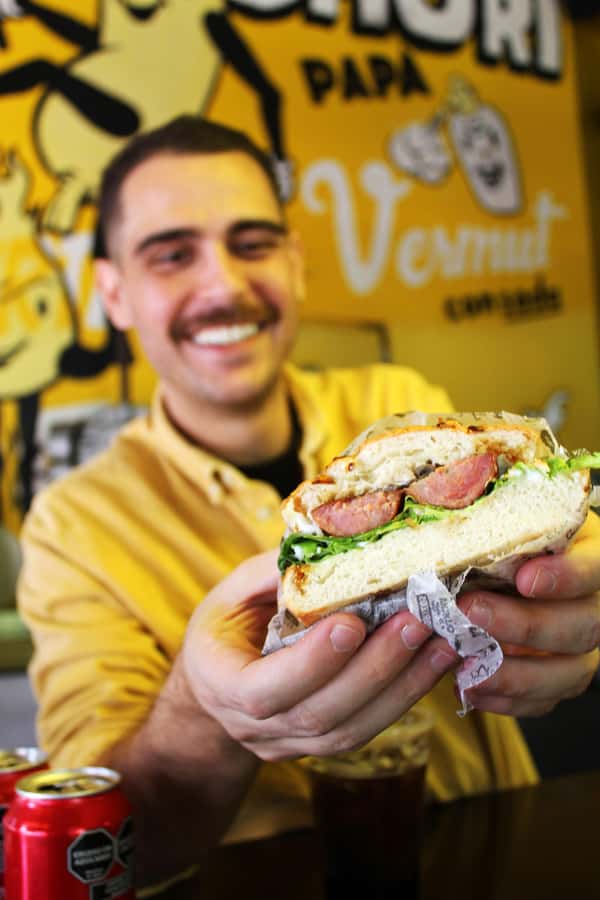
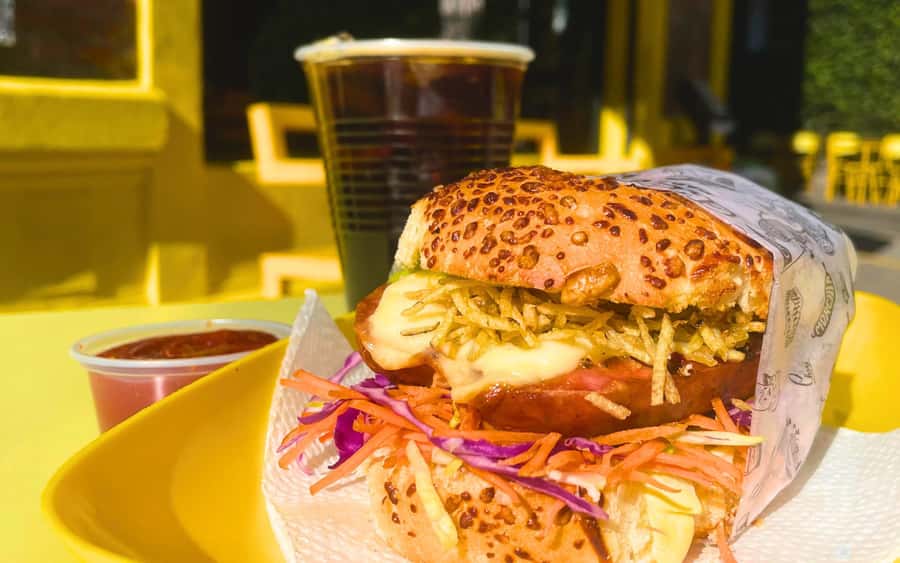
In Palermo Soho, you stop for choripán at a venue known for a globally awarded version of the dish. Choripán is a simple Argentine favorite: grilled sausage served in bread, usually with sauces or condiments. Its appeal comes from the combination of smoke, bread, meat, and sharp flavor rather than complicated presentation.
This stop gives the tour a more casual counterpoint to the steak. Parrilla can feel like a formal national icon, while choripán is the kind of food that shows how Argentines enjoy a quick, satisfying bite.
The exact venue and menu can change because locations may have availability issues. That is worth remembering if the award-winning choripán is the one item you are planning the whole experience around. The tour promises this style of tasting, but the operator also states that the itinerary and menu are subject to change.
The portion sizes are not specified. You should arrive hungry, but not assume every tasting is a full meal. Taken together, the food is substantial enough that many people may not need a separate lunch during the three-hour outing.
Handmade alfajores to finish
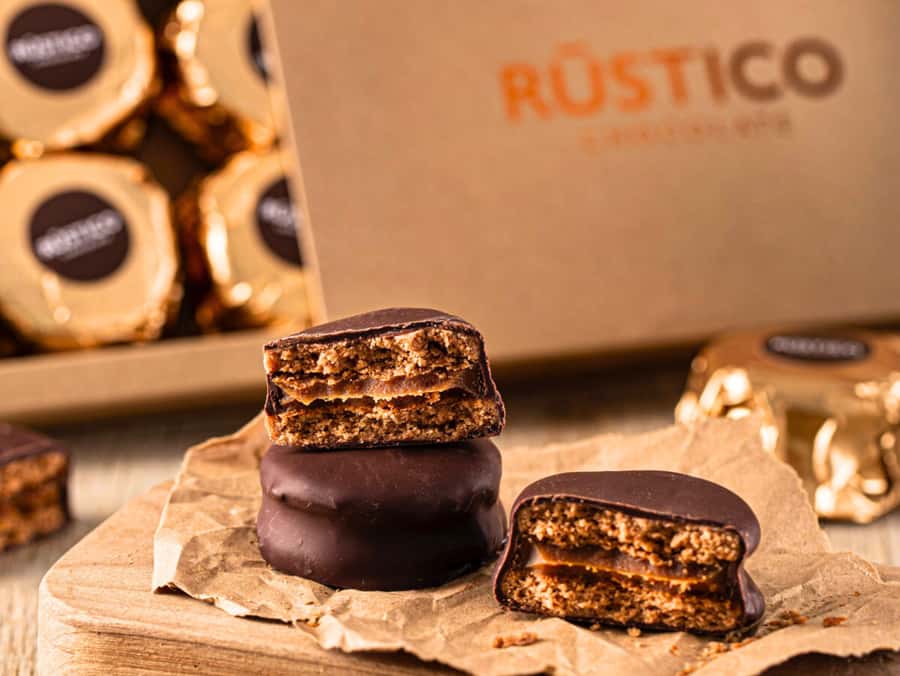
Dessert is a handmade alfajor, with 99 percent of its ingredients sourced from Argentina and the product made by local chocolatiers. Alfajores are among the country’s best-known sweets, and this makes a fitting final stop.
The alfajor gives you a chance to compare the structure of Argentine dessert with the savory food earlier in the walk. It is also the easiest item to remember when you are back home and looking for a small edible souvenir, though the tour does not specifically include a packaged takeaway.
The sequence works well: secret dish, empanadas and cheesecake, steak, choripán, then chocolate and alfajor. It moves between old traditions, immigrant influence, meat culture, neighborhood food, and dessert without making every stop feel like another version of the same plate.
What the $95 price really covers
At $95 per person, this is a premium food walk. You are paying for more than the raw cost of food. The price includes a live English-speaking guide, a small group, local interpretation, several tastings, water, Basque cider, and yerba mate.
The included food is broad:
- Argentinean cheesecake
- Special empanadas
- Fire-grilled steak with chimichurri
- Award-winning choripán
- Handmade alfajores
- The changing Secret Dish
I consider the price reasonable for someone who wants a guided introduction to Palermo and prefers several tastings over one restaurant meal. It is less compelling for a person who already knows Buenos Aires’ food scene, speaks Spanish comfortably, and would rather choose individual restaurants independently.
The guide is a major part of the value. One guide, Iago, has been praised for his knowledge of the area and for giving useful recommendations about what to do in Buenos Aires afterward. That kind of advice can make the tour pay off beyond the three hours, especially on a first visit.
The experience has an average rating of 4.5 from six ratings, with especially strong praise for the guide, steak, food choices, and Palermo orientation. That is encouraging, though six ratings are not enough to treat the score as a final verdict. I would focus more on the repeated strengths than on the number itself.
Who should book this food tour?
I would recommend it to first-time visitors who want to understand Palermo quickly. You get food, neighborhood orientation, cultural background, and practical suggestions in one compact outing.
It also suits people who enjoy trying several dishes but do not want to plan every restaurant stop themselves. The small group should make it easier to ask about Argentine food, local customs, and places to eat later.
Families and mixed-age groups may appreciate the variety, though the tour description does not specify a minimum age or child pricing. If anyone in your party has dietary restrictions, contact the operator before booking rather than assuming the menu can be changed.
I would be more cautious if you dislike surprises, have strict food requirements, or need a fixed end time. The Secret Dish is intentionally unknown, the menu can change, and the activity may run longer than three hours.
Booking details that matter
You can cancel up to 24 hours before the tour for a full refund. The reserve-now, pay-later option lets you hold a place without paying immediately, which is useful when your Buenos Aires schedule is still taking shape.
The tour is offered in English with a live guide. Starting times vary, so check availability for the date you want. Since hotel pickup is not included, plan your route to Julián Álvarez 1998 before the day begins.
The meeting point is exact and easy to identify once you know the restaurant name and orange umbrella detail. I would save the map link and allow extra time to reach Palermo, especially if you are crossing the city from another neighborhood.
Should you book the Secret Food Tour: Buenos Aires?
Book it if you want a friendly, food-led introduction to Palermo with enough history to give the dishes meaning. The steak, choripán, empanadas, alfajor, drinks, and secret tasting make the menu broad, while Iago’s praised local advice adds practical value.
Skip it if you are seeking a cheap meal, a strict itinerary, or a specialist tour focused only on parrilla. At $95, the experience earns its price through the guide and the range of stops, not through food alone.
For most first-time visitors who enjoy eating and walking, I would book it near the start of the trip. You will leave with a better sense of Palermo, several Argentine flavors in your memory, and a few ideas for where to go next.
FAQ
Where does the Secret Food Tour: Buenos Aires begin?
The tour begins in front of the main entrance of 1810 Cocina Regional Palermo at Julián Álvarez 1998, C1425DHB, Ciudad Autónoma de Buenos Aires.
Where does the tour end?
The activity ends back at the original meeting point.
How long does the tour last?
The scheduled duration is three hours. It can occasionally run 15 to 30 minutes longer.
What language is the tour offered in?
The tour is conducted in English with a live guide.
How large is the group?
The tour is a small-group experience limited to 10 participants.
Is hotel pickup included?
No. Hotel pickup and drop-off are not included.
Can dietary needs be accommodated?
You should contact the operator before booking to ask if the tour can accommodate your specific dietary needs.
Latest additions in Buenos Aires
- Buenos Aires: 7 Hour Small Group “BA 101” Walk★ 5.0 · 3 reviews
- Unique Tigre and Delta Private Day Cruise Navegation★ 5.0 · 3 reviews
- Buenos Aires: Customizable City Tour in Polish★ 4.7 · 3 reviews
- Buenos Aires After Dark: A City Lights & Sunset Experience★ 5.0 · 3 reviews
- Tango Show at El Querandi with optional Dinner★ 4.2 · 3 reviews
- Caminito, La Boca: vibrant neighborhood★ 5.0 · 3 reviews
- Velez Sarsfield Football Match★ 5.0 · 3 reviews
- Café de los Angelitos – Traditional Night in Buenos Aires★ 4.8 · 3 reviews
Food & Drink, compared.

Buenos Aires Food Tour: Local Dishes, Steak, Empanada & More
Read our review →
Full-day Cafayate, Lerma Valley, and Wine Tasting from Salta
Read our review →Browse the lists this tour appears in