
Reviewed · RECOLETA CEMETERY TOURS
Recoleta & Cemetery for curious people
Recoleta tells Argentina’s story in stone. This 150-minute walk links Plaza San Martín, grand mansions, and Recoleta Cemetery to explain how Buenos Aires became known for its Parisian style and how its wealthy elite shaped the country. I like the interactive format, which invites questions instead of delivering a fixed speech, and I like the small-group or private option, which gives the discussion room to follow your interests. The main drawback is that cemetery admission is not included, so you must arrange that extra ticket yourself.
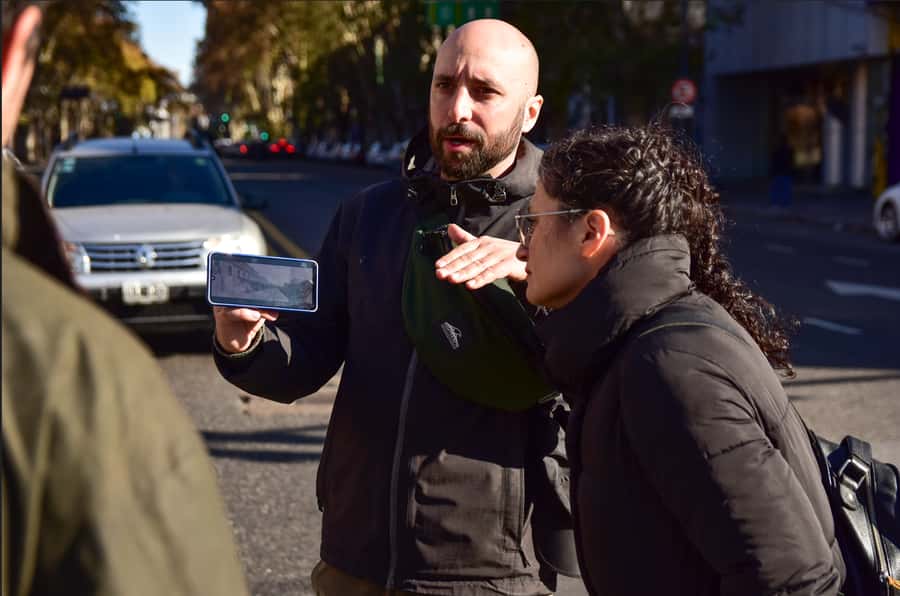
The walk is led by a university-educated guide in Spanish, English, or French. Guides Nicolas, Nico, and Ignacio receive especially warm praise for their humor, flexibility, and command of lesser-known stories. You should expect a thoughtful history walk rather than a quick photo stop tour. It covers a lot of ground, and the 45-minute cemetery visit may feel brief if you want to inspect every passage.
In This Review
- Key points at a glance
- Why this walk is more than a cemetery visit
- Starting at Rapa Nui and Plaza San Martín
- Edificio Kavanagh and the Torre Monumental
- Mansión Estrugamou and Palacio San Martín
- From the French Embassy to the Jockey Club
- Palacio Duhau and the short break
- Recoleta Cemetery as a mirror of society
- The guides make the difference
- Who gets the best value for $34
- Practical details that affect your day
- Should you book this Recoleta walk?
- FAQ
- Where does the tour meet?
- How long does the experience last?
- Is the cemetery entrance fee included?
- What languages are available?
- Is the tour private or shared?
- Is the tour wheelchair accessible?
- What places are visited before the cemetery?
- Can I cancel for a full refund?
Key points at a glance
- A 150-minute route from Plaza San Martín to Recoleta Cemetery: You see grand civic spaces, palaces, embassies, and private clubs before reaching the city’s famous burial ground.
- An interactive look at Argentina’s Gilded Age: The guide connects architecture to landownership, political power, wealth, and the country’s rise and fall as a possible world power.
- The cemetery is treated as a social record: You consider who received elaborate tombs, who was remembered, and who disappeared from public memory.
- Guides who adapt to your questions: Nicolas, Nico, and Ignacio are praised for humor, historical detail, and allowing the walk to run as short or as long as the group prefers.
- Cemetery entry costs extra: The walk includes the guided visit, but not the entrance ticket. You can buy admission at the gate or online in advance.
- Good practical flexibility: Free cancellation is available up to 24 hours ahead, and you can reserve now and pay later.
Why this walk is more than a cemetery visit
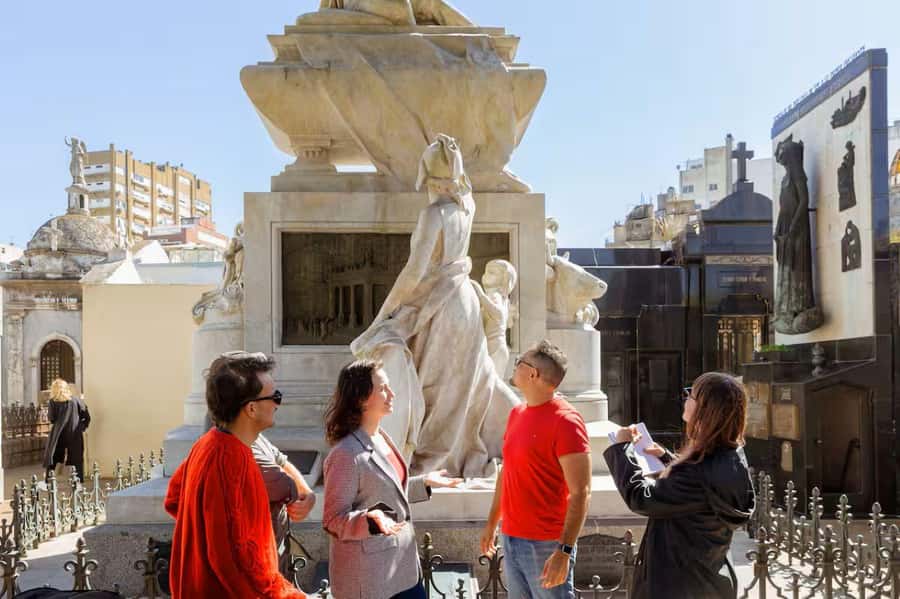
Recoleta Cemetery is the headline, but the walk begins well before its ornate gates. That matters because the cemetery makes more sense after you have seen the buildings, avenues, and institutions connected to the people buried there.
The experience presents Buenos Aires as a city shaped by ambition. Its elite wanted European polish, especially a Parisian look, and they had the money to build grand residences, clubs, embassies, and monuments. The route asks you to look past handsome façades and consider who paid for them, who benefited, and what happened when Argentina’s fortunes changed.
I appreciate that approach. You are not simply told that Buenos Aires was wealthy. You are asked to examine how wealth worked. The discussion reaches from the era of vast landowners to Argentina’s hopes of becoming a world power, then moves toward the city’s present and future.
That makes this a strong choice for you if architecture alone is not enough. You will see attractive buildings, but the real subject is power made visible.
More Recoleta Cemetery Tours:
- Buenos Aires: La Recoleta Cemetery Guided Tour in English
★ 4.8 · 1,359 reviews - Buenos Aires Bike Tour: North Districts, Recoleta and Palermo
★ 4.5 · 91 reviews - Recoleta Cemetery – Small Group Tour of History & Secrets
★ 5.0 · 53 reviews
Starting at Rapa Nui and Plaza San Martín
The meeting point is the Rapa Nui store. From there, the walk moves toward Plaza General San Martín, an important opening because it gives the guide room to set up the story of Buenos Aires before the route reaches Recoleta.
The plaza receives two short guided segments of about 10 minutes each. That may sound repetitive on paper, but it suggests that the guide uses this early section to establish both the setting and the larger argument. You can expect discussion of the city’s public image, its elite institutions, and the European influence that shaped this part of Buenos Aires.
A plaza is also a useful place to begin an interactive tour. You are not packed into a narrow passage or hurried through a doorway. The guide can point out how public space relates to power and how the city presents its past.
If you prefer a rapid checklist of attractions, this opening may feel slow. If you enjoy asking why a city looks the way it does, it gives you a good start.
Edificio Kavanagh and the Torre Monumental
The route then reaches Edificio Kavanagh, where the guide spends about 10 minutes. This stop adds a useful contrast to the older palaces and mansions. Its presence helps show that Buenos Aires was not frozen in one age of wealth. The city continued to build, compete, and express status through new forms of architecture.
Next comes the Torre Monumental, also with a 10-minute explanation. The tower adds another layer to the city’s public identity and its ties to European taste. Here, the guide can connect individual buildings to broader questions about who wanted Buenos Aires to look European and why that image mattered.
You will get more from these stops if you look for the argument behind the architecture. The guide is not simply identifying façades. The point is to see how monuments and buildings help a city tell its preferred story.
The itinerary gives each stop a short time slot, so do not expect lengthy interior visits. This is an exterior walking tour, with the value found in context and conversation.
Mansión Estrugamou and Palacio San Martín
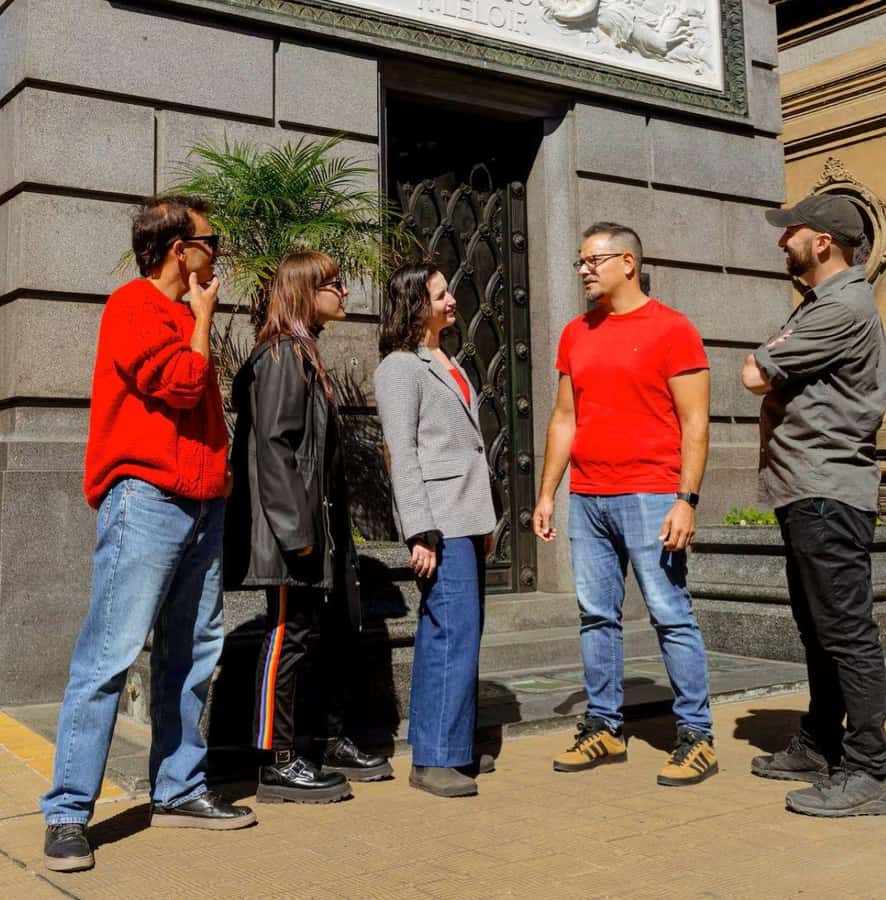
Mansión Estrugamou, also known as Casa Basavilbaso, brings the focus back to private wealth. A 10-minute guided stop here helps explain the kind of residence associated with Buenos Aires’s upper class during its grandest period.
The name itself is useful because the route does not treat the building as a generic mansion. It presents the house as part of the city’s social story, where families used architecture to display status and connection. You might find the guide comparing private residences with the public institutions seen earlier.
Palacio San Martín follows, again with about 10 minutes. Its scale and formal character suit the tour’s main theme: Argentina’s elite did not only live in impressive homes. They also occupied spaces tied to diplomacy, politics, and international ambition.
This pairing is one of the walk’s strongest sections. The mansion shows personal wealth, while the palace points toward national representation. Together, they help you understand how Buenos Aires projected confidence during its Gilded Age.
The exact depth will depend on your guide and the questions raised by your group. That flexibility is a benefit, especially with Nicolas or Nico, whose tours are praised for answering individual questions and adding local anecdotes.
A completely different sort of day in Buenos Aires:
- Buenos Aires Hop-On Hop-Off Bus, Free Walking Tours & Discounts
★ 4.5 · 2,218 reviews - Buenos Aires: Piazzolla Tango Show with Optional Dinner
★ 4.4 · 2,122 reviews - Buenos Aires: City Highlights Guided Tour with Transfer
★ 4.7 · 1,946 reviews - Buenos Aires: Hop-On Hop-Off City Bus Tour
★ 4.2 · 1,855 reviews
From the French Embassy to the Jockey Club
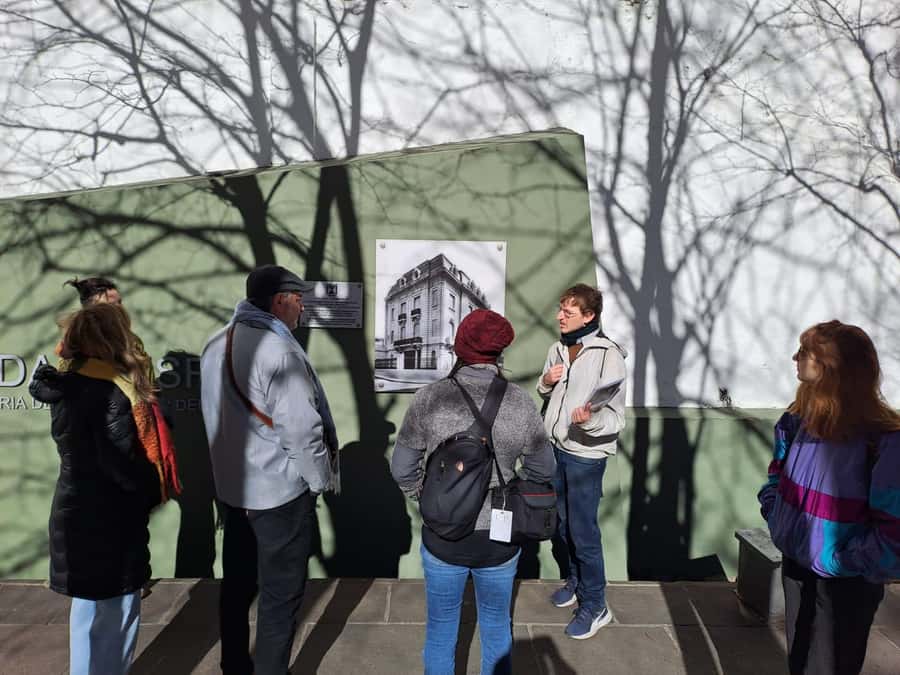
The French Embassy is another 10-minute stop. Its inclusion makes the Parisian theme concrete. Buenos Aires did not merely borrow European decoration for private homes. Diplomatic buildings also helped give the city an international character.
The guide uses this part of the route to examine the illusion of Paris in Buenos Aires. The word illusion matters. The city could reproduce an architectural style, but its social and political reality remained distinctly Argentine. That tension gives the tour more substance than a simple explanation of French influence.
The Jockey Club follows, with another 10-minute discussion. This is a natural place to examine the role of elite clubs and the networks that supported the country’s upper class. The tour asks you to consider how influence operated beyond government offices and family homes.
I like the way these stops make the elite visible without turning the tour into a celebration of rich people. The grand buildings are impressive, but the conversation also asks what their existence tells you about inequality, privilege, and access.
Palacio Duhau and the short break
At Palacio Duhau, now the Park Hyatt Buenos Aires, the guided portion lasts about five minutes. This shorter stop gives you one more look at a major residence associated with prestige and luxury.
You may find this part less substantial than the cemetery or the longer discussions earlier in the route. That is not necessarily a weakness. By this point, the guide has already built the main case, and the palace acts as a final example before the walk turns toward the City of the Dead.
There is also a five-minute break at a Carrefour Express. Treat it as a practical pause rather than a meal stop. You can use it to buy a drink or snack, but five minutes is not enough for a relaxed shop.
The walk involves repeated stops and discussion, so this small break has value. Still, wear comfortable shoes and carry water. The tour lasts two and a half hours, and much of it takes place outdoors.
Recoleta Cemetery as a mirror of society
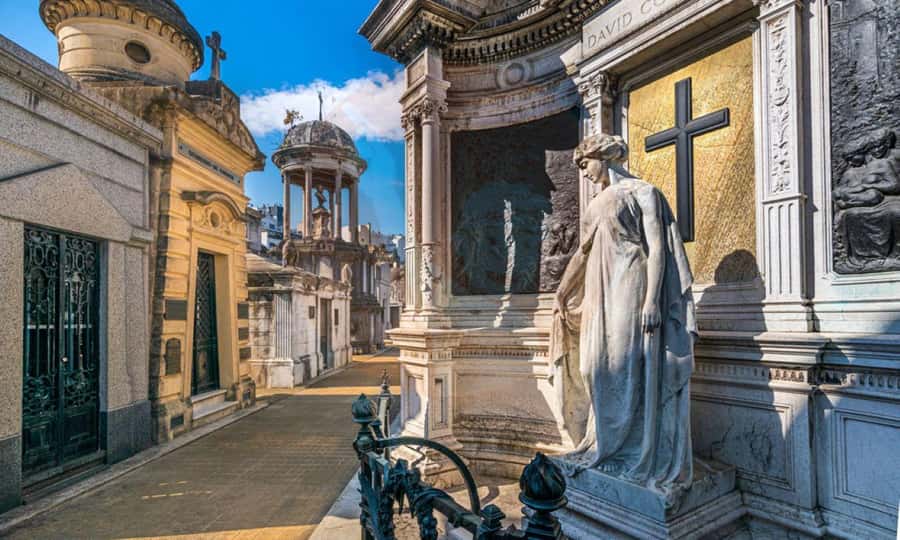
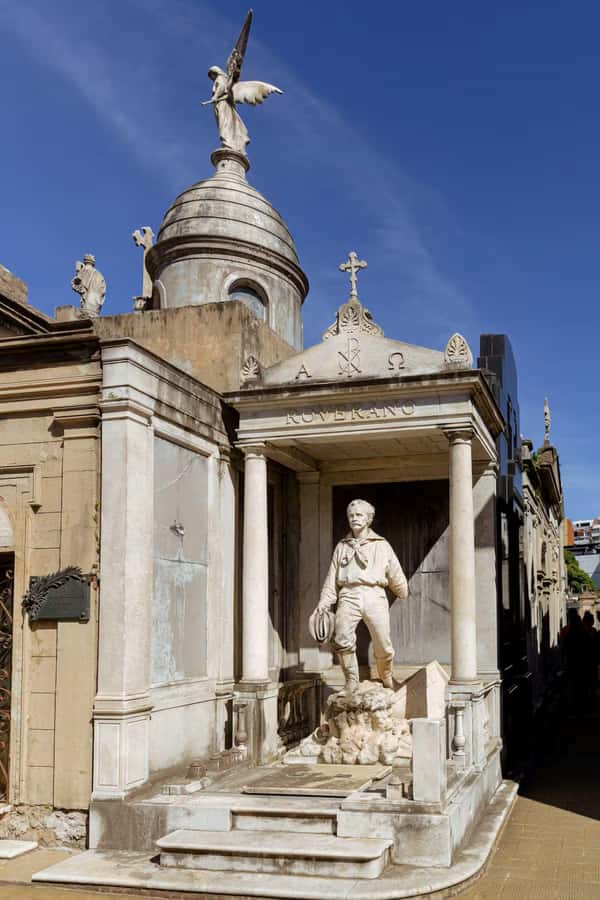
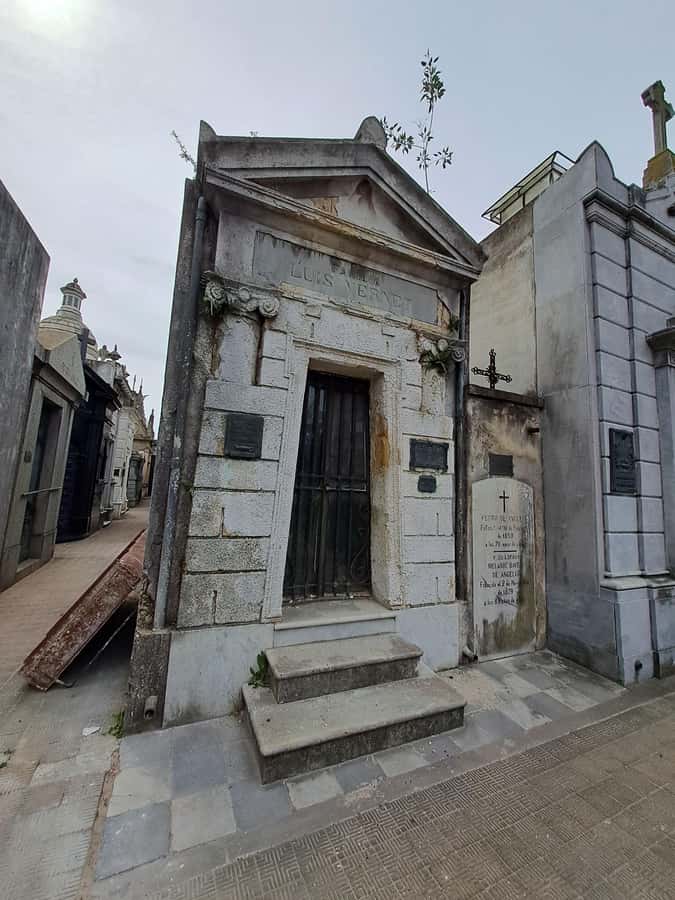
The cemetery receives about 45 minutes, the longest single guided section. This is where the earlier buildings and social themes come together.
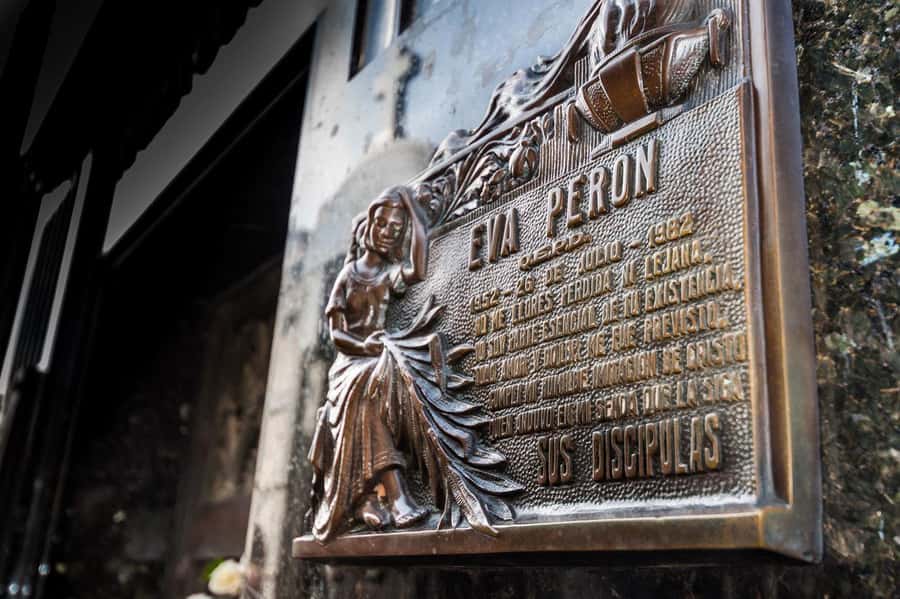
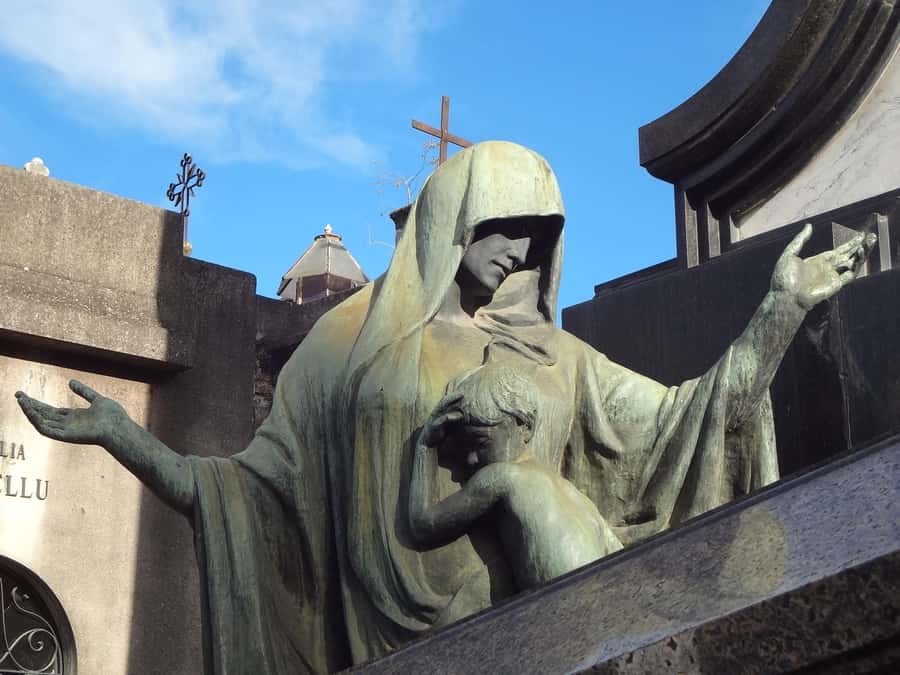
You will learn about the people buried there, but the guide also treats the cemetery as a record of Argentine society. The question is not only who has an elaborate tomb. It is also who gets remembered, who is left out, and how families use monuments to protect a public image.
That anthropological angle is the experience’s defining feature. Recoleta Cemetery can easily become a parade of famous names and ornate mausoleums. Here, the guide asks you to read the burial ground as a social document.
You might examine how wealth appears after death, how public memory is constructed, and what secrets can remain behind impressive façades. The cemetery becomes a smaller version of the city outside its walls, complete with rank, ambition, family stories, and selective memory.
The 45-minute visit should give you a clear introduction, but it will not cover everything. Recoleta Cemetery is large and visually dense. If you want plenty of time to wander alone, plan to return separately or continue exploring after the tour if your schedule allows.
Remember that cemetery admission is not included. You can buy the ticket at the entrance or in advance online. Check the current price and entry requirements when booking, since the supplied details do not give the admission cost.
The guides make the difference
The strongest praise goes to the guides, especially Nicolas, Nico, and Ignacio. Their shared strengths are clear: historical detail, humor, patience, and the ability to answer personal questions rather than forcing every group through the same script.
Nico is praised for giving the group time and allowing the walk to be shorter or longer depending on interest. That is useful if you want to linger over Argentina’s political story or ask about a particular building.
Nicolas is described as an historian with many lesser-known side stories. Those details can add life to buildings that might otherwise blur together. His humor also helps keep a serious subject from becoming heavy.
Ignacio receives similar praise for making the visit a particularly effective way to understand Buenos Aires. The guide assigned to your date may differ, so you should not assume you will get one specific person. Still, the pattern suggests that the provider places real weight on personal, discussion-led guiding.
The languages are Spanish, English, and French. Private and small-group formats are available, which should suit you if you value conversation over a large group’s fixed pace.
Who gets the best value for $34
At $34 per person, the price is reasonable if you want a guided explanation of several prestigious parts of Buenos Aires rather than only cemetery access. You are paying for two and a half hours, a route through major buildings, and a guide who can connect architecture with politics and society.
The price becomes especially worthwhile in a private or small group, where your questions can shape the discussion. A large group would still receive the same route, but the interactive element may be less personal.
The value is weaker if you only want to see Recoleta Cemetery. In that case, you still need to buy the cemetery ticket separately, and nearly half the experience takes place before reaching the gates.
I would choose this walk early in a Buenos Aires stay. It can give you a framework for understanding later visits to Recoleta, Plaza San Martín, and other central districts. It is also a good fit for repeat visitors who have already seen the obvious sights and now want to understand the forces behind them.
Practical details that affect your day
The total duration is 150 minutes, with a route that includes many outdoor stops. Give yourself enough time to reach the Rapa Nui meeting point without rushing.
The itinerary lists individual sections of roughly five or 10 minutes, followed by 45 minutes in the cemetery. These times are useful guides, not a promise that every discussion will end exactly on schedule. The experience is interactive, and the guide may spend longer on a topic that interests your group.
The tour is wheelchair accessible according to the supplied information. Since this is a walking route through multiple city locations, you may still want to confirm the current route conditions when booking, particularly if you need specific access arrangements.
You can cancel up to 24 hours before the start for a full refund. The reserve-now, pay-later option is useful if your schedule is still changing. Starting times vary, so check availability before building the rest of your day around it.
Should you book this Recoleta walk?
Book it if you want Buenos Aires explained through architecture, elite power, public memory, and cemetery symbolism. I would especially recommend it to curious first-time visitors, history-minded couples, and anyone who prefers a conversation to a rehearsed sightseeing speech.
Skip it if you want a fast tour, a food-focused outing, or a long independent visit inside the cemetery. The route is intellectually focused, and the cemetery ticket costs extra.
For most people, the best choice is a small group or private departure in a language you speak comfortably. That gives the guide more room to follow your questions, which is where this experience seems to offer its greatest value.
FAQ
Where does the tour meet?
The meeting point is the Rapa Nui store.
How long does the experience last?
The tour lasts 150 minutes, or two and a half hours.
Is the cemetery entrance fee included?
No. The cemetery ticket is not included. You can buy it at the entrance or online in advance.
What languages are available?
The live tour is available in Spanish, English, and French.
Is the tour private or shared?
Private and small-group options are available.
Is the tour wheelchair accessible?
The experience is listed as wheelchair accessible.
What places are visited before the cemetery?
The route includes Plaza General San Martín, Edificio Kavanagh, Torre Monumental, Mansión Estrugamou, also known as Casa Basavilbaso, Palacio San Martín, the French Embassy, the Jockey Club, and Palacio Duhau, now Park Hyatt Buenos Aires.
Can I cancel for a full refund?
Yes. You can cancel up to 24 hours in advance for a full refund.
Latest additions in Buenos Aires
- Buenos Aires: 7 Hour Small Group “BA 101” Walk★ 5.0 · 3 reviews
- Unique Tigre and Delta Private Day Cruise Navegation★ 5.0 · 3 reviews
- Buenos Aires: Customizable City Tour in Polish★ 4.7 · 3 reviews
- Buenos Aires After Dark: A City Lights & Sunset Experience★ 5.0 · 3 reviews
- Tango Show at El Querandi with optional Dinner★ 4.2 · 3 reviews
- Velez Sarsfield Football Match★ 5.0 · 3 reviews
- Caminito, La Boca: vibrant neighborhood★ 5.0 · 3 reviews
- Café de los Angelitos – Traditional Night in Buenos Aires★ 4.8 · 3 reviews
Recoleta Cemetery Tours, compared.
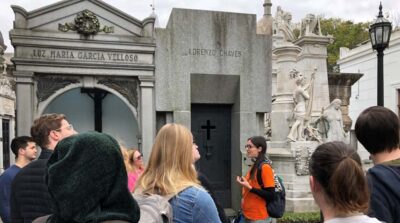

Buenos Aires Bike Tour: North Districts, Recoleta and Palermo
Read our review →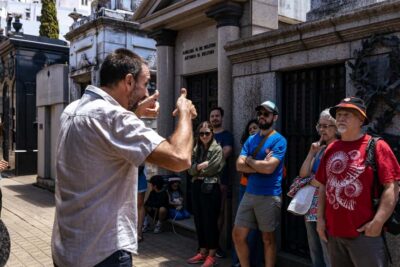
Recoleta Cemetery – Small Group Tour of History & Secrets
Read our review →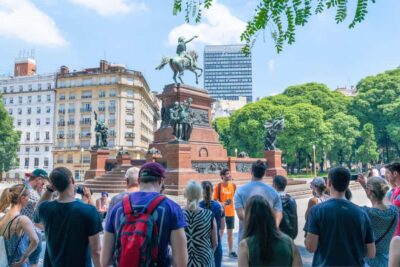
Cultural Experience by Bike around Palermo and Recoleta Max 6 ppl
Read our review →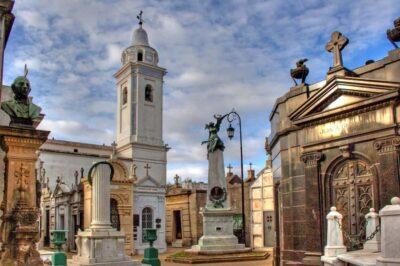
Full Day City Tour Buenos Aires, Recoleta Cemetery and Tigre
Read our review →Browse the lists this tour appears in