
Reviewed · FOOD & DRINK
N1 Coffee Tasting Experience in Buenos Aires
Coffee can be a holiday highlight. This private tasting at Al Diablo Coffee Roasters turns a familiar daily drink into a hands-on lesson in origins, roasting, aroma, and taste. I like the personal format, which gives you room to ask questions, and I like the practical focus on choosing beans that suit your own palate. The one drawback is that coffee drinkers who want only a quick tasting may find the session more like a class than a casual café stop.
The experience costs $85 per person and lasts about two and a half hours, with morning and afternoon start times. Host Lyubov guides you through specialty coffee using single-origin samples, a sensory workshop, and the Le Nez du Café aroma kit. It is a strong pick for curious beginners, serious coffee fans, and anyone who wants an indoor activity with real take-home value.
In This Review
- Key points to know before booking
- Meeting Lyubov at Al Diablo Coffee Roasters
- The opening lesson: coffee from seed to cup
- The Le Nez du Café aroma game
- Comparing four single-origin coffees
- Learning to read a coffee bag
- A private lesson with plenty of questions
- Why the two-and-a-half-hour timing matters
- Is $85 per person good value?
- Who will enjoy this most?
- What may not suit you
- Booking and cancellation details
- FAQ
- Where does the coffee tasting begin?
- How long does the experience last?
- Is the experience private?
- Are morning and afternoon times available?
- What coffees will I taste?
- Can I cancel for a full refund?
- Should you book the N1 Coffee Tasting Experience?
Key points to know before booking
- Four single-origin coffees give the tasting a useful range: You compare coffees from different places and learn to notice how flavor changes from cup to cup.
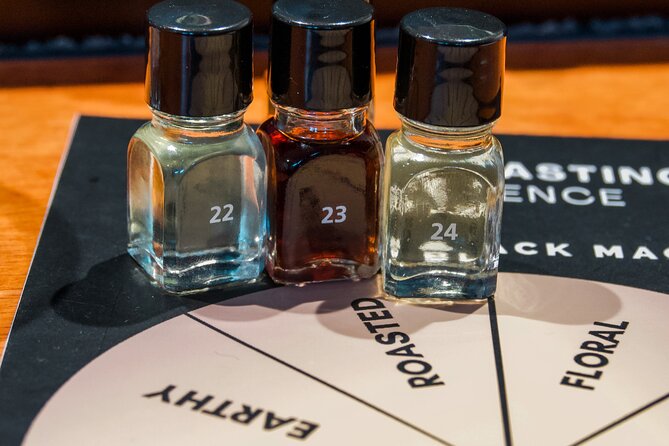
- The Le Nez du Café kit makes smell part of the lesson: You identify aromas before connecting them to the coffees you taste.
- Lyubov teaches from seed to finished cup: The session covers growing, harvesting, processing, roasting, brewing, and coffee labels.
- This is a private experience: Your group receives Lyubov’s full attention, which makes questions and personal taste advice easier.
- The lesson is playful, not stiff: A coffee game helps you learn the vocabulary of beans, roasts, aromas, and flavor.
- Plan for a full two and a half hours: Some sessions have run closer to three hours, so avoid scheduling a tight appointment afterward.
Meeting Lyubov at Al Diablo Coffee Roasters
Your meeting point is Al Diablo Coffee Roasters at Costa Rica 4752 in Buenos Aires. The location is near public transportation, so it should fit neatly into a day spent exploring the city, though you will want to allow time to reach Palermo-area Costa Rica street without rushing.
The setting matters because this is not a lecture detached from coffee. You begin in a working coffee environment, then use that setting as the starting point for a wider look at specialty coffee. The session ends back at the same meeting point, so there is no second location to find.
The tour is private. That detail is more important than it may sound. Coffee tasting involves plenty of small questions: Is this acidity or sourness? Why does one roast taste heavier? What does a bag label really tell me? With only your group present, you can stop Lyubov and ask without holding up a larger class.
The tone appears warm and relaxed. Lyubov, also referred to as Luba or Lyubi by past participants, combines personal stories with clear explanations. That helps keep the technical parts from becoming a wall of coffee jargon.
More Food Tours in Buenos Aires
- Buenos Aires: 9-Course Argentine Meat Tasting at Fogón Asado
★ 4.9 · 826 reviews - Buenos Aires: Local Foodie Adventure with Sherpa Food Tours
★ 4.9 · 670 reviews - Buenos Aires: Wine Tasting and Lunch at Bodega Gamboa
★ 4.8 · 177 reviews
The opening lesson: coffee from seed to cup
Lyubov begins by placing your cup in context. You learn that coffee quality is shaped long before brewing, starting with the planted seed and continuing through cultivation, harvesting, processing, roasting, and preparation.
This part gives the tasting its backbone. Instead of treating coffee as a mystery drink with vague notes on a packet, you see how production choices can affect what reaches your cup. The session explains specialty coffee and the methods used to achieve better quality.
I find this especially useful for people who buy coffee bags but feel lost when reading them. Origin, roast descriptions, and tasting notes can sound like marketing code. Here, Lyubov explains the language in plain terms, so you can make more informed choices later.
The lesson also helps beginners. You do not need a trained palate before arriving. The experience is designed to teach the basic ideas while letting you test them directly through touch, smell, and taste.
For experienced coffee drinkers, the value is different. You can use the session to check your assumptions, compare preferences with someone else, and ask detailed questions about brewing and roast styles. Several people with strong coffee backgrounds have described the session as closer to a beginner master class than a simple tasting.
The Le Nez du Café aroma game
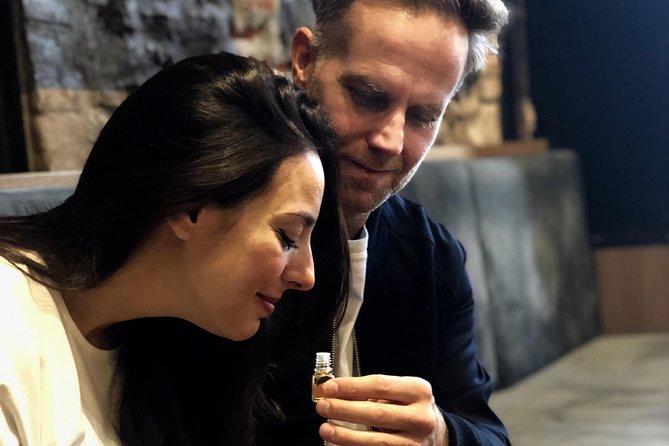
The sensory section uses Le Nez du Café, a sommelier kit built around individual coffee-related aromas. You smell the samples and try to identify them, turning the lesson into a game rather than a test you can fail.
This is one of the smartest parts of the experience. Many people drink coffee every day but pay little attention to smell. By separating aromas and naming them, you start to understand how the nose shapes the flavor you think you are tasting.
Do not worry if you cannot identify every scent. The point is to build awareness, not prove that you have a professional palate. Lyubov links the aromas back to coffee origins and cup characteristics, giving each smell a practical purpose.
This exercise also explains why coffee tasting can feel difficult at first. Tasting notes are not always obvious. You may sense something but lack the word for it. The aroma kit gives you a vocabulary and helps you notice details that might otherwise pass by.
The game adds a little humor and energy to the session. It also breaks up the spoken instruction, which is helpful during a lesson lasting roughly two and a half hours.
Comparing four single-origin coffees
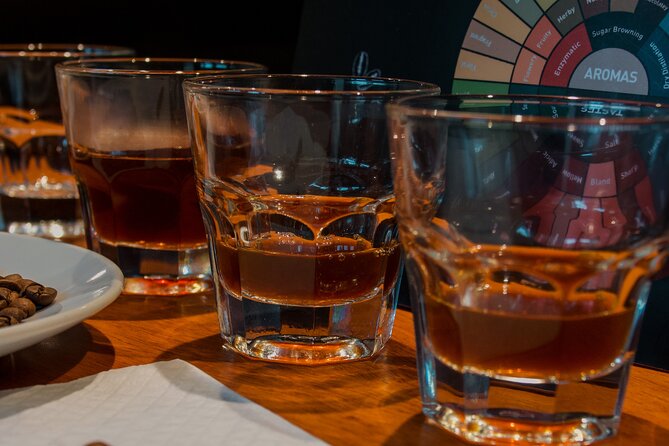
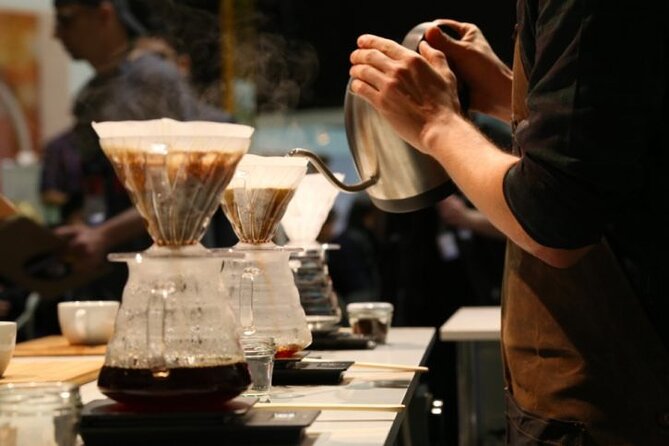
The tasting centers on freshly roasted specialty coffees, including four different samples according to the experience details. The coffees come from top roasters in Buenos Aires and represent single-origin styles from around the world.
You taste and compare them rather than drinking one cup in isolation. That comparison is the key. A coffee may seem bright, sweet, floral, nutty, or heavy only when you have another cup beside it for reference.
Lyubov guides you through the process and helps you work out your own preferences. You may find that you prefer a certain roast level, origin style, or flavor profile. The goal is not to declare one coffee the winner. It is to help you understand what you like and why.
This personal approach gives the tasting lasting value. You leave with more than a pleasant caffeine break. You have a better chance of selecting beans that fit your palate when you return home.
The samples are also a useful reminder that coffee is not one fixed flavor. Growing conditions, processing, roasting, and preparation all shape the final drink. You get to test that idea in the cup rather than simply hearing it explained.
The exact coffee selection can change, so you should not expect a fixed menu of named beans. What is consistent is the chance to compare several specialty coffees and discuss how they differ.
A completely different sort of day in Buenos Aires:
- Buenos Aires Hop-On Hop-Off Bus, Free Walking Tours & Discounts
★ 4.5 · 2,218 reviews - Buenos Aires: Piazzolla Tango Show with Optional Dinner
★ 4.4 · 2,122 reviews - Buenos Aires: City Highlights Guided Tour with Transfer
★ 4.7 · 1,946 reviews - Buenos Aires: Hop-On Hop-Off City Bus Tour
★ 4.2 · 1,855 reviews
Learning to read a coffee bag
A practical part of the session focuses on coffee packaging. Lyubov explains the information printed on coffee bags and clears up the confusion that often comes with origin names, roast terms, and flavor descriptions.
This may be the most useful lesson for everyday coffee drinkers. A beautiful package can still leave you unsure what you are buying. After the session, you should have a clearer way to judge the information and connect it with what you taste.
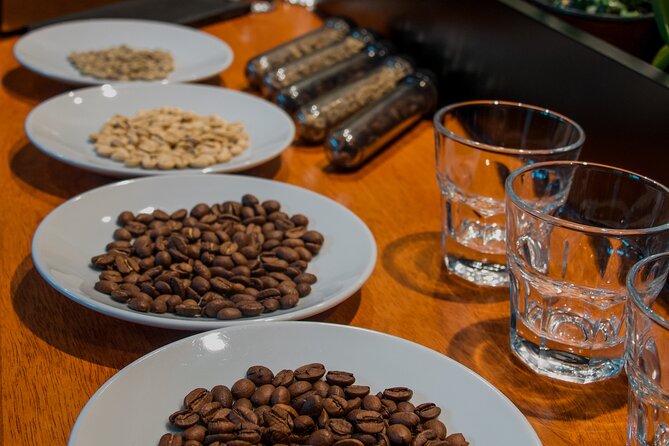
You also learn to examine the beans. That physical step matters because coffee is not only a liquid. Looking at the beans, smelling them, and then tasting the brewed result creates a fuller picture of the process.
The session connects each part. You do not simply study beans, then move to unrelated cups. Lyubov ties the appearance, aroma, origin, roast, and taste together. That structure is why the experience can feel much more useful than a series of disconnected facts.
A private lesson with plenty of questions
The private format suits people who want a tailored session. If you already know you like a certain coffee style, you can ask Lyubov to explain what might lead you toward similar beans. If you are new to specialty coffee, you can take your time with the basics.
Past sessions have included solo participants, couples, friends, and families. A solo booking may offer the most focused discussion, while couples or friends can compare their reactions and discover that they have very different palates.
Lyubov’s teaching style is a major part of the experience. She is described as patient, engaging, and passionate, with a personal coffee journey that adds warmth to the subject. Her stories help turn technical information into something memorable.
That said, this is not an entertainment show built around a few fancy pours. You should expect active participation. You will smell, touch, taste, guess, compare, and discuss. If you prefer to sit quietly while someone serves coffee, this may feel demanding.
For most people, the hands-on format is an advantage. You remember an idea better when you have tested it yourself. The session also gives you space to ask about brewing methods, roast differences, and your own preferences.
Why the two-and-a-half-hour timing matters
The advertised duration is approximately two hours and thirty minutes. Some sessions have lasted about three hours, so I would treat the timing as a range rather than a strict countdown.
That length makes sense for the material. You cover production, specialty coffee, aromas, beans, labels, tasting, and personal preferences. Rushing through those topics would reduce the value.
Choose the morning departure if you want to begin your day with a focused activity. One past participant described it as a fun way to start the day. The afternoon option works well if you want a break from sightseeing or need an indoor plan.
Do not book a tightly timed museum entry, dinner, or transfer immediately afterward. The experience may finish near the stated time, but the teaching style invites questions, and the tasting itself is not meant to feel hurried.
Coffee is also worth considering in relation to your caffeine tolerance. The session includes several samples, though the supplied details do not specify serving sizes or decaffeination options. If caffeine affects you strongly, ask about this before the tasting.
Is $85 per person good value?
At $85 per person, this is not a cheap coffee stop. You are paying for a private, guided lesson rather than simply buying several drinks.
The value improves if you care about learning. Your fee covers personal instruction, multiple specialty coffees, the aroma workshop, coffee education from seed to cup, and advice on understanding your own palate. You can carry those skills into future café visits and home brewing.
The private format also changes the price calculation. You are not sharing a large group guide with dozens of people. Lyubov can adjust the pace, answer individual questions, and help you identify the types of coffee you prefer.
I would not recommend it to someone who simply wants a Buenos Aires café experience and does not care how coffee is grown, roasted, or described. That person may get better value from ordering a good drink at a local café.
For a coffee lover, the cost is easier to justify. The experience has been praised for changing how people consume coffee at home, including how they choose beans and prepare their daily cup. That practical benefit gives it more value than a tasting that ends when the last sample is gone.
Who will enjoy this most?
I would book this for:
- Coffee drinkers who want to understand specialty coffee
- Beginners who feel confused by tasting notes and bag labels
- Experienced coffee fans who want to test and sharpen their palate
- Solo visitors looking for a personal, off-the-usual-tour-path activity
- Couples or friends who enjoy comparing tastes
- Anyone who likes interactive lessons more than passive sightseeing
You do not need to be a coffee expert. The session is intentionally accessible, and the aroma game gives beginners a simple way into the subject.
You also do not need to be obsessed with coffee. The teaching covers basic production and tasting in a friendly way, and the hands-on format keeps the class active. Still, you should have at least a passing interest in learning about the drink.
Tea drinkers may also find something useful here, particularly in the sections about aroma and sensory awareness. But the actual tasting is focused on coffee, so this is not a general beverage workshop.
What may not suit you
The main concern is focus. This experience spends serious time on coffee, and some people may find the detail more than they wanted from a holiday activity.
The private format can also feel more like a lesson than a social tour. That is excellent if you want personal attention, but less appealing if you hoped to meet a large mix of people.
There is no separate city sightseeing component. You meet at Al Diablo Coffee Roasters, stay focused on coffee, and finish at the same place. Plan it as a specialty food experience, not as a way to see Buenos Aires landmarks.
Finally, the session may run longer than the approximate two-and-a-half-hour estimate. Build in breathing room. Coffee education is best enjoyed without watching the clock.
Booking and cancellation details
Morning and afternoon departures are available, and the experience is often booked well ahead, with an average booking lead time of 38 days. If your Buenos Aires dates are fixed, reserving early is sensible.
Confirmation is provided at booking. The activity is near public transportation, is private for your group, and returns to the starting point.
Free cancellation is available up to 24 hours before the local start time for a full refund. Cancellations or changes made less than 24 hours before the start are not accepted for a refund.
FAQ
Where does the coffee tasting begin?
It begins at Al Diablo Coffee Roasters, Costa Rica 4752, C1414 Ciudad Autónoma de Buenos Aires, Argentina.
How long does the experience last?
The approximate duration is two hours and thirty minutes. Some sessions have lasted about three hours, so allow extra time afterward.
Is the experience private?
Yes. Only your group participates, giving you Lyubov’s undivided attention.
Are morning and afternoon times available?
Yes. You can choose a morning or afternoon departure.
What coffees will I taste?
You will sample a variety of freshly roasted single-origin specialty coffees. The experience details indicate four coffee samples, though the exact selection may vary.
Can I cancel for a full refund?
Yes, if you cancel at least 24 hours before the experience start time. Cancellations or changes made less than 24 hours before the start are not refundable.
Should you book the N1 Coffee Tasting Experience?
I would book it if you want to understand coffee rather than simply drink it. The best parts are the private guidance from Lyubov, the aroma work with Le Nez du Café, and the side-by-side tasting of single-origin coffees. Those elements make the session active and useful.
Skip it if your priority is a fast café visit, a city tour, or a low-cost activity. At $85, it earns its price through teaching and personal attention, not through sightseeing.
For coffee lovers, curious beginners, and visitors who enjoy learning a local craft in a small setting, this is a thoughtful Buenos Aires experience. You leave with a sharper nose, better tasting vocabulary, and a clearer idea of what to buy for your next cup.
Latest additions in Buenos Aires
- Buenos Aires: 7 Hour Small Group “BA 101” Walk★ 5.0 · 3 reviews
- Unique Tigre and Delta Private Day Cruise Navegation★ 5.0 · 3 reviews
- Buenos Aires: Customizable City Tour in Polish★ 4.7 · 3 reviews
- Buenos Aires After Dark: A City Lights & Sunset Experience★ 5.0 · 3 reviews
- Tango Show at El Querandi with optional Dinner★ 4.2 · 3 reviews
- Velez Sarsfield Football Match★ 5.0 · 3 reviews
- Caminito, La Boca: vibrant neighborhood★ 5.0 · 3 reviews
- Café de los Angelitos – Traditional Night in Buenos Aires★ 4.8 · 3 reviews
Food & Drink, compared.

Buenos Aires Food Tour: Local Dishes, Steak, Empanada & More
Read our review →
Full-day Cafayate, Lerma Valley, and Wine Tasting from Salta
Read our review →Browse the lists this tour appears in