
Reviewed · WINE TOURS
Discover Argentine Wines Paired with Delicious Tapas
Wine tells Argentina’s story. This two-hour tasting brings four wines from small family producers together with fresh regional tapas, giving you a friendly introduction to the country’s food and wine traditions. I like the small-group setting and the care put into matching each pour with Aby’s homemade dishes. I also like that the tasting travels beyond the usual Mendoza Malbec. The main consideration is that the food comes as small tapas, not a full restaurant meal, so hungry diners may need lunch before or after.
Hosted by Bertie and Aby, the tasting takes place at Soler 5650 in Buenos Aires, in or near Palermo Soho. Bertie leads the wine presentation, while Aby prepares the food. Their warm, relaxed style makes this a good choice for first-time wine tasters as well as serious wine fans, though anyone seeking a formal cellar tour or a large selection of bottles may prefer a winery visit outside the city.
In This Review
- Key points to know before booking
- Why this tasting works so well in Buenos Aires
- Meeting Bertie and Aby at Soler 5650
- Four regions, four wines, and a broader view of Argentina
- The arid north
- The cooler plains of Patagonia
- Mendoza
- Tapas that do more than fill the plate
- The culture and stories behind each bottle
- What the $84 price gets you
- Who will enjoy this most
- Booking advice and cancellation terms
- Should you book Discover Argentine Wines and Tapas?
- FAQ
- Where does the wine and tapas tasting begin?
- How long does the experience last?
- How many wines are included?
- Is food included?
- How many people can join?
- Can I cancel for a full refund?
Key points to know before booking
- Four wines from different Argentine regions: The tasting moves through wines from the arid north, Patagonia, and Mendoza, with each wine coming from a different producer.
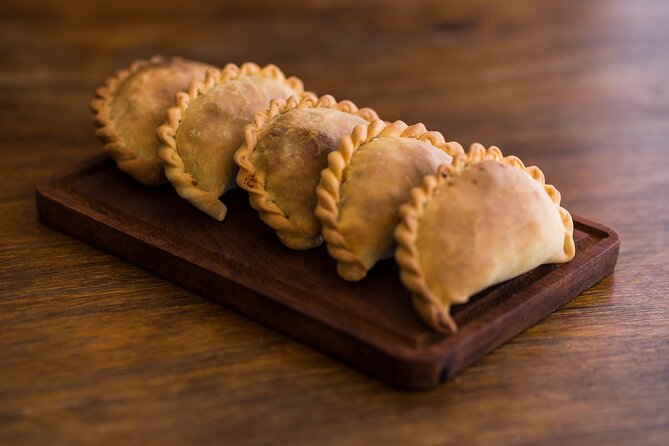
- Regional tapas are matched to each pour: Aby prepares small homemade dishes, including an empanada and an Inca-inspired humita mentioned by the hosts.
- Family-run producers take center stage: The wines come from small wineries that focus on character and regional identity rather than mass-market labels.
- Bertie and Aby host the session personally: You get wine guidance, food context, and a conversation about Argentine culture in an intimate setting.
- Groups are limited to 14 people: That is small enough for questions and conversation, though the atmosphere may depend on the mix of people in your sitting.
- The price is $84 per person: Four wines, tapas, and the chance to repeat wines make this fair value for a hosted tasting in Buenos Aires, but gratuity and purchased bottles cost extra.
Why this tasting works so well in Buenos Aires
Buenos Aires is an excellent place to learn about Argentine wine, even though the main vineyards are far away. You can taste wines from several parts of the country without spending a day on buses or arranging winery visits in Mendoza.
That matters because Argentine wine is not just Malbec from Mendoza. Mendoza is the country’s best-known wine region, but the tasting also introduces wines from the dry north and the cooler plains of Patagonia. The regional contrasts give you a better sense of how climate and geography affect grapes.
I like this approach because it keeps the focus on smaller producers. The wineries are family run, and the goal is to show wines with a strong sense of character. You are not simply sampling famous supermarket labels. You are being introduced to bottles that may be harder to find on your own.
The setting adds to the appeal. The tasting is held at Soler 5650, with the hosts’ home described as a comfortable apartment with a view over Palermo Soho. That is a very different mood from a hotel conference room or a crowded wine bar. You sit down, eat, ask questions, and let the afternoon unfold at a human pace.
More Wine Tours in Buenos Aires
- Buenos Aires: Wine Tasting and Lunch at Bodega Gamboa
★ 4.8 · 177 reviews - Premium Argentinian Wines and Malbec Tasting Experience
★ 4.6 · 60 reviews - Buenos Aires: Palacio Barolo Guided Night Tour with Wine
★ 4.4 · 54 reviews
Meeting Bertie and Aby at Soler 5650
The experience begins at the listed address on Soler Street. It ends at the same meeting point, so you do not need to arrange a separate pickup or figure out a return route from an outlying vineyard.
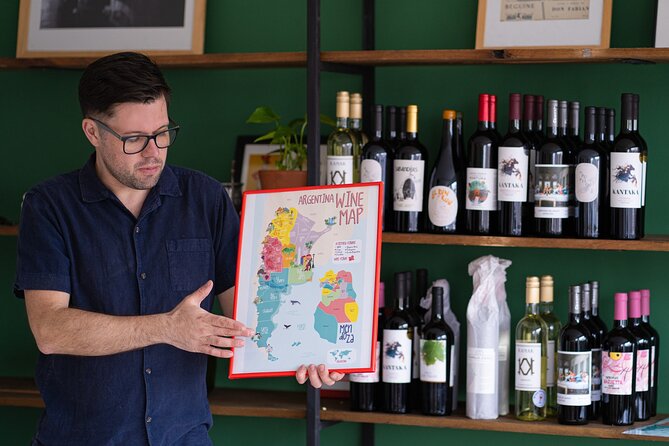
Bertie handles the wine side of the session. His role is not limited to naming the grape and region. He explains the background of each producer, why certain grapes grow well in particular parts of Argentina, and what to notice in the glass. Aby prepares and presents the food, adding family recipes and cultural background to the meal.
The hosts are one of the strongest reasons to choose this tasting. Their style is friendly and conversational rather than stiff or academic. You can ask basic questions without feeling out of place, but wine lovers also have room to ask about regions, producers, and bottle recommendations.
The maximum group size is 14 people. That is not a private tasting, but it is far more personal than a large bus-group event. I would expect the experience to work best when you join in the conversation. If you prefer to sit quietly and taste at your own pace, the social side may feel more active than expected.
Four regions, four wines, and a broader view of Argentina
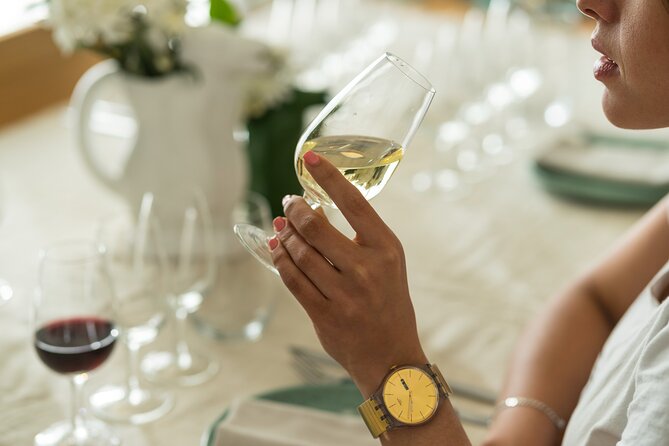
The advertised tasting includes four wines, each from a different producer and area of Argentina. The route begins in the arid north, moves south toward Patagonia, and then returns north to Mendoza.
That order gives the session a clear sense of movement. You are not just drinking four unrelated wines. You are following a loose map of Argentine wine country while hearing how local conditions shape grape growing.
The arid north
The northern vineyards offer an early reminder that Argentine wine reaches well beyond Mendoza. The region is dry, and its wines can bring a different profile to the table than the fuller bottles many people associate with Argentine reds.
This first stage also sets up the cultural side of the tasting. Wine is tied to local food, farming, migration, and family businesses. Bertie connects those subjects to each producer, so the glass becomes a starting point for a wider conversation about Argentina.
A completely different sort of day in Buenos Aires:
- Buenos Aires Hop-On Hop-Off Bus, Free Walking Tours & Discounts
★ 4.5 · 2,218 reviews - Buenos Aires: Piazzolla Tango Show with Optional Dinner
★ 4.4 · 2,122 reviews - Buenos Aires: City Highlights Guided Tour with Transfer
★ 4.7 · 1,946 reviews - Buenos Aires: Hop-On Hop-Off City Bus Tour
★ 4.2 · 1,855 reviews
The cooler plains of Patagonia
Patagonia adds a cooler southern counterpoint. The region helps show why Argentine wine can include more than bold, powerful reds. A Patagonia pour gives you a chance to compare how a cooler growing area can produce a different style.
I find this regional comparison especially useful for people who already know Mendoza Malbec. It helps you understand Argentina as a collection of wine areas, not a single style. You may also find that one of the less familiar bottles becomes the most memorable pour of the afternoon.
Mendoza
Mendoza remains an important part of the tasting because it is Argentina’s best-known wine area. Yet the experience does not treat Mendoza as the whole story. One particularly useful detail from the tasting is that only one wine is Malbec and only one comes from Mendoza, according to the way the wines were presented in one session.
That choice is smart. A tasting built around four Malbecs would be easy to understand but limited in scope. Here, you get a more useful introduction to the country’s range. If you are visiting Mendoza later, this session can also help you arrive with a better vocabulary and a clearer idea of what to seek.
The hosts have also presented five wines in at least one tasting, while the standard description promises four. I would plan on four pours and regard any additional wine as a welcome variation rather than something to count on.
Tapas that do more than fill the plate
Each wine comes with a small tapas dish prepared fresh by Aby. The portions are designed for pairing, not for a large lunch. That distinction matters when you plan your day.
The food receives nearly as much attention as the wine. An empanada has been singled out as especially memorable, and an Inca-inspired humita is another featured dish. These are not random snacks placed beside a glass. The pairings are chosen to make the wine and food work together.
Aby also explains the story behind the dishes. That gives the food a stronger connection to place and tradition. You learn not only what you are eating, but also why it belongs in a tasting about Argentina.
I like this balance. Wine tastings can sometimes become overly technical, with food treated as decoration. Here the food gives you a practical way to understand the wine. Salt, spice, richness, texture, and sweetness all change how a pour tastes.
Still, keep your expectations in check. The experience includes a small tapas serving with each wine, not a guaranteed full meal. Some people may find the food substantial enough for a relaxed midday snack, while others will want a proper meal before or afterward. If you have dietary restrictions, the available details do not specify substitutions, so ask the provider before booking.
The culture and stories behind each bottle
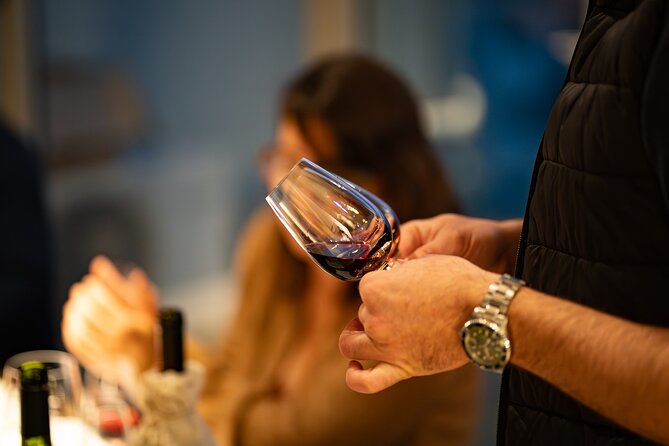
The tasting is designed to cover Argentine history and culture as well as wine. This makes the two hours feel more like a hosted introduction to the country than a simple flight of drinks.
Bertie explains the wineries and their regions, while Aby adds food stories and family recipes. The result is a conversation that moves between grapes, geography, cooking, and daily life.
This is particularly useful early in a Buenos Aires visit. It can give you a framework for restaurant menus and wine lists later in your trip. You may recognize regional names, understand why Malbec is so closely tied to Argentina, and feel more comfortable ordering something unfamiliar.
You do not need prior wine knowledge. The presentation is approachable, and the hosts make room for questions at different levels. If you already know your way around wine, you will likely appreciate the less predictable selection and the focus on small producers.
The setting also encourages conversation with the other people at the table. It has worked well for couples, solo visitors, friends, and honeymooners. That mix can be part of the fun, though it means the experience is social rather than completely private.
What the $84 price gets you
At $84 per person, the price is not bargain-basement, but it is reasonable for a two-hour hosted tasting that includes four wines and four small food pairings. You are paying for the selection, preparation, presentation, and personal attention, not only for the liquid in the glass.
The ability to repeat the wines adds value. A tasting pour can be too small to understand a wine fully, especially when you are comparing several regions. Being welcome to request another taste lets you return to a bottle that caught your attention.
The price also covers an experience that would be difficult to reproduce independently. You could order Argentine wine in a Buenos Aires bar, but you would not necessarily get four small producers from different regions, paired tapas, and an explanation of how the wines connect to the country.
Gratuity is not included. Bottles are also available to buy at the end, which is useful if you find a producer you want to remember. If you are flying home with wine, check your own airline and customs rules before purchasing. The experience itself does not include shipping.
For the best value, book this as an introduction rather than as a replacement for a full winery day. It is compact, urban, and focused. You get context without giving up half a day to transport.
Who will enjoy this most
I would recommend the tasting to:
- Couples seeking a relaxed date activity
- Solo visitors who enjoy meeting people around a table
- Friends who want food and wine without a formal restaurant setting
- Wine beginners who want clear guidance
- Experienced wine drinkers looking beyond Mendoza Malbec
- Anyone starting a Buenos Aires trip and wanting useful food and drink context
It is less suitable if you want a large meal, a private group, or a visit to working vineyards. It is also not the right pick if you dislike social tastings. The maximum of 14 people keeps the group manageable, but you are still sharing the room and conversation.
The two-hour length is another strength. You can fit it into a day of sightseeing, and because it returns to the starting point, it does not create a transport puzzle afterward. The address is near public transportation, which helps, though you should allow time to locate the entrance. One person had trouble getting in, so pay attention to the meeting instructions and contact details provided at booking.
Booking advice and cancellation terms
This experience is often reserved about 40 days ahead. That is a useful warning for anyone visiting Buenos Aires during a busy season or with fixed dates. If you know you want a small-group food and wine activity, booking early makes sense.
Confirmation arrives when you book. Service animals are allowed, and the location is near public transportation. The experience requires a minimum number of people, so a cancellation for that reason brings the choice of another date or a full refund.
You can cancel for a full refund up to 24 hours before the start time. Changes made inside that 24-hour window are not accepted, and cancellations within that period are not refunded. All cut-off times use local Buenos Aires time.
Should you book Discover Argentine Wines and Tapas?
I would book it if you want a friendly, food-centered introduction to Argentine wine without leaving Buenos Aires. The strongest features are the regional range, the small family producers, Aby’s carefully matched tapas, and Bertie’s clear explanations.
Book it early if your dates are fixed, and do not arrive expecting a full lunch or a private tasting. Plan for four wines, allow for a social setting, and leave room in your luggage budget if you may want to buy bottles.
For $84, this is a sound choice for curious eaters, wine beginners, and anyone who wants more than the familiar Malbec story. It offers a pleasant afternoon, useful context, and a direct connection to Argentine food and drink.
FAQ
Where does the wine and tapas tasting begin?
It begins at Soler 5650, C1425BYH, in Buenos Aires, Argentina. The activity ends back at the same meeting point.
How long does the experience last?
The tasting lasts approximately two hours.
How many wines are included?
The standard experience includes four wines from different Argentine producers and regions. You are welcome to repeat the wines. One session included five wines, but four is the stated format.
Is food included?
Yes. A small tapas serving is provided with each wine. The food is prepared fresh by Aby and includes regional dishes.
How many people can join?
The activity has a maximum of 14 participants.
Can I cancel for a full refund?
Yes. You can cancel at least 24 hours before the start time for a full refund. Cancellations or changes made less than 24 hours before the start time are not accepted for a refund.
Latest additions in Buenos Aires
- Buenos Aires: 7 Hour Small Group “BA 101” Walk★ 5.0 · 3 reviews
- Unique Tigre and Delta Private Day Cruise Navegation★ 5.0 · 3 reviews
- Buenos Aires: Customizable City Tour in Polish★ 4.7 · 3 reviews
- Buenos Aires After Dark: A City Lights & Sunset Experience★ 5.0 · 3 reviews
- Tango Show at El Querandi with optional Dinner★ 4.2 · 3 reviews
- Velez Sarsfield Football Match★ 5.0 · 3 reviews
- Caminito, La Boca: vibrant neighborhood★ 5.0 · 3 reviews
- Café de los Angelitos – Traditional Night in Buenos Aires★ 4.8 · 3 reviews
Wine Tours, compared.



Full-Day Tour Cafayate Calchaqui Valleys with Wine
Read our review →
Browse the lists this tour appears in