
Reviewed · BARILOCHE TOURS
OneWay Journey: from Bariloche, Argentina to Puerto Varas, Chile
A border crossing by boat is hard to beat. This one links Bariloche and Puerto Varas through the Andean Lakes Crossing, using catamarans, buses, and two countries’ mountain roads instead of a standard flight. I like the mix of transport and the chance to see Nahuel Huapi, Lago Frías, and Todos Los Santos in a single long day.
I also like the small group size, with no more than 14 people, plus hotel pickup, a driver-guide, and luggage transfers. The main catch is the pace: this is about 12 hours of repeated bus, boat, customs, and waiting-room changes. You also need to arrange your own overnight stay in Puerto Varas.
- Three major lakes: Cruise Nahuel Huapi and Todos Los Santos, with a short transfer beside Lago Frías.
- A genuine cross-Andes route: Follow a historic passage through forests, glacial water, and mountain channels.
- Useful luggage allowance: One suitcase up to 23 kilograms and one carry-on up to 10 kilograms are included.
- Border crossing at Puerto Frías: Passport details are required when booking, and immigration procedures happen during the trip.
- Lunch comes late: The Peulla stop may not come until 2:30 or 3 p.m., or later if customs takes time.
- Best scenery early on: The first cruise across Nahuel Huapi often provides the strongest views of the day.
In This Review
- What the Bariloche to Puerto Varas Crossing Is Really Like
- Leaving Bariloche for Puerto Pañuelo
- Nahuel Huapi: The Strongest Part of the Day
- Puerto Frías and the Argentina-Chile Border
- The Bus Sections: Necessary, Scenic, and Sometimes Slow
- Peulla: A Late Lunch in a Tiny Chilean Settlement
- Todos Los Santos and the Emerald Water
- Arriving in Puerto Varas
- Is US$347 a Fair Price?
- Who Will Enjoy This More?
- Practical Packing Advice for a 12-Hour Day
- Should You Book the Andean Lakes Crossing?
- FAQ
- How long does the crossing from Bariloche to Puerto Varas take?
- Where does the trip begin?
- Where does the trip end?
- Which lakes are included in the route?
- Is lunch included?
- Can customs delay the schedule?
- What luggage can I bring?
- Are port and park fees included?
- Do I need passport information to book?
- What should I wear?
- How many people can join the tour?
- Can I cancel for a full refund?
What the Bariloche to Puerto Varas Crossing Is Really Like
This is not a simple bus ride with a scenic stop. It is a full transport day built around water. You leave Bariloche in the morning, reach Puerto Pañuelo, board a boat across Nahuel Huapi, transfer by bus toward the Chilean border, cross Lago Frías, continue overland to Peulla, and then sail across Todos Los Santos before reaching Puerto Varas.
The scheduled start is 8 a.m., and the complete journey takes about 12 hours. That makes it a practical way to move between Argentina and Chile, but it is not a relaxed sightseeing cruise from one pier to another. You need to be comfortable handling several transitions with your passport and luggage.
The operator limits the group to 14 people. That is a useful size for a day with many moving parts. It should make it easier to hear instructions and keep track of the group, though the boats and border facilities are shared with other passengers.
Leaving Bariloche for Puerto Pañuelo
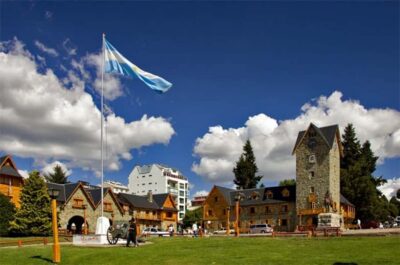
Bariloche is a good opening act. The city sits inside Nahuel Huapi National Park, with a civic center known for chocolate shops, hotels, and restaurants. If you have time before departure, this is a place to stock up on snacks, since food is not included and lunch comes late.
The road to Puerto Pañuelo covers about 25 kilometers from Bariloche. Puerto Pañuelo is the passenger port used for the lake crossing, and the transfer takes about an hour in the stated schedule. The port has an additional boarding charge of about US$3.50, or AR$500, payable in cash. That fee can change under local authority rules, so keep Argentine pesos available.
Hotel pickup is included in the advertised service, which matters when you are carrying bags and leaving early. Still, pay close attention to the final drop-off details. One person reported being left with luggage a considerable distance from the promised hotel drop-off in Puerto Varas, including a steep uphill walk. I would confirm the exact end point before departure and avoid assuming the driver will deliver you directly to your accommodation.
Other days out in Bariloche that people book on the same trip:
- Bariloche: 7 Lakes & San Martin de Los Andes Road Trip
★ 4.5 · 624 reviews - Bariloche: Circuito Chico with optional Cerro Catedral
★ 4.5 · 316 reviews - Bariloche: German Immigration and History Walking Tour
★ 4.8 · 169 reviews
Nahuel Huapi: The Strongest Part of the Day
The first boat ride across Lago Nahuel Huapi is often the most impressive section. The lake is large, open, and surrounded by mountain scenery, native forests, and changing light. The scheduled cruise lasts about two hours, giving you a proper stretch of time on the water rather than a quick photo stop.
Bring binoculars if you have them. Condors, eagles, deer, and other wildlife are found around the lake, although sightings are never guaranteed. A camera, sunglasses, and sunblock are sensible additions, even when the morning begins under cloud.
The boat offers the best chance to enjoy the scenery without the constant need to move. Try to spend some time outside for views, then retreat indoors if the wind or rain turns sharp. Waterproof clothing is recommended for good reason. Even a beautiful day can feel cold on an open deck.
One odd practice deserves a warning: a review described people feeding crackers to seagulls from the upper deck. I would skip this. Food dropped into a national park lake can affect wildlife and water systems, and the birds do not need an extra handout.
Puerto Frías and the Argentina-Chile Border
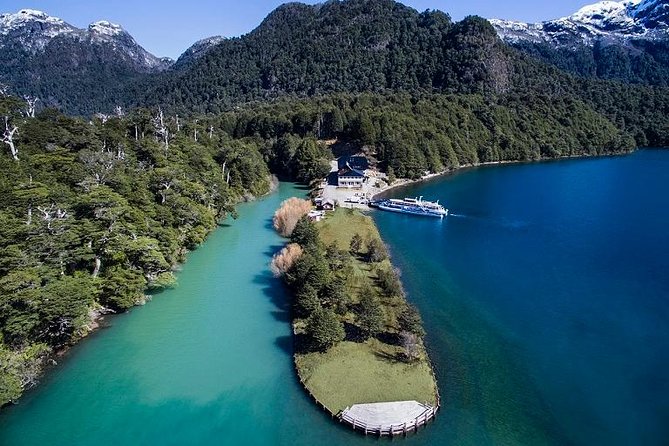
After the first major cruise, the crossing becomes more procedural. Puerto Frías sits beside Lago Frías, the smallest of the three lakes used on this route. Its water gets its green-turquoise color from glacial meltwater, and the short stop is scheduled for about 20 minutes.
This is where immigration procedures for Argentina and Chile take place. Keep your passport easy to reach, and make sure the passport name, number, expiration date, and country match the information entered at booking. Border processing can take longer than planned, which has a direct effect on the timing of lunch and the later boat ride.
The change in scenery here is one of the route’s special features. The green waters of the Frías River meet the blue waters of Nahuel Huapi, with native forest around them. You may see the Valdivian Forest, a cold forest type found in only a few parts of the world.
Do not treat the 20-minute stop as free time to wander far. It is primarily a border and transfer point. You want to stay close, listen for instructions, and keep your documents secure.
The Bus Sections: Necessary, Scenic, and Sometimes Slow
The buses connect the lakes, but they are also where the day can feel drawn out. Several changes from bus to boat and back again are built into the route. One person described the repeated transfers as tiring, while another found the bus sections boring.
That criticism is fair. You are not spending 12 hours in a single comfortable catamaran. The road portions are necessary to cross the gaps between the lakes, but they can feel less special after the excitement of Nahuel Huapi.
The benefit is that you see how the Andean crossing works as a route rather than as a single attraction. The old passage through Patagonia used water and land together, and this journey follows that basic pattern. You move through native forest, mountain roads, and narrow waterways in a way that a flight simply cannot match.
Wear comfortable shoes. Pack a small day bag with water, medication, documents, sunscreen, and a light waterproof layer. Your larger suitcase is covered up to 23 kilograms, and your carry-on can weigh up to 10 kilograms, but you will still handle your bags during transfers.
A completely different sort of day in Bariloche:
- San Martín de los Andes por 7 Lagos
★ 4.4 · 155 reviews - Circuito Chico
★ 4.5 · 146 reviews - Bariloche Small Circuit: Mt Campanario and Llao Llao Peninsula
★ 4.0 · 142 reviews - Fly Fishing Trips in Bariloche
★ 5.0 · 137 reviews
Peulla: A Late Lunch in a Tiny Chilean Settlement
Peulla is the main pause before the final lake cruise. The stop is scheduled for about two hours, and the area includes Villa Peulla, described as a small ecological village recognized as one of Chile’s most sustainable locations.
Lunch costs extra, listed at about US$25 per person. The timing is the bigger issue. Customs delays can push the meal to 2:30 or 3 p.m., and it may be later. I strongly recommend carrying a packed breakfast or substantial snacks from Bariloche. Food and drinks are not included in the tour price, and relying only on the Peulla meal could leave you hungry for much of the day.
Peulla is not a place to build an independent sightseeing plan around. It functions as a rest, meal, and transfer stop. Use the break to eat, stretch your legs, check your belongings, and prepare for the next boat.
The setting should appeal to anyone who enjoys quiet rural places and mountain scenery. It may disappoint you if you expect shops, a long village visit, or a wide menu of activities. The stop is short and practical.
Todos Los Santos and the Emerald Water
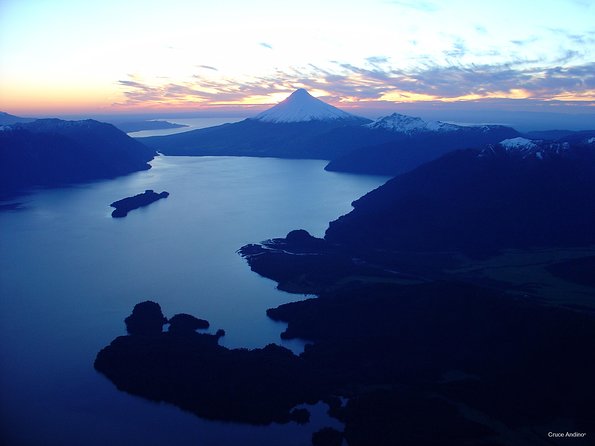
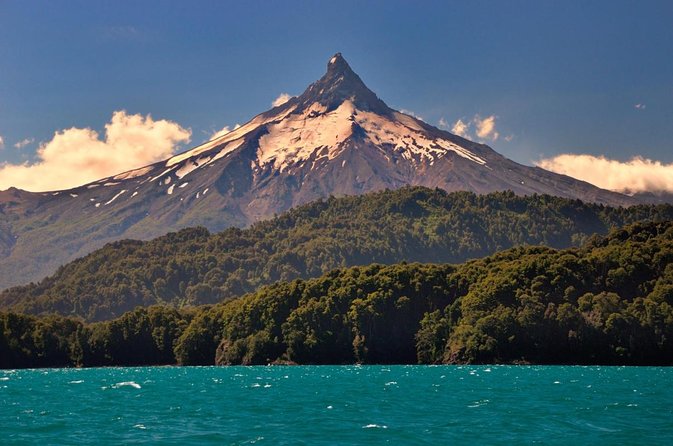
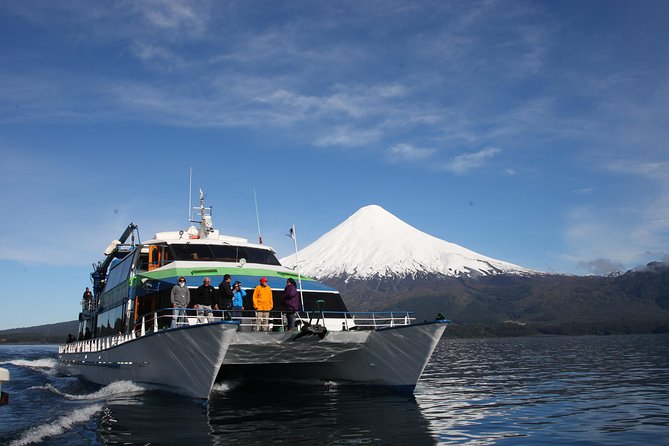
The final major cruise crosses Lago Todos Los Santos for about two hours. Evergreen forests cover the surrounding hills, and the water is known for its emerald color. From the catamaran deck, you may see waterfalls and three snowy peaks: Mount Tronador, Osorno Volcano, and Puntiagudo Volcano.
The experience depends heavily on the weather. Clear conditions can make this a memorable finish, with snow-covered summits above the water. Rain and cloud can reduce visibility, though the boat and bus arrangement means you can still enjoy the journey without spending the entire day exposed to the elements.
A poor-weather day does not ruin the crossing, but it can change what you get for the price. If the mountains disappear behind cloud, much of the value shifts from grand views to the pleasure of making the historic route itself.
Commentary can also be uneven for English speakers. One English-speaking passenger described receiving explanations separately from a guide who spoke Spanish over the microphone, making the English portion difficult to hear over the engine. If clear narration matters to you, ask at the start how commentary will be handled. The experience is about scenery and transport as much as interpretation, so do not book it expecting a detailed multilingual tour lecture.
Arriving in Puerto Varas
Puerto Varas is the destination, not a round-trip base. The trip ends there after roughly 12 hours, and accommodation in Puerto Varas is not included. Plan your hotel before you leave Bariloche, especially because a late arrival after a long series of transfers is no time to search for a room.
Puerto Varas gives you access to the Puerto Montt area, nearby Frutillar, Chilean food and wine, and views toward volcanoes such as Osorno and Calbuco. Frutillar is associated with German settlers whose customs and way of life remain part of the local identity.
The listed end point can be less clear than the start. Since hotel drop-off has not always matched expectations, check the exact arrival arrangement with the operator. If you have a steep walk, distant lodging, or heavy bags ahead, that detail matters.
Is US$347 a Fair Price?
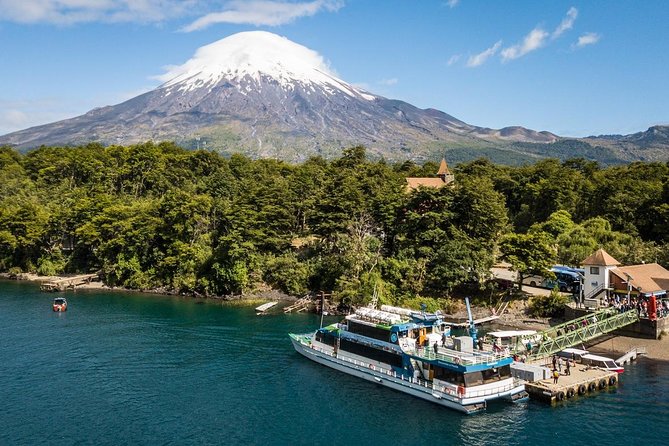
At US$347 per person, this is expensive for a one-way transfer, but it is not priced like an ordinary bus ticket. The cost covers the driver-guide, all land and lake transfers, the scheduled boat rides, and a rare cross-border route through two national park regions.
The value is strongest if you already want to see both Bariloche and Puerto Varas and would otherwise pay separately for transport, lake excursions, and border connections. You also avoid planning a complicated chain of buses and boats yourself.
The value is weaker if your only goal is to reach Chile quickly. A flight or standard land route may be more efficient, though this experience offers scenery that those options cannot provide. One person specifically preferred doing a day trip from Bariloche and then flying to Chile, saying the first lake was the best part and the later sections felt less exciting.
The price does not cover meals, drinks, the Peulla lunch, port fees, immigration or national park charges, or hotel stays. Budget for those extras. The Puerto Pañuelo charge is listed as about US$3.50 or AR$500 in cash, and authorities can change the amount.
Who Will Enjoy This More?
I would choose this crossing if you value the journey itself more than speed. It suits people who enjoy changing vehicles, watching scenery unfold, and meeting other passengers during a long day.
It is also a good fit if you want a memorable connection between Argentina and Chile without arranging each segment alone. The small group and included luggage allowance make the logistics easier, though you still need to stay organized at every transfer.
I would hesitate if you dislike early starts, long waits, late meals, or uncertain weather. The route has many starts and stops. If you need firm timing, quiet comfort, or a guaranteed mountain panorama, the crossing may test your patience.
Book well ahead if your dates are fixed. It is often reserved around 77 days in advance, which suggests that popular travel periods can fill early. Free cancellation is available up to 24 hours before the start time, but changes or cancellations inside that window are not refunded.
Practical Packing Advice for a 12-Hour Day
Pack as if you are preparing for four different conditions. You may have sun at the port, wind on the boat, rain near the border, and a late lunch on the road.
Bring:
- Passport and a copy of your booking information
- Cash for the Puerto Pañuelo charge and other personal expenses
- Packed snacks and water
- Sunblock and sunglasses
- Comfortable shoes
- Waterproof clothing
- Camera and binoculars, if available
- Any medication you need during a long day
Keep important items in your carry-on rather than in your larger suitcase. Your bags are included within the stated weight limits, but the repeated transfers mean you may need access to essentials before the final arrival.
Should You Book the Andean Lakes Crossing?
Book it if you want a dramatic, unusual way to pass between Bariloche and Puerto Varas, and if you can accept a long day with several transfers. The first Nahuel Huapi cruise, the glacial color of Lago Frías, and the final sail across Todos Los Santos give the route real character.
Skip it if you mainly want convenience. The late lunch, border delays, bus sections, weather risk, extra fees, and uncertain hotel drop-off reduce the comfort factor. My practical choice would be to book this as a scenic transport experience, not as a smooth luxury cruise, and to prepare for it with food, waterproof layers, cash, and a confirmed Puerto Varas hotel.
FAQ
How long does the crossing from Bariloche to Puerto Varas take?
The experience takes approximately 12 hours, with an 8 a.m. start time.
Where does the trip begin?
It begins in San Carlos de Bariloche, Argentina, with hotel pickup included.
Where does the trip end?
It ends in Puerto Varas, Chile. Accommodation there is not included.
Which lakes are included in the route?
The route includes boat crossings on Lago Nahuel Huapi and Lago Todos Los Santos, plus a transfer beside Lago Frías.
Is lunch included?
No. Lunch and drinks are not included. A lunch stop takes place in Peulla, with the meal listed at about US$25 per person.
Can customs delay the schedule?
Yes. Argentina-Chile border procedures take place at Puerto Frías, and delays there can push lunch later than expected.
What luggage can I bring?
The included allowance is one suitcase weighing up to 23 kilograms and one carry-on weighing up to 10 kilograms.
Are port and park fees included?
No. Port, immigration, and national park fees are excluded. The Puerto Pañuelo charge is listed as about US$3.50 or AR$500, payable in cash, though authorities can change the amount.
Do I need passport information to book?
Yes. The passport name, number, expiration date, and country are required for every participant at booking.
What should I wear?
Comfortable shoes and waterproof clothing are recommended. Sunblock and sunglasses are also advised.
How many people can join the tour?
The maximum group size is 14 people.
Can I cancel for a full refund?
Yes, if you cancel at least 24 hours before the local start time. Cancellations or changes made less than 24 hours before departure are not refunded or accepted.
Latest additions in Bariloche
- Bariloche: Sailing tour on Nahuel Huapi Lake★ 5.0 · 3 reviews
- Bariloche: Circuito Chico and Cerro Catedral★ 5.0 · 3 reviews
- Bariloche: Tour to Circuito Chico + Optional: Arrayanes★ 4.2 · 3 reviews
- Bariloche: Cerro Tronador and Ventisquero Negro Tour★ 4.3 · 4 reviews
- Bariloche: Puerto Blest and Cascada de los Cántaros (Waterfall of the Cantaros)★ 3.1 · 5 reviews
- Bariloche “Small Circuit” with Chairlift Campanario Hill★ 5.0 · 5 reviews
- Crossing to Puerto Blest and Cascada de los Cántaros★ 4.4 · 5 reviews
- Bariloche: Cerro Catedral guided tour★ 4.6 · 5 reviews
Bariloche Tours, compared.
Bariloche Small Circuit: Mt Campanario and Llao Llao Peninsula
Read our review →
Browse the lists this tour appears in