
Reviewed · SALINAS GRANDES & PURMAMARCA TOURS
From Salta: 2 Day Guided Trip to Cafayate & Salinas Grandes
Salt, wine, and red rock await.
This two-day trip gives you a useful taste of Salta Province without requiring you to arrange several separate excursions. I like the mix of a Cafayate winery visit and the huge white expanse of Salinas Grandes. I also like the changing scenery, from tobacco farms in the Valle de Lerma to the steep Cuesta de Lipán. The main drawback is the amount of time spent in the minivan, especially on the second day.
The price is $68 per person, which is strong value if you want transport, a bilingual guide, downtown hotel pickup, and the winery admission handled for you. Food and most other entry tickets are extra, and the winery visit may be conducted only in Spanish, so keep that in mind if you do not speak the language. Fernando, praised as both a great driver and guide, is one named guide connected with the experience.
In This Review
- The key details at a glance
- What the two-day route really gives you
- Day one: tobacco fields and the road to Cafayate
- Garganta del Diablo and the red-rock country
- Cafayate winery visit and lunch plans
- The return to Salta by a different route
- Day two: the Quebrada de Humahuaca
- Seven Colors Hill near Purmamarca
- Climbing the Cuesta de Lipán
- Salinas Grandes, Argentina’s white salt desert
- Lunch in Purmamarca and the trip back
- Is $68 good value?
- Who should book this Salta tour?
- Practical tips before you go
- FAQ
- How long does the tour last?
- Where does pickup take place?
- Which languages are available?
- Is transportation included?
- Is the winery admission included?
- Are food and drinks included?
- What should I bring?
- Is the tour suitable for people with back problems?
- Should you book it?
The key details at a glance
- Two very different days: Day one follows Route 68 to Cafayate, while day two crosses the Quebrada de Humahuaca toward Salinas Grandes.
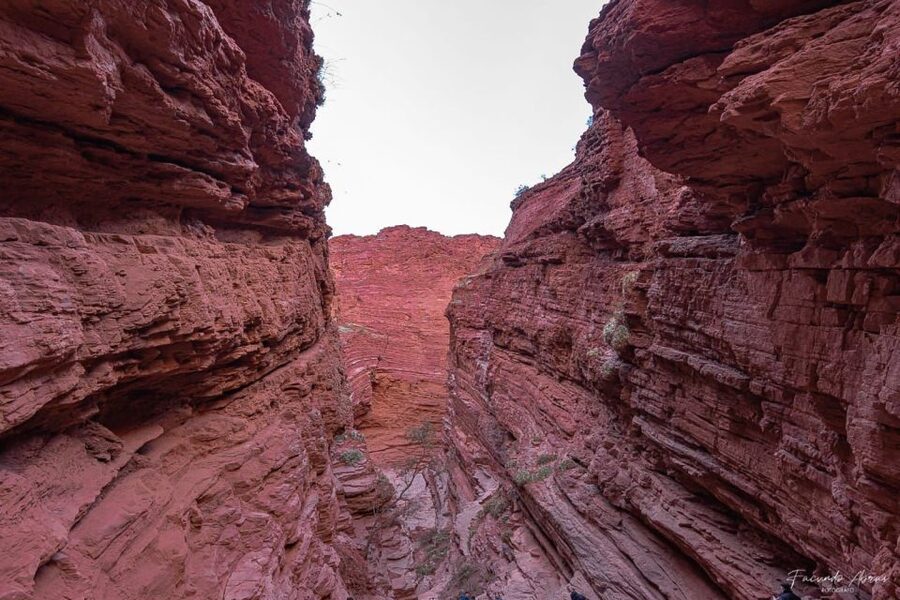
- Garganta del Diablo: Stop to see a dramatic red-rock formation shaped like a vast natural throat.
- Cafayate wine country: Visit a local winery and learn about the area’s wine production, with lunch purchased separately.
- Seven Colors Hill: Walk around Purmamarca and head up to one of the area’s most striking multicolored rock formations.
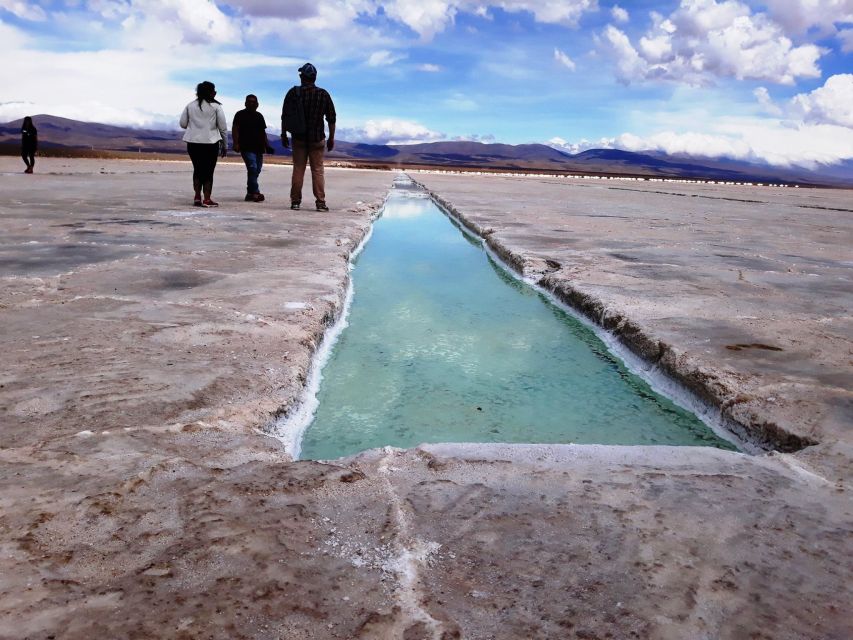
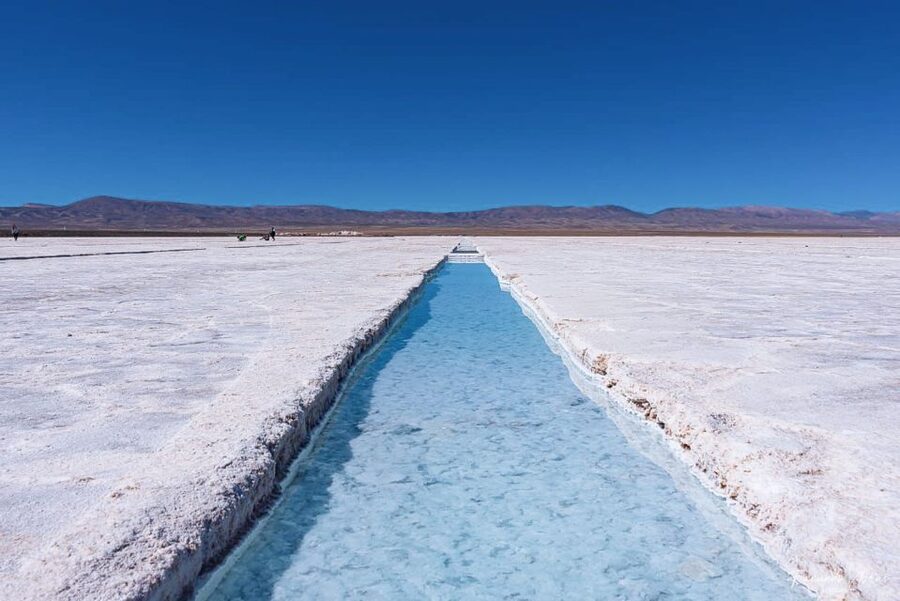
- Salinas Grandes: Spend free time at one of Argentina’s Seven Natural Wonders, where white salt meets blue pools and open sky.
- Central Salta pickup: Hotel transport is included only within fifteen blocks of Plaza 9 de Julio.
What the two-day route really gives you
This is not a slow village-and-winery holiday. It is a long scenic circuit designed to show you several of northern Argentina’s signature sights in a short amount of time.
The two days have different personalities. Cafayate brings cultivated fields, wine, and red rock. The route toward Salinas Grandes feels more rugged, with mountain roads, high passes, salt flats, and the colorful hills around Purmamarca.
I would choose this trip if you have limited time in Salta and want the major sights without hiring separate transport. You should be comfortable with long drives and changing scenery viewed largely from the road. The air-conditioned Mercedes-Benz minivan helps, but it does not turn the itinerary into a relaxed, short-hop outing.
More Salinas Grandes and Purmamarca Tours:
- From Salta: Full-Day Trip to Salinas Grandes and Purmamarca
★ 4.6 · 914 reviews - From Salta: Salinas Grandes, Purmamarca & Los Colorados Hike
★ 4.3 · 356 reviews - Full-Day Tour Salinas Grandes and Purmamarca from Salta
★ 4.0 · 220 reviews
Day one: tobacco fields and the road to Cafayate
Pickup begins at your downtown Salta hotel, provided it sits within fifteen blocks of Plaza 9 de Julio. From there, the vehicle heads along National Route 68 through the Valle de Lerma.
The early scenery is agricultural. You pass farms and tobacco plantations, including leaves laid out to dry. This is a useful reminder that Salta Province is not only about dramatic mountains and salt flats. The region also has working fields and rural communities, and the drive gives you a look at that quieter side of local life.
I like this opening because it lets the scenery change gradually. The trip does not throw you straight into a postcard view. You first move through farmland, then toward drier country and red rock.
The peaceful settlement of Alemani appears along the route. It is a brief stop or passing point rather than a full town tour, but it helps break up the drive and gives the road a human scale. Bring water and keep your camera ready, since much of the appeal here comes from the views between formal stops.
Garganta del Diablo and the red-rock country
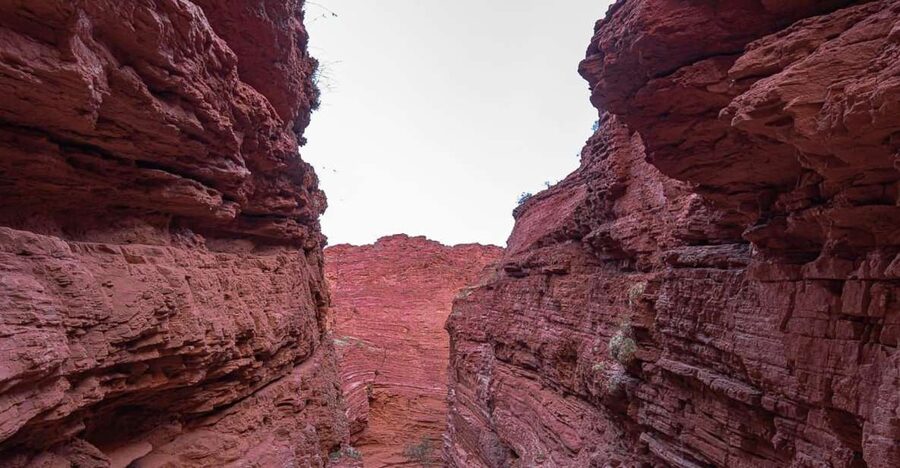
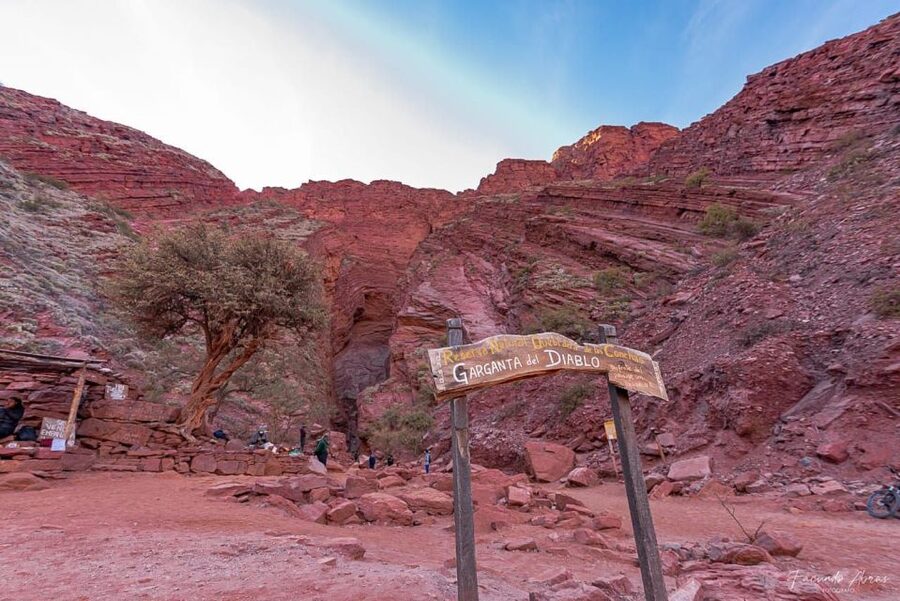
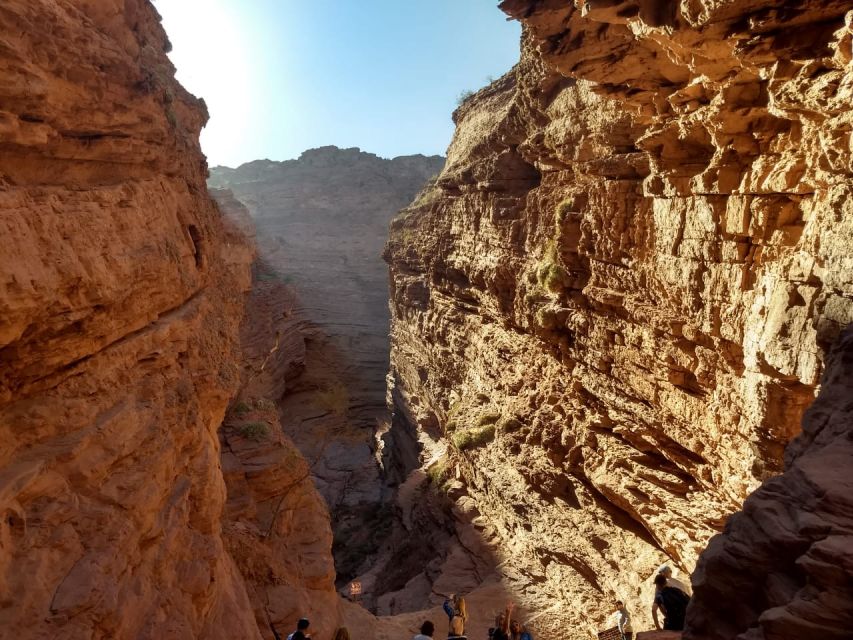
As you continue toward Cafayate, the rock formations become the main event. The stop at Garganta del Diablo gives you a close look at a huge red formation carved into the surrounding rock.
The name means Devil’s Throat, and the shape explains why. The rock walls create a narrow, dramatic opening that feels far more powerful than a typical roadside viewpoint. This is one of the stops where a few minutes outside the vehicle can make the long drive worthwhile.
The red stone is especially effective against the open sky. You will want comfortable clothes and sturdy enough footwear for walking around the formation, although the activity information does not specify trail conditions. Do not expect a full mountain hike. This is a scenic stop, not a strenuous trekking excursion.
The route includes several red-rock formations, so the guide’s commentary can help you understand how each stop differs. If you are taking photographs, wide shots show the scale best, while a person in the frame can make the size of the rock walls easier to judge.
Cafayate winery visit and lunch plans
Cafayate is known for vineyards and local wine production, and the itinerary includes entry to a winery. This is the cultural center of the first day. Instead of only looking at vineyards from the roadside, you get a chance to learn about the area’s wine industry inside a working wine setting.
The winery entry is included, but food and drink are not. Plan to buy lunch separately in Cafayate, and remember that any wine tasting or additional drinks are also not included in the listed price.
One practical point deserves attention: a five-star review specifically praised Fernando as an excellent driver and guide, but noted that the wine tasting was only in Spanish. The tour offers English and Spanish-speaking guides, yet the language used during a particular winery presentation may vary. If wine education matters to you and your Spanish is limited, ask about the language before booking.
I still like the winery stop because it adds variety. After the farms and rock formations, you get a more personal look at one of Cafayate’s best-known local industries. The visit is not just another viewpoint, and it gives the day a clear destination.
More Cafayate wine route trips:
- From Salta: Full-Day Tour to Cafayate with Wine Tasting
★ 4.5 · 478 reviews - Full-Day Tour Cafayate Calchaqui Valleys with Wine
★ 4.5 · 347 reviews - From Salta: Cafayate, land of wines and imposing ravines
★ 4.4 · 347 reviews - From Salta: Cafayate Day Trip with Wine Tasting
★ 4.4 · 226 reviews
The return to Salta by a different route
After lunch and the winery visit, you drive back to Salta using a different route. That matters. You are not simply retracing the same road, so the return journey can offer fresh views and prevents the day from feeling like a single corridor traveled twice.
The first day is likely to suit you best if you enjoy seeing how a region changes over distance. The Valle de Lerma, tobacco fields, red formations, Cafayate vineyards, and the return road create a broad visual sample of Salta Province.
The tradeoff is time. You cover a lot of ground in one day, and the itinerary leaves little room for an unplanned stop or a leisurely afternoon in Cafayate. Think of it as a scenic introduction rather than a deep visit to the town.
Day two: the Quebrada de Humahuaca
The second day heads toward the UNESCO World Heritage Listed Quebrada de Humahuaca. This is a more mountainous route, with the scenery becoming drier, higher, and more dramatic as you move toward Purmamarca and the salt flats.
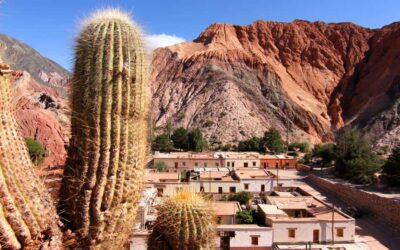
The trip stops in Purmamarca, a peaceful town with a main square and access to Seven Colors Hill. You have time to explore the square before heading up to the viewpoint or area around the hill.
Purmamarca is important because it gives the day a place to pause. The salt flats are immense and open, while the town offers a more intimate setting with local restaurants and a central gathering point. I like having both in one day. You get natural scenery, a town visit, and a meal stop rather than a nonstop sequence of roadside photographs.
The schedule is still fairly full. Your time in Purmamarca is not described as an overnight stay or an extended independent visit, so you should expect a guided stop with a set departure time.
Seven Colors Hill near Purmamarca
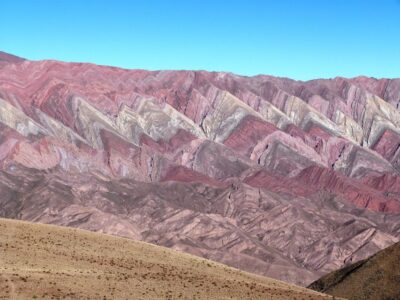
Seven Colors Hill is one of the most memorable sights on the second day. Bands of different mineral colors run through the rock, creating a layered formation that looks almost painted from a distance.
The visit is valuable because it shows how different the Quebrada is from the red-rock country near Cafayate. Both areas have dramatic stone, but the colors and forms change as the route climbs.
Keep your camera ready, but give yourself time to look without a screen in front of your face. The hill works best as a broad view, where you can see the colored layers together. Since the tour includes driving and walking stops, comfortable clothing is a sensible choice.
The provided information does not give a specific walking distance or trail difficulty. If you have back problems, this tour is not considered suitable. Even without a long hike, the vehicle time, mountain roads, and stops may be uncomfortable for some people.
Climbing the Cuesta de Lipán
From Purmamarca, the route continues up the Cuesta de Lipán, a rugged mountain road leading toward Salinas Grandes.
This section is about the journey as much as the destination. The road climbs through open mountain scenery, and the change in altitude and terrain makes the second day feel quite different from the vineyard route. I would keep a light layer handy and carry water, as the tour specifically recommends both water and comfortable clothes.
The road itself may be a highlight if you enjoy mountain views. It may feel tiring if winding routes bother you. The tour does not provide a separate note about altitude effects, so I would not assume any special support beyond the guide and vehicle. If long, rugged road journeys are difficult for you, this is the part to consider carefully before booking.
Salinas Grandes, Argentina’s white salt desert
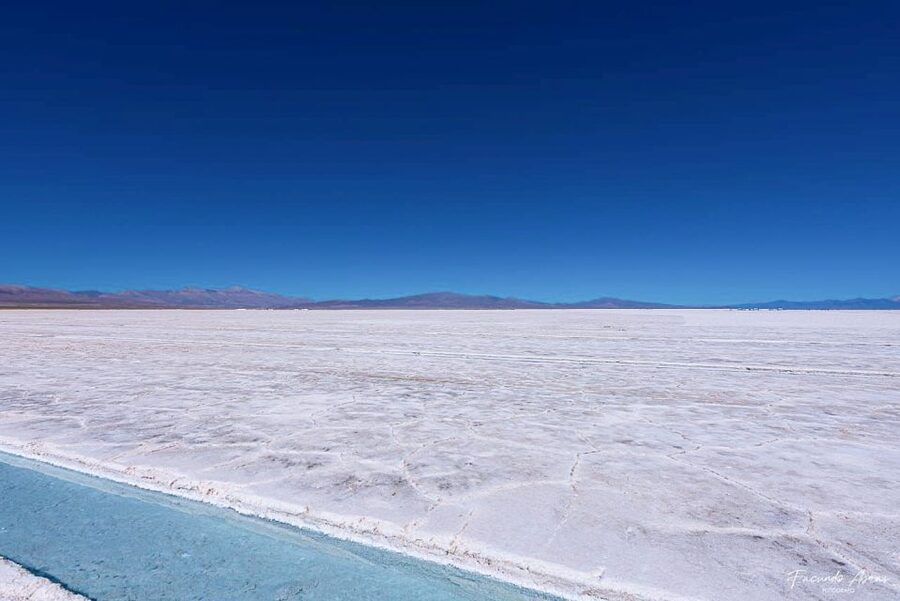
Salinas Grandes is the big payoff of day two. The tour gives you free time to admire the broad salt desert and its blue pools, described as one of the Seven Natural Wonders of Argentina.
The contrast is striking: white ground, blue water, and a huge open horizon. After the colored rock around Purmamarca and the mountain road of Cuesta de Lipán, the salt flats feel almost unreal in their simplicity.
This is a place where weather and light matter. The experience details promise white salt and crystal blue pools, but the exact appearance can change with conditions. You should bring a camera, as recommended, and water for the time spent outside.
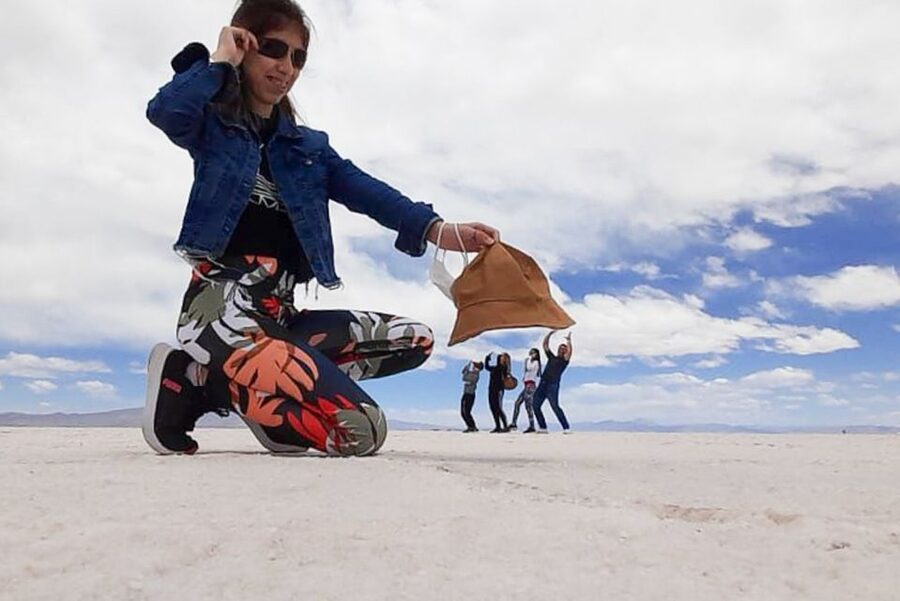
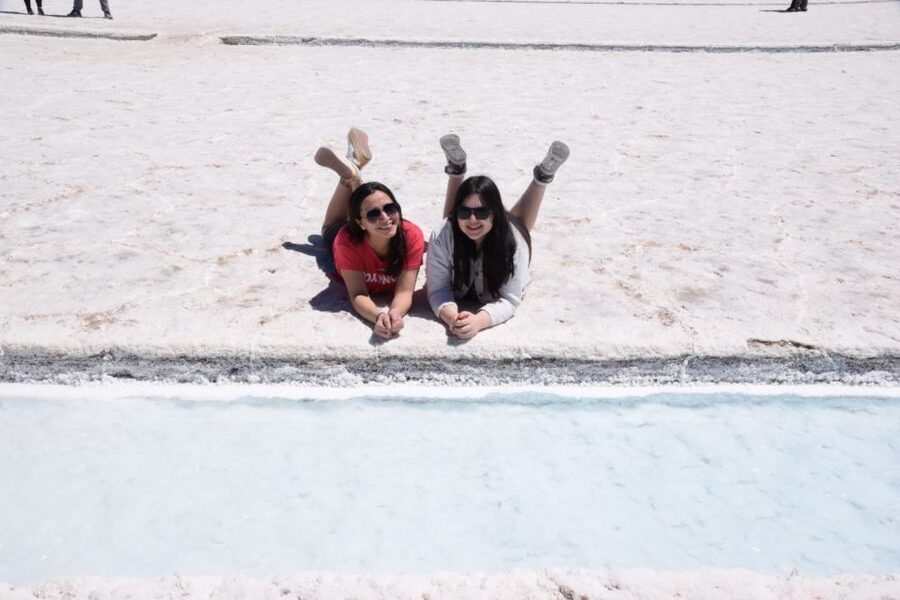
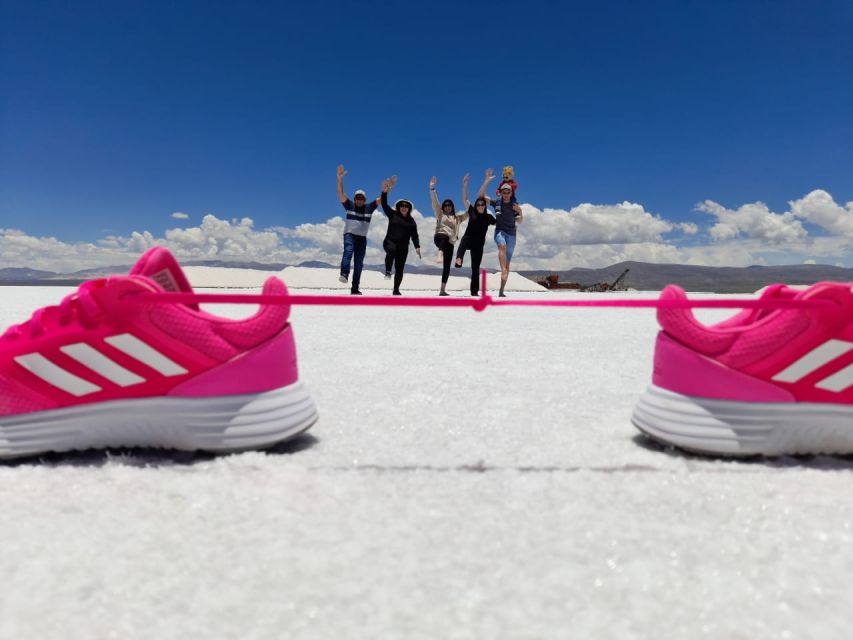
The salt flats are not presented as a guided activity with a long list of attractions. You have free time to look around and take photographs. That is a good arrangement here. The open space does not need constant commentary, and you can enjoy the scale at your own pace before returning to Purmamarca.
Lunch in Purmamarca and the trip back
After Salinas Grandes, the route returns to Purmamarca. You can take a break and buy lunch at one of the traditional restaurants in town.
Because food and drinks are not included, set aside extra money for both days. The $68 price covers the main transport and winery entry, but it is not an all-inclusive package. That is normal for a low-cost sightseeing trip, and it lets you choose what you want to eat rather than locking you into a set meal.
The final transfer takes you back to Salta. By this point, you will have spent two full days on the road, so the return journey is more about getting back safely than adding another attraction. If you want to continue sightseeing in Salta that evening, keep your plans flexible.
Is $68 good value?
At $68 per person, the trip offers a lot of coverage for the price. You receive two days of transport in an air-conditioned Mercedes-Benz minivan, an English and Spanish-speaking guide, pickup and drop-off from eligible downtown hotels, and winery admission.
You also reach places that are difficult to combine independently without a car. Cafayate, Garganta del Diablo, Purmamarca, Seven Colors Hill, Cuesta de Lipán, and Salinas Grandes cover a wide area. Paying separately for transport to all of them could quickly cost more than the tour price, especially if you are traveling alone.
The price does not include food, drinks, or other entry tickets. The supplied details do not identify additional ticket costs, so I would ask the provider what, if anything, you will pay at stops beyond the winery. Still, the core package is inexpensive for a two-day route covering this much ground.
The strongest value comes if you want convenience and variety. It is less compelling if you prefer a slow pace, long independent visits, or plenty of unstructured time in each town.
Who should book this Salta tour?
I would recommend it to you if:
- You have only a few days in Salta.
- You want to see both Cafayate and Salinas Grandes.
- You prefer organized transport to handling mountain roads yourself.
- You enjoy scenery viewed from the road as well as short stops.
- You want a bilingual guide and hotel pickup in central Salta.
- You are comfortable buying your own meals and drinks.
I would think twice if you have back problems, dislike long vehicle journeys, or want an in-depth winery experience in English. The second day in particular involves a rugged mountain road and a long route to the salt flats.
The live guide is available in English and Spanish, and the driver-guide role can make a real difference. Fernando received especially warm praise for his driving and guiding. Just confirm the language of the winery presentation if that point is important to you.
Practical tips before you go
Bring your passport or ID card, camera, water, and comfortable clothes. The identity document is listed among the required items, so do not leave it at your hotel.
Wear clothing that works for both roadside stops and time outdoors at the salt flats. Conditions can vary between the lower valleys, mountain roads, and open salt desert, so a light extra layer is sensible.
Plan your meals rather than expecting food to appear automatically. Lunch is purchased in Cafayate on day one and in Purmamarca on day two. Drinks are also your responsibility.
Pickup is limited to hotels within fifteen blocks of Plaza 9 de Julio. If your accommodation falls outside that area, contact the provider before booking instead of assuming a wider pickup zone.
Free cancellation is available up to 24 hours in advance for a full refund, and you can reserve now while paying later. Those policies are useful if your Salta schedule is still changing.
FAQ
How long does the tour last?
The experience lasts two days. Starting times depend on availability when you book.
Where does pickup take place?
Pickup and drop-off are available from hotels in downtown Salta within fifteen blocks of Plaza 9 de Julio.
Which languages are available?
The live guide is available in English and Spanish.
Is transportation included?
Yes. Transportation is provided in an air-conditioned Mercedes-Benz minivan.
Is the winery admission included?
Yes. The entry ticket to the winery is included.
Are food and drinks included?
No. Food and drinks are not included. You should plan to buy lunch in Cafayate on the first day and in Purmamarca on the second day.
What should I bring?
Bring your passport or ID card, a camera, water, and comfortable clothes.
Is the tour suitable for people with back problems?
No. The experience is listed as unsuitable for people with back problems.
Should you book it?
Book this tour if you want a high-value two-day overview of Salta Province and prefer someone else to handle the long drives. The combination of Cafayate wine country, Garganta del Diablo, Purmamarca, Seven Colors Hill, and Salinas Grandes is hard to match at this price.
Skip it if you want a relaxed pace or a detailed English-language wine tasting. For most visitors with limited time, though, the route delivers a memorable mix of farmland, rock, mountain roads, salt, and local food stops. Just bring water, allow for long hours in the minivan, and confirm the pickup point and winery language before you pay.
Latest additions in Salta
- From Salta: Cafayate,Humahuaca and Salinas Grandes in 3 days★ 3.6 · 3 reviews
- From Salta: Cachi and Salinas Grandes 2-Day Guided Trip★ 4.1 · 3 reviews
- From Salta: Cafayate, Cachi, & Hornocal 3-Day Tour★ 4.0 · 3 reviews
- From Salta: 3-Day Cafayate, Cachi, and Humahuaca Guided Trip★ 4.7 · 3 reviews
- Salta en un Bocado – Cultural Tour & Empanada Tasting★ 5.0 · 3 reviews
- From Salta: Cafayate, Salinas Grandes, & Hornocal Tour★ 4.7 · 3 reviews
- From Jujuy: Yala and Termas de Reyes Half-Day Tour★ 3.8 · 3 reviews
- Salta: Tour to the Salinas Grandes and Purmamarca★ 3.7 · 3 reviews
Salinas Grandes & Purmamarca Tours, compared.
Full-Day Trip to Salinas Grandes and Purmamarca
Read our review →
Salinas Grandes, Purmamarca & Los Colorados Hike
Read our review →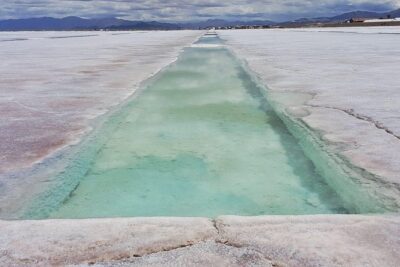
Full-Day Tour Salinas Grandes and Purmamarca from Salta
Read our review →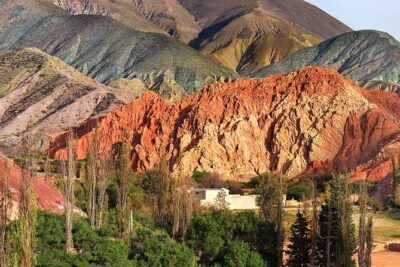
Full-Day Tour to Salinas Grandes and Purmamarca From Salta
Read our review →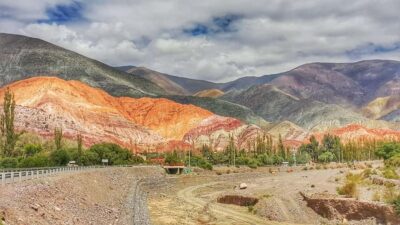
Salinas Grandes, Purmamarca & Los Colorados Hike
Read our review →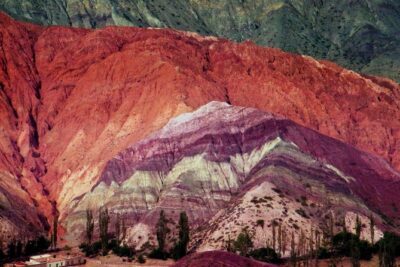
Browse the lists this tour appears in