
Reviewed · IGUAZU FALLS TOURS
Minas de Wanda – Foz do Iguaçu/Puerto Iguazú
The rocks here tell a volcanic story. Minas de Wanda gives you a close look at an active gemstone mine in Misiones Province, only about 45 kilometers from the Foz do Iguaçu border. I like the mix of open-air excavation, cave passages, and local stones on display. I also like the small-group format, with no more than 15 people and guides in English, Portuguese, or Spanish.
The main drawback is time. The guided visit at the mine lasts about 1.5 hours, while the full outing takes four hours because of pickup, transport, and border procedures. At $52 per person, you also need to pay the mine admission and ecotourism fee separately, so check the final cost before booking.
In This Review
- What makes Minas de Wanda worth your time
- From Iguazú to Wanda in about four hours
- Why the volcanic story matters
- Walking through five active mine areas
- The Stone Museum and its polished side
- A realistic look at the 1.5-hour visit
- Is $52 a fair price?
- Who will enjoy this outing most?
- Languages, guides, and the small-group advantage
- What to know before you go
- How it compares with a second day at the waterfalls
- Should you book Minas de Wanda?
- FAQ
- Where is Minas de Wanda located?
- How long does the tour take?
- How many mines can I visit?
- Is the mine still active?
- What types of stones can I see?
- Is transportation included?
- Are the mine admission and ecotourism fee included?
- What languages are available?
What makes Minas de Wanda worth your time
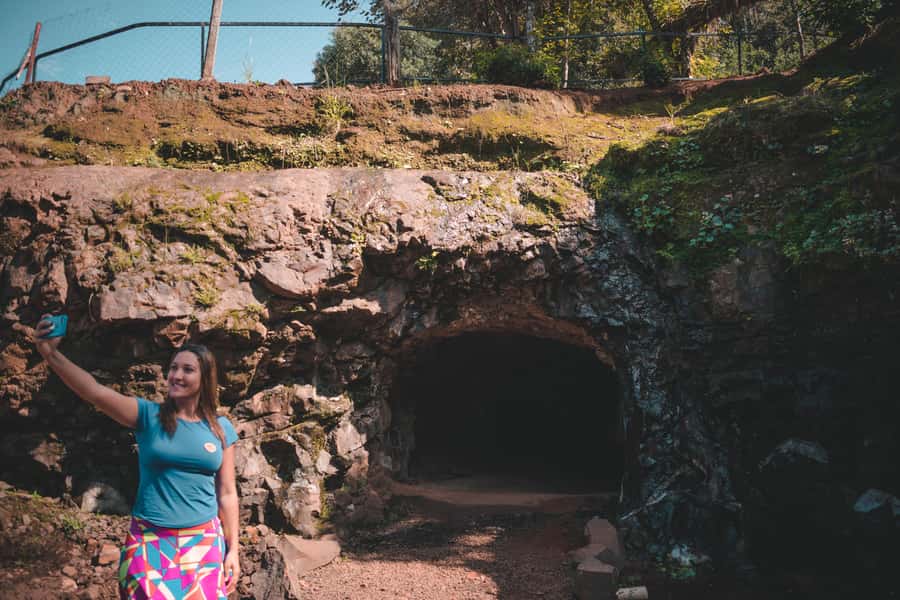
- A working mine, not just a museum: You can watch open-cast and cave mining in a site that is still being worked.
- Five mine areas to explore: The visit takes you through five accessible mines with different types and colors of stone.
- Volcanic origins: Ancient lava flows created air pockets in the rock, which later crystallized into colorful mineral formations.
- A useful break from Iguazú Falls: The visit offers a quieter, more hands-on look at the region’s geology and local industry.
- Transport from both sides of the border: Shared hotel pickup is available in central Puerto Iguazú and central Foz do Iguaçu.
- A small, multilingual group: The tour is limited to 15 people, with live guiding in English, Portuguese, or Spanish.
From Iguazú to Wanda in about four hours
Minas de Wanda is in Argentina’s Misiones Province, close to Puerto Iguazú and roughly 45 kilometers from the international border with Foz do Iguaçu. The tour is designed as a half-day outing, with shared round-trip transportation from hotels in central areas of either city.
That arrangement is useful if you are staying in Puerto Iguazú or Foz do Iguaçu and do not have a car. You do not need to arrange separate transport to the mine, and the return ride brings you back to Puerto Iguazú or the central pickup area.
The one part you should plan around is the border. If you are crossing from Brazil into Argentina, the process can be slow at times. That is not caused by the mine operator, but it can affect the rhythm of your morning or afternoon. I would avoid booking this tour too close to a flight, bus departure, or another timed activity.
Pickup is included from hotels in the central areas of both cities. If you are staying outside those zones, the operator can arrange a meeting point after checking the address by WhatsApp. This is worth settling before the day of the tour, rather than assuming the vehicle will come to any hotel.
More ways to see the Iguazu falls:
- Foz do Iguaçu: Brazil/Argentina Sides Iguazu Falls Day Tour
★ 4.9 · 1,551 reviews - Iguazu Falls: Gran Aventura Boat and Argentinian Falls Tour
★ 4.4 · 393 reviews - From Foz do Iguaçu: Brazilian Side of the Falls with Ticket
★ 4.6 · 346 reviews
Why the volcanic story matters
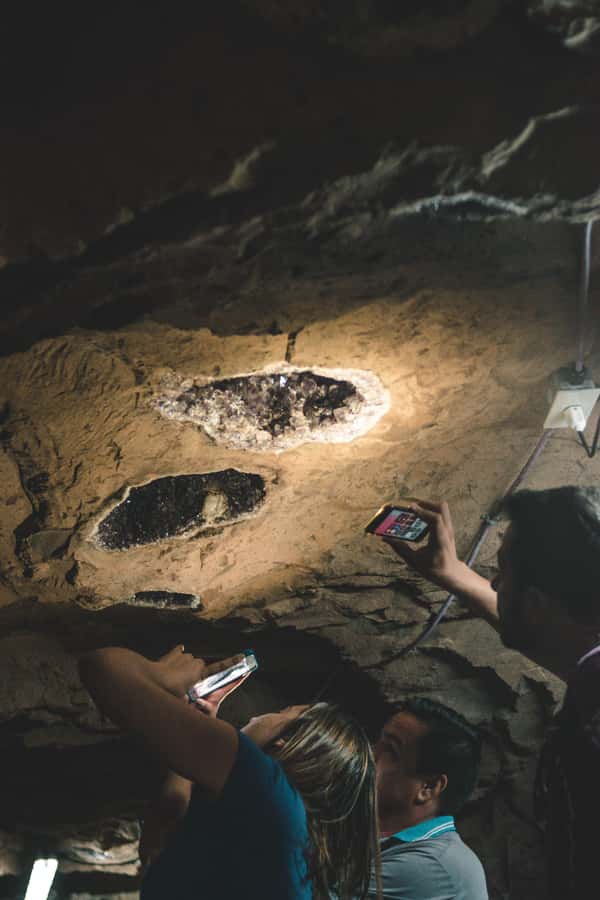
The mine’s stones began with volcanic lava flows thousands of years ago. As the hot lava moved and cooled, it formed pockets of air inside the rock. Over time, minerals crystallized in those spaces, creating the colors and patterns you see today.
That explanation gives the visit more meaning than simply walking past shelves of polished stones. You can connect the mineral display to the rock around you and see how a natural cavity becomes a place of extraction.
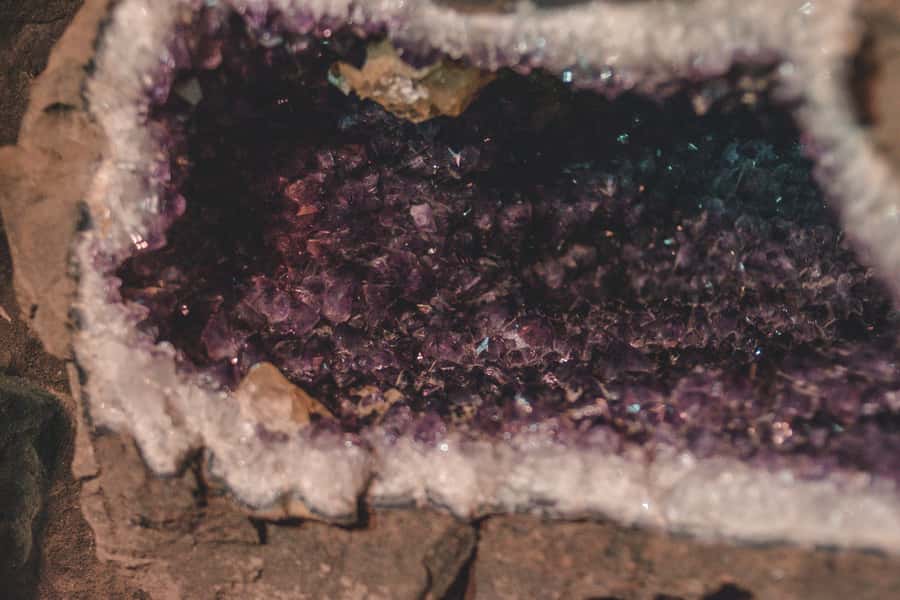
The area is associated with at least 52 varieties of stone. The examples listed for the site include emeralds, rubies, amethysts, agates, topazes in yellow, blue, and brown, pink rock crystals, Venus crystal, and aquamarine.
You should treat the list as a broad guide rather than a promise that every named stone will be visible during your visit. The appeal is the range of materials and the chance to see how they occur in the mine, not a guarantee of finding a particular mineral.
Walking through five active mine areas
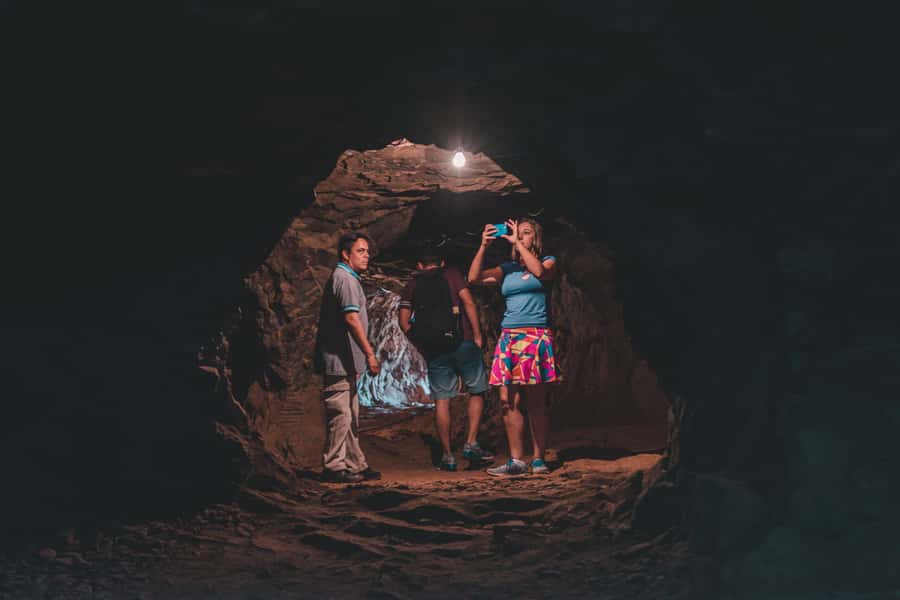
The main visit takes about 1.5 hours and includes a guided tour, sightseeing, and time for photos. You can access five mines within the site, giving you more variety than a single short tunnel or a display room.
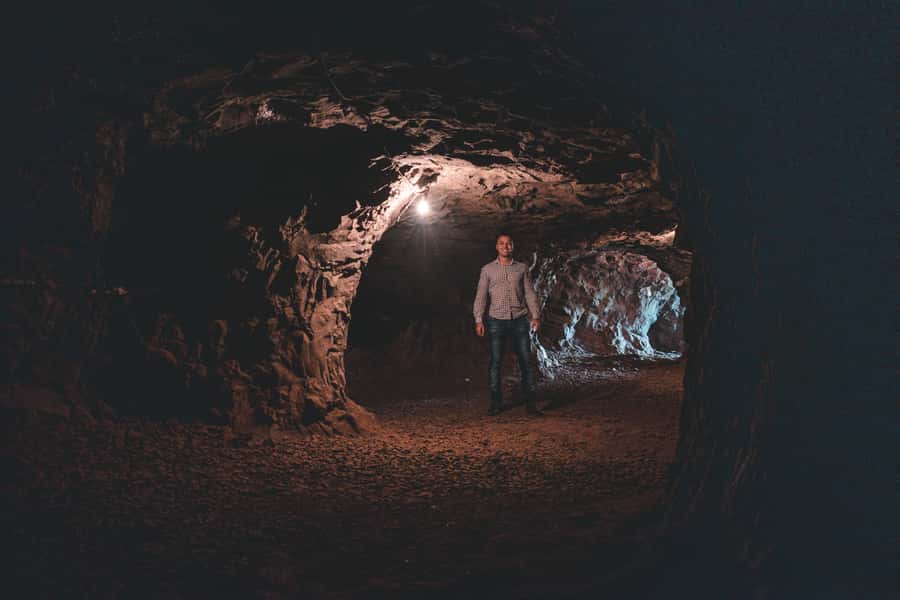
The mine combines open-cast work with cave mining. Open-cast extraction lets you see the rock from above and understand the practical side of removing material from the ground. Cave sections offer a closer look at the spaces where stone is found below the surface.
The work is described as artisanal and careful. In some cases, extraction can take more than a year because the material is fragile. That detail helps explain why the process may look slow. This is not a fast-moving industrial pit with machines doing everything at once.
I like that the site shows the work in progress. You are not only seeing finished stones in a shop. You are also seeing the uncertainty and patience behind them. A piece of rock may need careful handling before anyone knows what it contains.
The guided format matters here. A guide can point out what you are looking at, explain the local mining process, and connect the stone varieties to the volcanic formation. Without that context, a tunnel and a pile of rock can look much the same. With it, the stop becomes more rewarding.
The Stone Museum and its polished side
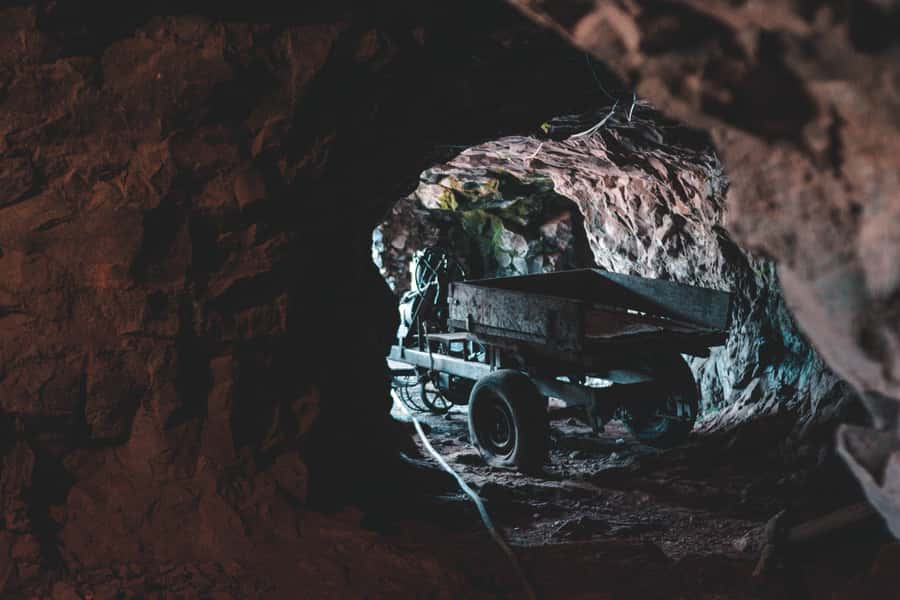
After seeing the mine areas, you can look at a collection of local specimens in the Stone Museum. This gives you a clearer way to compare colors, shapes, and finishes than you may get outdoors.
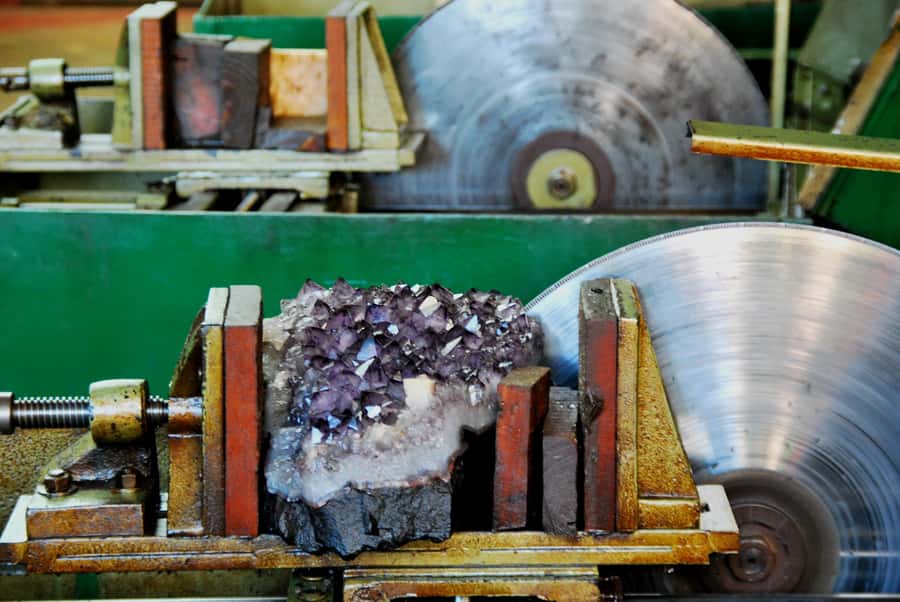
The museum is especially useful if you are not familiar with mineral types. You can see raw samples alongside worked pieces and better understand how a rough stone changes after cutting or polishing.
The park also has specialized shops selling raw and worked samples. This is the place to browse for a small souvenir, but I would take your time before buying. Compare pieces, ask what type of stone you are looking at, and remember that the purchase is a personal expense not covered by the tour price.
The shops add a commercial note to the visit. That may appeal to you if you like jewelry or natural specimens, but it can feel less important if your main goal is mining and geology. You are not required to buy anything to enjoy the tour.
A completely different sort of day in Iguazu:
- Puerto Iguazu: Iguazu Falls Argentinian Side Full-Day Tour
★ 4.6 · 334 reviews - From Foz do Iguaçu: Iguazú Falls Boat Ride Argentina
★ 4.9 · 274 reviews - From Foz do Iguaçu: Argentinean Falls Tour with Pickup
★ 4.6 · 269 reviews - Puerto Iguazu: Iguaza Falls Brazilian Side & Bird Park Tour
★ 4.0 · 260 reviews
A realistic look at the 1.5-hour visit
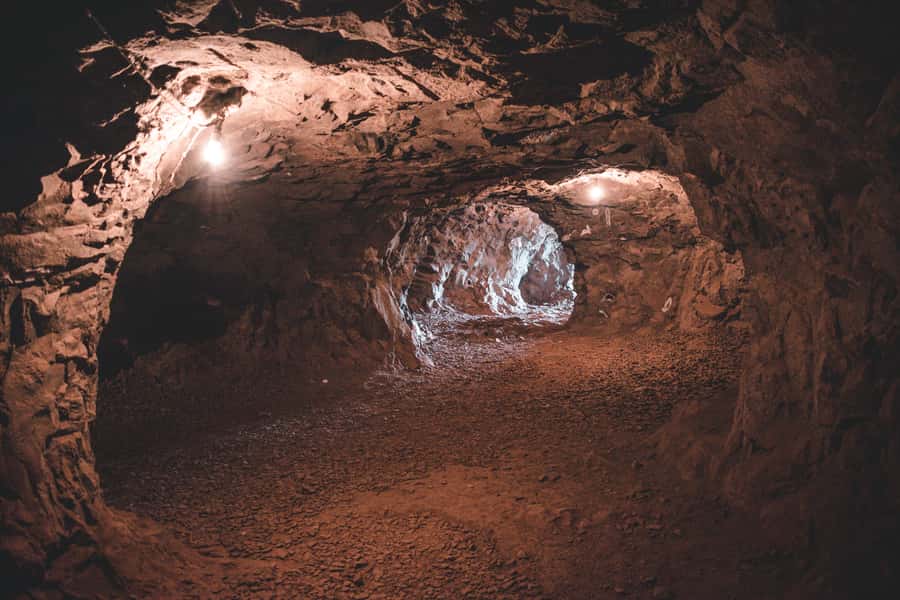
The mine portion is not an all-day expedition. The full activity lasts four hours, but the actual guided sightseeing at Wanda Mines is listed at about 1.5 hours.
That shorter visit works well if you want an introduction without committing an entire day. It also leaves room in your Iguazú schedule for another activity. I would see it as a focused regional excursion, not as a large museum or a long underground trek.
One useful expectation comes from the nature of the site itself: it is still developing. Parts of the operation may feel modest rather than fully built for tourism. That is part of the character, but it also means you should not expect a highly elaborate attraction with a long sequence of rooms and activities.
If you are fascinated by rocks, mining, or jewelry, the time may feel brief. If you mainly want a different half-day outing from the waterfalls, the length is likely to feel about right.
Is $52 a fair price?
The $52 price covers shared round-trip transportation and guide service, but it does not include admission to the mines, the ecotourism fee, food, drinks, or personal purchases.
That makes the value depend on where you are staying and how easily you could reach Wanda on your own. From central Puerto Iguazú or Foz do Iguaçu, the included transport removes the need to arrange a separate ride. The guide also adds value by explaining the mining process and local geology in your language.
Still, do not compare $52 with an all-inclusive entrance ticket. The final cost will be higher after the mine admission and ecotourism fee are added. I would ask for the complete total before paying, especially if you are budgeting several Iguazú activities.
The strongest value is convenience plus interpretation. You are paying for a managed half-day transfer, a guide, and access to a working site. You are not paying for meals, a private vehicle, or an extended underground expedition.
Who will enjoy this outing most?
I would recommend Minas de Wanda to you if you want a change from waterfalls and rainforest scenery. It is also a good match if you enjoy geology, local crafts, jewelry, mining, or unusual small museums.
Families can find the mix of tunnels, colorful stones, and open-air work interesting. The activity is described as suitable for all ages, though the provided information does not specify walking conditions or accessibility details. If you have mobility concerns, ask the operator what the mine paths are like before booking.
The tour suits visitors who want a small group rather than a large coach experience. With a maximum of 15 people, it should be easier to hear the guide and ask questions.
I would be more cautious if you want a long cave adventure, a major historical attraction, or a full day of activities. The mine visit is relatively short, and the site is still growing. You may enjoy it greatly, but it is best approached as a compact look at local mining rather than a grand attraction.
Languages, guides, and the small-group advantage
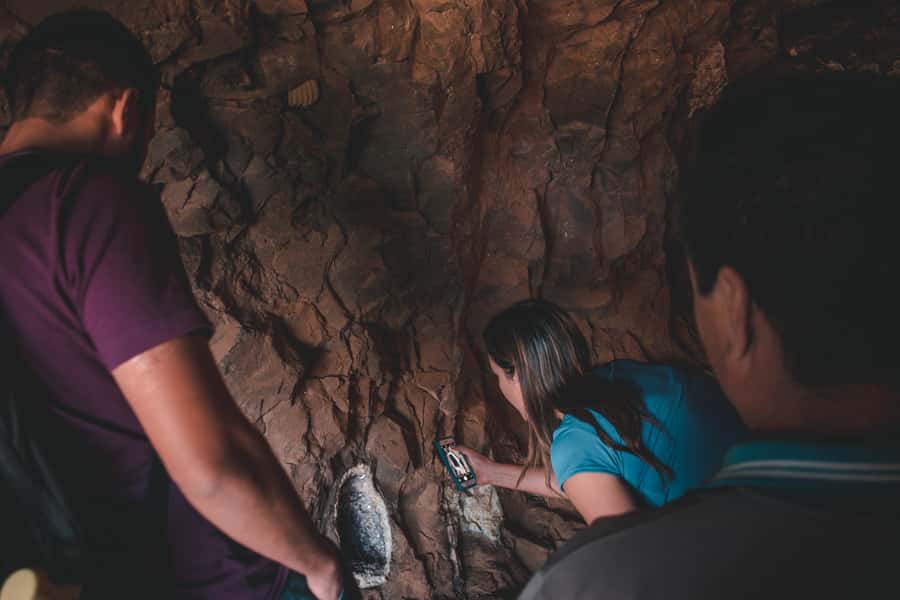
Live guiding is available in English, Portuguese, and Spanish. That matters in a place where the geology and extraction methods are central to the experience. A good explanation can help you understand why a fragile stone takes so long to remove and how volcanic cavities formed.
The small-group limit of 15 people is another practical advantage. You can stay closer to the guide during the mine walk and have a better chance to ask about the stones or the work.
The available feedback points to friendly, capable guiding and well-organized transport. One Spanish-speaking participant found the explanation of the mine and surrounding area both informative and entertaining, while another described the guides and location as excellent.
No individual guide names are provided, so I cannot tell you who will lead your departure. The guide language should be confirmed when you book, especially if your group needs a particular language.
What to know before you go
A little planning will make this outing easier.
- Confirm the exact pickup point if your hotel is outside central Puerto Iguazú or central Foz do Iguaçu.
- Allow extra time for the international border if you are crossing from Brazil.
- Check the total cost, including mine admission and the ecotourism fee.
- Bring money or a payment method for personal purchases if you want raw or polished stones.
- Do not count on food or drinks being included.
- Keep your schedule flexible because the overall activity takes about four hours.
- Confirm the starting time when you check availability, since departure times vary.
The activity offers free cancellation up to 24 hours in advance for a full refund, and you can reserve now while paying later. Those options help if your Iguazú plans may change, but I would still confirm pickup details early.
How it compares with a second day at the waterfalls
Iguazú Falls is the area’s main event, but a second activity can show you a different side of Misiones. Minas de Wanda focuses on stone, work, and geology rather than views of falling water.
That contrast is the point. The mine gives you a closer look at a local industry and the physical material beneath the region. You can see how volcanic activity shaped the ground and how people now extract and sell its minerals.
I would not replace a full visit to either side of Iguazú Falls with this excursion. But if you already have time for the falls, Wanda works well as a half-day addition. One person described it as an interesting change from Iguazú, which is exactly how I would frame it.
The outing is also useful on a rest day. It is more structured than simply wandering around Puerto Iguazú, but less demanding than a long day in a national park.
Should you book Minas de Wanda?
Book this tour if you want a small-group visit to an active mine, enjoy natural stones, and would value shared transport from Foz do Iguaçu or Puerto Iguazú. The combination of five mine areas, open-air and cave extraction, a Stone Museum, and multilingual guiding gives the half-day a clear purpose.
Think twice if you want a long underground experience or if your budget depends on the advertised price covering every fee. The mine admission and ecotourism charge are extra, and border delays can stretch the day.
For the right visitor, Minas de Wanda is a worthwhile side trip: practical, different from the falls, and grounded in the geology and work of Misiones Province.
FAQ
Where is Minas de Wanda located?
Minas de Wanda is in Misiones Province, Argentina, close to Puerto Iguazú and about 45 kilometers from the border with Foz do Iguaçu.
How long does the tour take?
The full activity lasts about four hours. The guided visit and sightseeing at the mines take approximately 1.5 hours.
How many mines can I visit?
You can access five mines during the guided visit.
Is the mine still active?
Yes. The site includes active gemstone mining, with both open-cast and cave extraction.
What types of stones can I see?
The site includes emeralds, rubies, amethysts, agates, topazes, pink rock crystals, Venus crystal, aquamarine, and other varieties. The mine area has at least 52 types of stone.
Is transportation included?
Yes. Shared round-trip transportation from central hotels in Foz do Iguaçu or Puerto Iguazú is included. A meeting point may be arranged if you stay outside the central pickup area.
Are the mine admission and ecotourism fee included?
No. The $52 price does not include mine admission or the ecotourism fee. Food, drinks, and personal expenses are also separate.
What languages are available?
Live guiding is available in Portuguese, English, and Spanish.
Latest additions in Iguazu
- Wanda Mines and San Ignacio Ruins Tour from Puerto Iguazu★ 3.3 · 3 reviews
- Private Tour “Dawn at the Iguassu Falls”.★ 4.3 · 3 reviews
- From Foz do Iguaçu: Madero Tango with dinner★ 5.0 · 3 reviews
- Iguazu Falls: Brazil & Argentina in One Day (Private)★ 4.4 · 3 reviews
- Iguazu Falls Argentinas Tour and Great Adventure Boat Tour★ 4.7 · 3 reviews
- Puerto Iguazú: Madero Tango Show with Optional Dinner★ 4.7 · 5 reviews
- Visit Guarani village at Mborore Fort with brunch★ 3.4 · 5 reviews
- Iguazu Falls: Guided Tour in Argentinean Side★ 5.0 · 7 reviews
Iguazu Falls Tours, compared.
Puerto Iguazu: Iguazu Falls Argentinian Side Full-Day Tour
Read our review →
Puerto Iguazu: Iguaza Falls Brazilian Side & Bird Park Tour
Read our review →
From Puerto Iguazu: Argentinian Iguazu Falls with Ticket
Read our review →Browse the lists this tour appears in